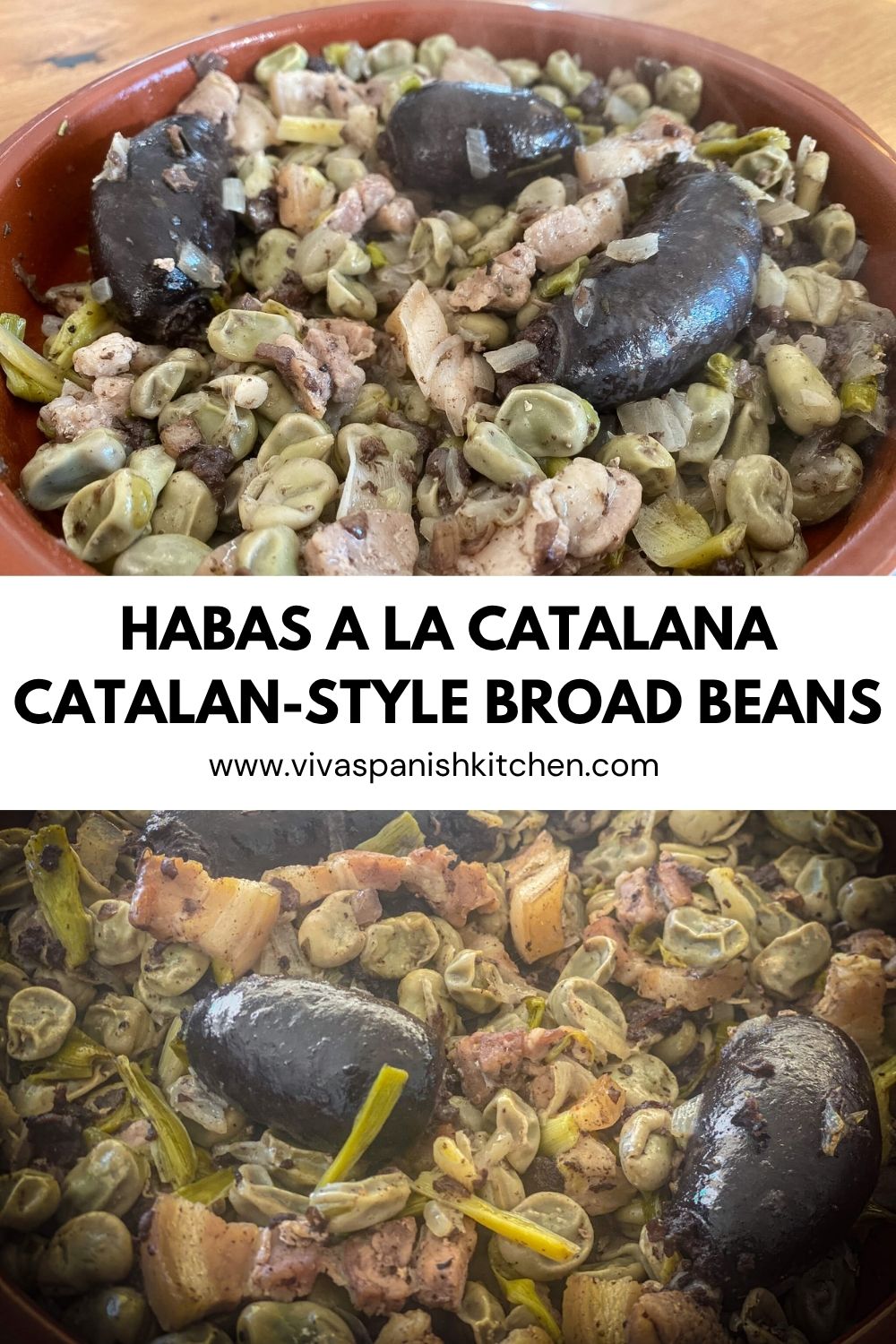
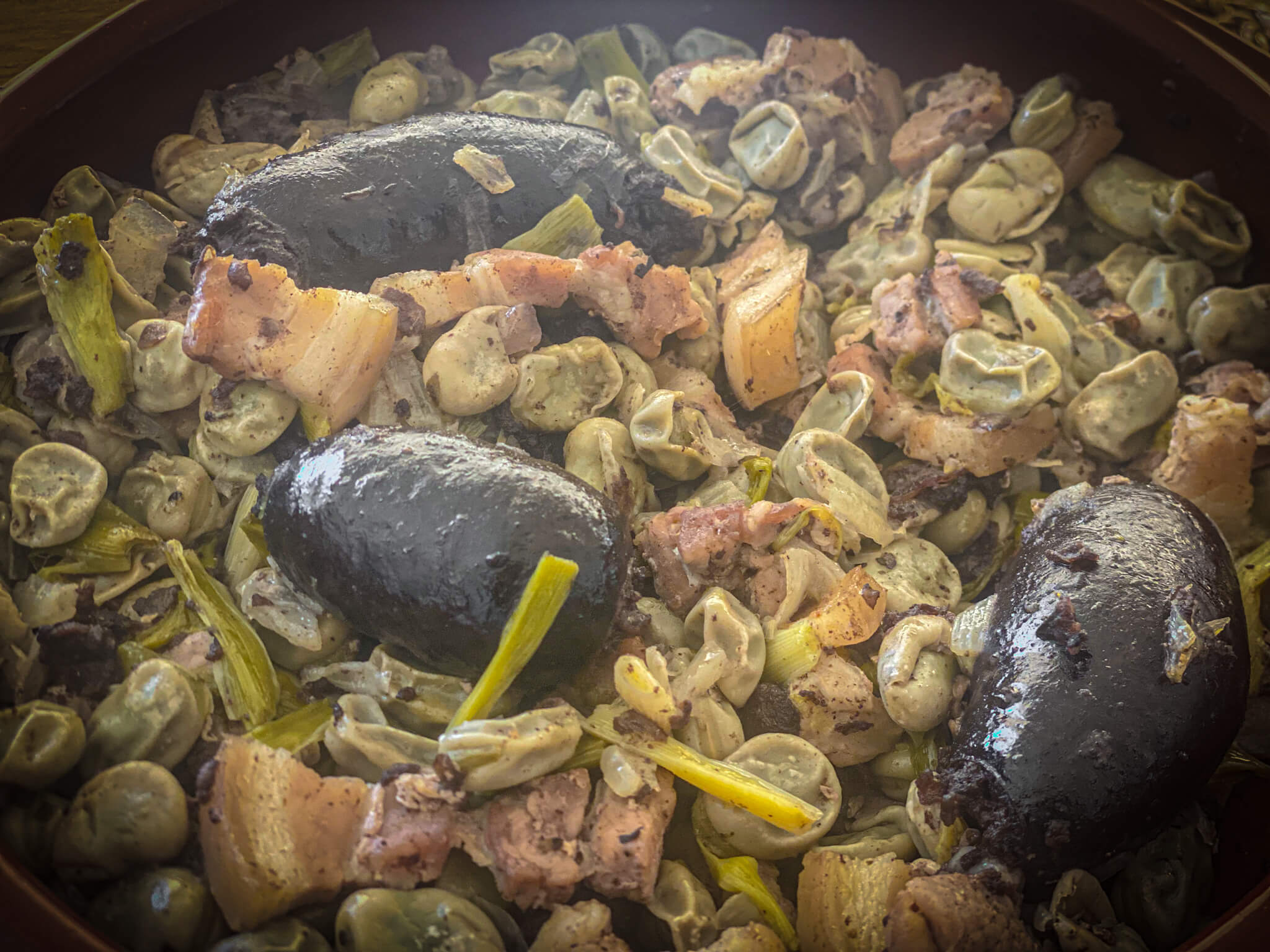
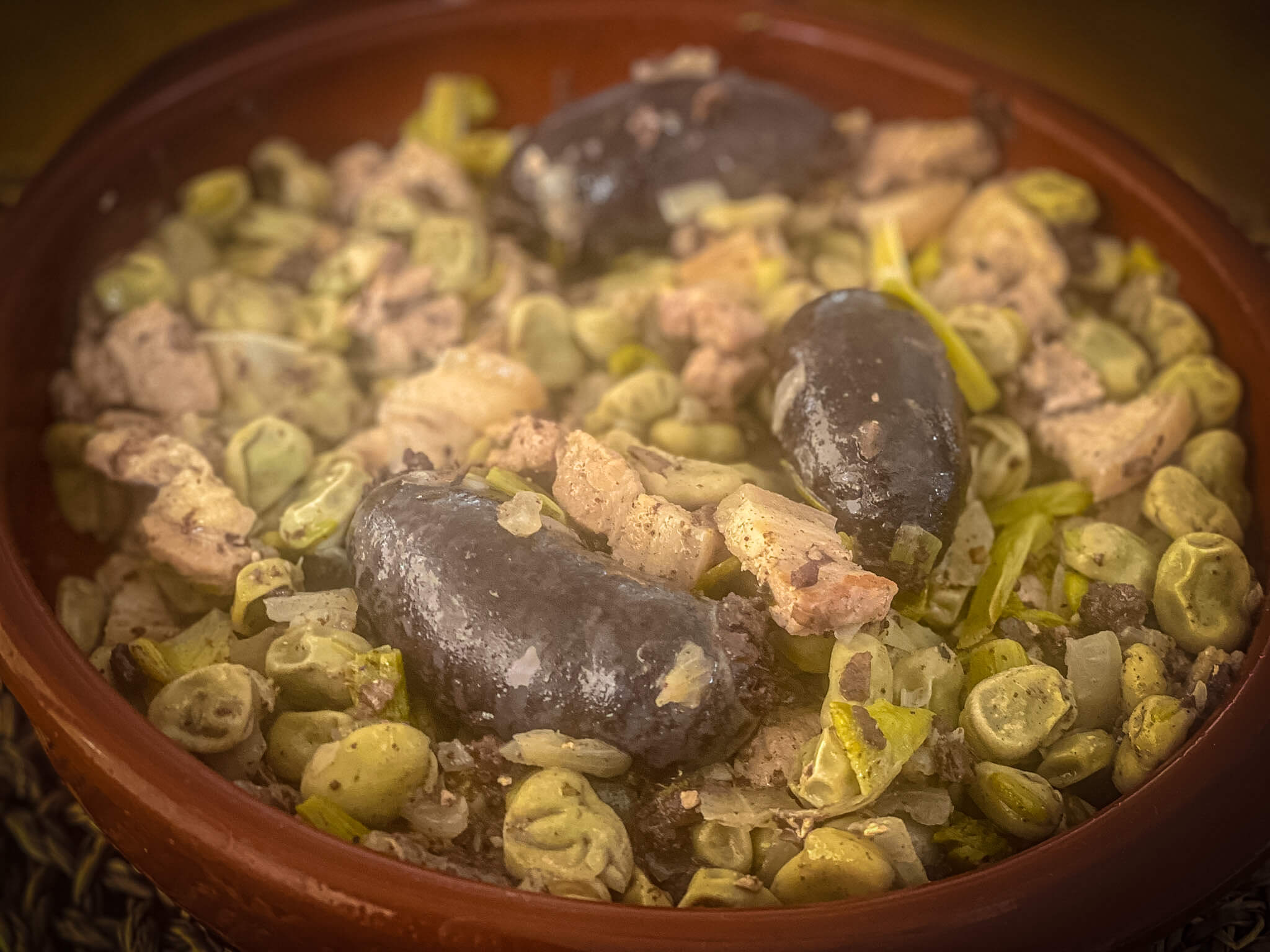
Habas a la Catalana: Authentic Catalan-Style Aromatic Broad Beans is a beautiful example of how simple ingredients can create a dish with remarkable depth. Fresh broad beans are slowly cooked with tender spring garlic, onion, pork, herbs, white wine and a small splash of sweet anise or Moscatel. The result is fragrant, savory and gently sweet, with the aromas becoming beautifully concentrated as everything cooks together.
Habas a la Catalana: Authentic Catalan-Style Aromatic Broad Beans
The Magic of Catalan Garden Roots: Why Habas a la Catalana Captured My Culinary Soul
There is a quiet, profound magic in traditional Catalan cooking—a philosophy rooted deeply in la huerta (the vegetable garden) and the rhythms of the land. Dishes in northeastern Spain aren’t created in a vacuum; they are born from what the soil produces at its absolute peak. Habas a la Catalana (Authentic Catalan-Style Aromatic Broad Beans) stands as one of the most brilliant expressions of this farm-to-table heritage.
What Makes This Plate So Fascinating?
What makes Habas a la Catalana captivating is how it transforms ultra-fresh, humble garden ingredients into a dish with extraordinary layers of flavor. At its core, the plate relies on young, tender spring broad beans and delicate green spring garlic—ingredients straight from the garden that carry a natural sweetness and crispness.
Rather than masking these fresh flavors, Catalan tradition elevates them through slow-cooked balance:
-
The Savory Base: Sliced pork belly and local morcilla (blood sausage) render their rich fats into the pan, creating a deeply savory liquid foundation.
-
The Aromatic Lift: A splash of sweet anise or Moscatel paired with a sprig of fresh rosemary cuts through the richness, infusing the soft beans with a fragrant, herbal-sweet aroma trapped beneath a covered lid.
-
The Art of Simplicity: Like many rustic Spanish comfort dishes, it relies not on complex modern tricks, but on thoughtful timing, gentle temperatures, and respect for raw seasonal produce.
Cooking this dish in a traditional earthenware cazuela de barro keeps the heat gentle and steady, letting the broad beans soak up the wine and aromatic steam until every bite tells a story of the Catalan countryside.
My Catalan Classics to Explore
If you love the harmony of fresh produce, rich cured meats, and authentic Mediterranean soul, dive deeper into these beloved regional specialties from our kitchen:
-
Catalan Esqueixada: A bright, refreshing shredded salt cod salad tossed with ripe garden tomatoes, onions, and black olives.
-
Easy Chickpeas with Catalan Sausage: A quick, hearty pan-fry connecting tender legumes with rich local botifarra or Catalan sausage.
-
Traditional Catalan San Esteban Cannelloni: Luxurious pasta tubes stuffed with slow-roasted festive meats and baked under a silken béchamel sauce.
-
Pollo al Ast: Catalonia’s legendary rotisserie chicken, roasted with citrus, lard, and aromatic herbs for juicy meat and glass-like crispy skin
Ingredients
| Metric Amount | Imperial Amount | Core Ingredient | Preparation |
|---|---|---|---|
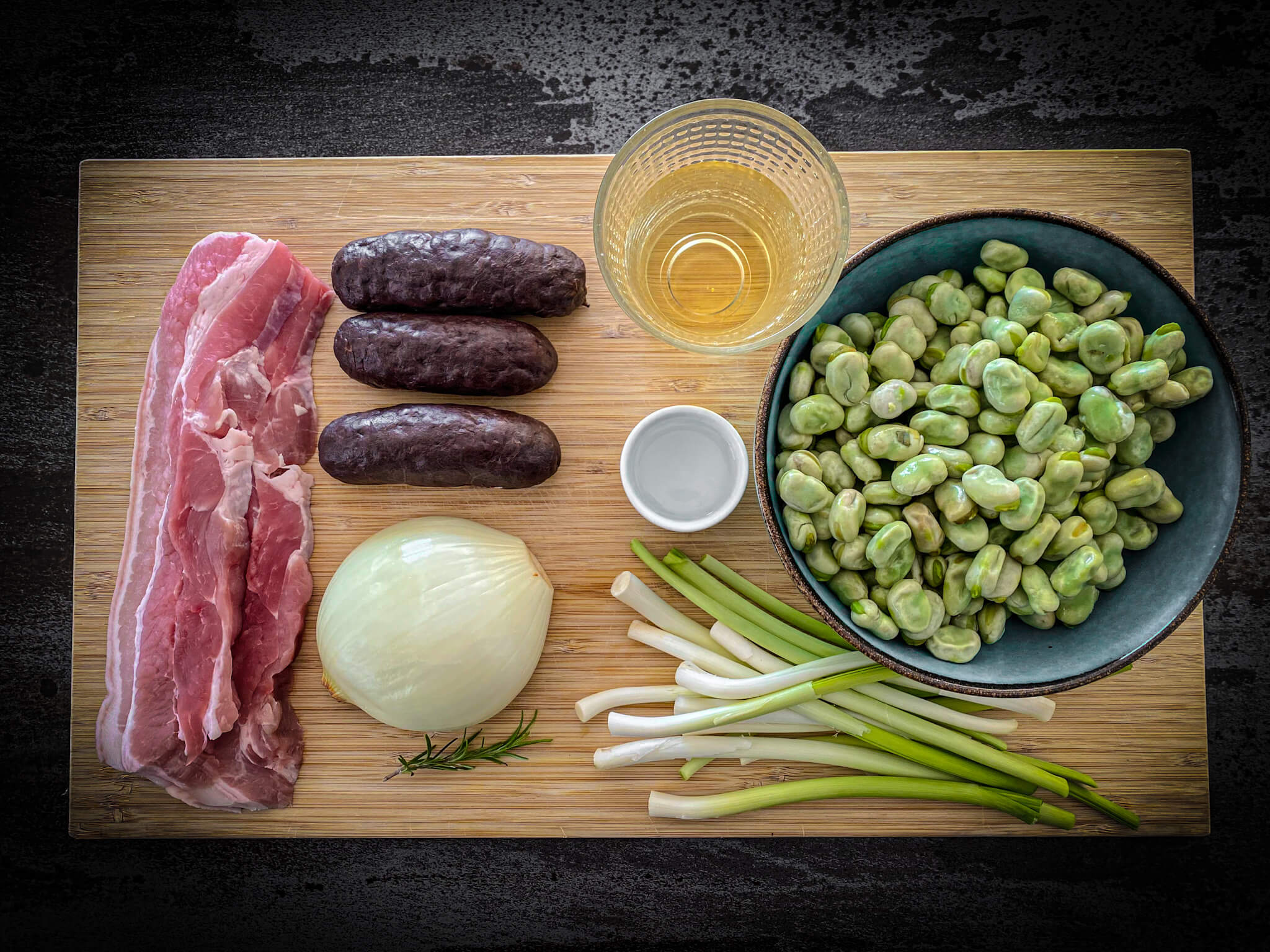
| 400 g | 14 oz | Fresh broad beans | Shelled |
| 180 g | 6.3 oz | Fresh pork belly | Cut into small pieces |
| 180 g | 6.3 oz | Spanish blood sausage | |
| 60 g | 2.1 oz | Fresh garlic | Cut into 2–3 cm pieces |
| 1/2 medium | 1/2 medium | Onion | Finely diced |
| 120 ml | 4 fl oz | Dry white wine | For deglazing |
| 20 ml | 0.7 fl oz | Sweet anise or Moscatel | For aromatic flavor |
| 1 sprig | 1 sprig | Fresh rosemary | Whole sprig |
| As needed | As needed | Extra virgin olive oil | For cooking |
Instructions
1. Brown the pork belly and blood sausage
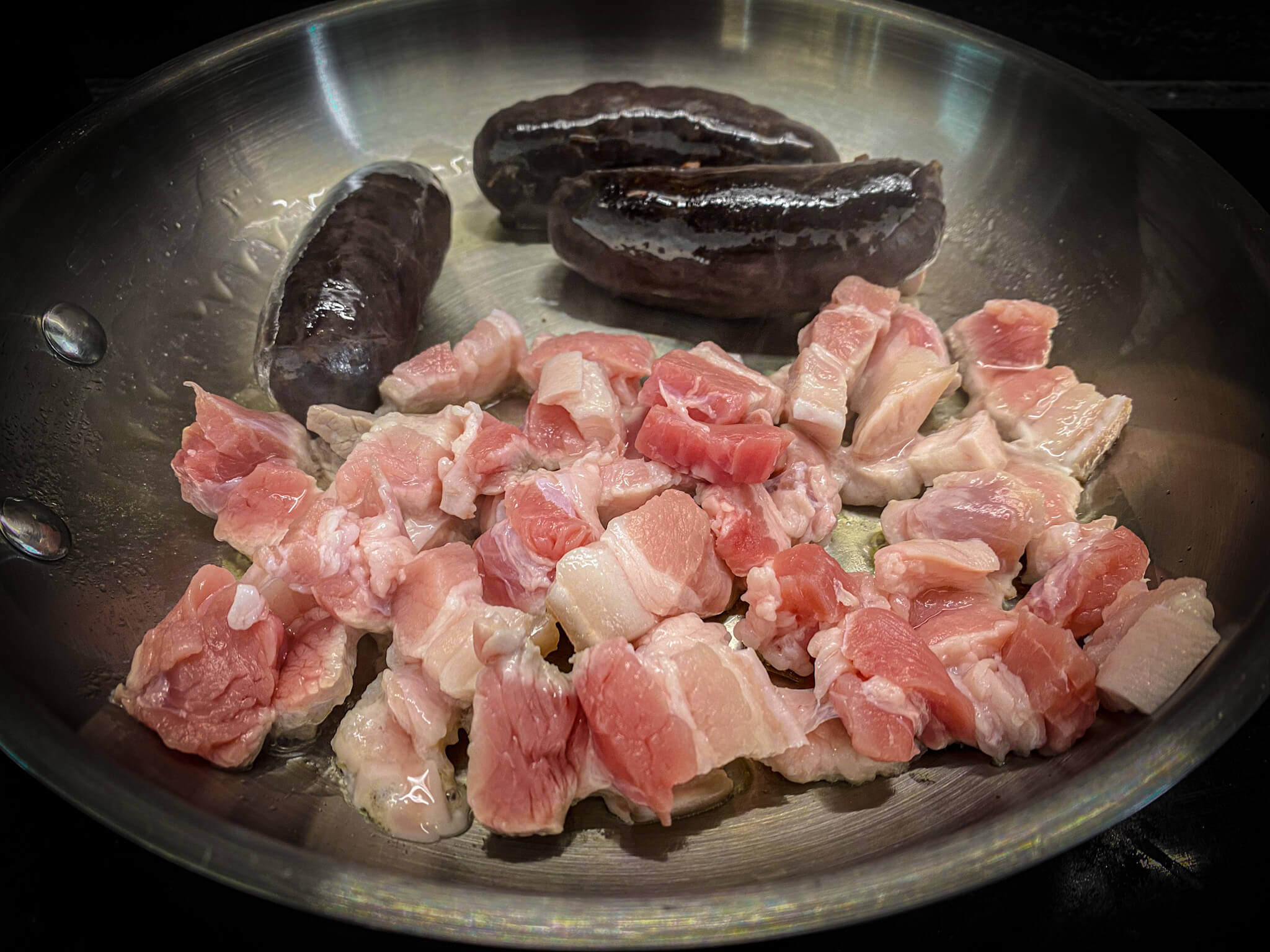
Heat a wide pan over medium heat with only a very small amount of olive oil. Add the pork belly and cook for approximately 5–7 minutes, allowing it to release some of its own fat and become nicely browned.
Add the blood sausage and cook gently until lightly browned, turning it carefully so it does not break apart. After about 3–4 minutes, remove the blood sausage and reserve it on a plate.
Keeping the blood sausage out of the pan during the following steps helps prevent it from breaking apart too early.
2. Slowly cook the onion
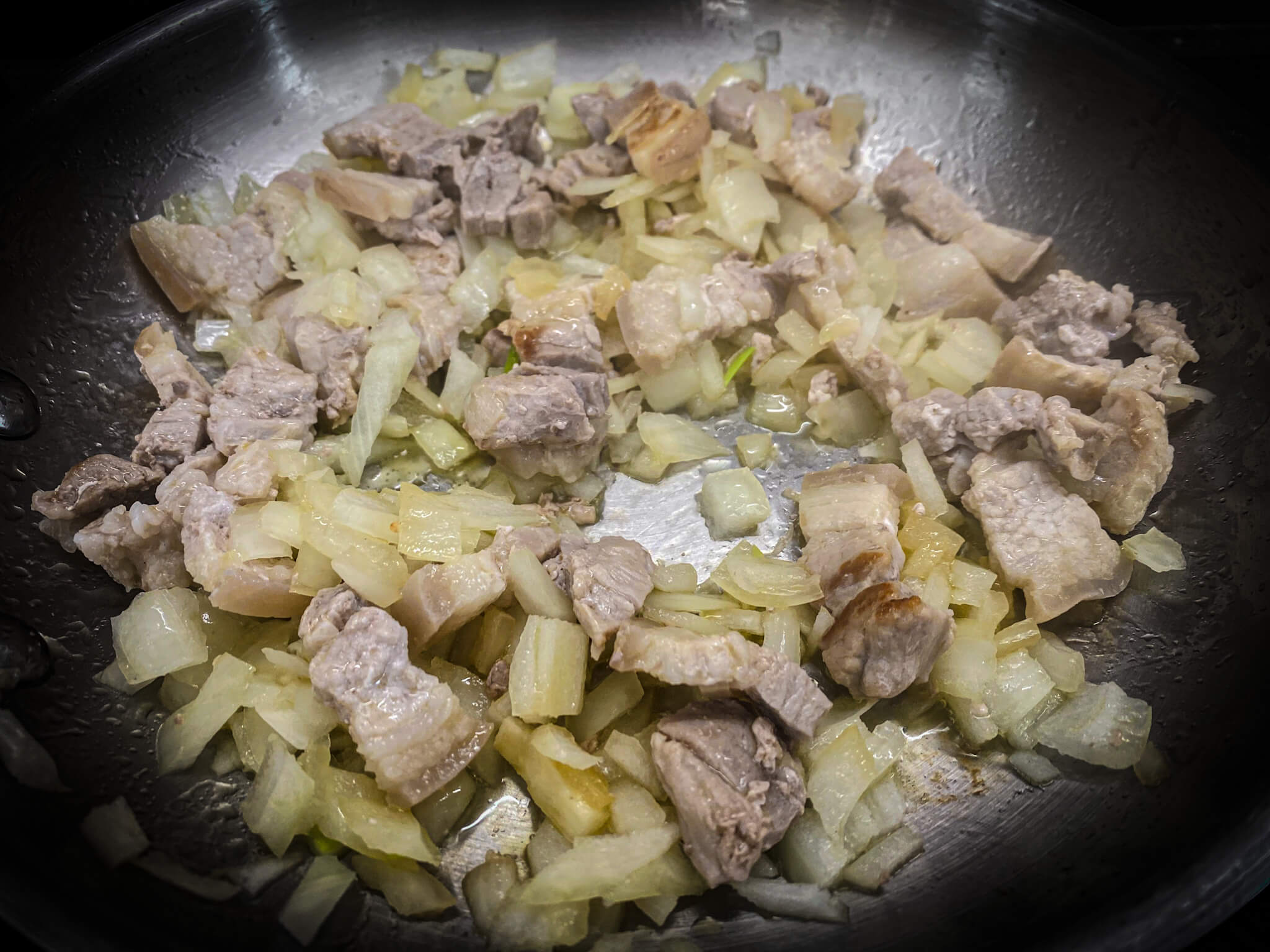
Keep the pork belly in the pan and add the finely diced onion to the rendered fat. Cook over medium-low heat for 6–8 minutes, stirring occasionally.
Let the onion soften slowly rather than browning aggressively. The fat released by the pork will give the onion a wonderfully savory base.
3. Add the fresh garlic
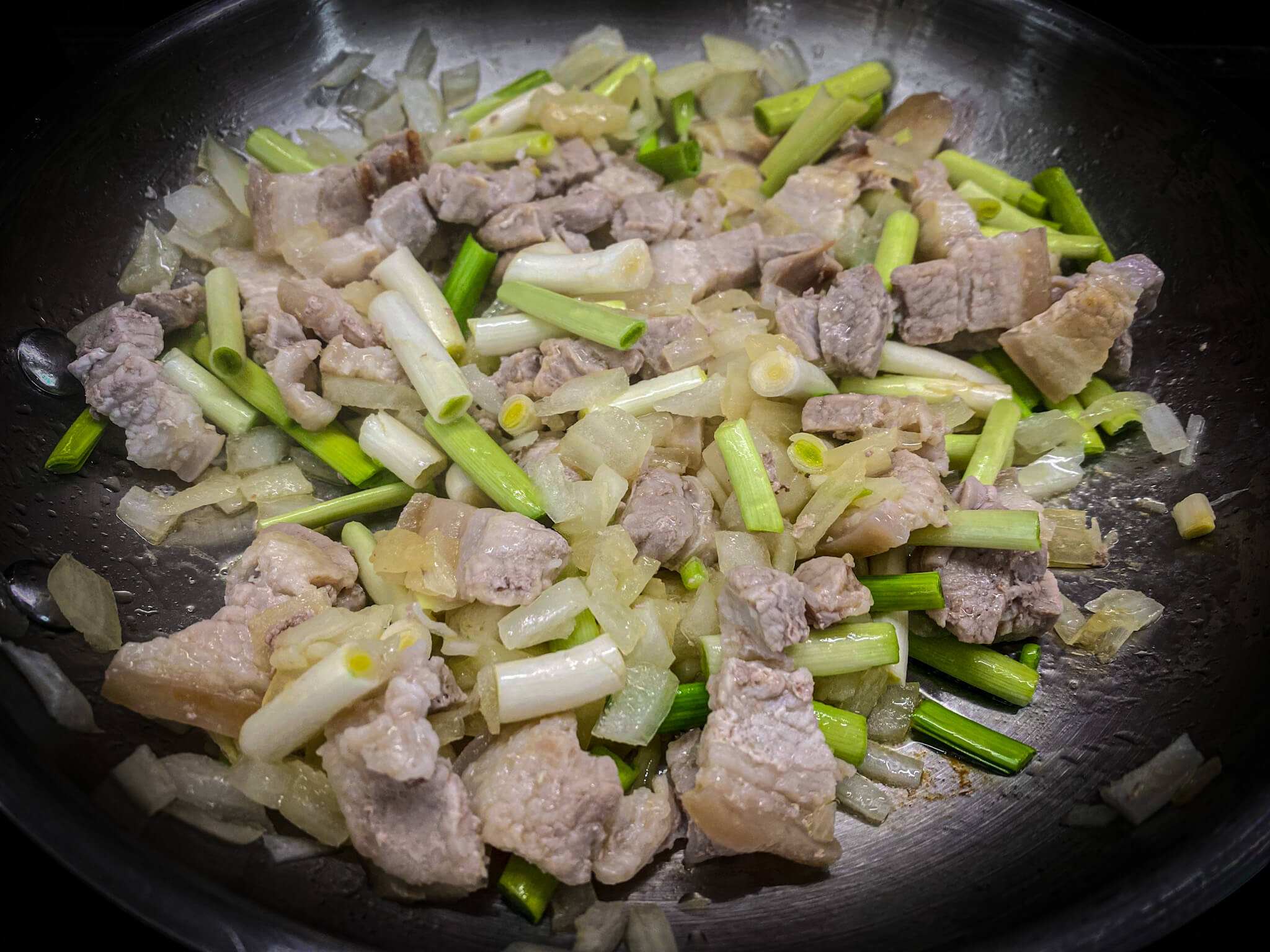
Add the fresh garlic, cut into 2–3 cm pieces, and cook gently for another 3–4 minutes.
Fresh garlic is delicate, so keep the heat moderate. It should soften and become aromatic without burning, as burnt garlic can quickly make the entire dish bitter.
4. Add the broad beans
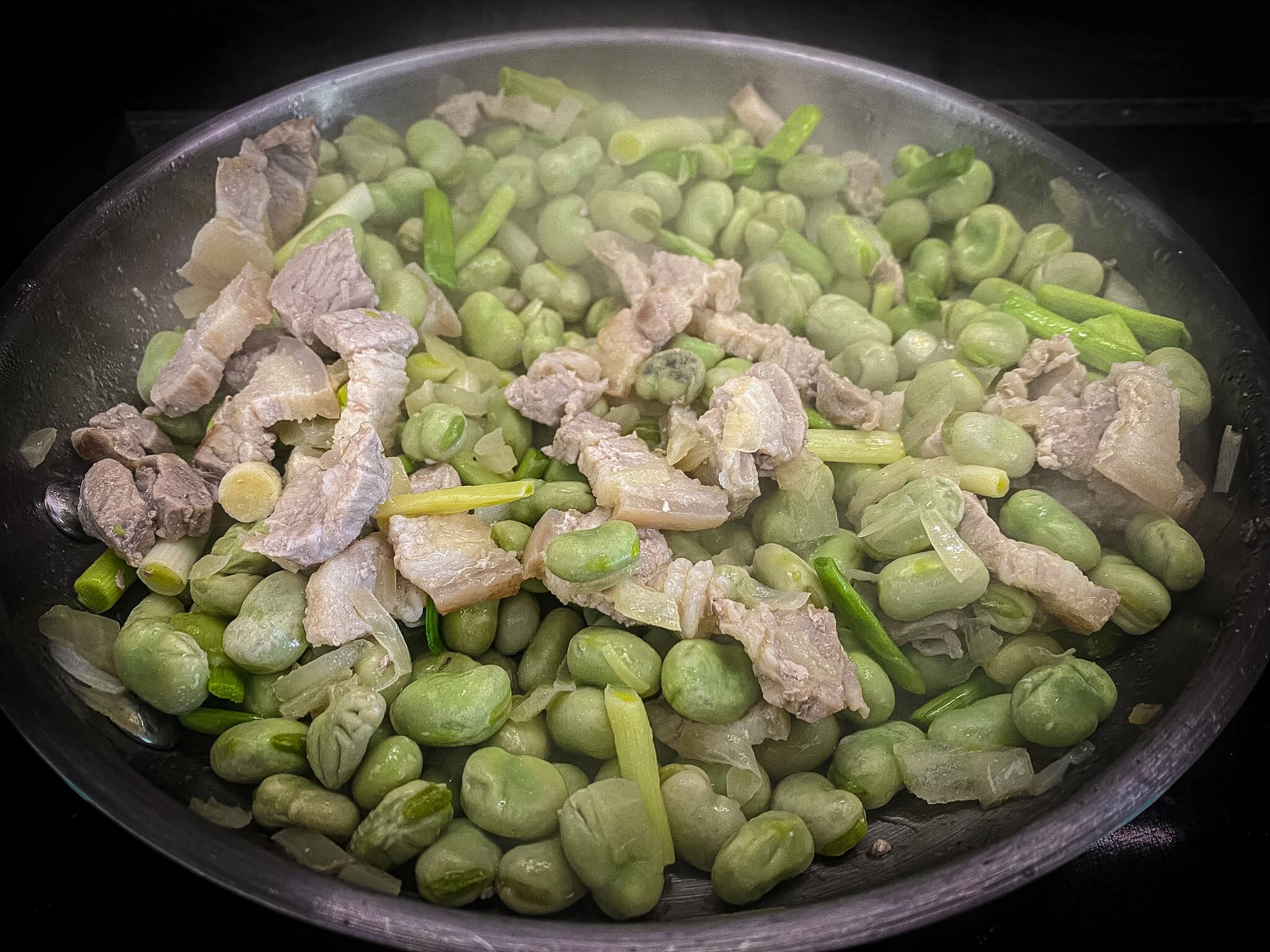
Add the shelled broad beans and stir gently so they become coated with the flavors already in the pan. Cook for approximately 3–4 minutes, allowing them to begin absorbing the pork, onion and garlic flavors.
5. Return the blood sausage and add the aromatics
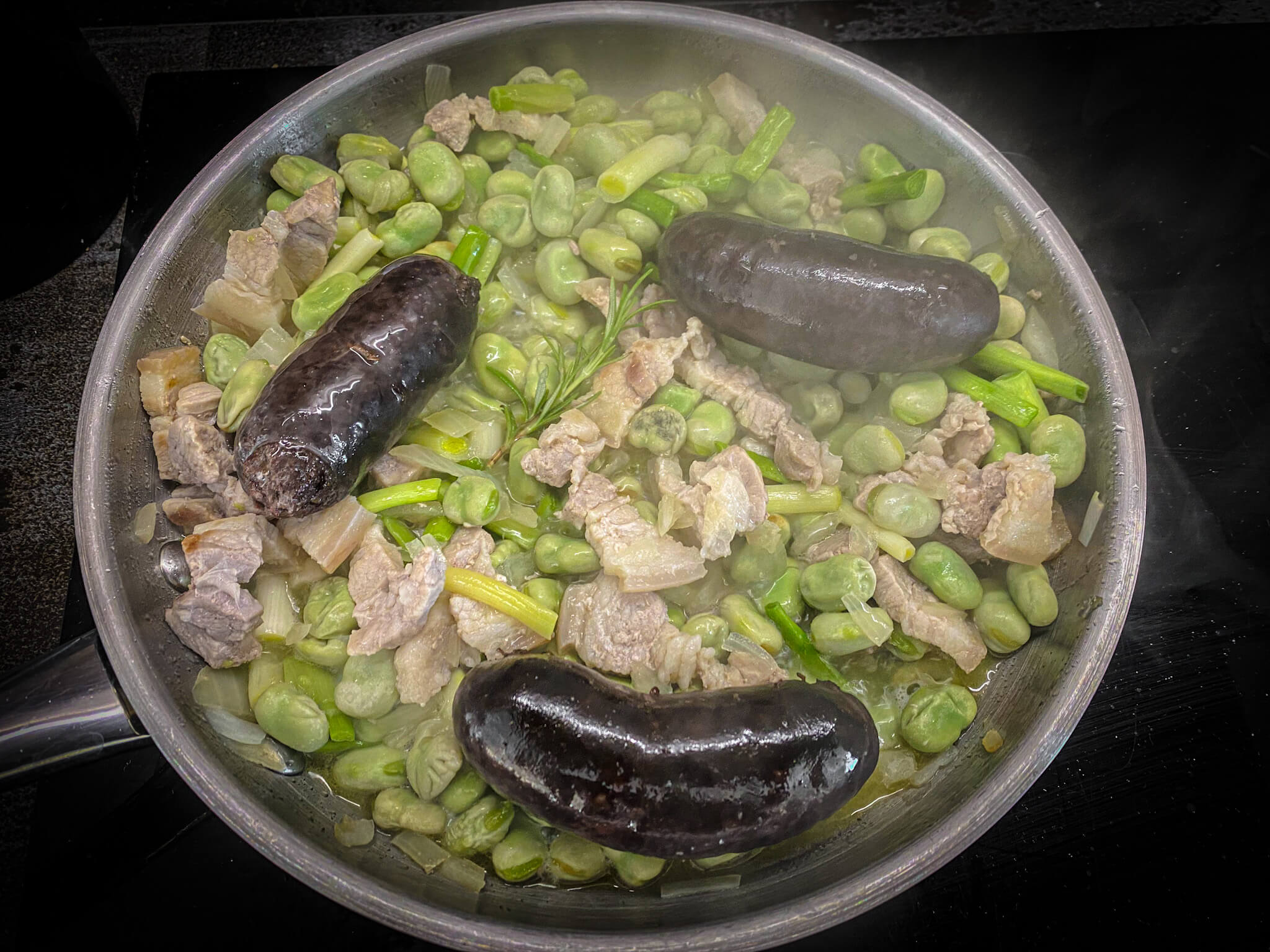
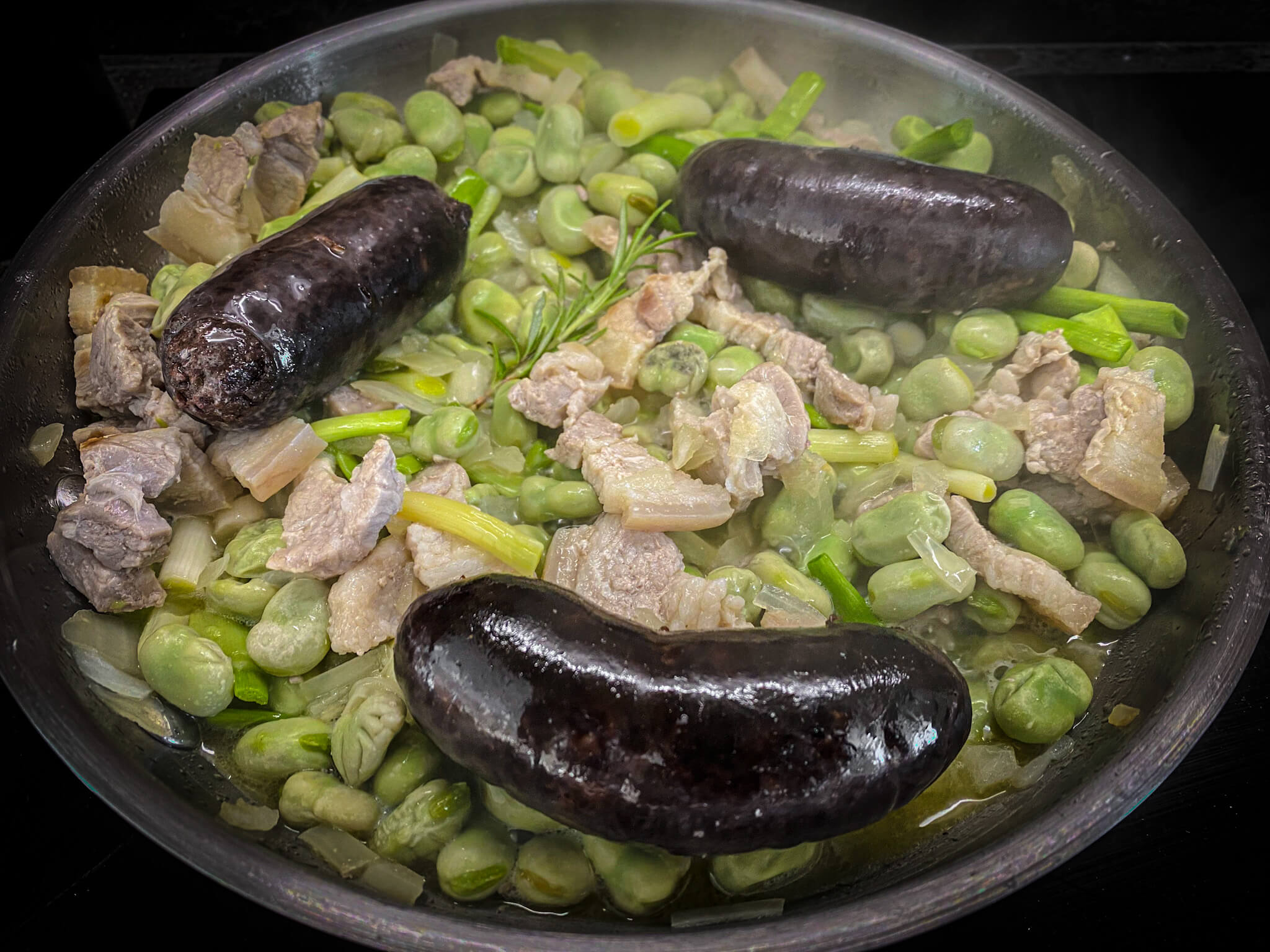
Carefully return the blood sausage to the pan, placing the pieces on top of the beans and vegetables rather than directly against the bottom of the pan.
Add the rosemary sprig, white wine and sweet anise or Moscatel. Increase the heat slightly and allow the liquids to bubble for approximately 3–5 minutes.
Take the time to deglaze the bottom of the pan properly, scraping up the flavorful browned juices. This is where the wine and anise begin to combine with the savory flavors from the pork.
6. Cover and cook gently
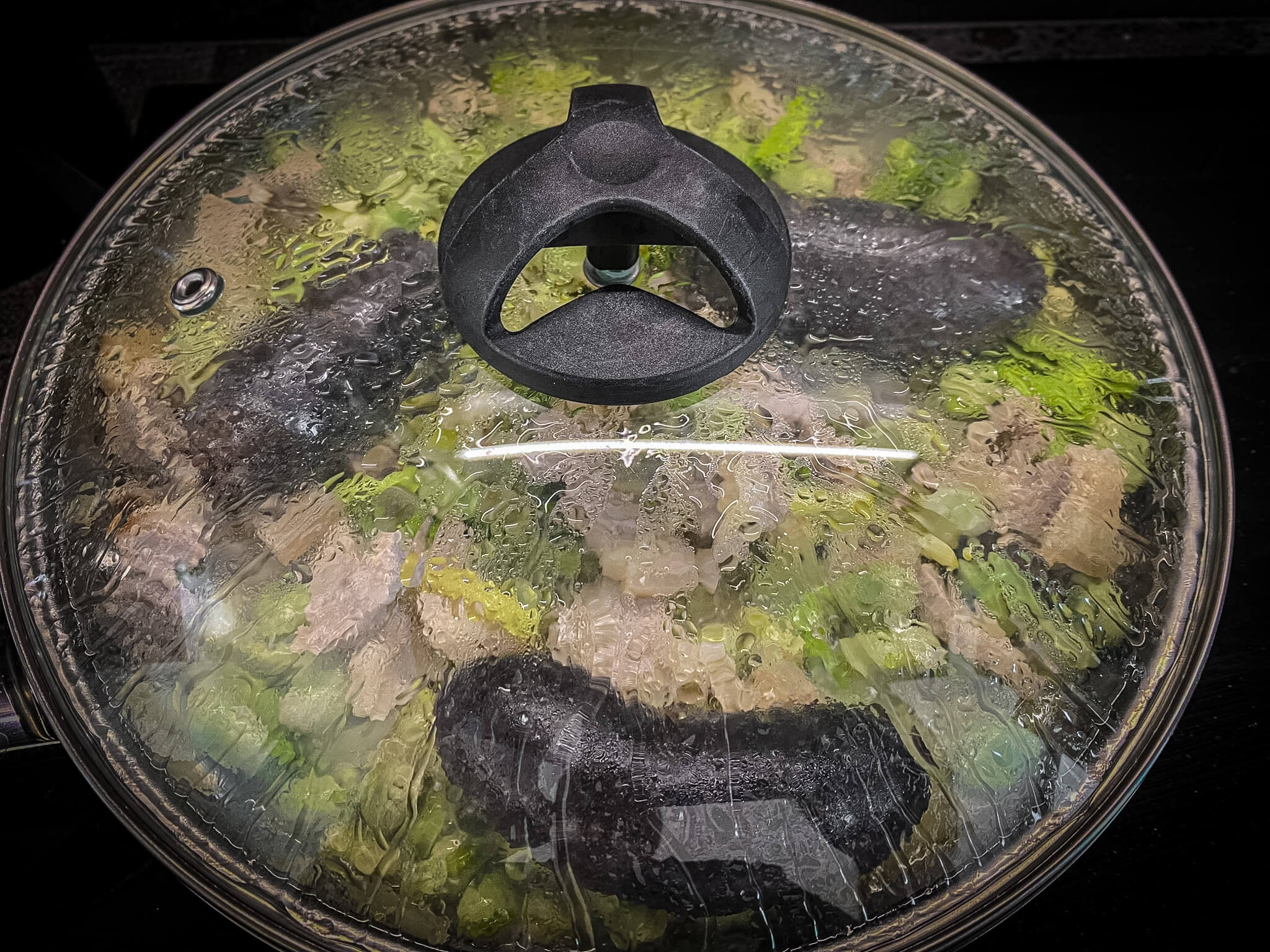
Once the alcohol has evaporated, lower the heat to low and cover the pan. Let the broad beans cook gently for approximately 20–25 minutes, allowing them to soften in their own juices.
The covered pan is important because it traps the aromas of the wine, anise and rosemary and allows them to circulate through the beans. Stir occasionally, but do so very gently, especially around the blood sausage.
If the pan becomes too dry, add a small splash of water or light chicken stock. There should be enough moisture to prevent the vegetables and beans from catching on the bottom, but Habas a la Catalana should not become a soupy dish.
7. Finish and serve
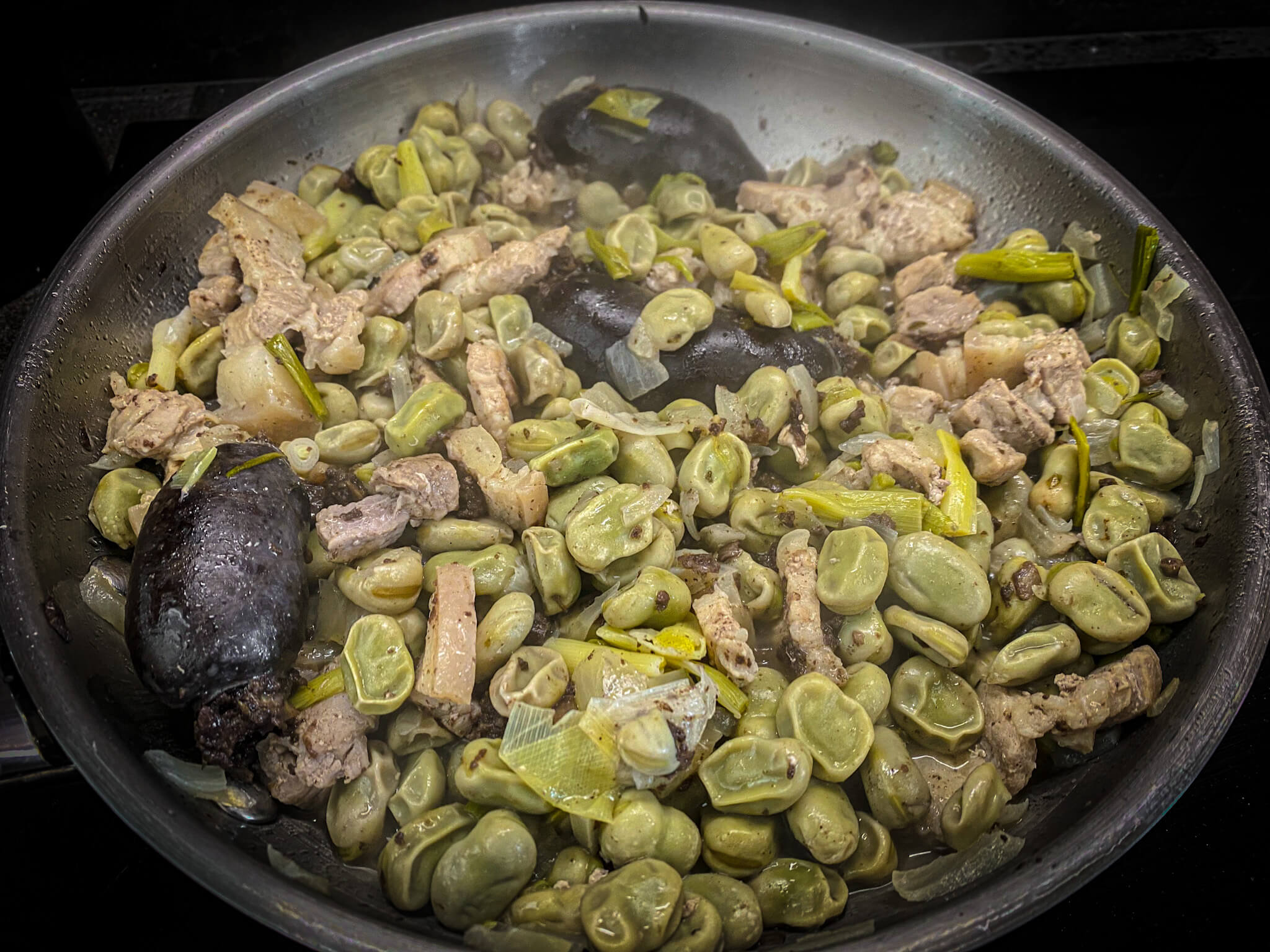
When the broad beans are tender and the sauce has reduced into a flavorful coating around the ingredients, remove the rosemary sprig and turn off the heat.
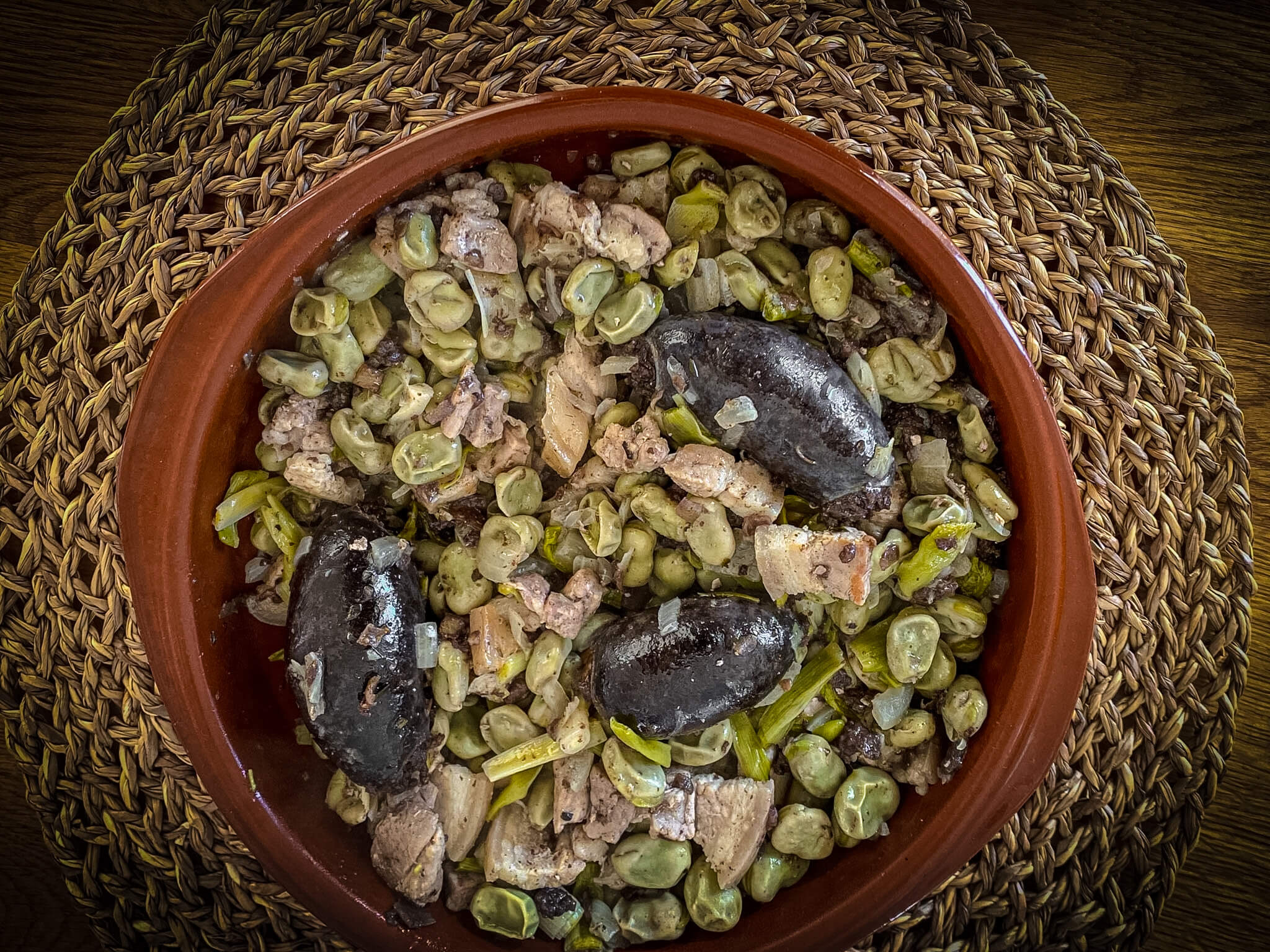
Let the dish rest for 5 minutes before serving. Carefully transfer the Habas a la Catalana to a clay cazuela if you have one. The earthenware keeps the dish warm and suits the rustic character of this traditional Catalan preparation.
A little blood sausage breaking apart during cooking is perfectly fine. In fact, when some of it melts into the beans, its rich flavor becomes distributed throughout the whole dish.
Chef’s Notes for Habas a la Catalana
Why are Habas a la Catalana so aromatic?
The combination of white wine, sweet anise or Moscatel and rosemary gives the dish its distinctive fragrance. The covered cooking also traps those aromas, allowing them to infuse the broad beans rather than simply evaporating away.
Why should the blood sausage be reserved during the first part of cooking?
Blood sausage is delicate and can break apart easily. Reserving it while the onion, garlic and beans cook helps maintain recognizable pieces. A little breaking apart later is not a problem because it enriches the sauce.
Why should Habas a la Catalana be cooked covered?
Covering the pan creates a gentle, moist cooking environment. The beans cook in their own juices while the aromas of the wine, anise and rosemary circulate inside the pan, creating a much more fragrant final dish.
Can some of the blood sausage break apart while cooking?
Yes. There is no need to worry if a small amount breaks down. It actually adds flavor and richness to the beans. The important thing is simply to avoid stirring aggressively.
Common Mistakes Cooking Habas a la Catalana
Breaking the blood sausage too early: Blood sausage is fragile, so handle it gently and reserve it during the first stage. Returning it later and placing it on top of the beans helps keep the pieces intact, although a little breaking apart is completely welcome.
Burning the fresh garlic or onion: Fresh garlic and spring garlic can burn much more quickly than expected. Keep the heat moderate and allow the vegetables to soften slowly in the pork fat rather than trying to brown them aggressively.
Skipping the deglazing: The browned juices left from the pork contain a huge amount of flavor. When the wine and anise are added, scrape the bottom of the pan thoroughly so those concentrated flavors become part of the sauce.
Cooking uncovered for too long: Without the lid, the liquid can disappear before the broad beans are tender. Keep the pan covered during the gentle simmer so the beans cook in their juices and the wine, anise and rosemary aromas remain trapped inside the pan.
Letting the beans catch on the bottom: The dish should become rich and concentrated, but it should never taste burnt. Cook over low heat and add a small splash of water or stock if the pan becomes too dry.
Ingredient Swaps & Variations on Habas a la Catalana
Fresh broad beans: Frozen broad beans can work when fresh beans are unavailable. Thaw them first and adjust the cooking time because they generally need less cooking.
Sweet anise or Moscatel: Either works beautifully. Sweet anise gives a more pronounced aromatic character, while Moscatel brings a softer, fruity sweetness.
Fresh garlic: If fresh garlic is unavailable, use a small amount of regular garlic, although the delicate flavor of fresh garlic is particularly well suited to this dish.
Clay cazuela: You do not need traditional earthenware to cook the dish. A wide heavy-based skillet works perfectly, but serving it in a clay cazuela is a lovely way to retain the heat at the table.
Recipe Card
Habas a la Catalana: Authentic Catalan-Style Aromatic Broad Beans

abas a la Catalana is traditionally enjoyed as a rustic, aromatic dish where the broad beans are allowed to cook gently in their own juices. The fresh garlic and onion provide the base, while the wine and sweet anise add an unmistakably aromatic character. A sprig of rosemary brings everything together.
The key is gentle cooking after the initial browning. Keeping the pan covered allows the aromas of the wine, anise and rosemary to circulate while the beans become tender without drying out.
Ingredients
- 400 g (14 oz) Fresh broad beans, shelled
- 180 g (6.3 oz) Fresh pork belly, cut into small pieces
- 180 g (6.3 oz) Spanish blood sausage
- 60 g (2.1 oz) Fresh garlic, cut into 2–3 cm pieces
- 1/2 medium Onion, finely diced
- 120 ml (4 fl oz) Dry white wine
- 20 ml (0.7 fl oz) Sweet anise or Moscatel
- 1 sprig Fresh rosemary
- As needed Extra virgin olive oil
Instructions
1. Brown the pork belly and blood sausage
Heat a wide pan over medium heat with only a very small amount of olive oil. Add the pork belly and cook for approximately 5–7 minutes, allowing it to release some of its own fat and become nicely browned.
Add the blood sausage and cook gently until lightly browned, turning it carefully so it does not break apart. After about 3–4 minutes, remove the blood sausage and reserve it on a plate.
Keeping the blood sausage out of the pan during the following steps helps prevent it from breaking apart too early.
2. Slowly cook the onion
Keep the pork belly in the pan and add the finely diced onion to the rendered fat. Cook over medium-low heat for 6–8 minutes, stirring occasionally.
Let the onion soften slowly rather than browning aggressively. The fat released by the pork will give the onion a wonderfully savory base.
3. Add the fresh garlic
Add the fresh garlic, cut into 2–3 cm pieces, and cook gently for another 3–4 minutes.
Fresh garlic is delicate, so keep the heat moderate. It should soften and become aromatic without burning, as burnt garlic can quickly make the entire dish bitter.
4. Add the broad beans
Add the shelled broad beans and stir gently so they become coated with the flavors already in the pan. Cook for approximately 3–4 minutes, allowing them to begin absorbing the pork, onion and garlic flavors.
5. Return the blood sausage and add the aromatics
Carefully return the blood sausage to the pan, placing the pieces on top of the beans and vegetables rather than directly against the bottom of the pan.
Add the rosemary sprig, white wine and sweet anise or Moscatel. Increase the heat slightly and allow the liquids to bubble for approximately 3–5 minutes.
Take the time to deglaze the bottom of the pan properly, scraping up the flavorful browned juices. This is where the wine and anise begin to combine with the savory flavors from the pork.
6. Cover and cook gently
Once the alcohol has evaporated, lower the heat to low and cover the pan. Let the broad beans cook gently for approximately 20–25 minutes, allowing them to soften in their own juices.
The covered pan is important because it traps the aromas of the wine, anise and rosemary and allows them to circulate through the beans. Stir occasionally, but do so very gently, especially around the blood sausage.
If the pan becomes too dry, add a small splash of water or light chicken stock. There should be enough moisture to prevent the vegetables and beans from catching on the bottom, but Habas a la Catalana should not become a soupy dish.
7. Finish and serve
When the broad beans are tender and the sauce has reduced into a flavorful coating around the ingredients, remove the rosemary sprig and turn off the heat.
Let the dish rest for 5 minutes before serving. Carefully transfer the Habas a la Catalana to a clay cazuela if you have one. The earthenware keeps the dish warm and suits the rustic character of this traditional Catalan preparation.
A little blood sausage breaking apart during cooking is perfectly fine. In fact, when some of it melts into the beans, its rich flavor becomes distributed throughout the whole dish.
Notes
4 serves
Nutrition Information:
Yield:
4Serving Size:
1Amount Per Serving: Calories: 584Total Fat: 40gSaturated Fat: 15gUnsaturated Fat: 25gCholesterol: 86mgSodium: 567mgCarbohydrates: 27gFiber: 6gSugar: 3gProtein: 20g