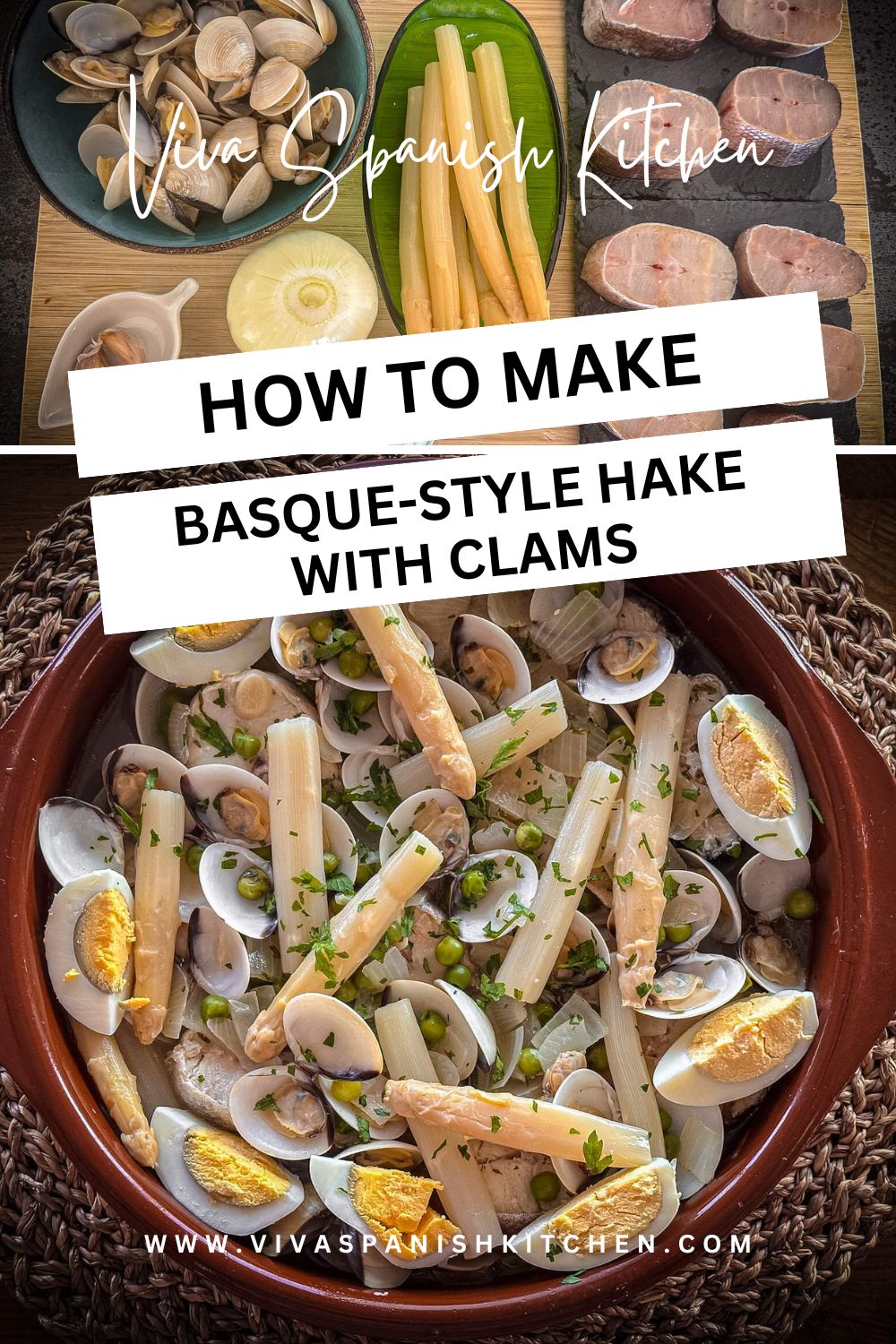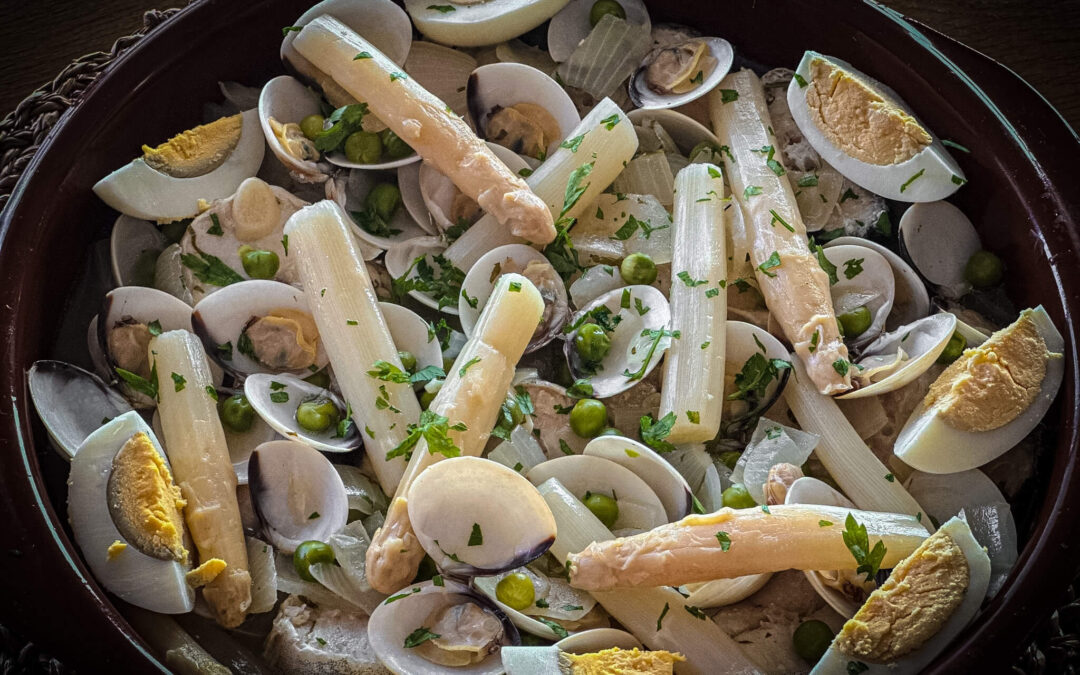
Basque-Style Hake with Clams is a classic Spanish seafood dish that brings the flavors of Spain’s northern coast straight to your table. Tender hake is gently cooked with clams, peas, white asparagus, garlic, parsley, white wine, and fish stock, then finished with wedges of boiled egg. Known in Spain as Merluza a la Vasca, this traditional Basque recipe is simple, elegant, and wonderfully comforting.
Classic Basque-Style Hake with Clams: Merluza a la Vasca
A Taste of the Basque Coast in One Complete Meal
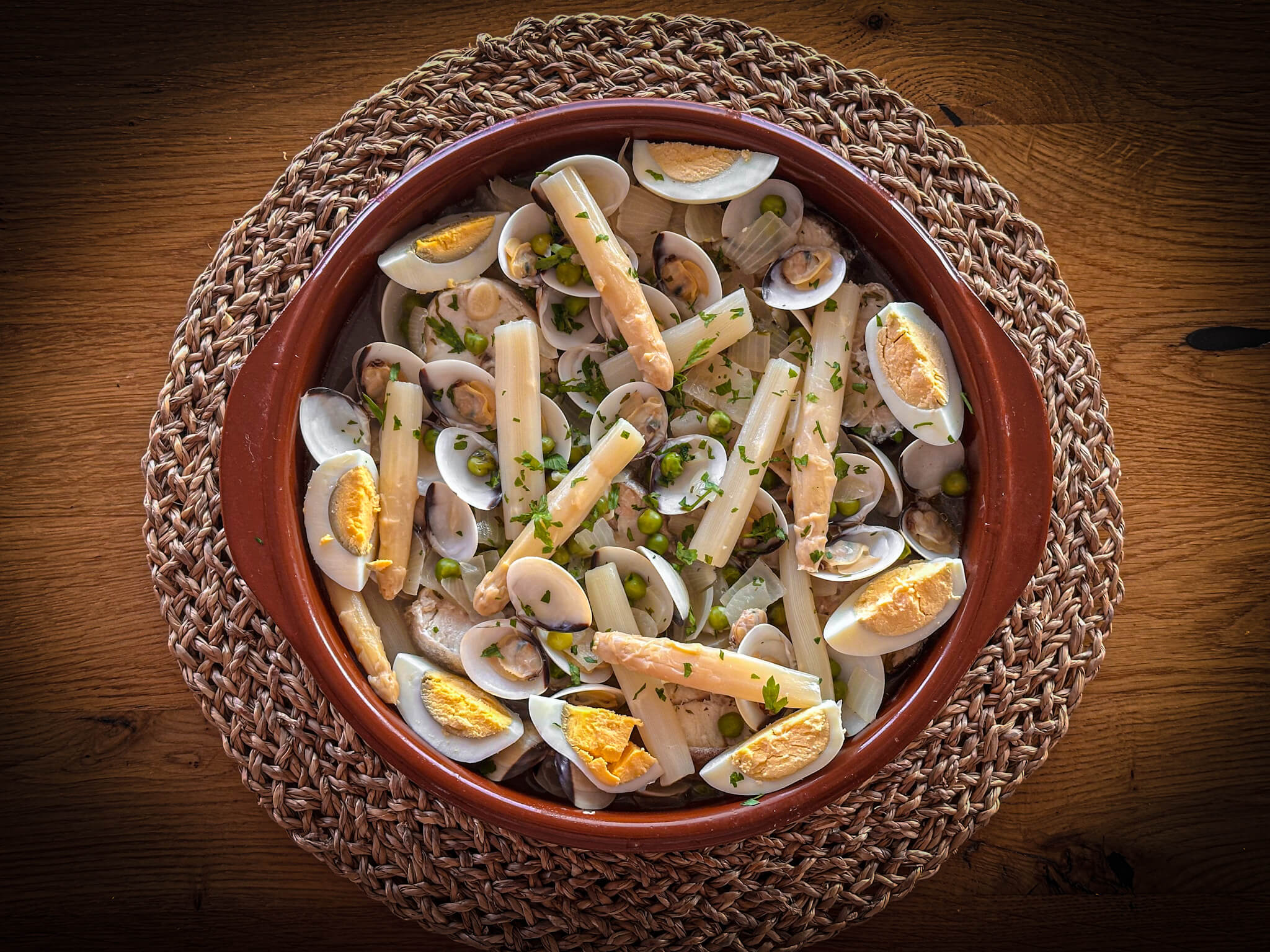
Basque-Style Hake with Clams is one of those traditional Spanish recipes that feels much more complete than its simple ingredients might suggest. Tender hake is gently cooked in a delicate fish broth with clams, peas, white asparagus, garlic, parsley, and white wine, then finished with wedges of boiled egg.
What makes Merluza a la Vasca so special is the way land and sea come together in the same dish. The hake and clams bring the unmistakable flavor of the sea, while peas, asparagus, onion, garlic, and egg add sweetness, richness, and substance. The result is a generous, nourishing dish that needs very little else on the table.
The combination of fish, shellfish, vegetables, and egg is also part of what gives this dish its traditional character. It is not simply a piece of hake served with a sauce; the ingredients become part of one shared cooking broth, each contributing something different to the final flavor.
The white asparagus adds a gentle sweetness, the peas bring freshness, the clams add briny depth, and the boiled egg gives the dish a satisfying richness. Meanwhile, garlic, parsley, olive oil, and white wine create the aromatic foundation that ties everything together.
I especially love serving Merluza a la Vasca in a traditional earthenware cazuela, with plenty of sauce and good crusty bread for dipping. It is the kind of Spanish seafood dish that can go straight from the kitchen to the center of the table and become a complete family meal.
Discover More Spanish Coastal Recipes
This recipe is part of my The Ultimate Guide to Spanish Fish & Seafood Recipes: Coastal Traditions & Classic Recipes, where I explore how Spain’s different coastlines have shaped its extraordinary seafood traditions.
From the Basque Country and the Cantabrian Sea to Galicia, Cádiz, Huelva, and the Mediterranean coast, Spanish fish and seafood recipes reflect the ingredients, landscapes, and traditions of the communities that have lived alongside the sea for generations.
Ingredients
| Metric Amount | Imperial Amount | Core Ingredient | Preparation |
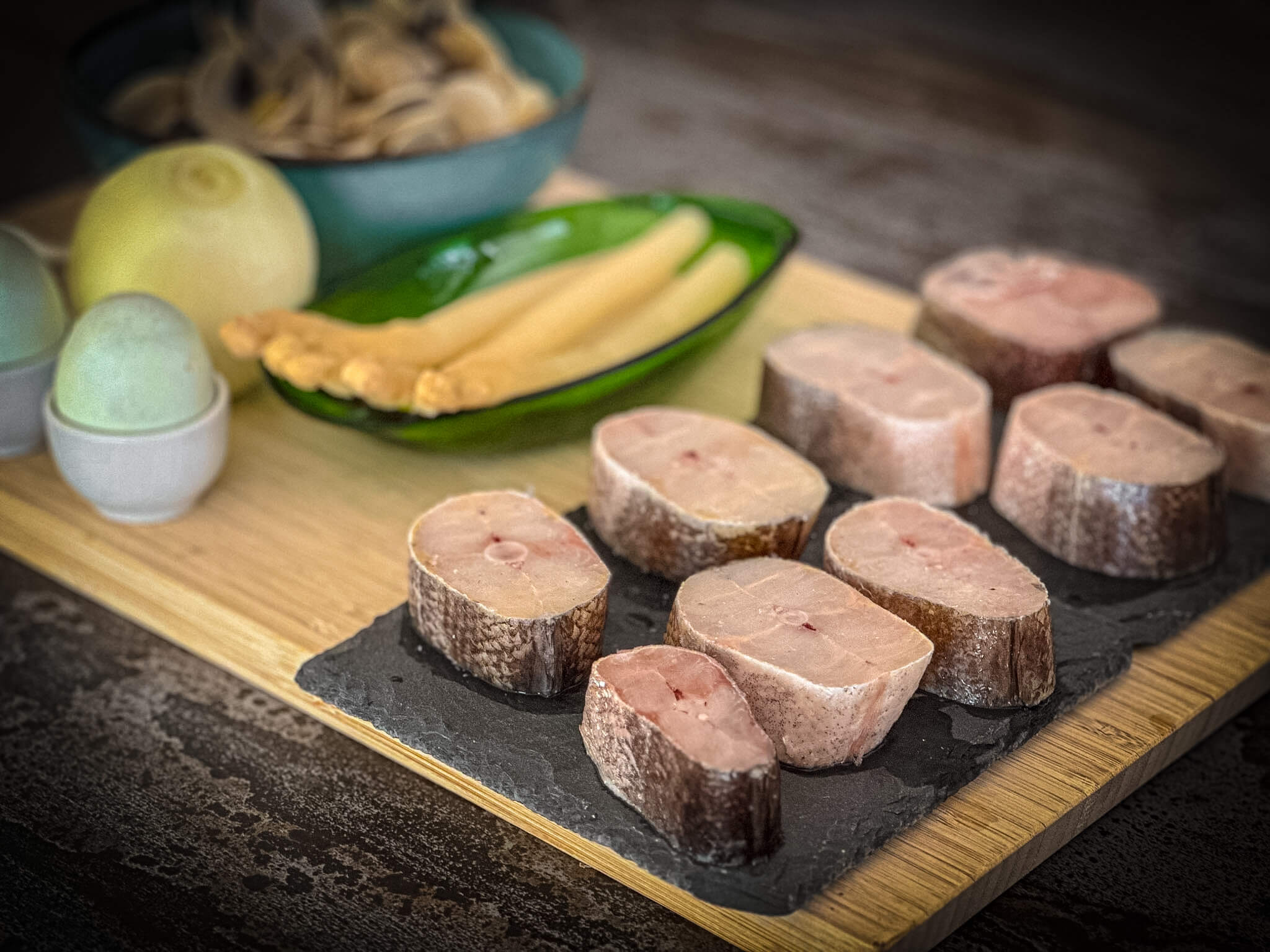
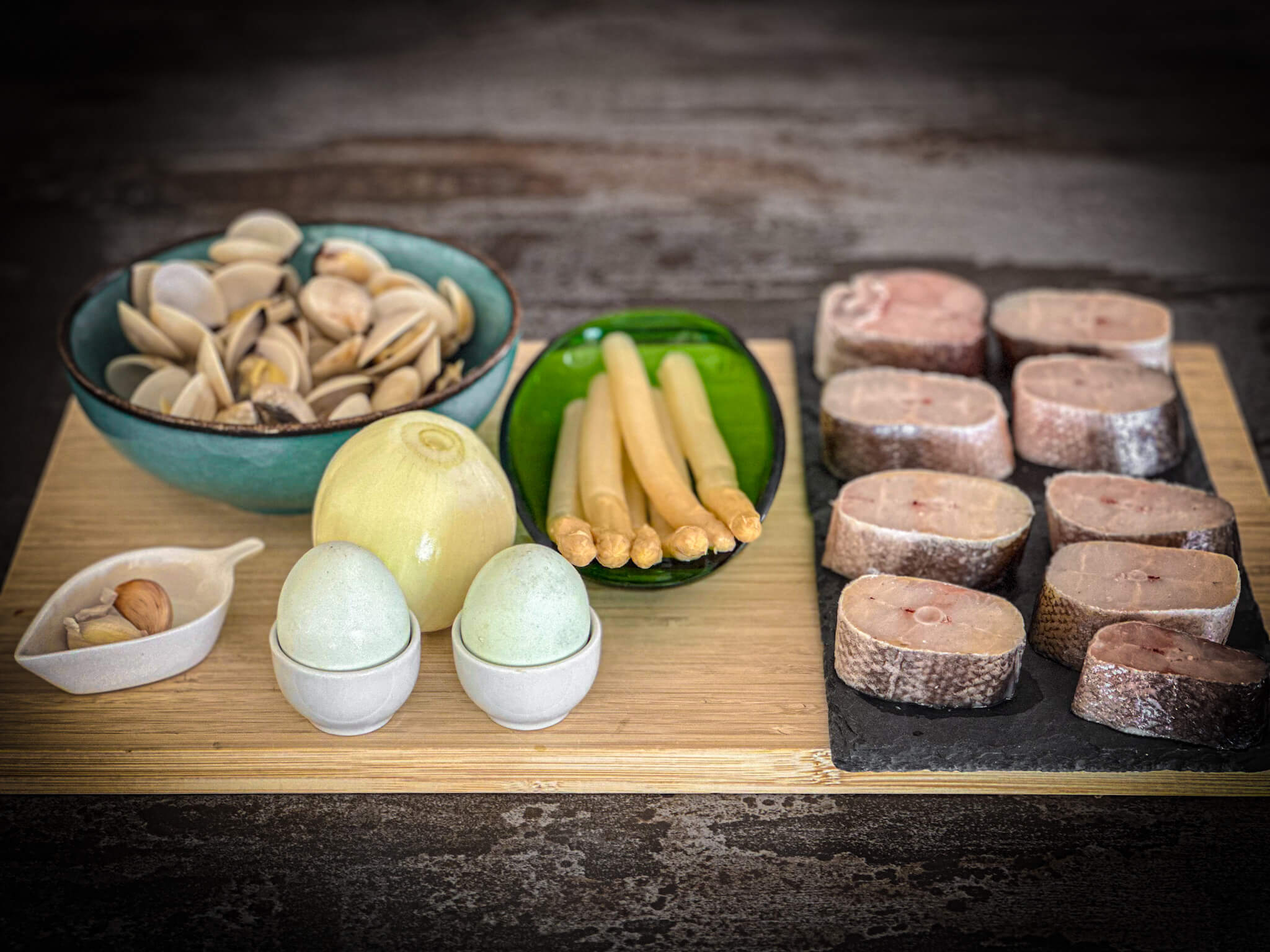
| 500 g | 1.1 lb | Hake steaks | Steaks or medallions, preferably skin-on |
| 400 g | 14 oz | Fresh clams | Purged, thoroughly cleaned |
| 2 units | 2 units | Large eggs | Hard-boiled, shelled, halved |
| 6 units | 6 units | White asparagus spears | Canned, drained |
| 2 units | 2 units | Garlic cloves | Thinly sliced |
| 1 unit | 1 unit | Yellow onion | Finely chopped |
| 100 ml | 3.5 fl oz | Dry white wine | Room temperature |
| 50 g | 1.8 oz | Peas | Frozen |
| 350 ml | 12 fl oz | Fish stock | Warm |
| 15 g | 0.5 oz | Fresh parsley | Small bunch, finely chopped |
| 30 ml | 2 tbsp | Extra virgin olive oil | High quality |
| 1 pinch | 1 pinch | Sea salt | Adjusted to taste |
Instructions
1. Boiling and Preparing the Eggs
Place the eggs in a saucepan and cover them with cold water. Bring to a boil over medium-high heat and cook for 12 minutes. Drain immediately and transfer to a bowl of cold running water to cool. Peel the shells, set the eggs aside, and cut them into halves or wedges once cooled.
2. Building the Aromatic Base
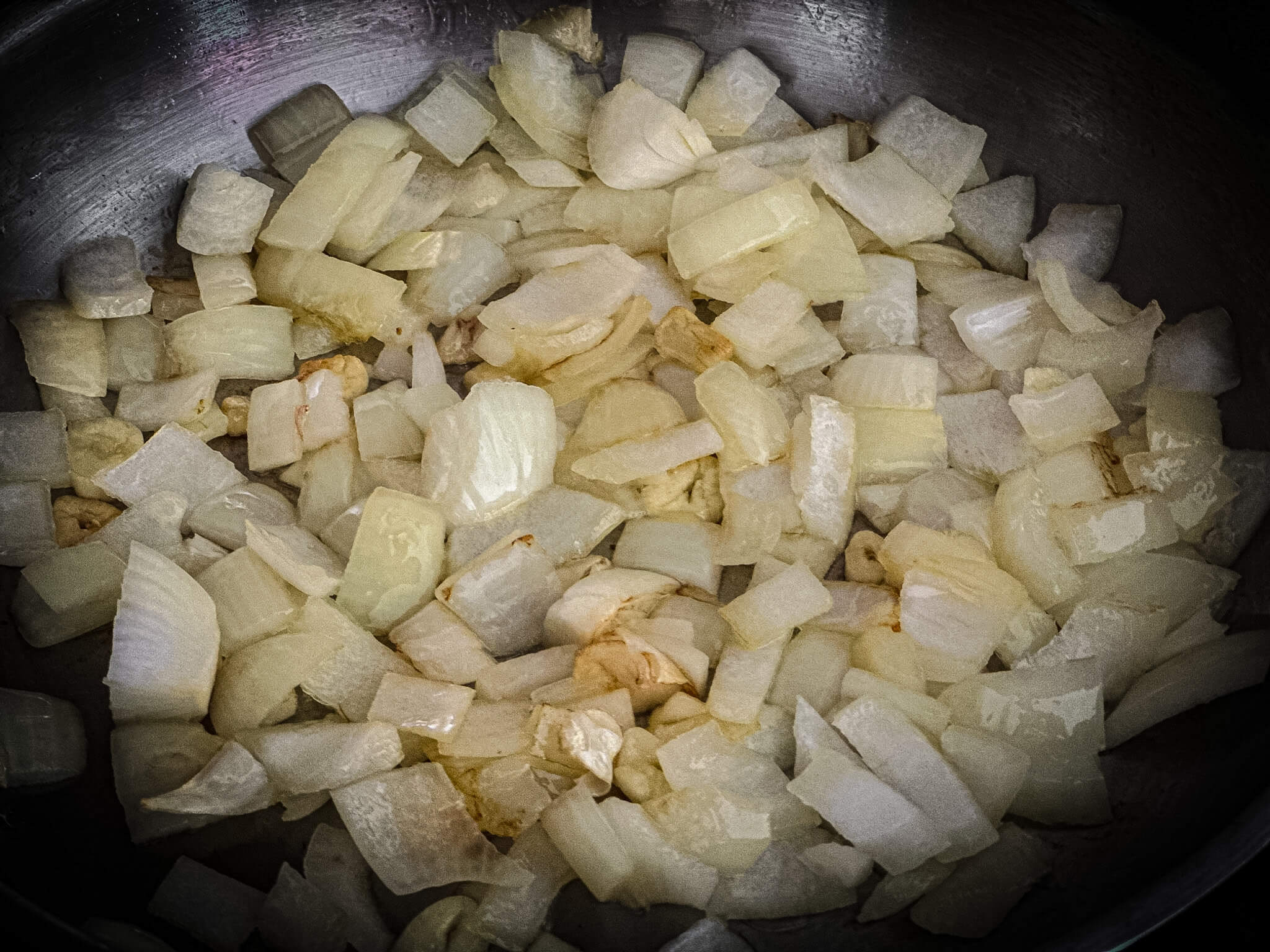
Heat a generous drizzle of extra virgin olive oil in a wide skillet or shallow casserole dish over medium-low heat. Add the sliced garlic and cook gently for 2 to 3 minutes until lightly golden and fragrant, taking care not to burn it. Stir in the finely chopped onion and cook for 7 to 8 minutes, stirring occasionally, until soft and translucent.
3. Deglazing with White Wine
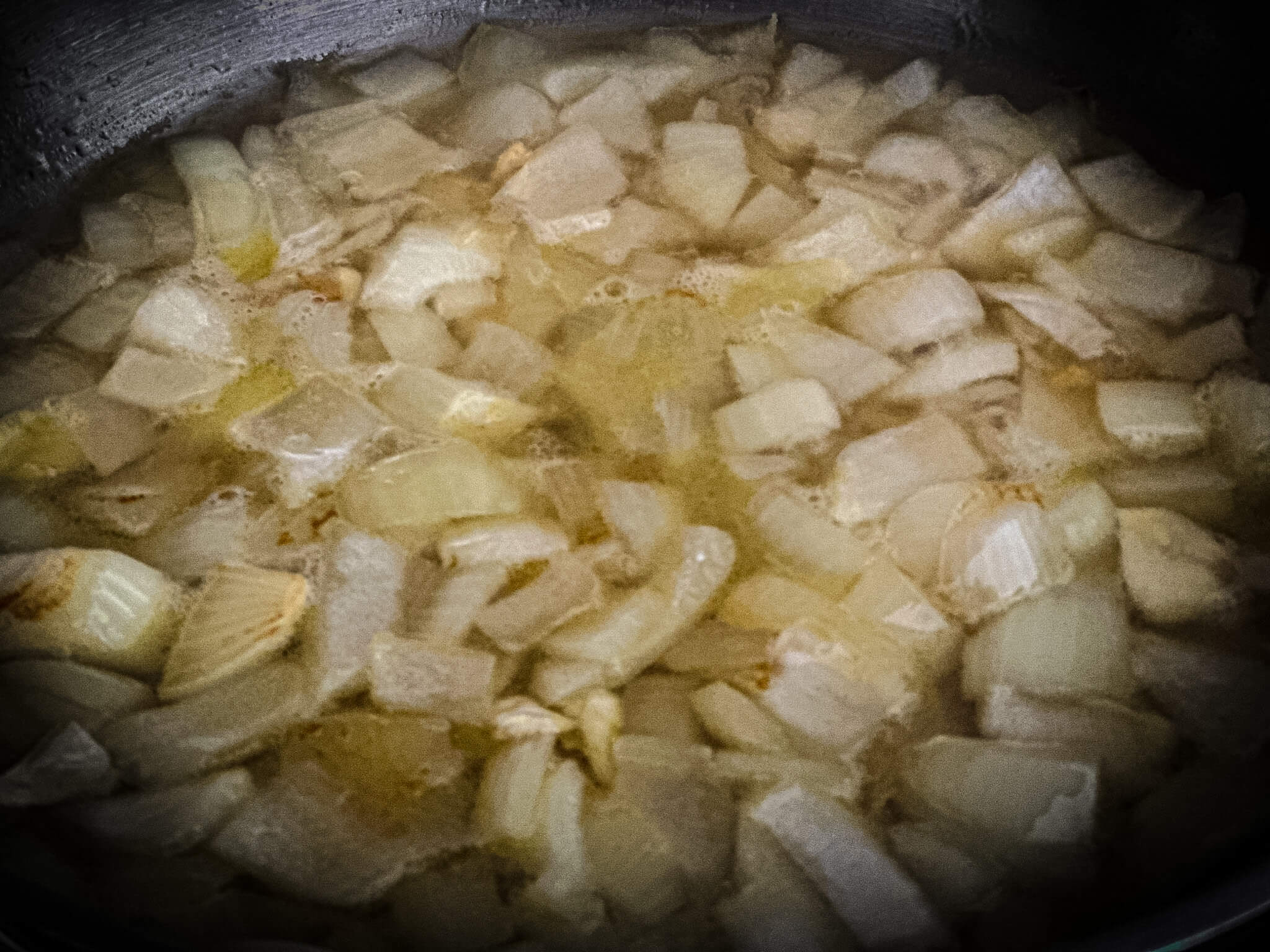
Pour the dry white wine directly into the pan and increase the heat slightly. Scrape the bottom of the pan with a wooden spoon to release any browned flavorful bits, allowing the wine to simmer for 4 to 5 minutes until the alcohol scent completely evaporates and the liquid reduces.
4. Simmering the Stock and Peas
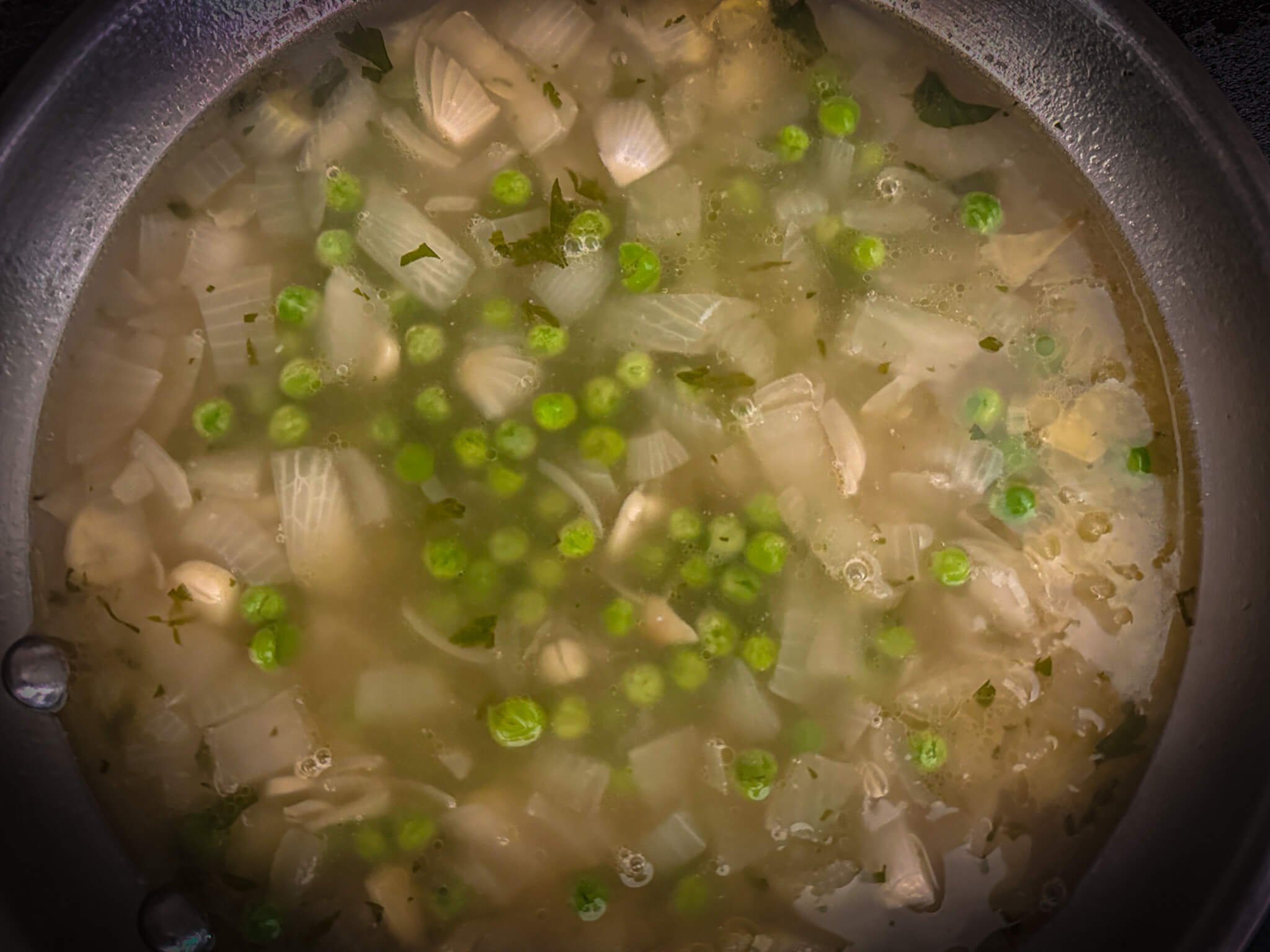
Pour in the warm fish stock and bring the liquid to a gentle simmer. Stir in half of the chopped fresh parsley and add the frozen peas. Simmer gently for 5 minutes so the peas soften and infuse their sweet green flavor into the sauce.
5. Cooking the Hake Medallions
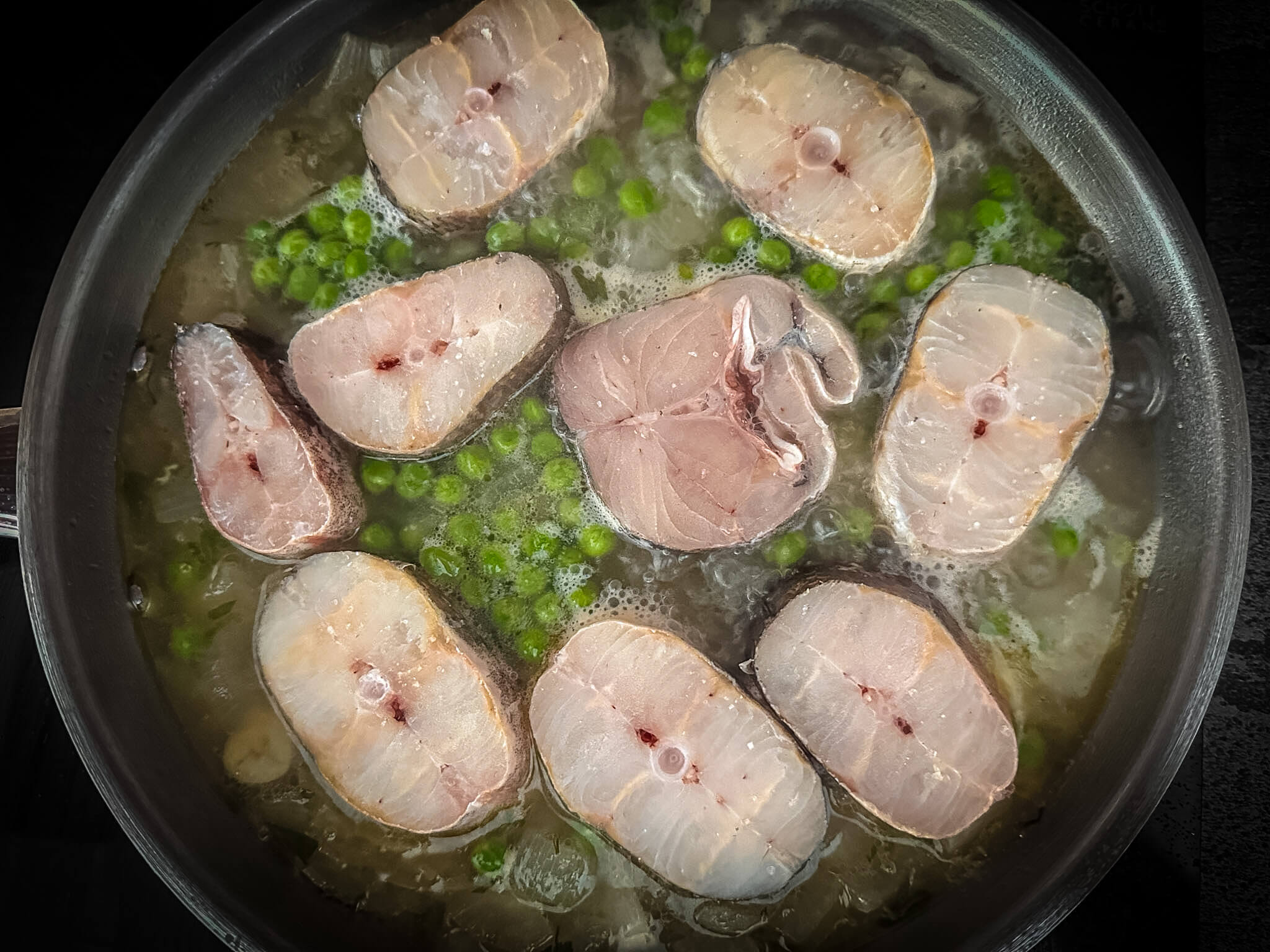
Gently place the hake medallions into the simmering sauce, ensuring they are partially submerged. Cook over low heat for 5 minutes, carefully turning them once if needed. Maintain a light simmer rather than a rolling boil to ensure the hake remains moist and tender.
6. Warming the Clams
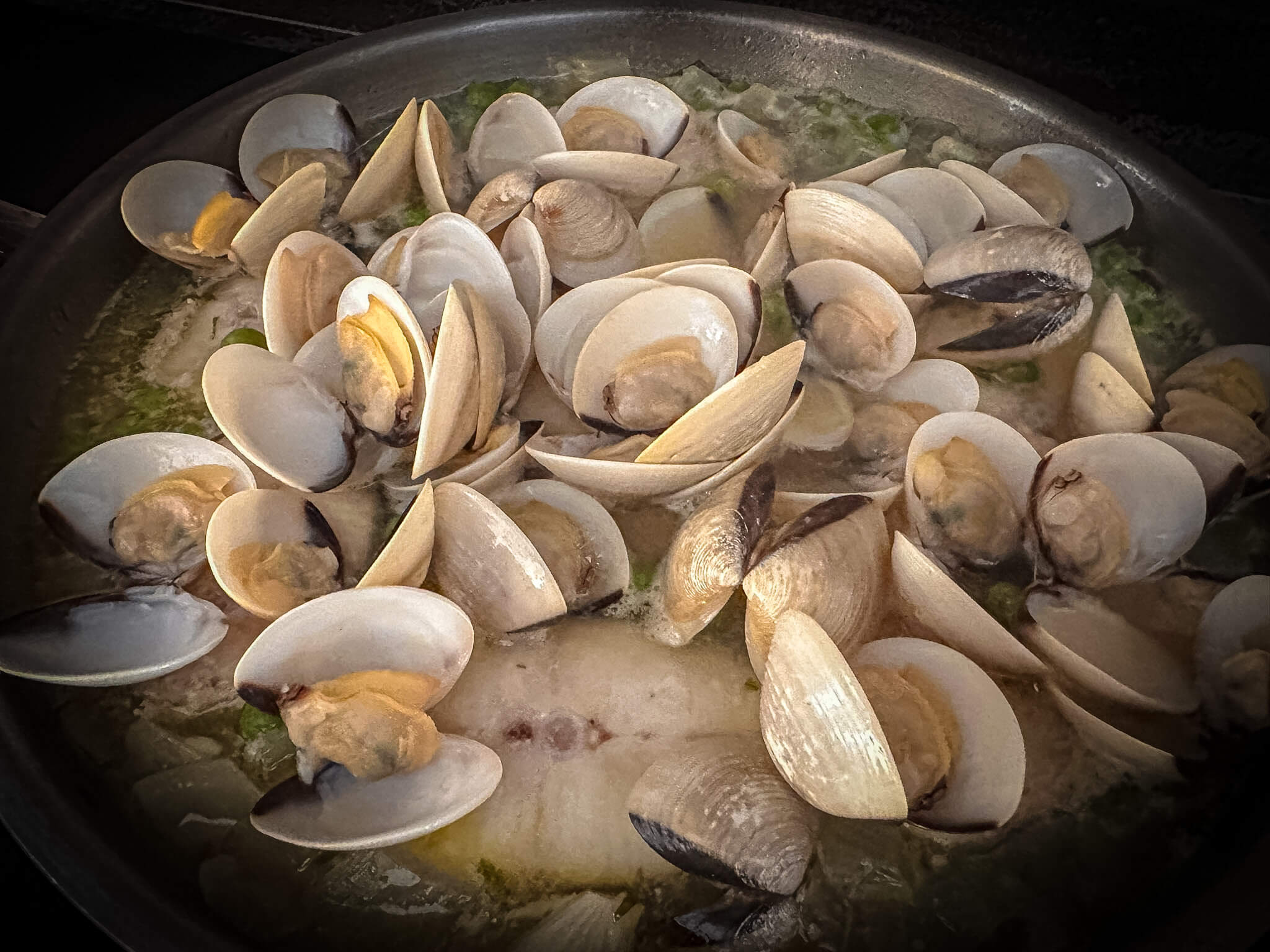
Add the pre-cooked clams into the pan alongside the fish. Immediately turn off the heat, cover the pan with a lid, and let it rest for 2 to 3 minutes so the clams warm through in the residual heat without turning rubbery. (Note: If using fresh raw clams, add them 4 to 5 minutes earlier with the hake and cook covered until they fully open).
7. Assembling and Garnishing
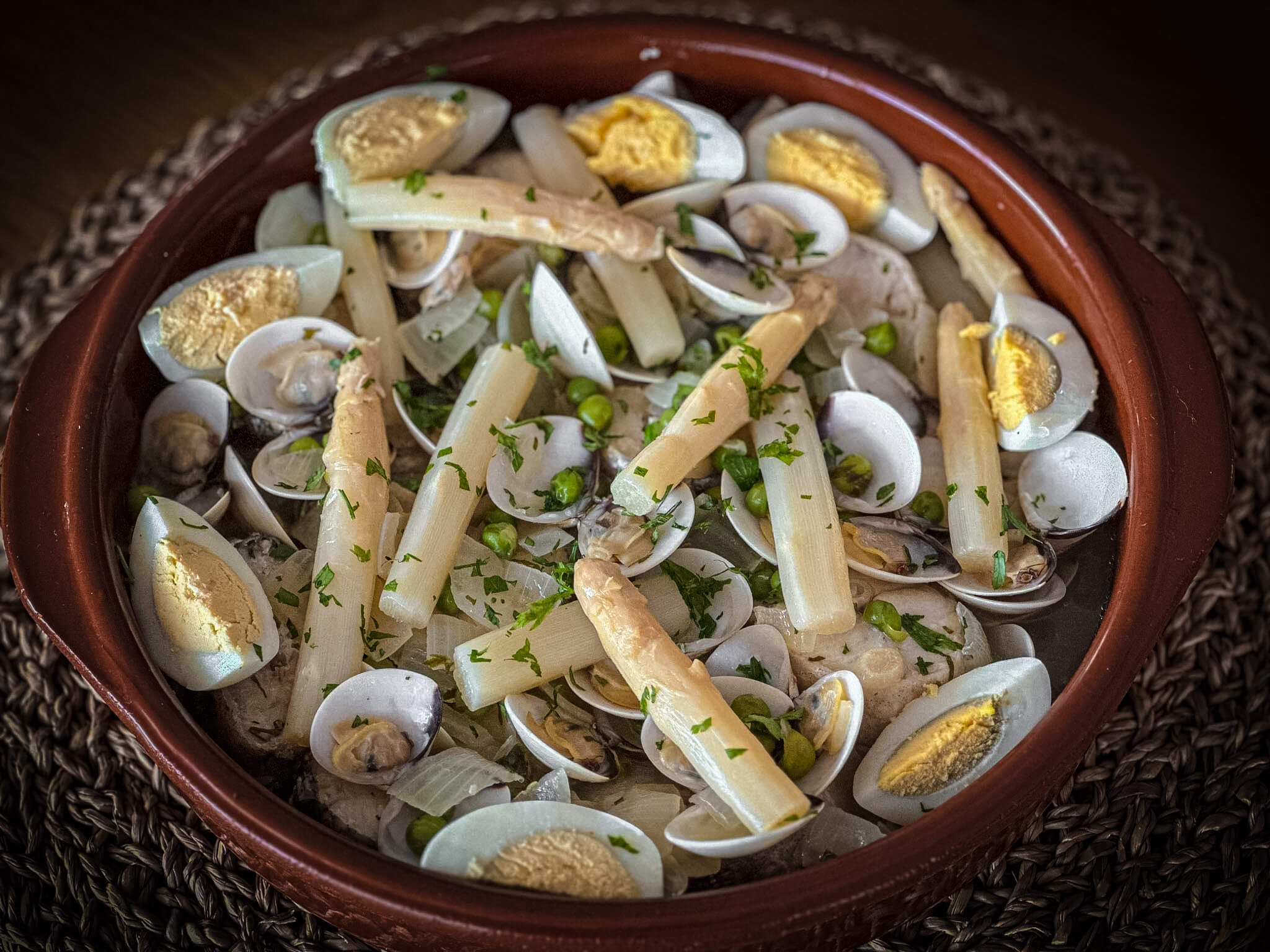
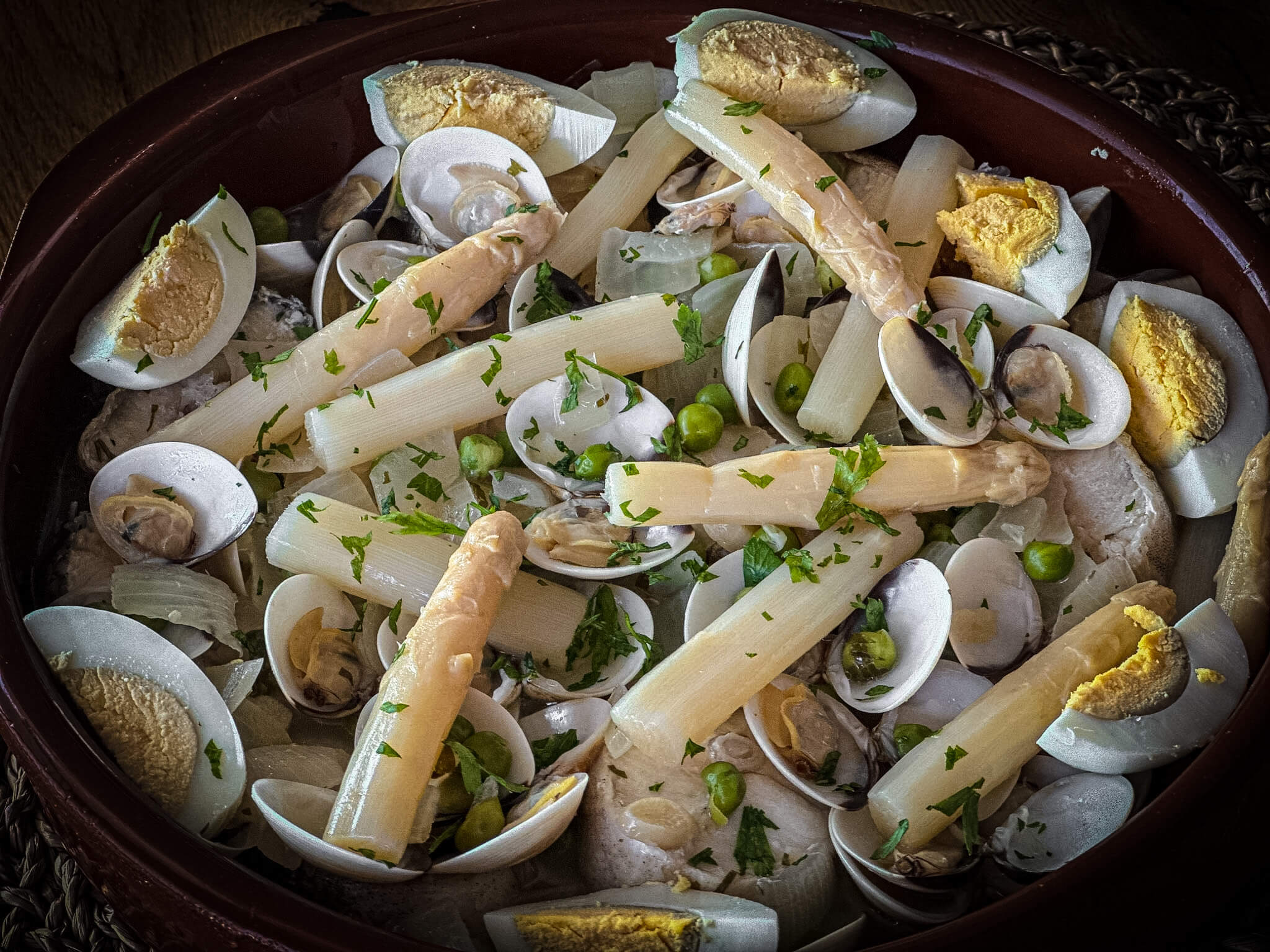
Cut the canned white asparagus spears into 4–5 cm pieces if necessary. Arrange the hake medallions, clams, peas, asparagus pieces, and hard-boiled egg wedges neatly in a traditional earthenware cazuela or serving platter. Spoon plenty of the hot parsley-infused sauce over everything and finish with a generous sprinkle of remaining fresh parsley before serving hot with crusty bread.
Chef’s Notes for Basque-Style Hake with Clams
Can you use pre-cooked clams to save time when making Spanish hake? A: Absolutely. Pre-cooked clams make this recipe much quicker and are especially convenient for a weeknight meal. Since they are already cooked, add them at the very end, turn off the heat, and cover the pan for a few minutes to warm them through without making them tough or rubbery.
Why do some Spanish chefs use Fino sherry instead of white wine in seafood sauces? A: A splash of Fino sherry works beautifully in this traditional green sauce. Its dry, delicate, and slightly nutty character adds rich complexity without overpowering the hake or clams. However, you can also use a crisp dry white wine if that is what you have available in your kitchen.
Can you prepare and serve this seafood dish in a traditional Spanish cazuela? A: Yes, a wide earthenware cazuela is ideal for this classic Spanish seafood dish. Clay cookware retains heat exceptionally well, ensuring the fish stays warm at the table while making an authentic and beautiful presentation for serving.
Common Mistakes Cooking Basque-Style Hake with Clams
Overcooking the delicate hake medallions: The most important rule when cooking hake is to avoid leaving it in the pan too long. Hake is an exceptionally delicate white fish that turns dry quickly if left simmering. Cook it gently over low heat until just done, remembering that the fish will continue to cook slightly from the residual heat of the cazuela after removing it from the stove.
Browning or burning the garlic base: When building your aromatic base, the garlic should be lightly golden and fragrant rather than dark brown. Burnt garlic turns bitter instantly and will ruin the entire green sauce. Keep your oil at a moderate temperature and watch the pan carefully during the first few minutes.
Boiling the pre-cooked clams for too long: Pre-cooked clams do not require actual cooking time in the pan. Prolonged exposure to direct heat makes them rubbery and tough. Simply add them at the very end of cooking, switch off the heat, and let the trapped steam warm them through safely.
Ingredient Swaps & Variations on Basque-Style Hake with Clams
Fresh Clams Option: If you have access to fresh seafood, swap the pre-cooked clams for fresh ones; simply purge them in salted water first, add them to the pan with the hake, and cook covered until they fully open.
Alternative White Fish: While hake is traditional, you can substitute it with other firm white fish such as cod, sea bass, sea bream, or monkfish that can hold their shape while gently simmering.
Fino Sherry Swap: Replace the dry white wine with an equal amount of dry Fino sherry to give the parsley sauce a distinctive, nutty Andalusian depth.
Recipe Card
Basque-Style Hake with Clams: Merluza a la Vasca

Basque-Style Hake with Clams is a classic Spanish seafood dish that brings the flavors of Spain’s northern coast straight to your table. Tender hake is gently cooked with clams, peas, white asparagus, garlic, parsley, white wine, and fish stock, then finished with wedges of boiled egg. Known in Spain as Merluza a la Vasca, this traditional Basque recipe is simple, elegant, and wonderfully comforting.
Ingredients
- 500 g (1.1 lb) hake steaks or medallions, preferably skin-on
- 400 g (14 oz) clams, cleaned
- 2 large eggs
- 6 white asparagus spears, canned and drained
- 2 garlic cloves, thinly sliced
- 1 medium onion, finely chopped
- 100 ml (⅓ cup + 1 tbsp) dry white wine or Fino sherry
- 50 g (1.8 oz) frozen peas
- 350 ml (1½ cups) fish stock
- 1 small bunch fresh parsley, finely chopped
- 2–3 tbsp extra virgin olive oil
- Salt, to taste
Instructions
1. Boiling and Preparing the Eggs
Place the eggs in a saucepan and cover them with cold water. Bring to a boil over medium-high heat and cook for 12 minutes. Drain immediately and transfer to a bowl of cold running water to cool. Peel the shells, set the eggs aside, and cut them into halves or wedges once cooled.
2. Building the Aromatic Base
Heat a generous drizzle of extra virgin olive oil in a wide skillet or shallow casserole dish over medium-low heat. Add the sliced garlic and cook gently for 2 to 3 minutes until lightly golden and fragrant, taking care not to burn it. Stir in the finely chopped onion and cook for 7 to 8 minutes, stirring occasionally, until soft and translucent.
3. Deglazing with White Wine
Pour the dry white wine directly into the pan and increase the heat slightly. Scrape the bottom of the pan with a wooden spoon to release any browned flavorful bits, allowing the wine to simmer for 4 to 5 minutes until the alcohol scent completely evaporates and the liquid reduces.
4. Simmering the Stock and Peas
Pour in the warm fish stock and bring the liquid to a gentle simmer. Stir in half of the chopped fresh parsley and add the frozen peas. Simmer gently for 5 minutes so the peas soften and infuse their sweet green flavor into the sauce.
5. Cooking the Hake Medallions
Gently place the hake medallions into the simmering sauce, ensuring they are partially submerged. Cook over low heat for 5 minutes, carefully turning them once if needed. Maintain a light simmer rather than a rolling boil to ensure the hake remains moist and tender.
6. Warming the Clams
Add the pre-cooked clams into the pan alongside the fish. Immediately turn off the heat, cover the pan with a lid, and let it rest for 2 to 3 minutes so the clams warm through in the residual heat without turning rubbery. (Note: If using fresh raw clams, add them 4 to 5 minutes earlier with the hake and cook covered until they fully open).
7. Assembling and Garnishing
Cut the canned white asparagus spears into 4–5 cm pieces if necessary. Arrange the hake medallions, clams, peas, asparagus pieces, and hard-boiled egg wedges neatly in a traditional earthenware cazuela or serving platter. Spoon plenty of the hot parsley-infused sauce over everything and finish with a generous sprinkle of remaining fresh parsley before serving hot with crusty bread.
Notes
2 serves
Nutrition Information:
Yield:
2Serving Size:
1Amount Per Serving: Calories: 1257Total Fat: 57gSaturated Fat: 20gUnsaturated Fat: 37gCholesterol: 561mgSodium: 2842mgCarbohydrates: 31gFiber: 6gSugar: 7gProtein: 133g