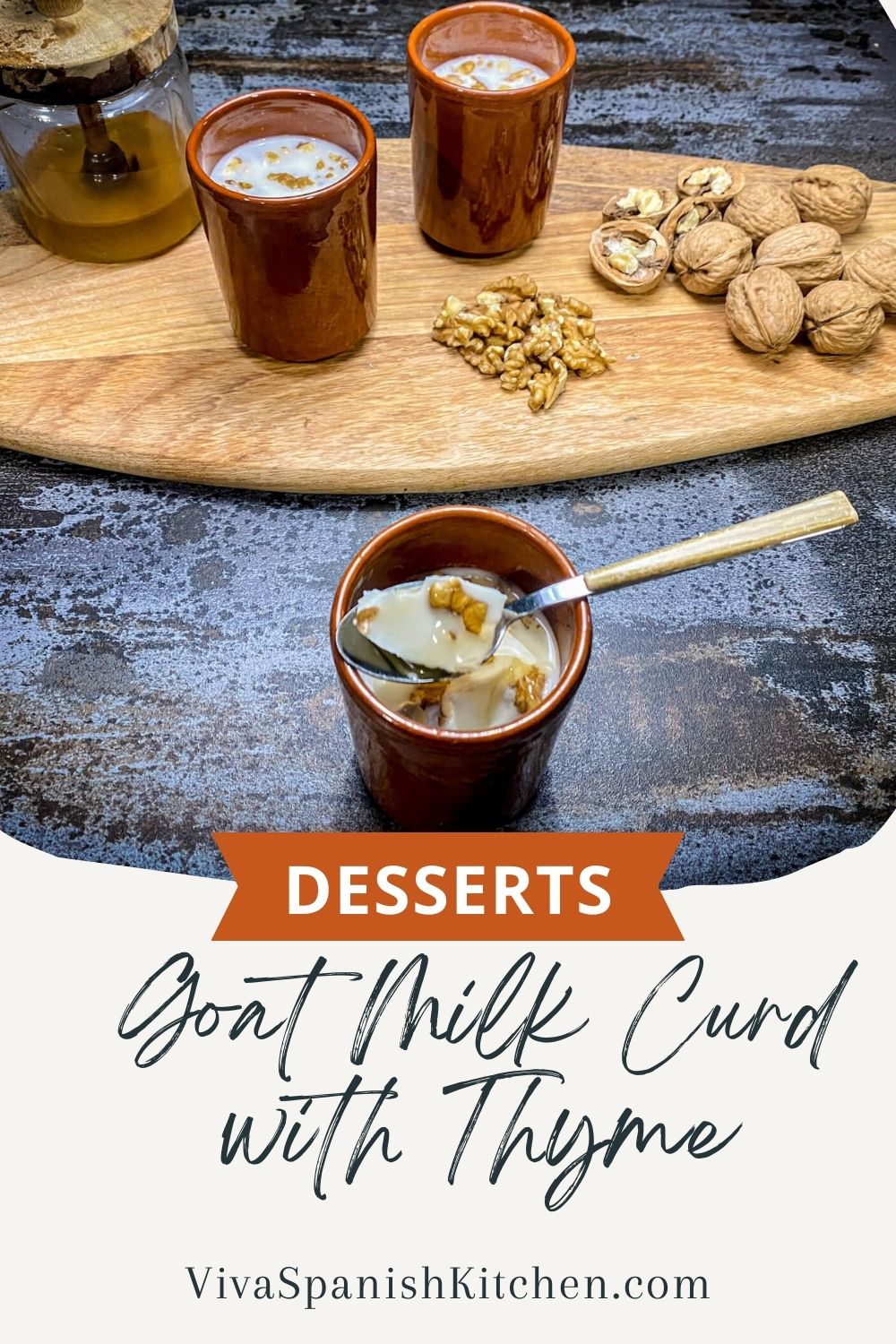
There are dishes that whisper of tradition, and then there are those that sing it.Spanish Goat Milk Curd with Thyme, Walnuts, and Honey is one of those rare, rustic delights that instantly transports you to the sun-drenched hills of the Mediterranean. With just a few simple ingredients this dish captures the essence of countryside simplicity and transforms it into a gourmet experience. Whether served as an elegant appetizer, a light dessert, or a mid-afternoon indulgence, it’s a perfect balance of creamy, herbal, sweet, and nutty. In this post, we’ll explore why this combination works so beautifully, and how to bring this timeless harmony of flavors to your own table.
Spanish Goat Milk Curd with Thyme, Walnuts, and Honey

What Are the Benefits of Spanish Goat Milk Curd?
Curd is more than just a traditional treat, it’s packed with nutrients and can be a game-changer for your health.
1. Strengthens Bones and Teeth
Curd is rich in calcium and phosphorus, which are essential for maintaining strong bones and healthy teeth. Many people who include curd in their diet regularly say they’ve noticed stronger nails and improved dental health.
2. Supports Muscle Health
It’s a great source of high-quality protein, helping to build and repair muscle tissue. After a workout, curd makes an excellent protein-packed recovery snack—many athletes swear by it.
3. Aids Digestion
Thanks to the natural probiotics formed during fermentation, curd helps maintain a healthy gut. People with mild digestive discomfort often find that adding curd to their meals improves bloating and digestion over time.
4. Easier on the Stomach
Properly fermented curd is lower in lactose than milk, making it easier to tolerate for people with mild lactose intolerance. It’s a relief for those who miss dairy but can’t handle regular milk.
5. Satisfying and Filling
Curd has a creamy texture that leaves you feeling full without being heavy. It’s ideal for controlling hunger between meals. A bowl with a drizzle of honey or a few nuts is a go-to snack for many.
6. Natural and Minimally Processed
When made at home or sourced from small-scale producers, curd is free of additives and artificial ingredients. Many describe the taste of homemade curd as pure and nostalgic—like stepping back into simpler times.
What are the disadvantages of curd?
While curd is a healthy choice for most people, there are a few things to consider, especially if you have dietary restrictions:
1. Severe Lactose Intolerance
Even though curd contains less lactose, those with severe lactose intolerance may still experience discomfort and should proceed with caution.
2. Milk Protein Allergy
People with a true allergy to milk proteins should avoid curd entirely, as it can trigger allergic reactions.
3. Fat Content
Curd made from whole milk can be high in saturated fat. For those with high cholesterol or on low-fat diets, it’s best to choose curd made from skim or low-fat milk.
4. Not Always Vegetarian
Traditional curd often uses animal-based rennet to set. This may not be suitable for vegetarians or vegans, although plant-based or microbial rennet alternatives are becoming more widely available.

What Are the Different Ways to MakeSpanish Goat Milk Curd?
With Animal Rennet (Traditional Method)
This type of rennet usually comes in liquid or tablet form and is derived from the stomach lining of ruminant animals, such as calves or lambs.
It produces a firm curd with a traditional flavor, ideal for those seeking authenticity.
Note: Not suitable for vegetarians.
With Commercial Curd Mix Packets
These packets typically contain microbial rennet, stabilizers, and sometimes flavorings. They offer a quick, easy, and consistent way to make curd. Suitable for vegetarians if microbial rennet is used. However, the result is less natural and may contain additives.
With Plant-Based Rennet
This method uses plant extracts from cardoon, fig tree, or artichoke to coagulate the milk. It’s a great option for vegetarians or anyone avoiding animal products. Downside: It may result in a softer texture and milder flavor compared to animal rennet.
With Gelling Agents (Gelatin or Agar-Agar)
We have used this method to prepare our dessert
This approach doesn’t produce a traditional curd but rather a pudding-like or jelly-like dairy dessert. It’s a very easy and quick alternative if you don’t have rennet on hand. Since there’s no fermentation involved, it doesn’t provide probiotics, and the texture is noticeably different from
Goat Milk Curd with Thyme, Walnuts, and Honey

Goat Milk Curd with Thyme, Walnuts, and Honey is one of those rare, rustic delights that instantly transports you to the sun-drenched hills of the Mediterranean. With just a few simple ingredients this dish captures the essence of countryside simplicity and transforms it into a gourmet experience.
Ingredients
- 1 liter of goat milk
- A bunch of thyme
- A handful of walnuts
- 6 tablespoons of honey
- 10 sheets of unflavored gelatin (or 12 grams of powdered rennet or 10 grams of Agar-Agar (gluten-free))
Instructions
- Prepare the Nuts: Break 5 to 10 walnuts into pieces, clean them, and set them aside.
- Infuse the Milk: Pour the milk into a saucepan and add fresh thyme. It’s recommended to use a small mesh bag to hold the thyme, or you can strain it out later after infusing.
- Heat the Milk: Warm the milk with the thyme on low heat for about 5 minutes—be careful not to bring it to a boil.
- Strain the Milk: After the milk has infused with thyme, remove the thyme or strain the milk to remove any leaves or branches.
- Add the Gelling Sheets: While the milk is still warm, add the gelling sheets (gelatin or agar-agar). Stir well for about 5 minutes on low heat to make sure they dissolve completely.
- Fill the Cups: Once the mixture is well-mixed, pour it into small cups where you plan to serve it. Add the prepared walnuts (or any other nuts of your choice) into the cups.
- Let It Set: Allow the mixture to cool to room temperature, then place the cups in the fridge for 4-6 hours to set.
- Serve the curd chilled or at room temperature with a spoonful of honey (or jam or syrup).
Nutrition Information:
Yield:
6Serving Size:
1Amount Per Serving: Calories: 245Total Fat: 13gSaturated Fat: 5gTrans Fat: 0gUnsaturated Fat: 7gCholesterol: 19mgSodium: 87mgCarbohydrates: 26gFiber: 1gSugar: 25gProtein: 8g
Pin it: