

This Authentic Pulpo a la Gallega (Galician Octopus with Paprika & Potatoes) is the absolute crown jewel of Spanish seafood tapas, delivering a masterclass in how minimal ingredients can achieve sublime culinary heights. Originating from the rustic country fairs of Galicia, this timeless dish requires no complex kitchen gear—just a tender octopus tentacle, thick slices of skin-on boiled potatoes, a vivid dusting of sweet and spicy paprika, and a generous pour of liquid gold extra virgin olive oil. Prepared in the true Polbo á Feira tradition, every single bite offers a perfect balance of smoky, spicy, and buttery maritime notes that transport your senses straight to the Atlantic coast.
Pulpo a la Gallega: Galician Octopus with Paprika & Potatoes
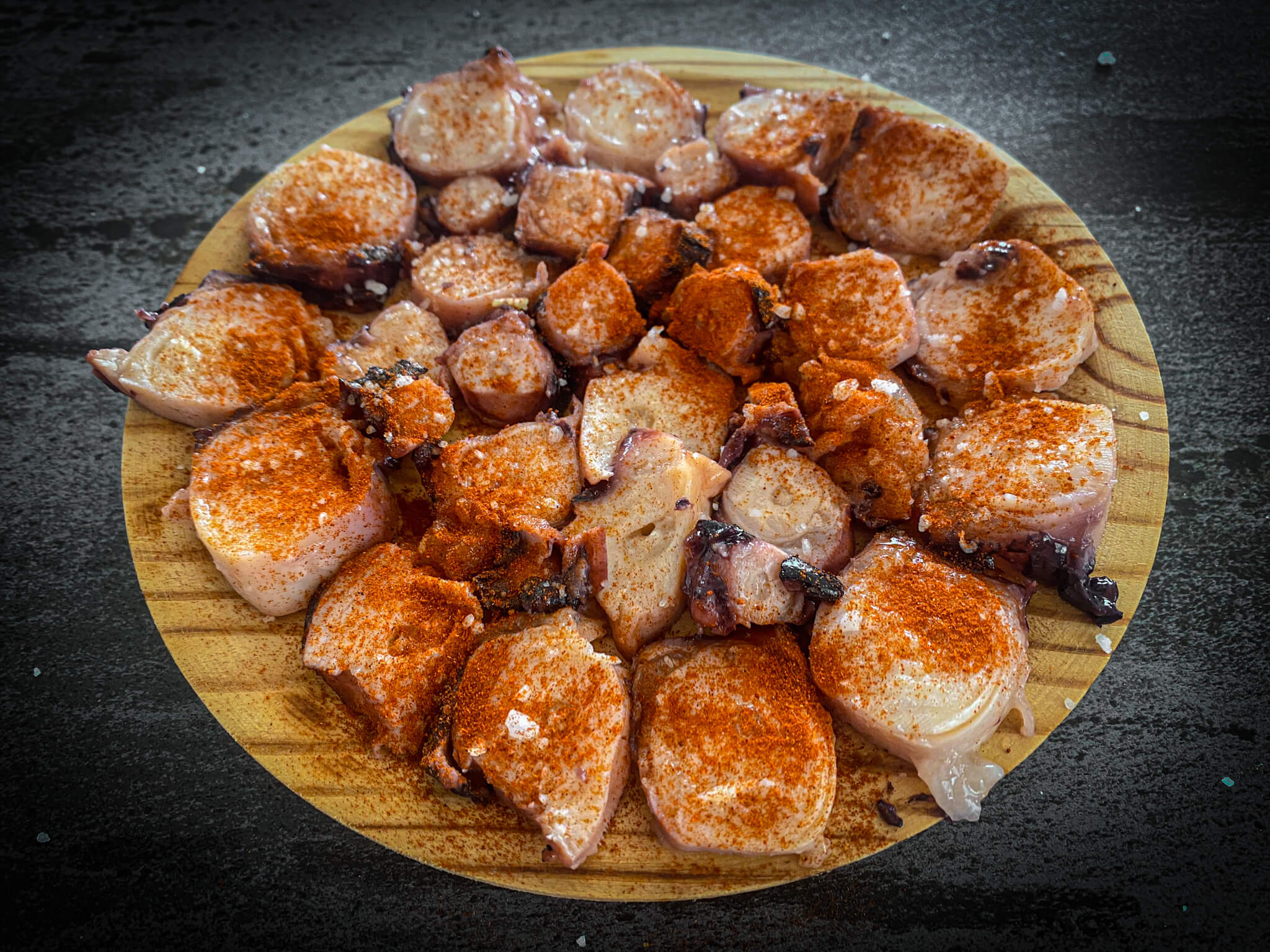
Authentic Pulpo a la Gallega Recipe
This single-serving octopus platter is deeply fascinating because it highlights the brilliant minimalism of traditional Atlantic tavern cooking. What makes this recipe a masterpiece is its absolute restraint; with just a single high-quality tentacle and humble potatoes, you create a texturially perfect dish simply by using the boiling water as a flavor bridge. Snipping the warm octopus directly over the potatoes allows the starches to trap the rich maritime oils, building an incredible, glossy dressing right on the plate when hit with premium olive oil and smoky paprika. It proves that you do not need complex kitchen gadgets or lengthy ingredient lists to serve a truly legendary, world-class seafood tapa.
If you love the rustic charm of serving simple, high-impact starters that celebrate authentic regional ingredients, you can build the ultimate foundation for your table with my cornerstone guide on Spanish Toast Recipes. Crispy, seasoned bread is the quintessential companion for catching every stray drop of smoky paprika oil that pools at the bottom of your seafood platter.
To turn this succulent octopus dish into a complete, unforgettable Mediterranean gathering, you can easily surround it with a vibrant mix of quick-cooking tavern classics. For a bright pop of color and a fun, interactive element where every bite is a game of roulette, toss a quick batch of blistering Padron Peppers in coarse salt. You can beautifully balance that smoky heat by introducing the refreshing, sweet, and savory contrast of Esgarraet, a traditional Valencian salad of slow-roasted red bell peppers and shredded salted cod shredded in rich olive oil. Finally, to bring a dramatic, fiery energy to your spread that pairs exquisitely with the tender seafood, light up the night by serving a sizzling skillet of my flamed Spicy Devil Choricitos Recipe, creating the absolute perfect lineup for an authentic tapas party.
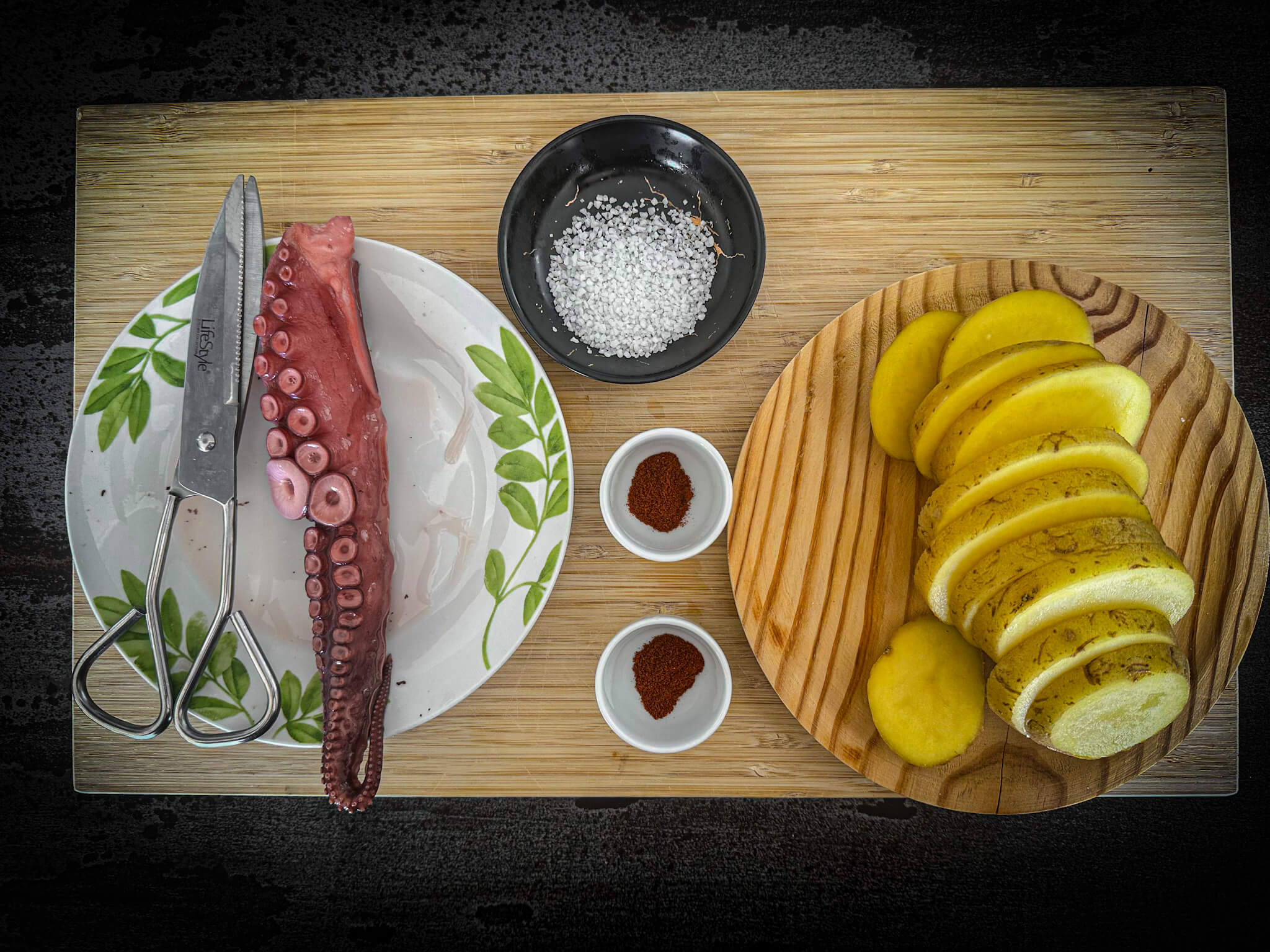
Ingredients
| Metric Amount | Imperial Amount | Core Ingredient | Preparation |
| 180 g | 6.3 oz | Pre-cooked high-quality octopus tentacle (pata de pulpo) | Whole, brought to room temperature before slicing |
| 1 unit | 1 unit | Kennebec or russet potato (patata) | Medium size, unpeeled, thoroughly washed |
| 1.5 L | 6.3 cups | Water | For boiling the potatoes and heating the tentacle |
| 5 g | 1 tsp | Coarse sea salt (sal gorda) | Divided use for boiling and final seasoning |
| 45 ml | 3 tbsp | Premium Extra Virgin Olive Oil (AOVE) | High quality, warm, for generous drizzling |
| 3 g | 0.5 tsp | Sweet Spanish smoked paprika (pimentón dulce) | De la Vera variety, for dusting |
| 2 g | 0.3 tsp | Spicy Spanish smoked paprika (pimentón picante) | De la Vera variety, adjusted to taste |
Instructions
1. Infusing the Water and Boiling the Cachelos
Pour the water into a deep pot over high heat and bring it to a rolling boil. Wash the two medium potatoes thoroughly to remove any dirt, keeping the skin entirely intact, and slice them crosswise into thick rounds measuring roughly half an inch. Drop the potato rounds straight into the boiling water, drop in a light pinch of salt, and cook them steadily for 15-18 minutes over medium-high heat until they are completely tender when pierced with a fork, absorbing that beautiful, faint pink maritime hue from the water’s essence.
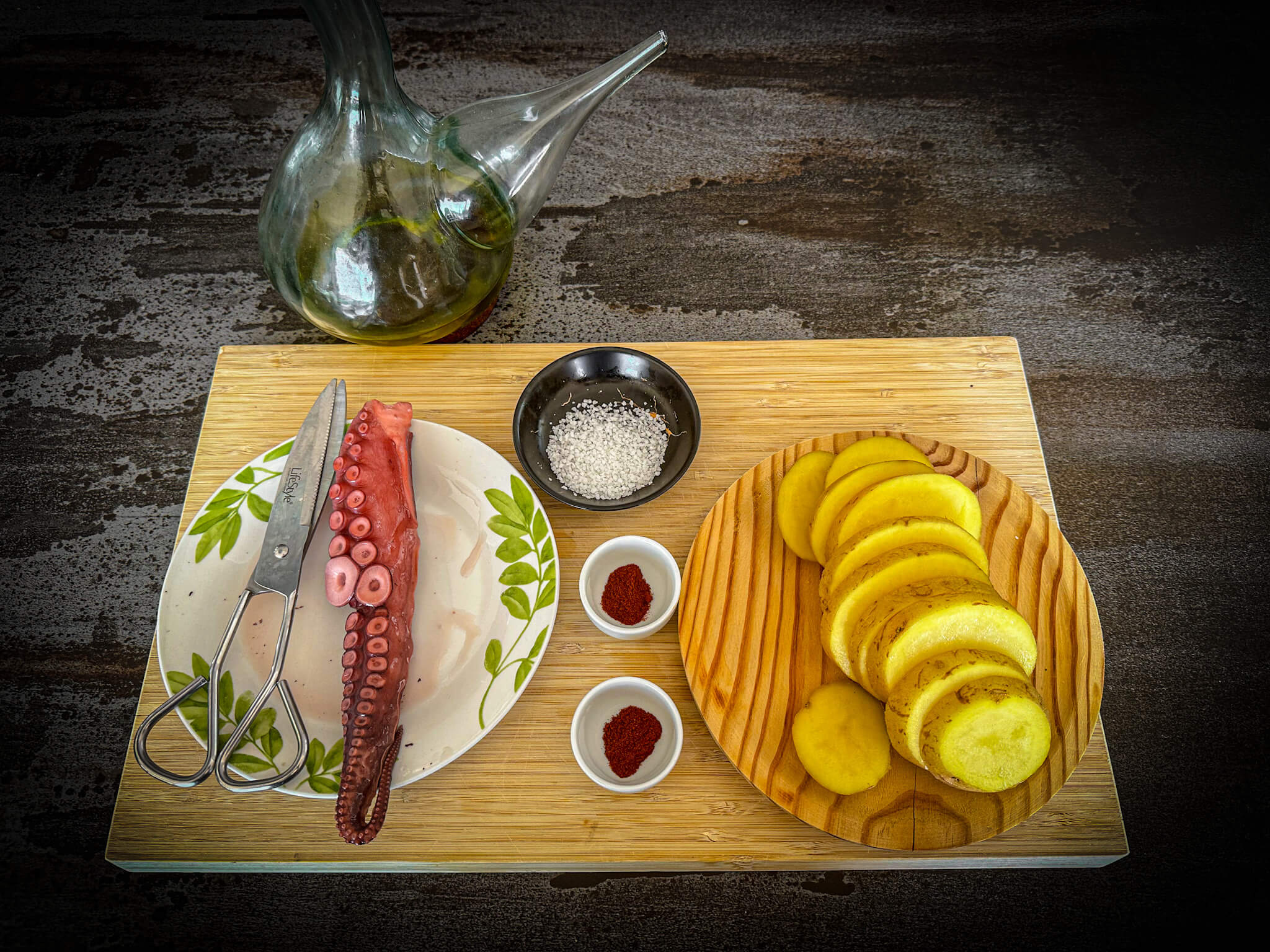
2. Warming the Pre-Cooked Octopus Tentacle
Once the potatoes are just 3 minutes away from being fully cooked, use tongs to gently submerge your 180 g (6.3 oz) pre-cooked octopus tentacle directly into the same boiling pot alongside the boiling tubers. Leave the tentacle to warm through for exactly 3 minutes, which is just enough time to gelatinize the exterior skin and make the core piping hot without overcooking the delicate muscle fibers. Use your tongs to carefully lift both the warm octopus tentacle and the tender potato slices out of the water, draining them thoroughly on a clean plate.
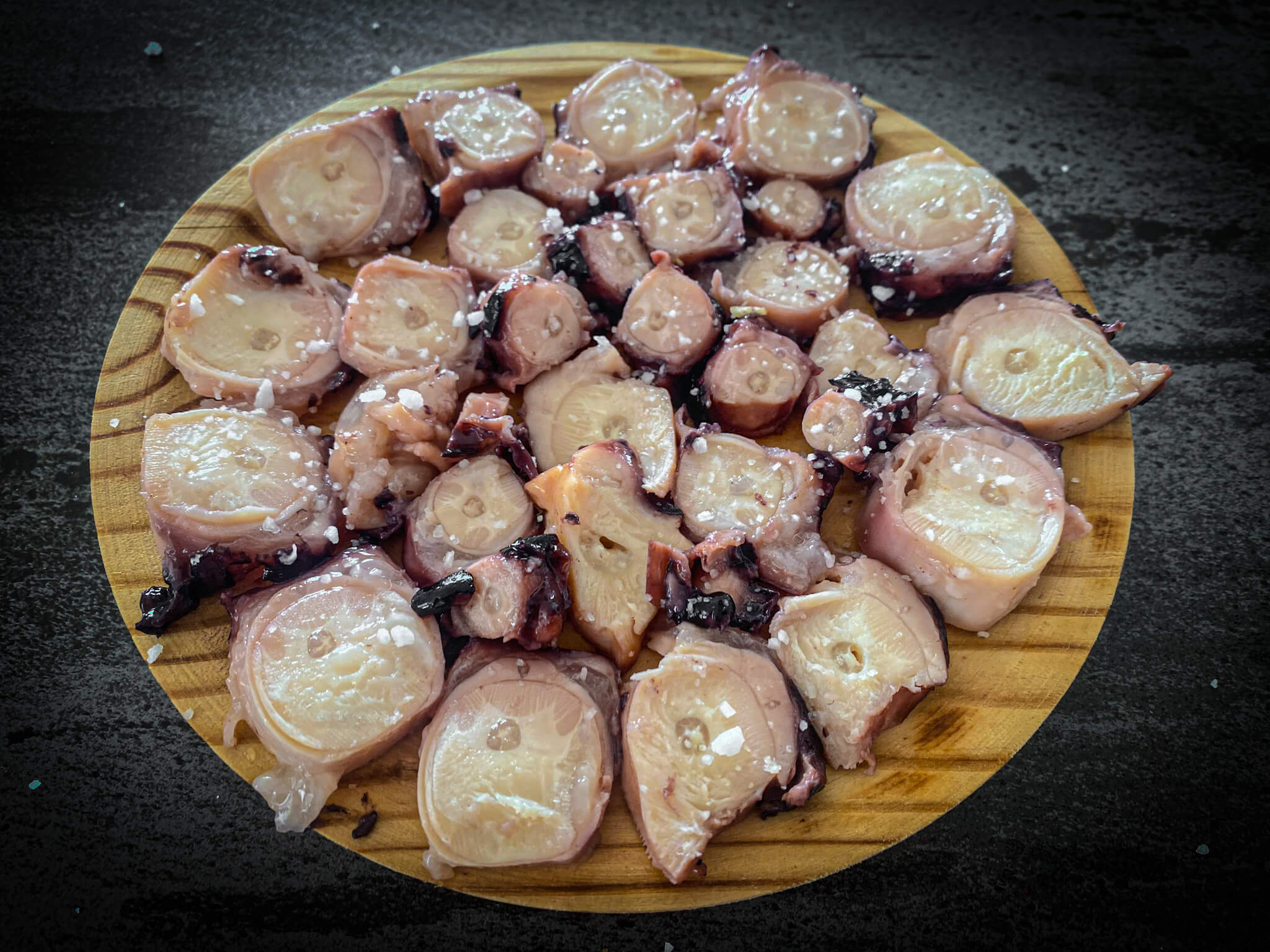
3. Assembling the Traditional Wooden Platter Base
Grab a traditional round wooden tapas plate—or a rustic ceramic platter—and drizzle a tiny teaspoon of extra virgin olive oil across the bottom to create a non-stick flavor base. Peel the skins off the warm boiled potatoes if you prefer, or leave them on for a rustic finish, and arrange the thick rounds in a single, even layer across the surface of the plate. This potato foundation is crucial because it acts as a soft sponge that will catch all the flavorful juices and spiced oils dropping from the seafood above.
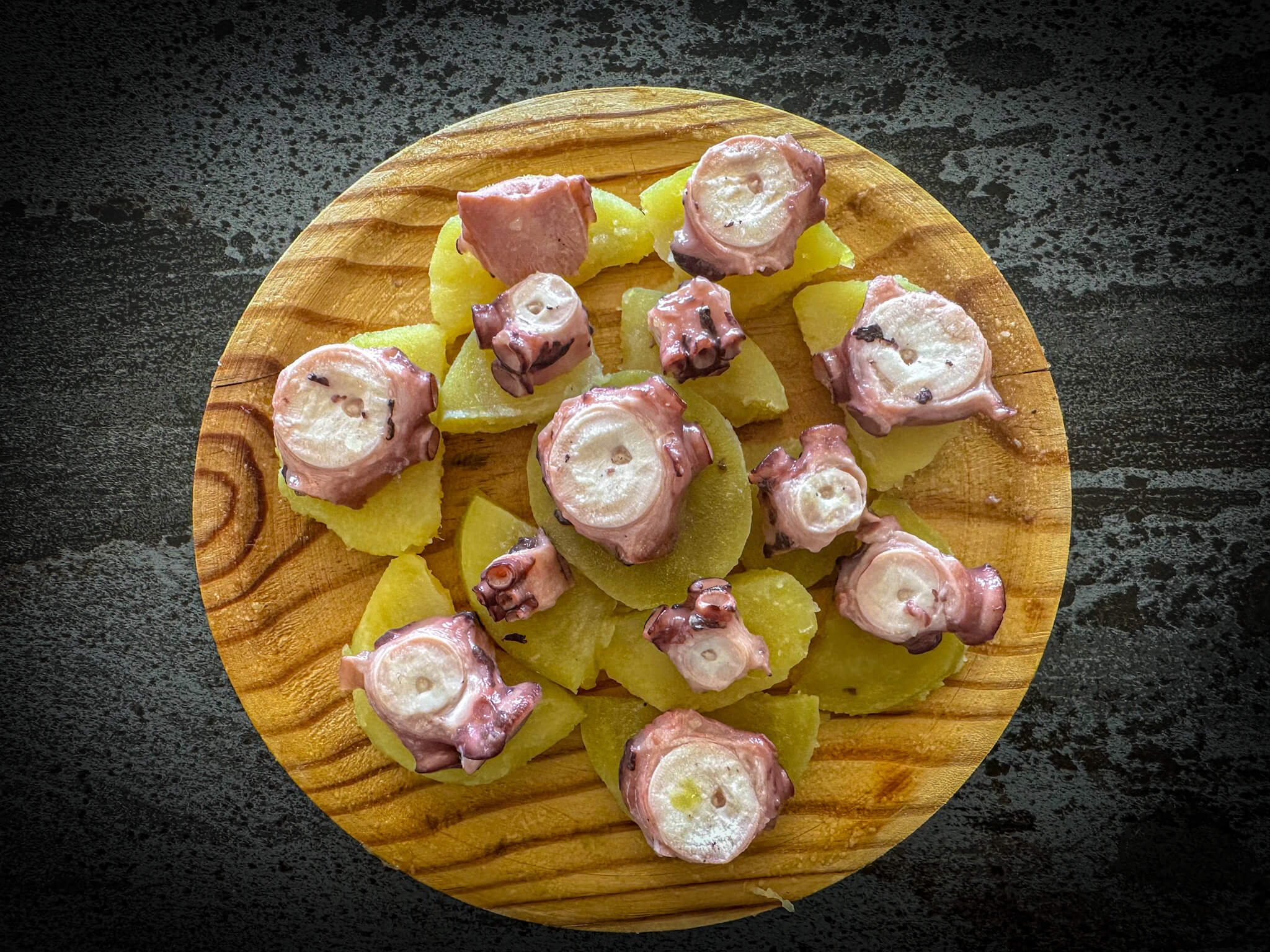
4. Slicing the Seafood with Scissors
Hold the warm octopus tentacle over the bed of potatoes and use a sharp pair of kitchen shears to cut it into uniform rounds measuring roughly a quarter-inch thick. Snip the tentacle at a slight diagonal angle, working your way from the thick base down to the curly tip, letting the pieces fall naturally across the boiled potatoes so every single potato slice is crowned with a piece of seafood. Slicing with scissors is the authentic maritime method because it pinches the fibers cleanly, locking the internal moisture inside each round.
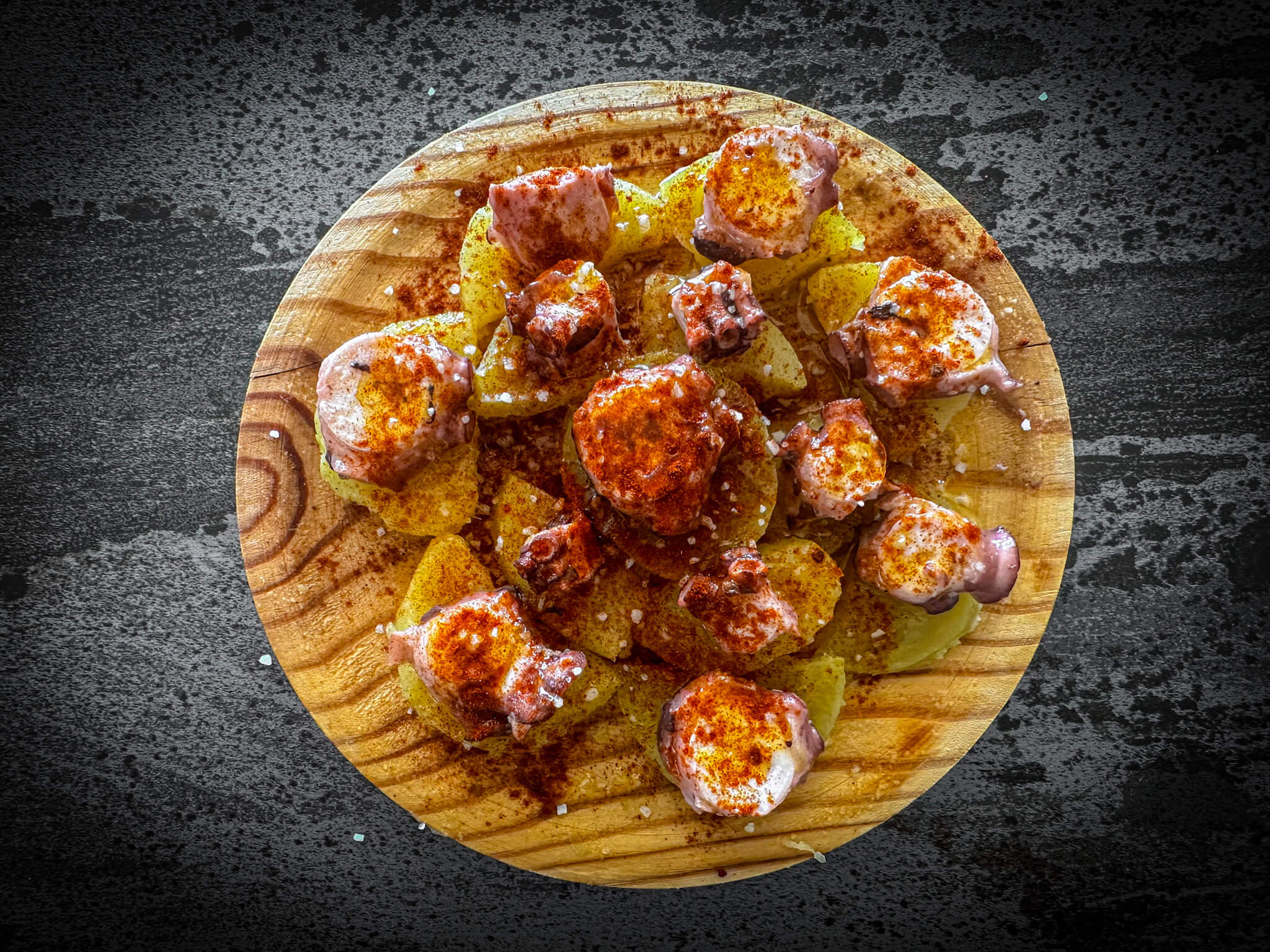
5. The Final Paprika and Olive Oil Dressing
Scatter the coarse sea salt evenly across the top of the sliced octopus and potatoes to provide a distinct, crunchy contrast. Mix your sweet smoked paprika and spicy smoked paprika together in a tiny bowl, then dust the vibrant red blend generously over the entire plate using a small sieve or your fingers. Finish the dish by pouring the remaining premium extra virgin olive oil in a slow, steady stream over the platter, creating a beautiful red-tinted emulsion as it pools around the warm potato edges.
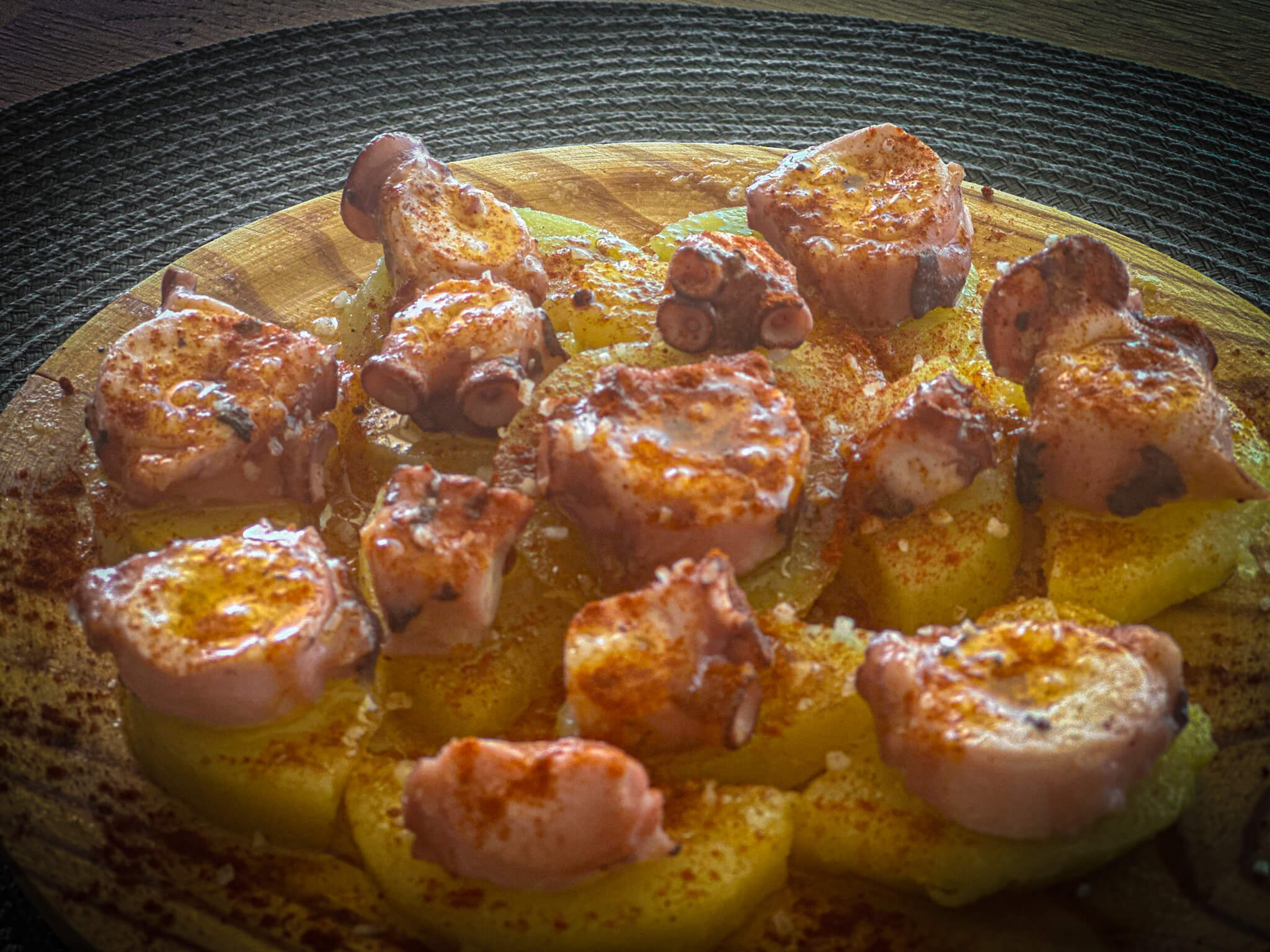
Pulpo á Feira Chef’s Notes
Why is a wooden plate traditionally used to serve authentic pulpo a la gallega? The porous nature of a traditional wooden platter serves a vital culinary purpose because **it absorbs the excess water from the boiled potatoes** while keeping the olive oil pooled around the food. This creates a thick, concentrated sauce on the wood surface that doesn’t get thinned out by stray boiling liquids, ensuring every forkful remains intensely flavorful.
How do you cook a raw frozen octopus tentacle instead of pre-cooked? If your tentacle is raw and frozen, thaw it completely, bring your large pot of water to a boil without salt, and **”scare” the octopus by dipping it in and out of the water 3 times** until the skin curls up tightly. Then, submerge it fully and **simmer gently on medium heat for 35 to 40 minutes** until a toothpick slides easily into the thickest part before proceeding with the potato step.
What is the best way to reheat leftover Spanish octopus without making it rubbery? While this tapa is best enjoyed fresh and warm, you can store leftovers in an airtight container in the fridge for up to 24 hours. To enjoy it the next day, **avoid the microwave at all costs as it makes the seafood rubbery**; instead, place the octopus and potatoes in a skillet over low heat with a tiny splash of water and a lid, warming gently for 4 minutes until the oil loosens.
Common Mistakes When Making Galician Octopus
How does heating pre-cooked octopus for too long affect the texture? Pouring a pre-cooked tentacle into boiling water for ten or fifteen minutes is a critical mistake. This happens because the extended exposure to high heat breaks down the delicate proteins completely, turning a perfectly tender, firm tentacle into a rubbery, stringy texture. Always limit the warming step to exactly 3 minutes just to heat the core through, ensuring a succulent, melt-in-your-mouth bite that retains its structural bounce.
Why should you avoid fine table salt on a traditional pulpo platter? Seasoning the finished seafood with standard fine shaker salt will backfire. The fine crystals dissolve instantly into the wet surface of the octopus, creating an uneven, harsh saltiness that draws out too much moisture. Always use coarse sea salt or maldon flakes at the very end, providing localized bursts of clean salinity that elevate the natural sweetness of the tentcale without overwhelming the palate.
What happens if you slice cooked octopus with a knife instead of scissors? Pressing down on the cooked tentacle with a standard straight blade on a cutting board is a bad idea. The downward friction tears the delicate purple skin away from the meat, making the presentation look messy and allowing the internal juices to pool on the board instead of the plate. Always use sharp kitchen shears to snip the tentacle directly over the potatoes, keeping the skin intact and preserving every drop of maritime flavor.
Galician Octopus Recipe Swaps & Variations
The Pilgrim’s Fusion (Octopus with Patatas Revolconas): For an incredibly rich and comforting twist, you can combine the elegance of this fresh seafood with the rustic heart of Ávila by serving your tender octopus over a bed of mashed Patatas Revolconas Recipe. This spectacular combination is exactly what inspired my signature Pilgrims Octopus Traditional Galician Octopus with Smoky Paprika Potatoes, where the garlic-and-pancetta infused mashed potatoes elevate the tender seafood into a legendary, comforting masterpiece.
The Sweet-Only Adjustment: If you are highly sensitive to spicy foods, completely omit the spicy smoked paprika from the dressing. Increase the sweet Spanish smoked paprika to a full teaspoon to maintain that iconic, deep red color and rich woody aroma without introducing any tongue-tingling heat.
Can you make authentic pulpo a la gallega without any potatoes? Yes, you can easily completely skip the potatoes to enjoy a traditional, low-carb version of this dish known simply as naked *Polbo á Feira*. To prepare it this way, skip the boiling process entirely and heat your pre-cooked **180 g (6.3 oz)** octopus tentacle by steaming it or warming it gently in a pan, then slice it into diagonal rounds and dress it directly with the coarse sea salt, the sweet and spicy smoked paprika blend, and a heavy pour of extra virgin olive oil for a pure, protein-packed Spanish seafood tapa.
Recipe Summary & Resources
Recipe Card
Pulpo a la Gallega: Galician Octopus with Paprika & Potatoes

This Authentic Pulpo a la Gallega (Galician Octopus with Paprika & Potatoes) is the absolute crown jewel of Spanish seafood tapas, delivering a masterclass in how minimal ingredients can achieve sublime culinary heights. Originating from the rustic country fairs of Galicia, this timeless dish requires no complex kitchen gear—just a tender octopus tentacle, thick slices of skin-on boiled potatoes, a vivid dusting of sweet and spicy paprika, and a generous pour of liquid gold extra virgin olive oil. Prepared in the true Polbo á Feira tradition, every single bite offers a perfect balance of smoky, spicy, and buttery maritime notes that transport your senses straight to the Atlantic coast.
Ingredients
- For the Seafood and Potato Base:
- 180 g (6.3 oz) Pre-cooked high-quality octopus tentacle (pata de pulpo)
- 2 medium Kennebec or russet potatoes (patatas)
- 1.5 L (6.3 cups) Water (for boiling the potatoes and heating the tentacle)
- 5 g (1 tsp) Coarse sea salt (sal gorda)
- For the Authentic Galician Dressing:
- 45 ml (3 tbsp) Premium Extra Virgin Olive Oil (AOVE)
- 3 g (0.5 tsp) Sweet Spanish smoked paprika (pimentón dulce)
- 2 g (0.3 tsp) Spicy Spanish smoked paprika (pimentón picante)
Instructions
Infusing the Water and Boiling the Cachelos
Pour the water into a deep pot over high heat and bring it to a rolling boil. Wash the two medium potatoes thoroughly to remove any dirt, keeping the skin entirely intact, and slice them crosswise into thick rounds measuring roughly half an inch. Drop the potato rounds straight into the boiling water, drop in a light pinch of salt, and cook them steadily for 15-18 minutes over medium-high heat until they are completely tender when pierced with a fork, absorbing that beautiful, faint pink maritime hue from the water's essence.
Warming the Pre-Cooked Octopus Tentacle
Once the potatoes are just 3 minutes away from being fully cooked, use tongs to gently submerge your 180 g (6.3 oz) pre-cooked octopus tentacle directly into the same boiling pot alongside the boiling tubers. Leave the tentacle to warm through for exactly 3 minutes, which is just enough time to gelatinize the exterior skin and make the core piping hot without overcooking the delicate muscle fibers. Use your tongs to carefully lift both the warm octopus tentacle and the tender potato slices out of the water, draining them thoroughly on a clean plate.
Assembling the Traditional Wooden Platter Base
Grab a traditional round wooden tapas plate—or a rustic ceramic platter—and drizzle a tiny teaspoon of extra virgin olive oil across the bottom to create a non-stick flavor base. Peel the skins off the warm boiled potatoes if you prefer, or leave them on for a rustic finish, and arrange the thick rounds in a single, even layer across the surface of the plate. This potato foundation is crucial because it acts as a soft sponge that will catch all the flavorful juices and spiced oils dropping from the seafood above.
Slicing the Seafood with Scissors
Hold the warm octopus tentacle over the bed of potatoes and use a sharp pair of kitchen shears to cut it into uniform rounds measuring roughly a quarter-inch thick. Snip the tentacle at a slight diagonal angle, working your way from the thick base down to the curly tip, letting the pieces fall naturally across the boiled potatoes so every single potato slice is crowned with a piece of seafood. Slicing with scissors is the authentic maritime method because it pinches the fibers cleanly, locking the internal moisture inside each round.
The Final Paprika and Olive Oil Dressing
Scatter the coarse sea salt evenly across the top of the sliced octopus and potatoes to provide a distinct, crunchy contrast. Mix your sweet smoked paprika and spicy smoked paprika together in a tiny bowl, then dust the vibrant red blend generously over the entire plate using a small sieve or your fingers. Finish the dish by pouring the remaining premium extra virgin olive oil in a slow, steady stream over the platter, creating a beautiful red-tinted emulsion as it pools around the warm potato edges.
Notes
The secret to a flawless Galician-style octopus platter lies in texturizing the starch and building flavor layers through the cooking water. Boiling the potato slices directly in water infused with concentrated octopus essence allows the tubers to absorb the natural sea salts and maritime oils, turning them a beautiful, subtle pink color. When sliced cleanly with kitchen shears and dressed while piping hot, the warm octopus and potatoes absorb the raw olive oil and paprika into their exterior pores, creating a glossy, emulsified coating that prevents the seafood from drying out.
Nutrition Information:
Yield:
4Serving Size:
1Amount Per Serving: Calories: 191Total Fat: 5gSaturated Fat: 1gUnsaturated Fat: 4gCholesterol: 42mgSodium: 706mgCarbohydrates: 21gFiber: 2gSugar: 1gProtein: 16g
Pin It
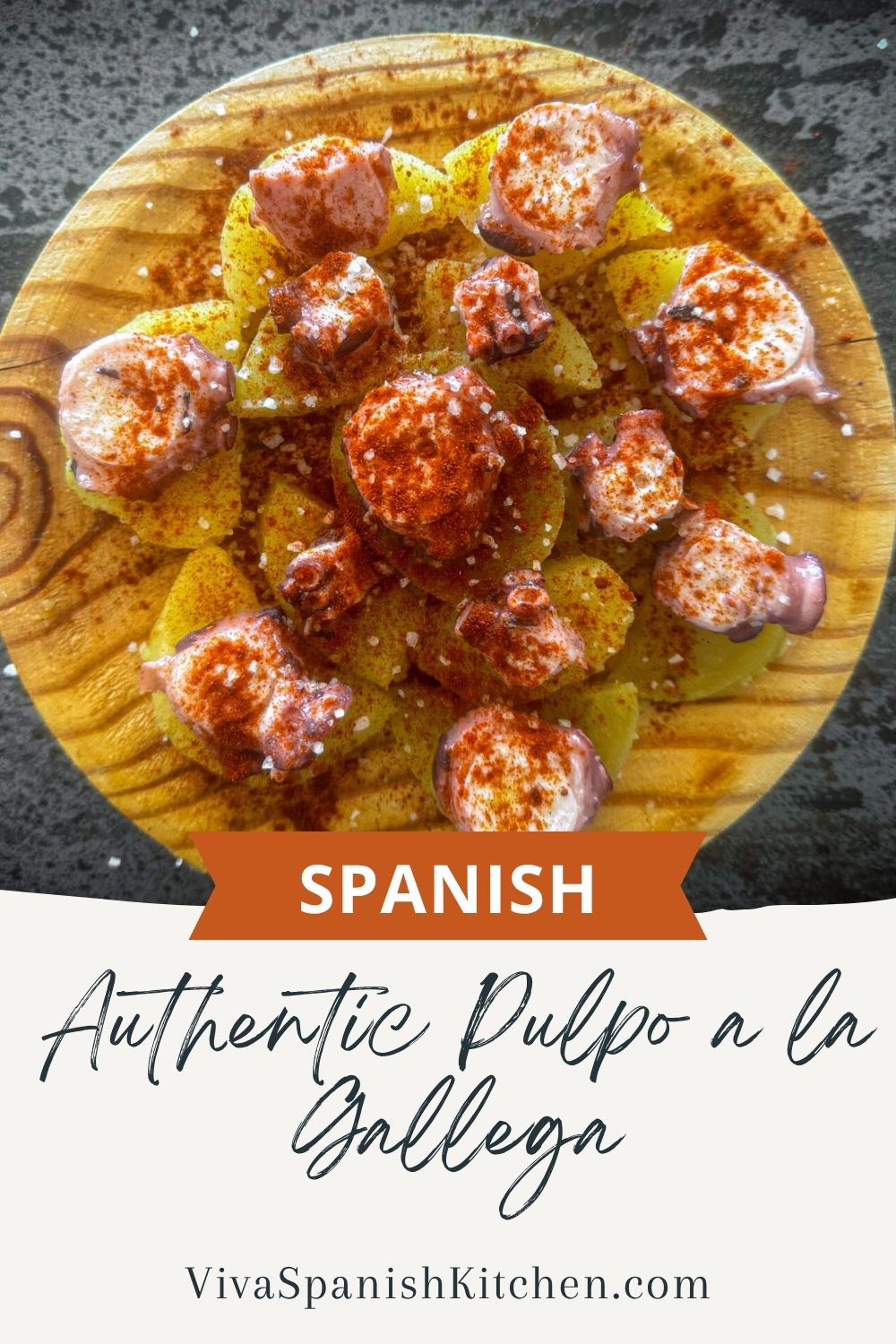
Pulpo a la Gallega: Galician Octopus with Paprika & Potatoes
This Authentic Pulpo a la Gallega (Galician Octopus with Paprika & Potatoes) is the absolute crown jewel of Spanish seafood tapas, delivering a masterclass in how minimal ingredients can achieve sublime culinary heights. Originating from the rustic country fairs of Galicia, this timeless dish requires no complex kitchen gear—just a tender octopus tentacle, thick slices of skin-on boiled potatoes, a vivid dusting of sweet and spicy paprika, and a generous pour of liquid gold extra virgin olive oil. Prepared in the true Polbo á Feira tradition, every single bite offers a perfect balance of smoky, spicy, and buttery maritime notes that transport your senses straight to the Atlantic coast.
Ingredients
- For the Seafood and Potato Base:
- 180 g (6.3 oz) Pre-cooked high-quality octopus tentacle (pata de pulpo)
- 2 medium Kennebec or russet potatoes (patatas)
- 1.5 L (6.3 cups) Water (for boiling the potatoes and heating the tentacle)
- 5 g (1 tsp) Coarse sea salt (sal gorda)
- For the Authentic Galician Dressing:
- 45 ml (3 tbsp) Premium Extra Virgin Olive Oil (AOVE)
- 3 g (0.5 tsp) Sweet Spanish smoked paprika (pimentón dulce)
- 2 g (0.3 tsp) Spicy Spanish smoked paprika (pimentón picante)
Instructions
Infusing the Water and Boiling the Cachelos
Pour the water into a deep pot over high heat and bring it to a rolling boil. Wash the two medium potatoes thoroughly to remove any dirt, keeping the skin entirely intact, and slice them crosswise into thick rounds measuring roughly half an inch. Drop the potato rounds straight into the boiling water, drop in a light pinch of salt, and cook them steadily for 15-18 minutes over medium-high heat until they are completely tender when pierced with a fork, absorbing that beautiful, faint pink maritime hue from the water's essence.
Warming the Pre-Cooked Octopus Tentacle
Once the potatoes are just 3 minutes away from being fully cooked, use tongs to gently submerge your 180 g (6.3 oz) pre-cooked octopus tentacle directly into the same boiling pot alongside the boiling tubers. Leave the tentacle to warm through for exactly 3 minutes, which is just enough time to gelatinize the exterior skin and make the core piping hot without overcooking the delicate muscle fibers. Use your tongs to carefully lift both the warm octopus tentacle and the tender potato slices out of the water, draining them thoroughly on a clean plate.
Assembling the Traditional Wooden Platter Base
Grab a traditional round wooden tapas plate—or a rustic ceramic platter—and drizzle a tiny teaspoon of extra virgin olive oil across the bottom to create a non-stick flavor base. Peel the skins off the warm boiled potatoes if you prefer, or leave them on for a rustic finish, and arrange the thick rounds in a single, even layer across the surface of the plate. This potato foundation is crucial because it acts as a soft sponge that will catch all the flavorful juices and spiced oils dropping from the seafood above.
Slicing the Seafood with Scissors
Hold the warm octopus tentacle over the bed of potatoes and use a sharp pair of kitchen shears to cut it into uniform rounds measuring roughly a quarter-inch thick. Snip the tentacle at a slight diagonal angle, working your way from the thick base down to the curly tip, letting the pieces fall naturally across the boiled potatoes so every single potato slice is crowned with a piece of seafood. Slicing with scissors is the authentic maritime method because it pinches the fibers cleanly, locking the internal moisture inside each round.
The Final Paprika and Olive Oil Dressing
Scatter the coarse sea salt evenly across the top of the sliced octopus and potatoes to provide a distinct, crunchy contrast. Mix your sweet smoked paprika and spicy smoked paprika together in a tiny bowl, then dust the vibrant red blend generously over the entire plate using a small sieve or your fingers. Finish the dish by pouring the remaining premium extra virgin olive oil in a slow, steady stream over the platter, creating a beautiful red-tinted emulsion as it pools around the warm potato edges.
Notes
The secret to a flawless Galician-style octopus platter lies in texturizing the starch and building flavor layers through the cooking water. Boiling the potato slices directly in water infused with concentrated octopus essence allows the tubers to absorb the natural sea salts and maritime oils, turning them a beautiful, subtle pink color. When sliced cleanly with kitchen shears and dressed while piping hot, the warm octopus and potatoes absorb the raw olive oil and paprika into their exterior pores, creating a glossy, emulsified coating that prevents the seafood from drying out.
Nutrition Information:
Yield:
4Serving Size:
1Amount Per Serving: Calories: 191Total Fat: 5gSaturated Fat: 1gUnsaturated Fat: 4gCholesterol: 42mgSodium: 706mgCarbohydrates: 21gFiber: 2gSugar: 1gProtein: 16g