

These Red Wine Braised Pork Cheeks with Dark Chocolate are the ultimate comfort food. Slow-cooked until irresistibly tender, the pork absorbs the rich aromas of red wine, rosemary, garlic, and bay leaves, while a touch of dark chocolate adds depth and balance to the silky sauce. It’s an elegant yet surprisingly easy Mediterranean recipe that practically melts in your mouth.
Red wine Braised Pork Cheeks with Dark Chocolate
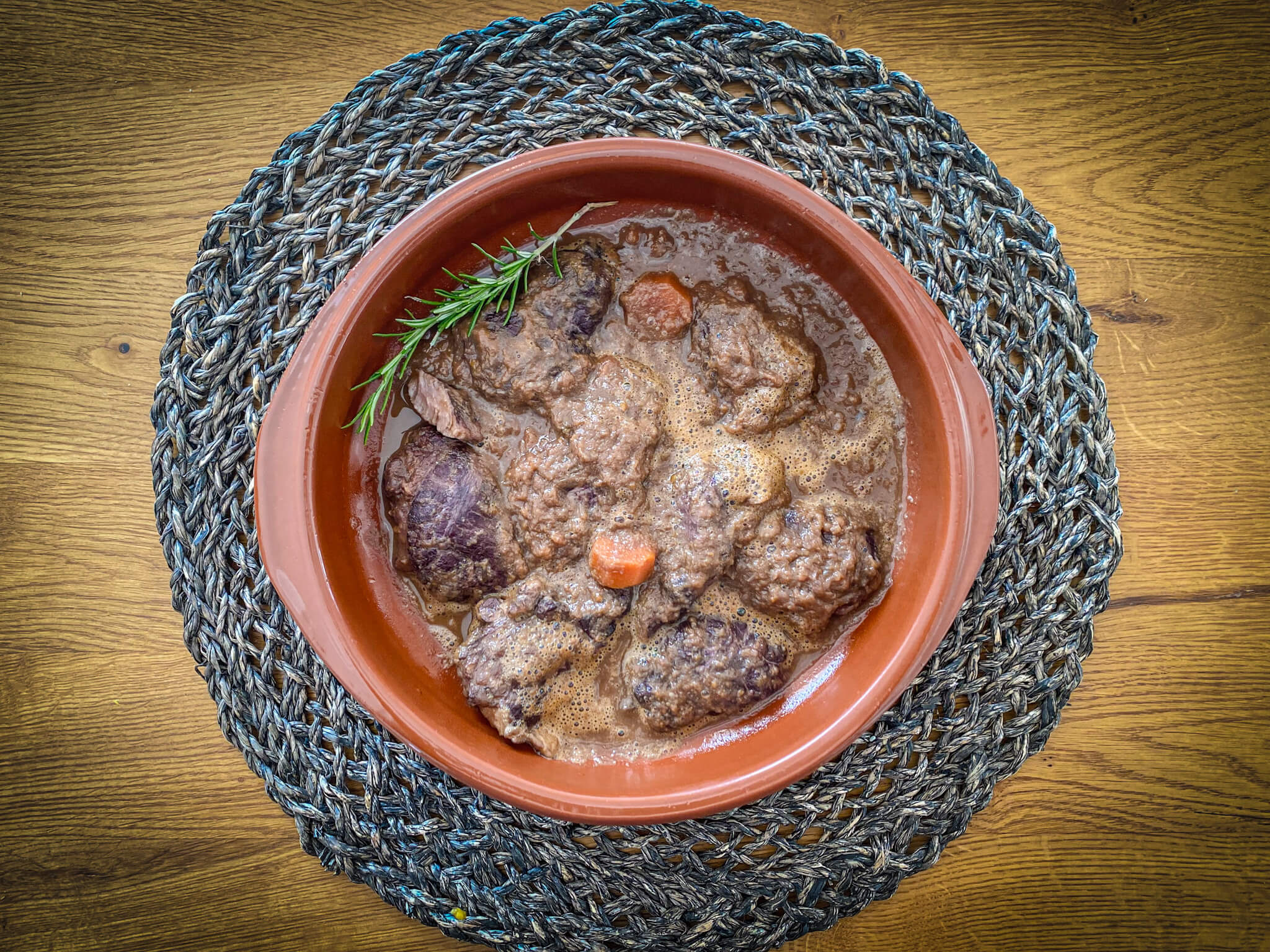
Pork Cheeks or Beef Cheeks?
Both pork and beef cheeks are excellent for slow braising, but they produce noticeably different results.
Pork cheeks are smaller, naturally rich in collagen, and become incredibly tender after about 2 hours of gentle cooking. Their delicate flavor allows the red wine, herbs, and dark chocolate to shine, while the collagen creates a silky, luxurious sauce.
Beef cheeks require a little more patience—usually 3 hours or more—but reward you with a deeper, richer beef flavor and a firmer texture that still melts in your mouth. They pair particularly well with full-bodied red wines and create a more robust, rustic stew.
Neither is better than the other; it simply depends on the style of dish you’re looking for. If you prefer a refined, velvety braise, choose pork cheeks. If you’re after a bold, hearty stew with intense beef flavor, beef cheeks are the perfect choice. The good news is that this recipe works beautifully with either.
Choosing the Right Red Wine for Braised Pork Cheeks
Red wine is one of the key ingredients in this recipe. As it slowly reduces, it blends with the meat juices, vegetables, and dark chocolate to create a rich, deeply flavored sauce.
There’s no need to use an expensive bottle, but always choose a wine you would happily drink. Avoid “cooking wines,” which often contain added salt or inferior-quality wine.
Some excellent choices include:
- Tempranillo – Spain’s classic choice, with ripe fruit and subtle spice that pairs beautifully with pork.
- Cabernet Sauvignon – Full-bodied and structured, ideal for beef cheeks and richer stews.
- Merlot – Softer and fruitier, producing a smoother, more rounded sauce.
- Syrah (Shiraz) – Peppery, dark-fruited, and an excellent match for the rosemary and dark chocolate in this recipe.
Whatever wine you choose, serve the same bottle alongside the finished dish. The flavors in the glass will echo those in the sauce, making the meal even more enjoyable.
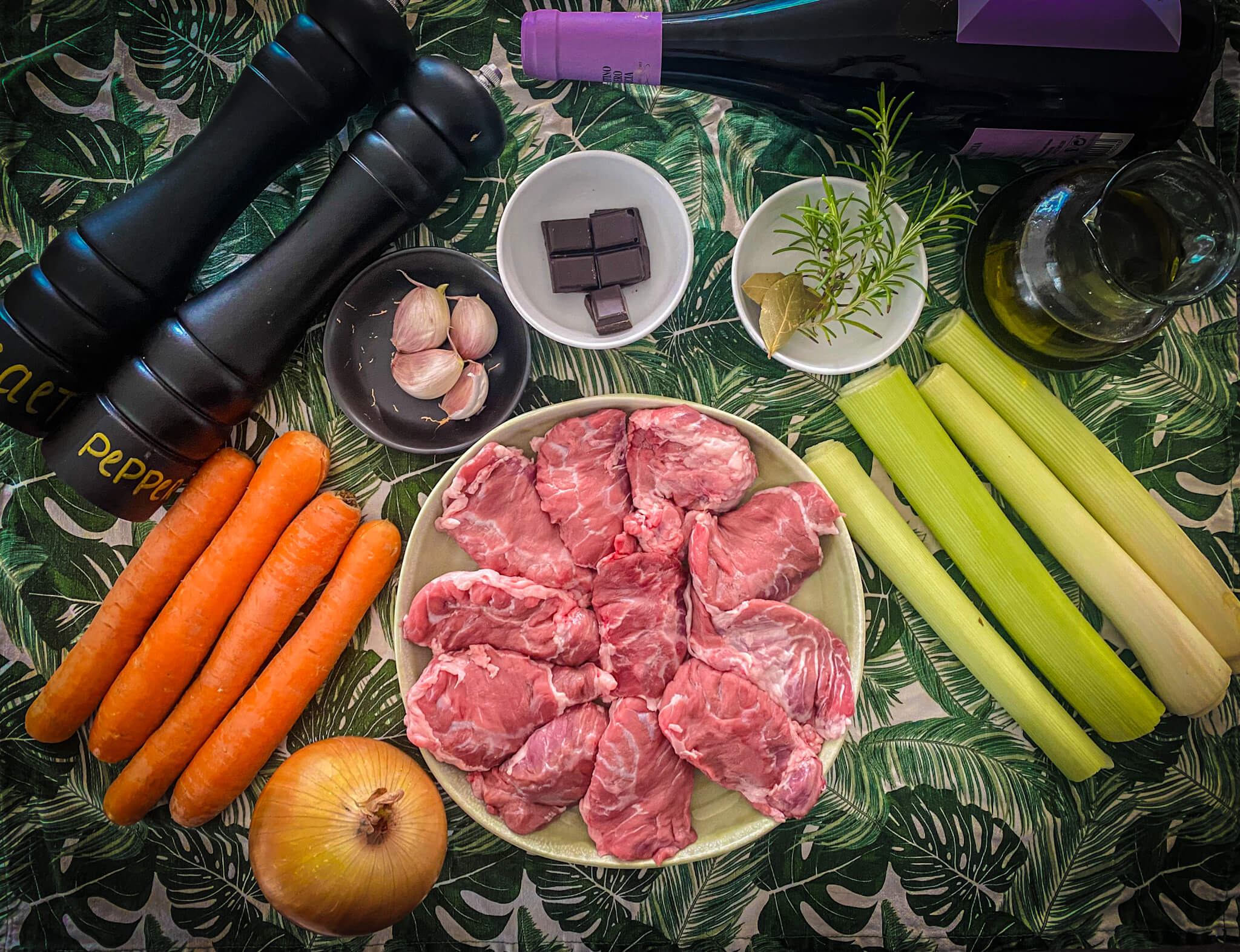
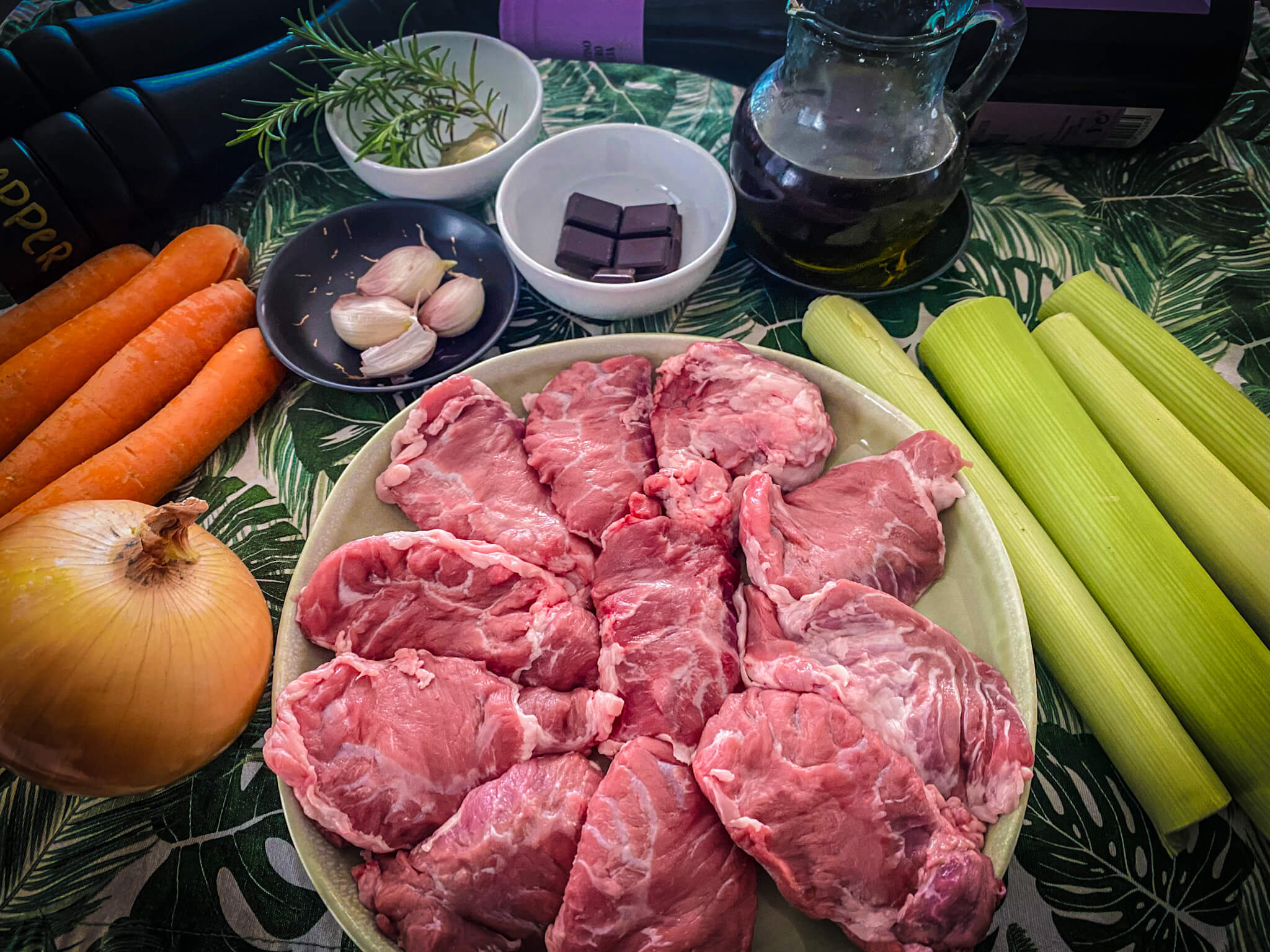
Ingredients
| Metric Amount | Imperial Amount | Core Ingredient | Preparation |
| 12 units (pork) / 4 units (beef) | 12 units (pork) / 4 units (beef) | Cheeks | Trimmed of excess fat |
| 200 g | 7 oz | Carrots | Peeled and medium-chopped |
| 250 g | 8.8 oz | Leeks | Cleaned and sliced |
| 150 g | 5.3 oz | Onion | Peeled and diced |
| 4 cloves | 4 cloves | Garlic | Peeled |
| 2 units | 2 units | Bay leaves | Dried |
| 2 sprigs | 2 sprigs | Rosemary | Fresh |
| 20 ml | 1.3 tbsp | Olive oil | Extra virgin |
| 10 g | 0.35 oz | Dark chocolate | High cocoa content |
| 180 ml | 0.75 cup | Red wine | Dry, full-bodied |
| To taste | To taste | Salt | Fine |
| To taste | To taste | Black pepper | Ground |
Instructions
1. Prepare the Vegetables
Peel and dice the onion. Wash the leeks, remove the tough outer leaves, halve them lengthwise, and slice them. Peel the garlic cloves, peel and chop the carrots into medium-sized pieces, and set everything aside.
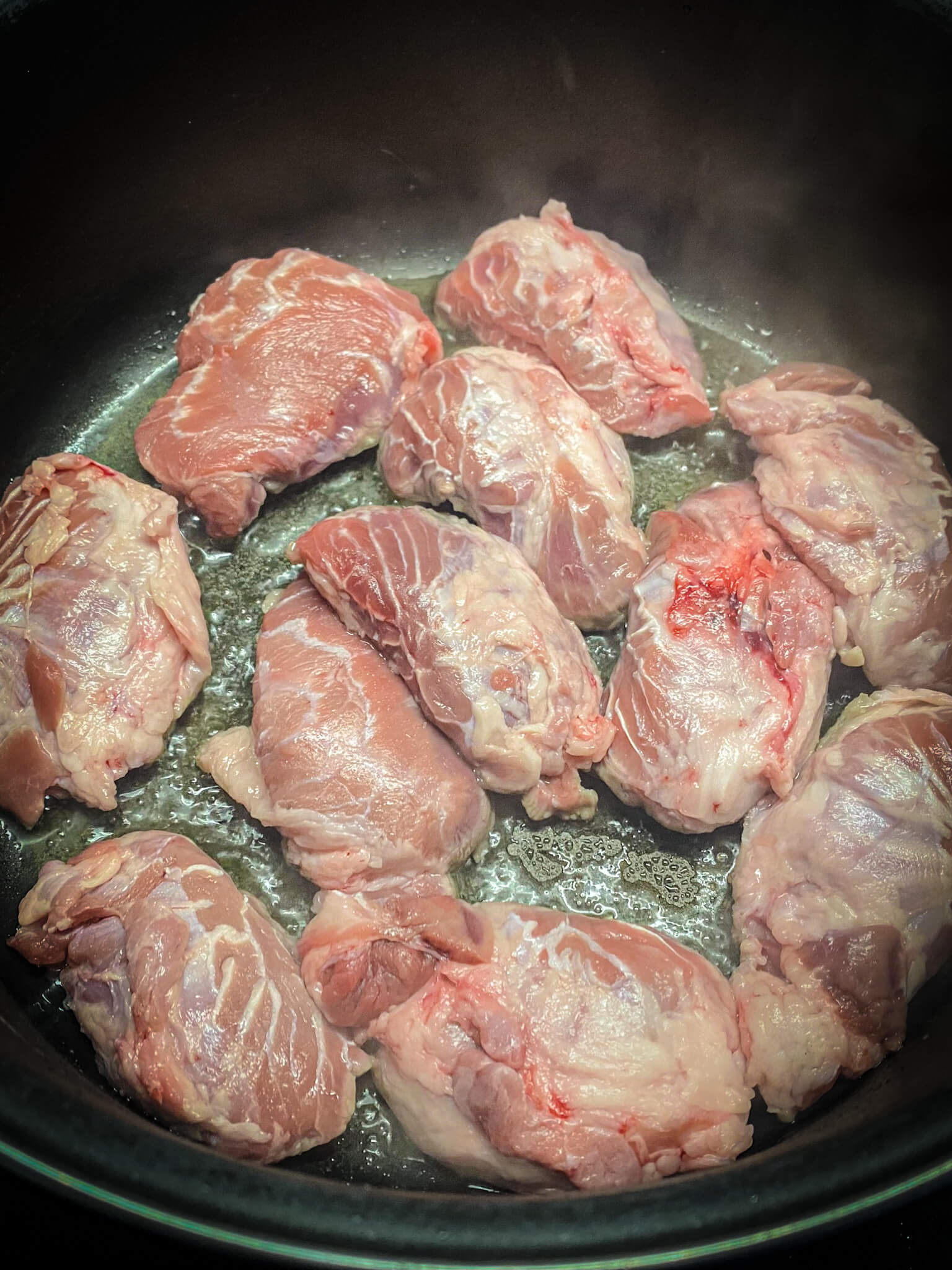
2. Brown the Cheeks
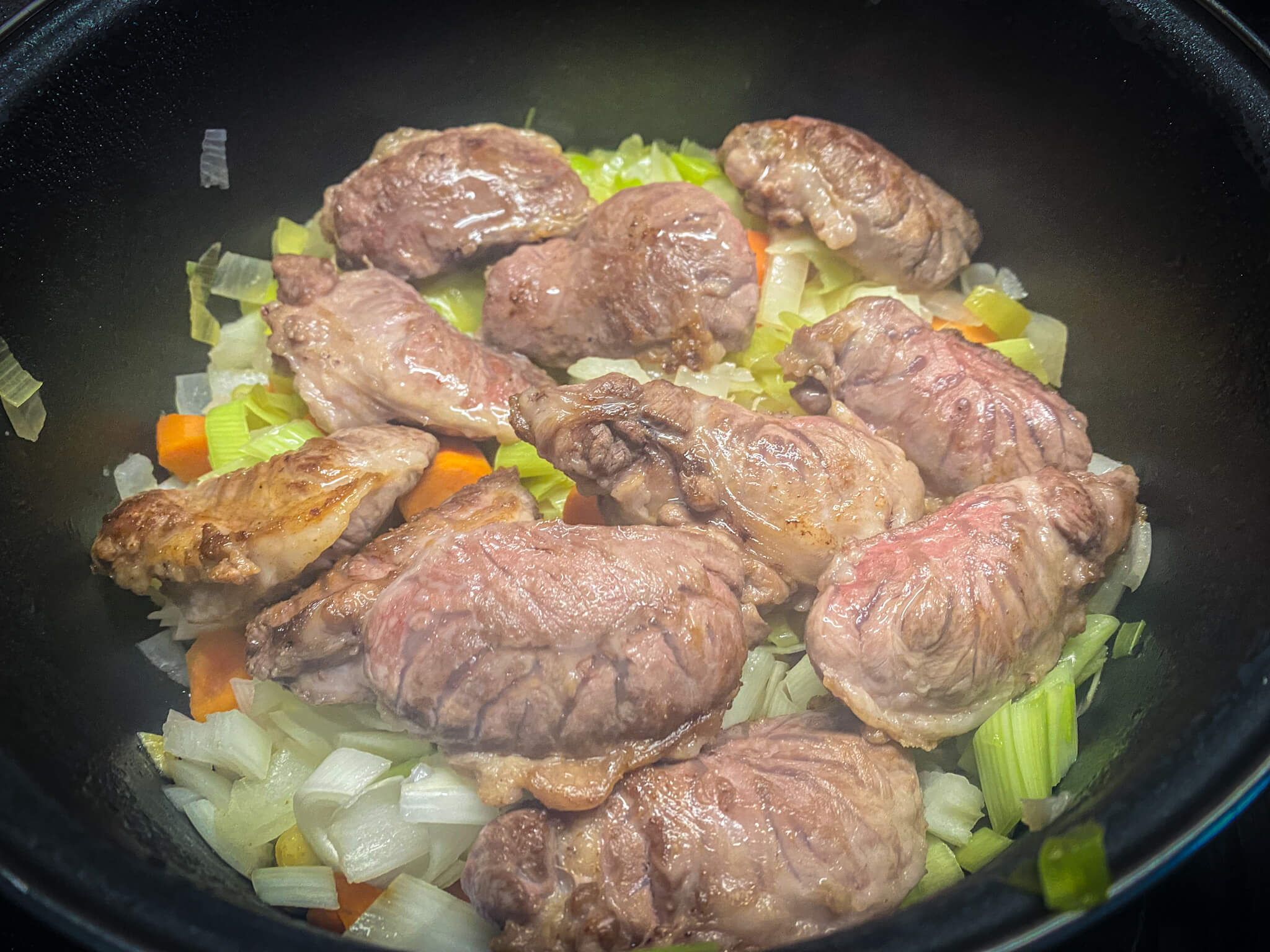
Heat a drizzle of olive oil in a large pot over medium-high heat. Season the pork cheeks with salt and pepper, then sear them for about 5 minutes, turning until browned on all sides. Remove and set aside.

3. Sauté the Vegetables
Using the same pot, add a little more olive oil if needed. Sauté the onion, leeks, garlic, and carrots over medium heat for about 10 minutes, scraping up any browned bits from the bottom of the pot to build flavor.

4. Braise the Meat
Return the pork cheeks to the pot and pour in the red wine. Increase the heat and simmer for about 5 minutes to allow the alcohol to evaporate. Add enough water or beef broth to nearly cover the meat, then season with salt, rosemary, and the bay leaf. Bring to a gentle boil, reduce the heat, cover, and simmer for 2 hours (or 3 hours for beef cheeks), until the meat is fork-tender.

5. Finish the Sauce
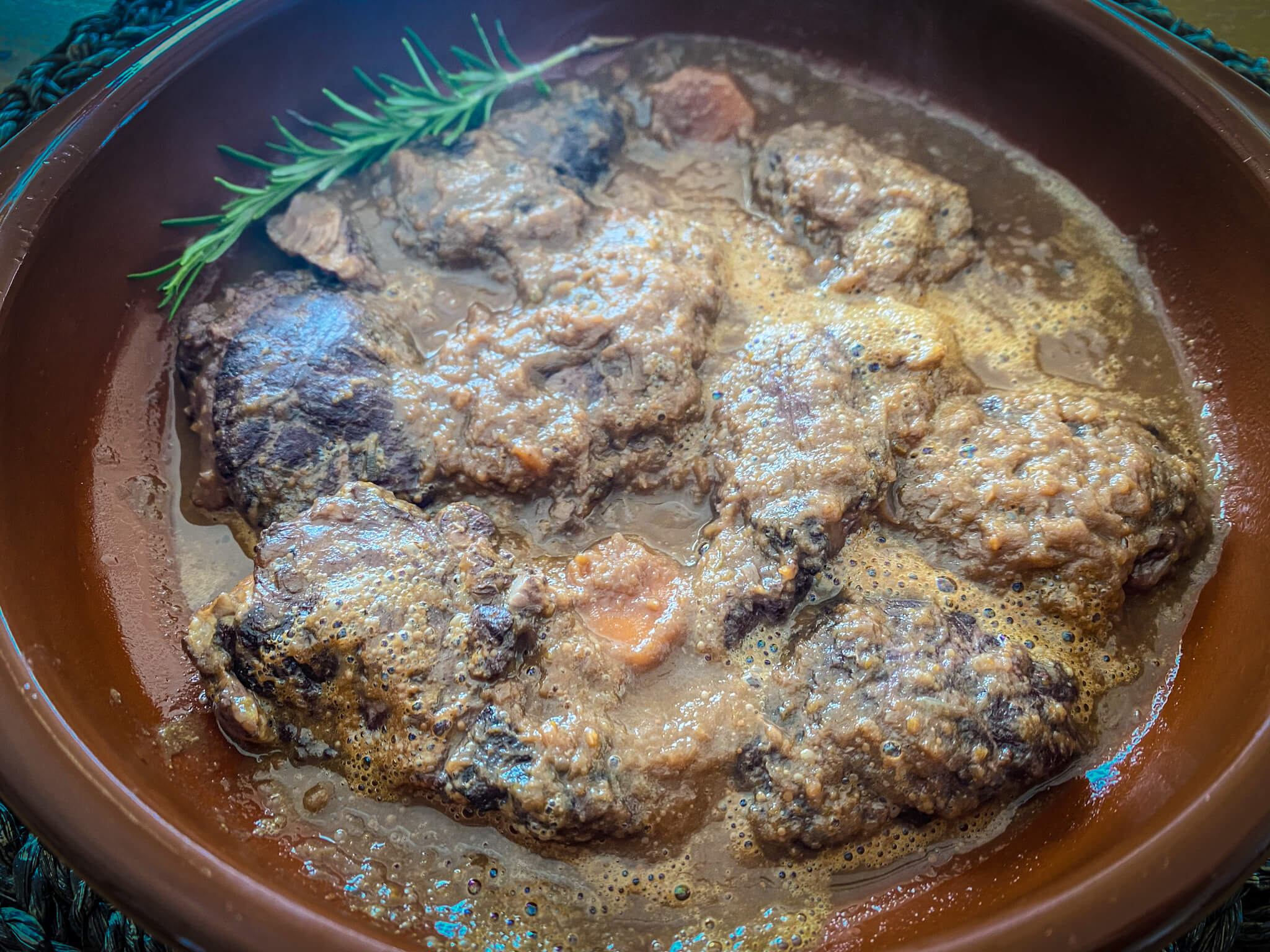
Remove the pork cheeks, rosemary, and bay leaf from the pot. Blend the vegetables and cooking liquid until smooth, then return the sauce to the pot. Add the dark chocolate and stir gently until completely melted. Simmer for a few minutes until the sauce reaches your desired consistency. If needed, thicken it with a small amount of cornstarch slurry.
6. Serve
Return the pork cheeks to the sauce and gently coat them. Serve hot with mashed potatoes, creamy polenta, roasted vegetables, or crusty bread to enjoy every drop of the rich red wine and chocolate sauce.
Chef’s Notes for Red Wine Braised Pork Cheeks
Why should I brown the pork cheeks first? Browning the meat develops a rich, caramelized crust that adds incredible depth to the sauce. Don’t rush this step—the browned bits left in the pot dissolve into the vegetables and wine, creating a much richer final flavor.
Why reduce the red wine before adding the broth? Letting the wine simmer for a few minutes allows the alcohol to evaporate while concentrating its fruity aromas. This creates a smoother, more balanced sauce that complements the richness of the pork without tasting overly acidic.
Why add the chocolate at the end? Dark chocolate isn’t meant to make the sauce sweet. Instead, it adds subtle bitterness, extra body, and a glossy finish that pairs beautifully with the red wine and slow-cooked meat. Stir it in gently once the sauce has been blended until completely melted.
Common Mistakes When Making Red Wine Braised Pork Cheeks
Not cooking the meat long enough: Pork cheeks are ready when they can be easily cut with a fork. If they still feel firm, simply continue simmering until the collagen has completely broken down.
Boiling instead of gently simmering: Keep the heat low throughout the braising process. A gentle simmer produces much more tender meat and prevents the sauce from reducing too quickly.
Adding too much liquid: The meat should be almost, but not completely, covered. Too much broth will dilute the sauce and require extra time to reduce later.
Skipping the final sauce reduction: After blending the vegetables, simmer the sauce for a few minutes if necessary. A slightly reduced sauce clings beautifully to the pork cheeks and delivers a much richer flavor.
Variations on Red Wine Braised Pork Cheeks
Mediterranean Citrus Version: Add a strip of orange peel during the braising process to bring a fresh citrus aroma that balances the richness of the meat and complements the dark chocolate.
Wild Mushroom Version: Add sautéed mushrooms during the final 20 minutes of cooking for an earthy flavor that pairs naturally with the red wine sauce.
Pedro Ximénez Version: Replace part of the red wine with Pedro Ximénez sherry for a richer, slightly sweeter sauce with even greater depth—a classic Spanish pairing for slow-cooked meats.
I especially like the orange peel variation. Orange, red wine, rosemary, bay leaf, and dark chocolate create a very Mediterranean flavor profile without overpowering the pork.
Recipe Card
Braised Pork Cheeks in Red Wine Recipe

These Red Wine Braised Pork Cheeks with Dark Chocolate are my new favorite way to enjoy this underrated cut of meat. Slow-cooked until fork-tender, the pork cheeks absorb the rich flavors of red wine, while a touch of dark chocolate adds remarkable depth and complexity without making the dish sweet. The result is a luxurious, melt-in-your-mouth meal that's perfect for a special dinner or a cozy weekend feast.
Ingredients
- 12 pork cheeks or 4 beef cheeks
- 4 carrots
- 4 leeks
- 1 onion
- 4 garlic cloves
- 2 bay leaves
- 2 sprigs of rosemary
- 20 ml olive oil
- A pinch of salt
- A pinch of ground black pepper
- 10 g dark chocolate
- 180 ml red wine
Instructions
1. Prepare the Vegetables
Peel and dice the onion. Wash the leeks, remove the tough outer leaves, halve them lengthwise, and slice them. Peel the garlic cloves, peel and chop the carrots into medium-sized pieces, and set everything aside.
2. Brown the Cheeks
Heat a drizzle of olive oil in a large pot over medium-high heat. Season the pork cheeks with salt and pepper, then sear them for about 5 minutes, turning until browned on all sides. Remove and set aside.
3. Sauté the Vegetables
Using the same pot, add a little more olive oil if needed. Sauté the onion, leeks, garlic, and carrots over medium heat for about 10 minutes, scraping up any browned bits from the bottom of the pot to build flavor.
4. Braise the Meat
Return the pork cheeks to the pot and pour in the red wine. Increase the heat and simmer for about 5 minutes to allow the alcohol to evaporate. Add enough water or beef broth to nearly cover the meat, then season with salt, rosemary, and the bay leaf. Bring to a gentle boil, reduce the heat, cover, and simmer for 2 hours (or 3 hours for beef cheeks), until the meat is fork-tender.
5. Finish the Sauce
Remove the pork cheeks, rosemary, and bay leaf from the pot. Blend the vegetables and cooking liquid until smooth, then return the sauce to the pot. Add the dark chocolate and stir gently until completely melted. Simmer for a few minutes until the sauce reaches your desired consistency. If needed, thicken it with a small amount of cornstarch slurry.
6. Serve
Return the pork cheeks to the sauce and gently coat them. Serve hot with mashed potatoes, creamy polenta, roasted vegetables, or crusty bread to enjoy every drop of the rich red wine and chocolate sauce.
Notes
To make the sauce, you can remove the vegetables and broth from the pot and blend them in a separate container. Then, strain the mixture back into the pot for a smoother texture before adding the chocolate.
If you choose to make this recipe with beef instead of pork, you'll need to add an extra hour of cooking time so the meat becomes tender enough to fall apart with every bite.
Nutrition Information:
Yield:
4Serving Size:
1Amount Per Serving: Calories: 747Total Fat: 40gSaturated Fat: 14gUnsaturated Fat: 27gCholesterol: 225mgSodium: 189mgCarbohydrates: 20gFiber: 3gSugar: 7gProtein: 69g
