
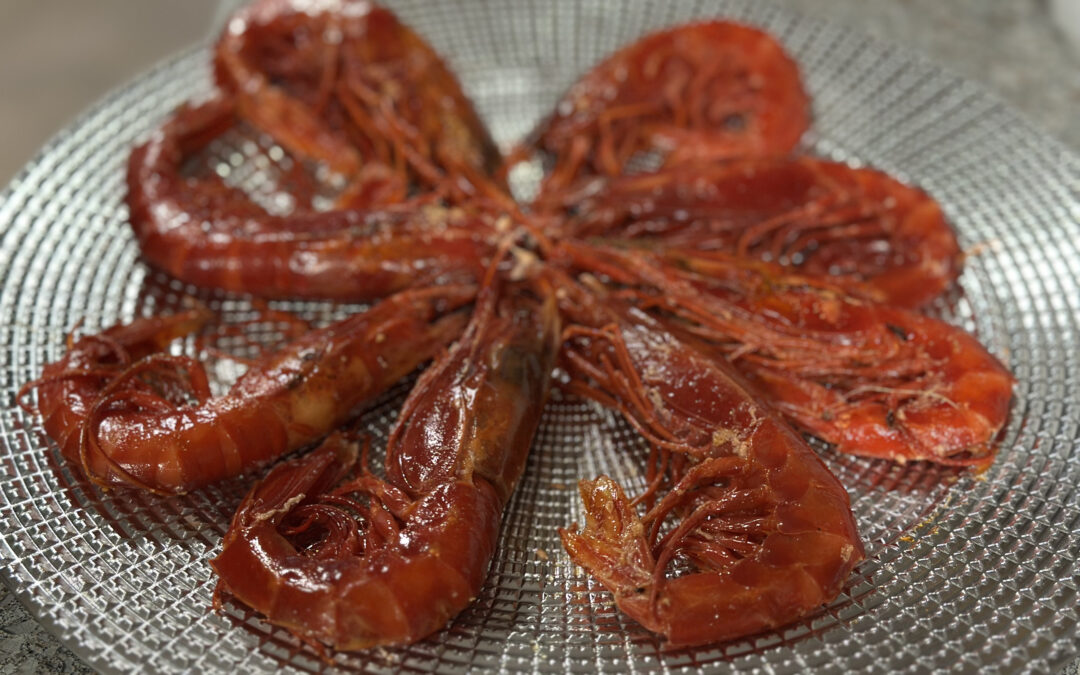
Spanish Fish & Seafood Recipes tell the story of a country shaped by the sea, from the rugged Cantabrian coast and Galicia to the tuna-rich waters of Cádiz and the sun-drenched Mediterranean. Discover the traditions, ingredients, and cooking techniques behind Spain’s coastal cuisine, from salt cod and Galician octopus to seafood stews, tapas, and classic fish dishes.
The Ultimate Guide to Spanish Fish & Seafood Recipes: Coastal Traditions & Classic Recipes
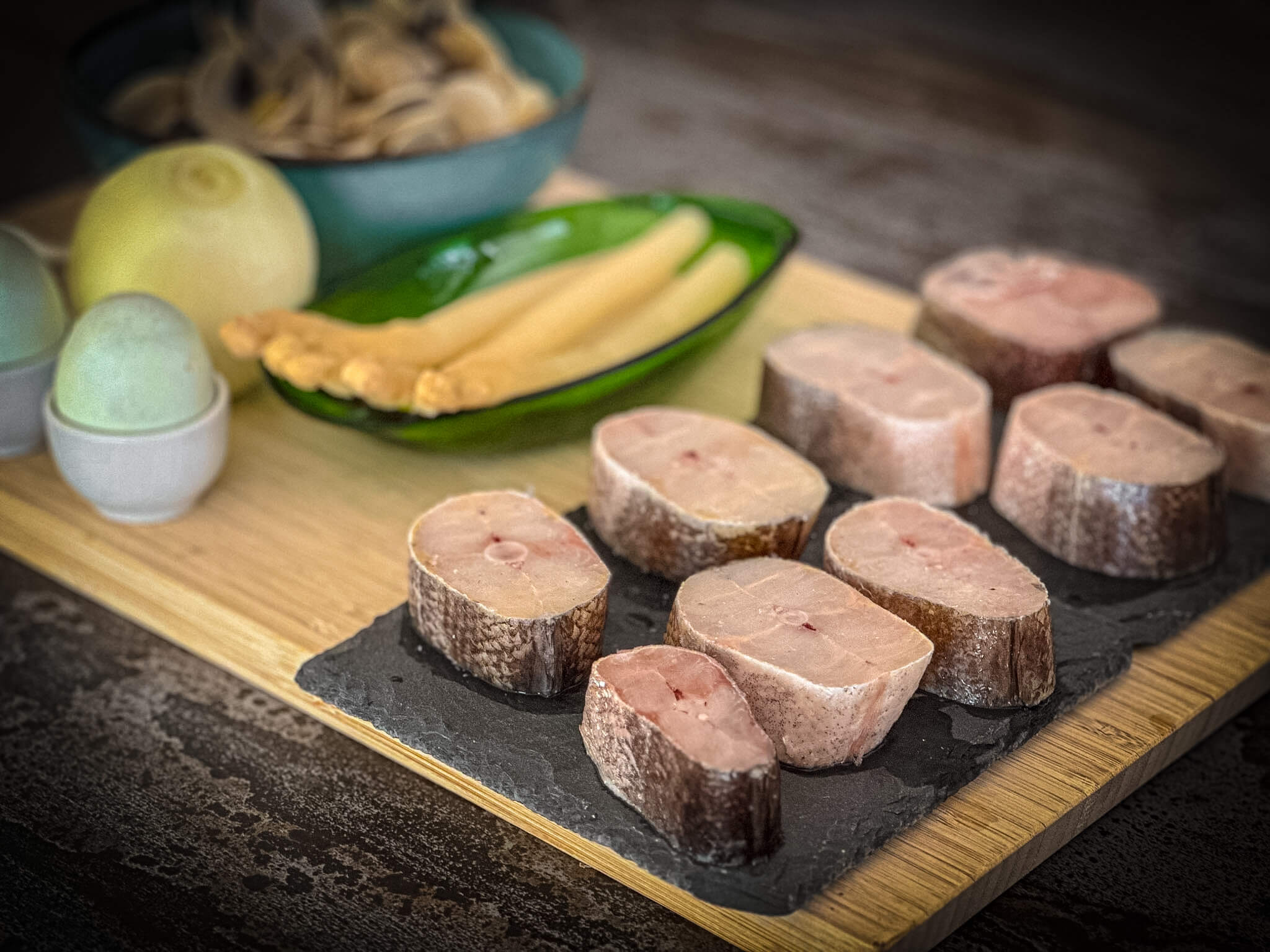
Spanish Fish & Seafood Recipes: From the Atlantic to the Mediterranean
Spain has always looked towards the sea. From the rugged Cantabrian coast and the Atlantic waters of Galicia to the tuna-rich waters of Cádiz and the warm Mediterranean, the sea has shaped the way generations of Spaniards have eaten, preserved, and cooked food.
But there is no single Spanish seafood cuisine.
The cold waters of the north created a strong tradition of fishing, salting, and preserving. Galicia developed a remarkable culture around its rías and shellfish. Cádiz built a centuries-old relationship with migrating tuna. And along the Mediterranean, fish and seafood became part of a cuisine built around olive oil, garlic, peppers, potatoes, and deeply flavored sauces.
What connects all these traditions is a remarkably practical approach to cooking: take what the sea provides, build flavor with simple ingredients, and make the most of every part of the meal.
Sometimes that means a delicate fish cooked simply with olive oil and garlic. Other times, it means a rich stew where potatoes absorb every drop of the broth, or a fisherman’s pot where fish becomes a hearty family meal.
This collection of Spanish Fish & Seafood Recipes brings together the dishes I cook and love from these different coastal traditions — from Basque salt cod and Galician octopus to Mediterranean stews, Andalusian seafood tapas, and simple Spanish fish dishes.
A Spanish Cuisine Shaped by the Sea
For centuries, Spain’s coastal communities have depended on the sea not only for food, but also for trade, livelihoods, and survival.
Fishermen learned to follow the seasons and the movements of fish. They developed ways to preserve their catches when refrigeration did not exist. They learned how to turn inexpensive ingredients into filling meals and how to make a small catch stretch further by combining it with potatoes, vegetables, legumes, bread, or other staples.
That practical intelligence is still visible in Spanish cooking today.
A piece of cod can become a silky pil-pil sauce. Tuna can become a hearty fisherman’s stew. Squid can be combined with potatoes, peas, vegetables, or a rich tomato sauce. Salt cod can be shredded into a simple Mediterranean salad.
And a handful of shrimp can become one of Spain’s most famous tapas with little more than garlic, olive oil, and a touch of chili.
The Spanish coast may be incredibly diverse, but the underlying philosophy remains remarkably consistent:
good ingredients, simple techniques, powerful cooking juices, and very little waste.
Basque Country & the Cantabrian Sea: Cod, Sailors & the Fisherman’s Pot
The northern coast of Spain has one of the country’s strongest maritime identities.
Basque sailors were renowned fishermen and navigators, venturing far into the Atlantic in search of rich fishing grounds. Their connection with the North Atlantic became closely associated with cod fishing around Newfoundland, while salting provided a practical way to preserve fish during long voyages.
Salt cod, or bacalao, eventually became one of the most important preserved fish in Spanish cuisine.
The beauty of bacalao is its versatility. Once properly desalted, it can be fried, baked, stewed, combined with vegetables, or transformed into an intensely flavored sauce.
Bacalao al Pil Pil
One of the great classics of Basque cooking, Bacalao al Pil Pil turns just a few ingredients — salt cod, olive oil, garlic, and chili — into a remarkably silky sauce. The magic happens as the gelatin released by the cod emulsifies with the olive oil.

Read the full Bacalao al Pil Pil recipe
Marmitako: The Fisherman’s Tuna Stew
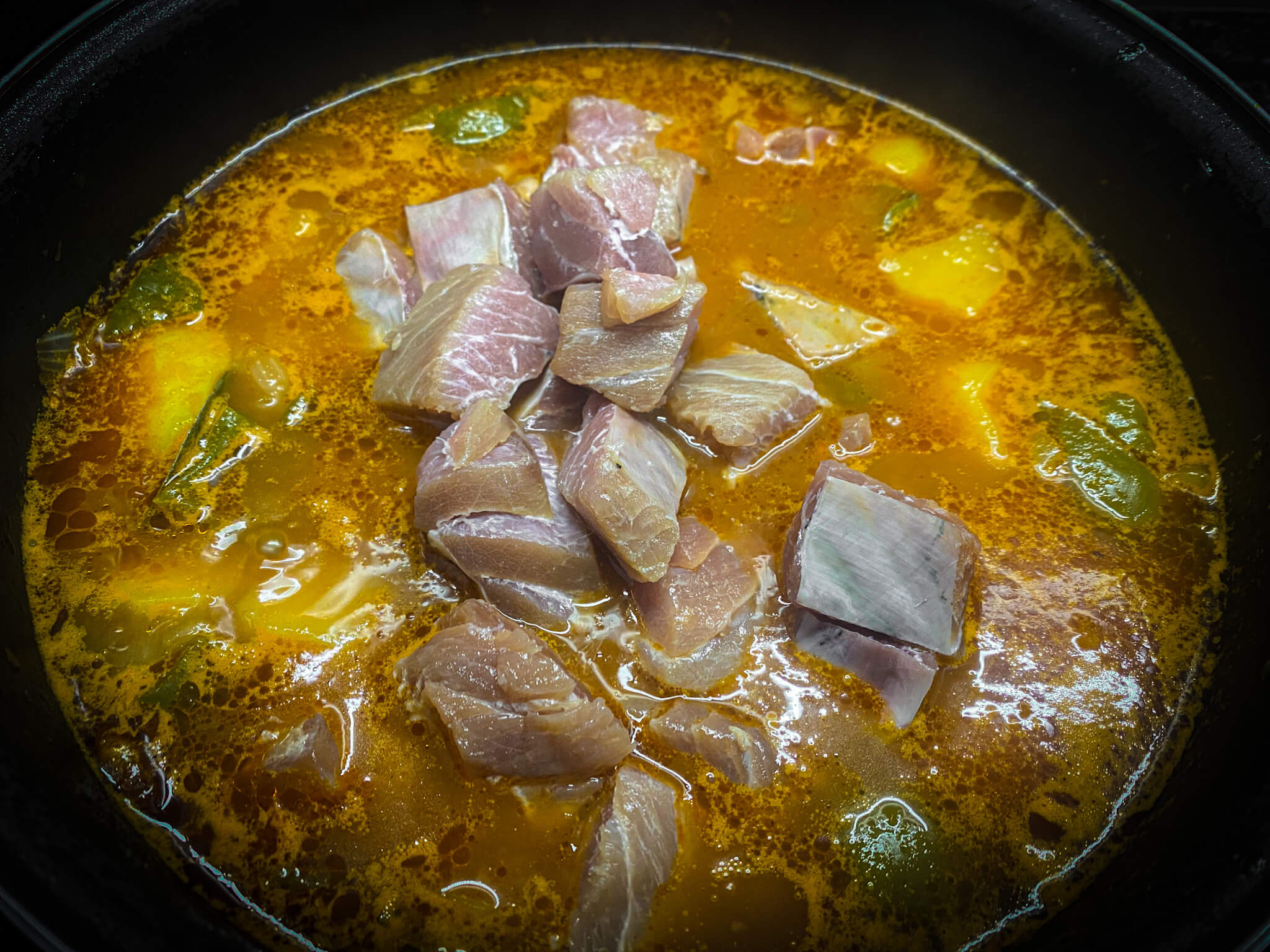
Marmitako is a perfect example of practical Basque fishing cuisine. Tuna is cooked with potatoes, peppers, onion, and a flavorful broth to create a hearty one-pot meal traditionally associated with fishermen.
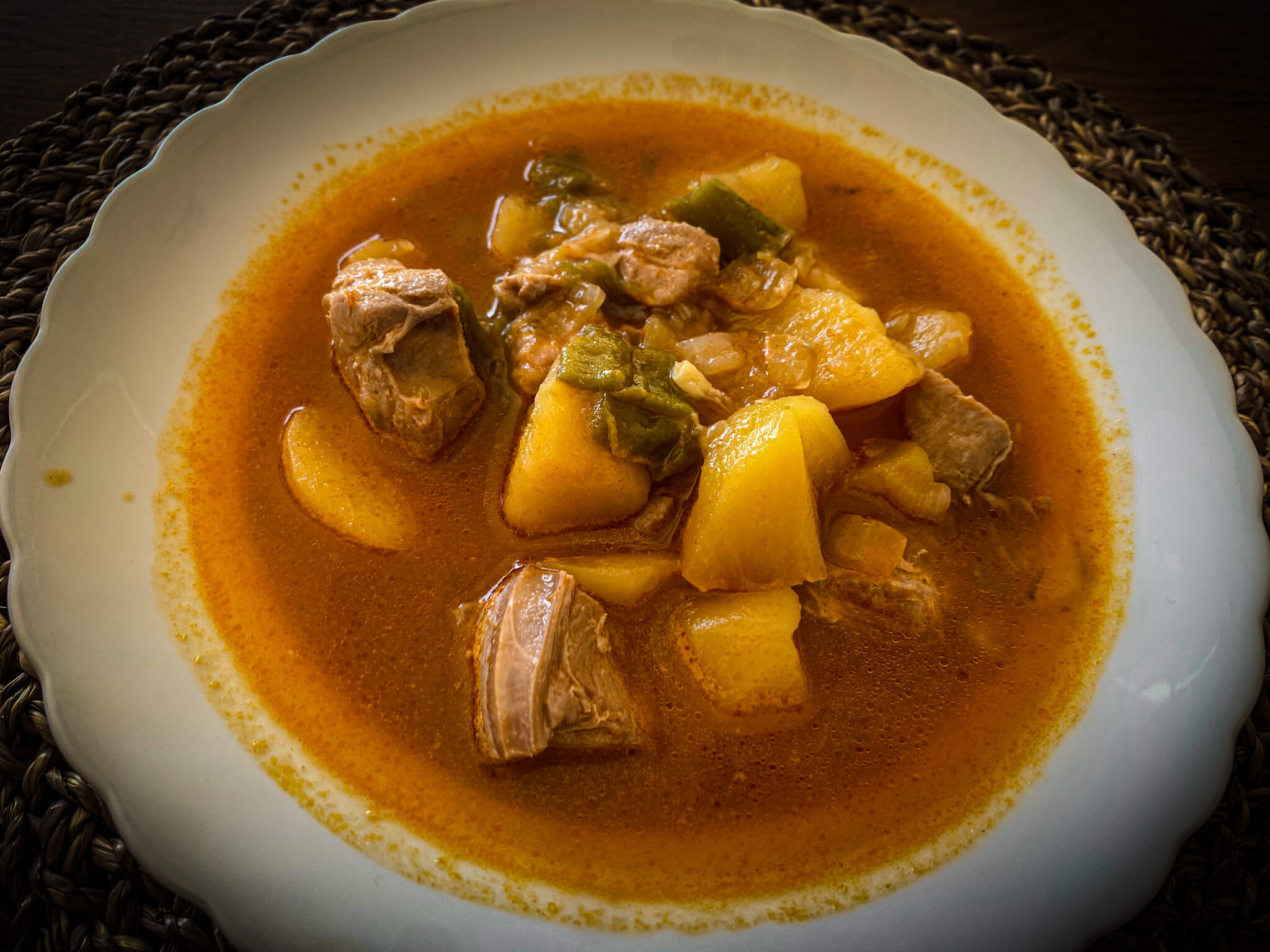
Read the full Authentic Basque Marmitako recipe
Bacalao a la Vizcaína
In Bacalao a la Vizcaína, salt cod meets one of the great sauces of Basque cooking, built around dried peppers for a deep, concentrated flavor.
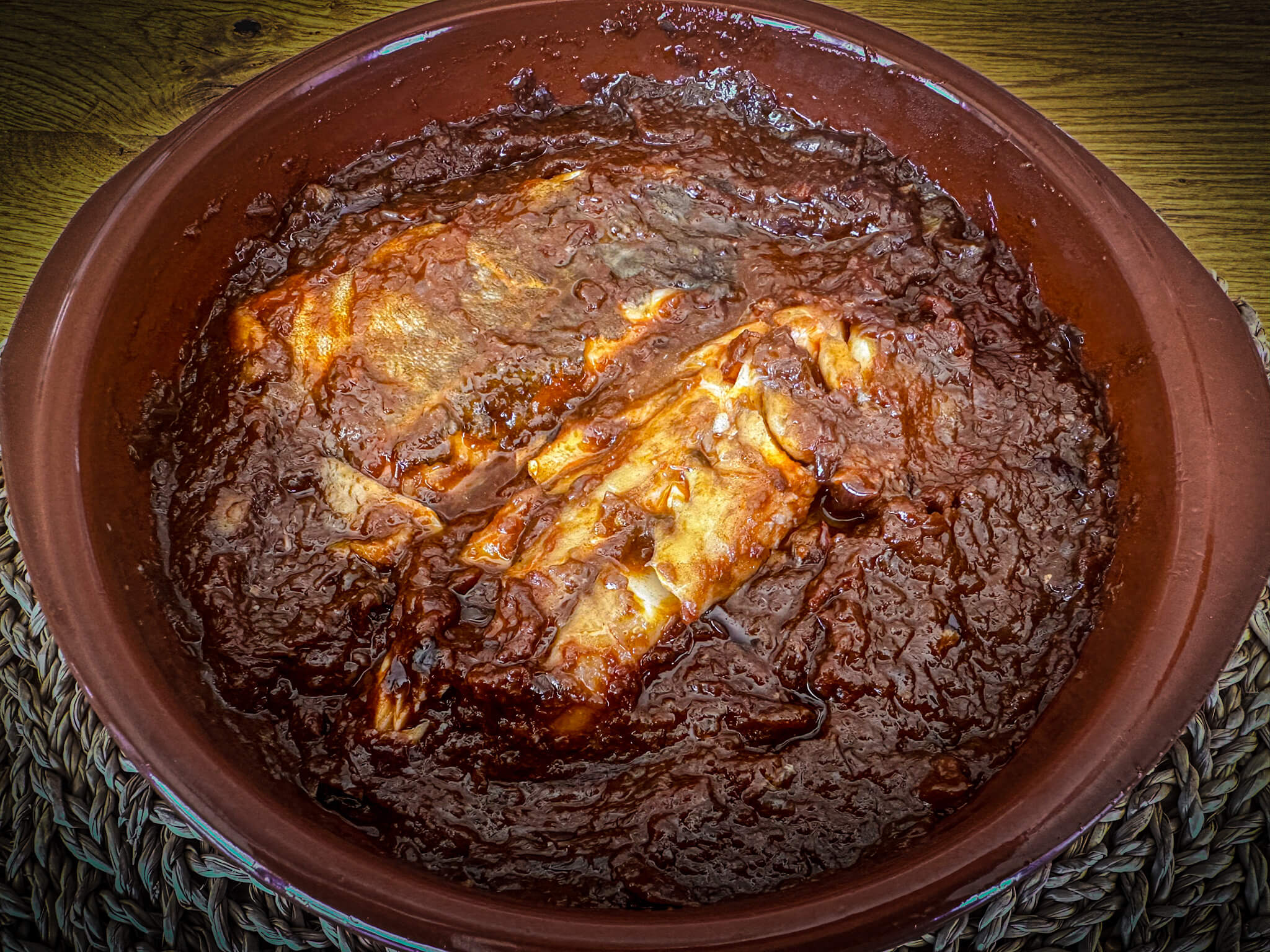
Read the full Bacalao a la Vizcaína recipe
(click here)
Bacalao en Salsa de Piquillos
Sweet roasted piquillo peppers bring another character to salt cod, creating a colorful and richly flavored Spanish sauce.

Read the full Spanish Cod in Piquillo Pepper Sauce recipe
Merluza a la Vasca
Hake is another important fish along northern Spain’s coast. In this Basque-style preparation, delicate hake is paired with the flavors and ingredients of the northern kitchen.
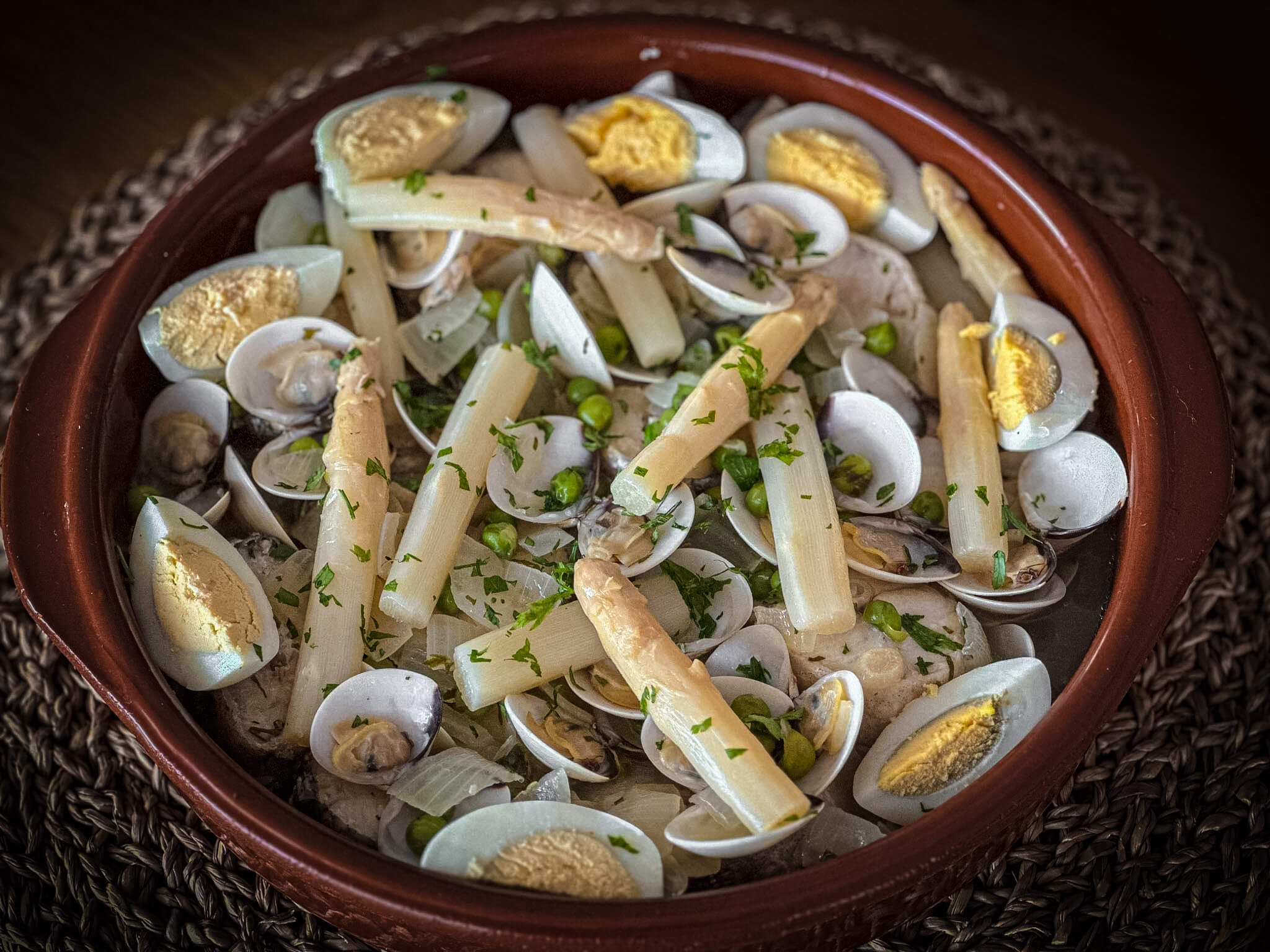
Read the full Basque-Style Hake recipe
The Cantabrian coast also developed an important tradition of preserving small fish, most famously the anchovies associated with places such as Santoña.
This relationship between the sea and preservation is an important part of northern Spanish food culture — and one that continues to influence the way fish is prepared today.
Galicia: Rías, Shellfish & the Flavor of the Atlantic
Further west, Galicia has developed one of Spain’s most celebrated seafood traditions.
Its rugged Atlantic coastline is shaped by the rías, long coastal inlets where marine and freshwater environments meet. These exceptionally productive waters have supported fishing, shellfish gathering, and mussel farming for generations.
Galician marisqueo, the traditional gathering of shellfish, is an essential part of the region’s identity. Mussels, clams, cockles, scallops, and other seafood are deeply connected to the local landscape and way of life.
But Galicia also demonstrates another important principle of Spanish seafood cooking:
when the ingredient is exceptional, the recipe does not need to be complicated.
Pulpo a la Gallega
Tender octopus, potatoes, extra virgin olive oil, and paprika create one of Spain’s most recognizable seafood dishes. Pulpo a la Gallega is a perfect example of how a small number of ingredients can express an entire region.
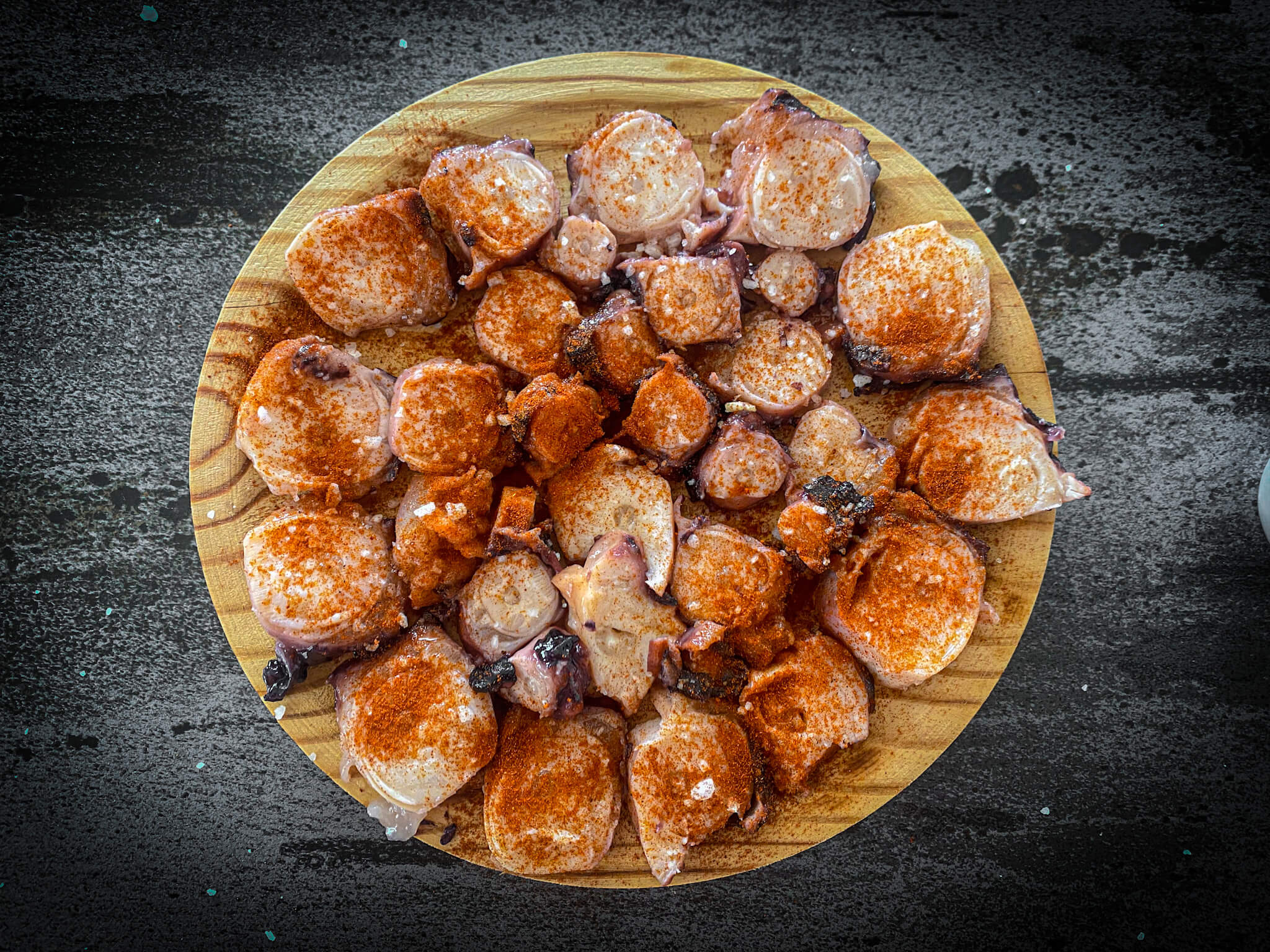
Read the full Authentic Pulpo a la Gallega recipe
Pulpo con Patatas Revolconas
This rustic combination brings Galician-style octopus together with smoky paprika potatoes, showing how potatoes can transform a seafood dish into something more substantial.
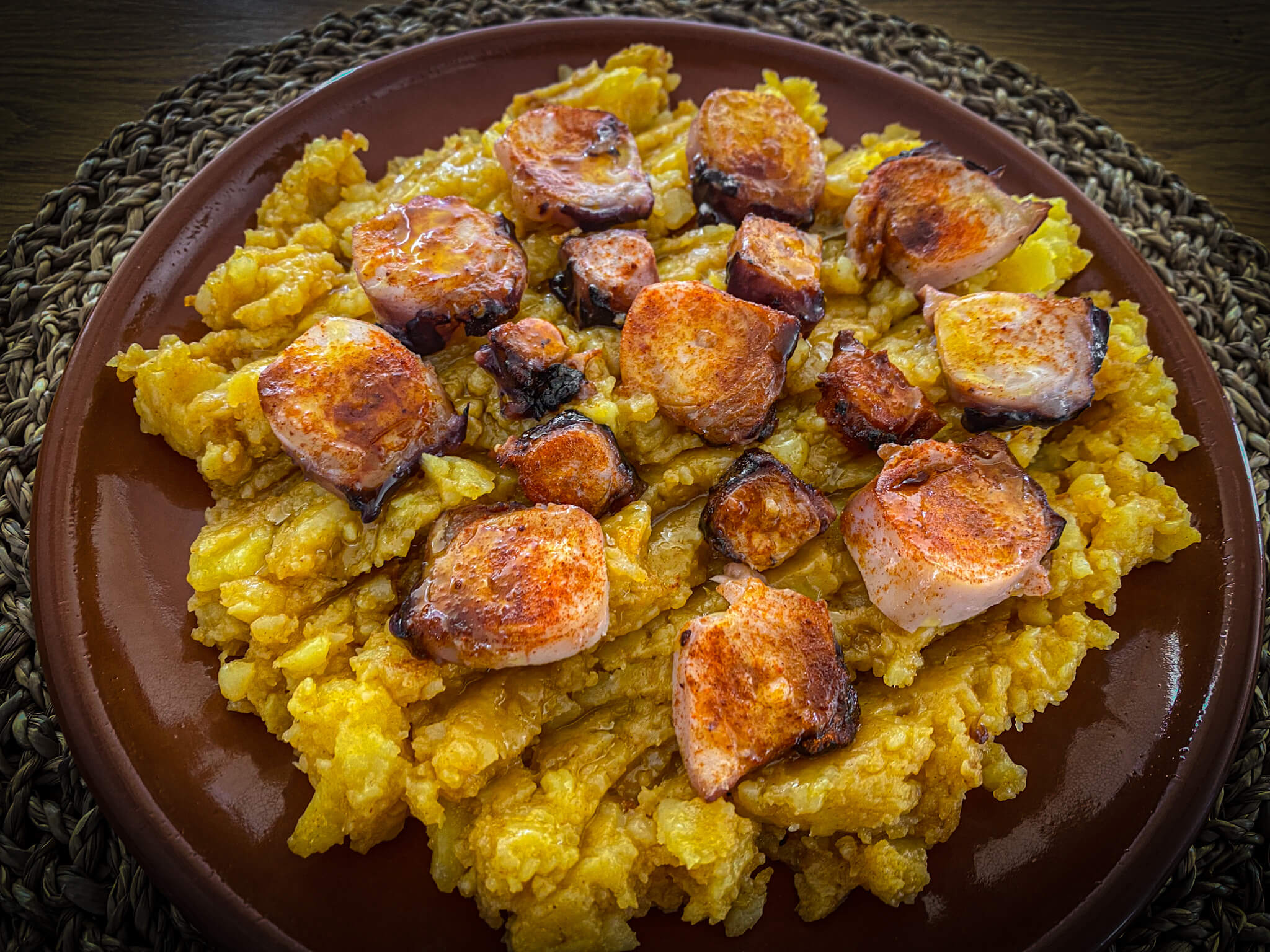
Read the full Pilgrim’s Octopus with Smoky Paprika Potatoes recipe
Merluza a la Gallega
Hake and potatoes are brought together with a fragrant garlic and paprika oil in this classic Galician-style preparation.
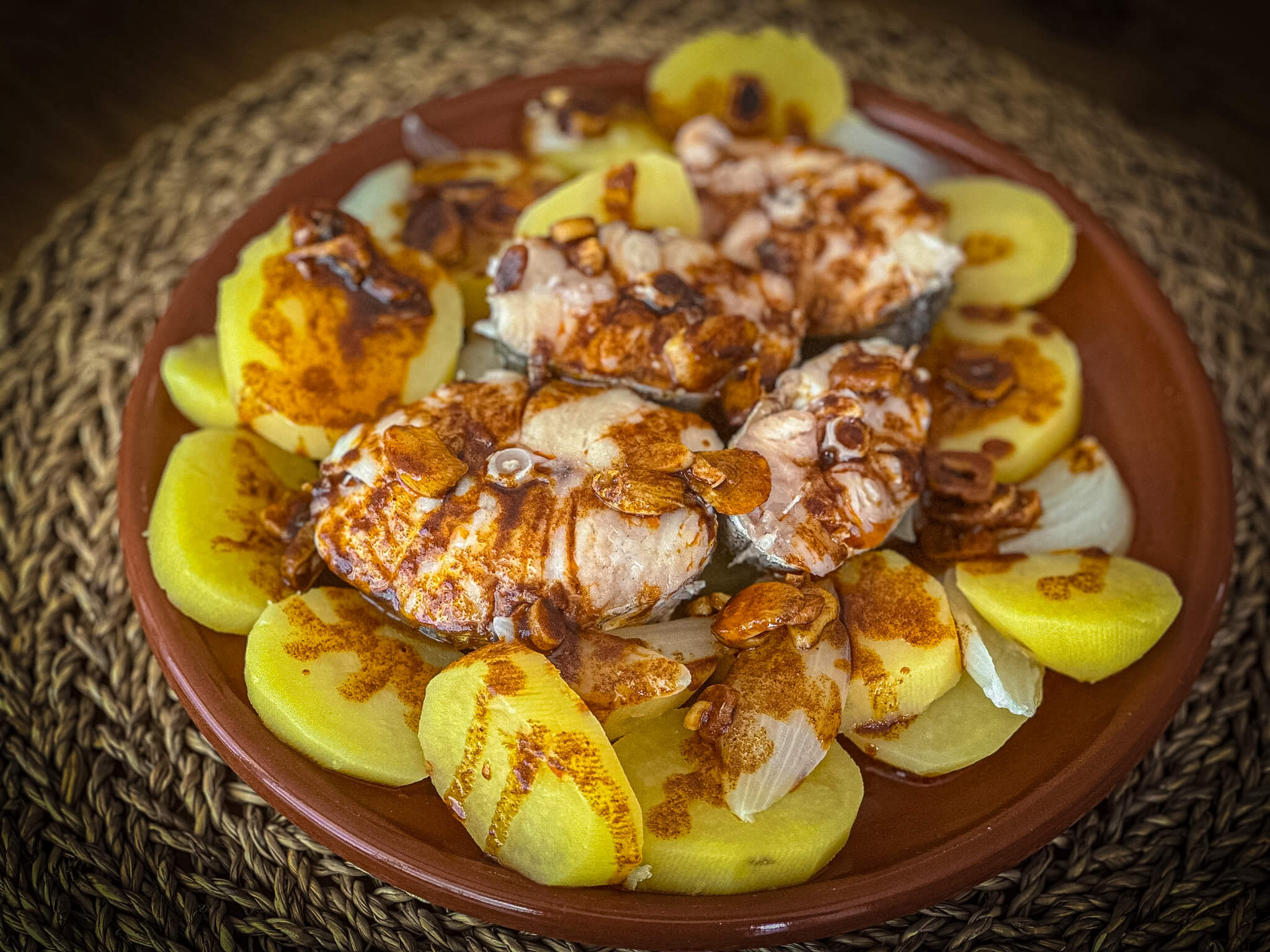
Read the full Galician-Style Hake recipe
Merluza con Almejas in Green Sauce
Hake and clams are another natural pairing from Galicia, combining delicate fish with the briny flavor of shellfish.
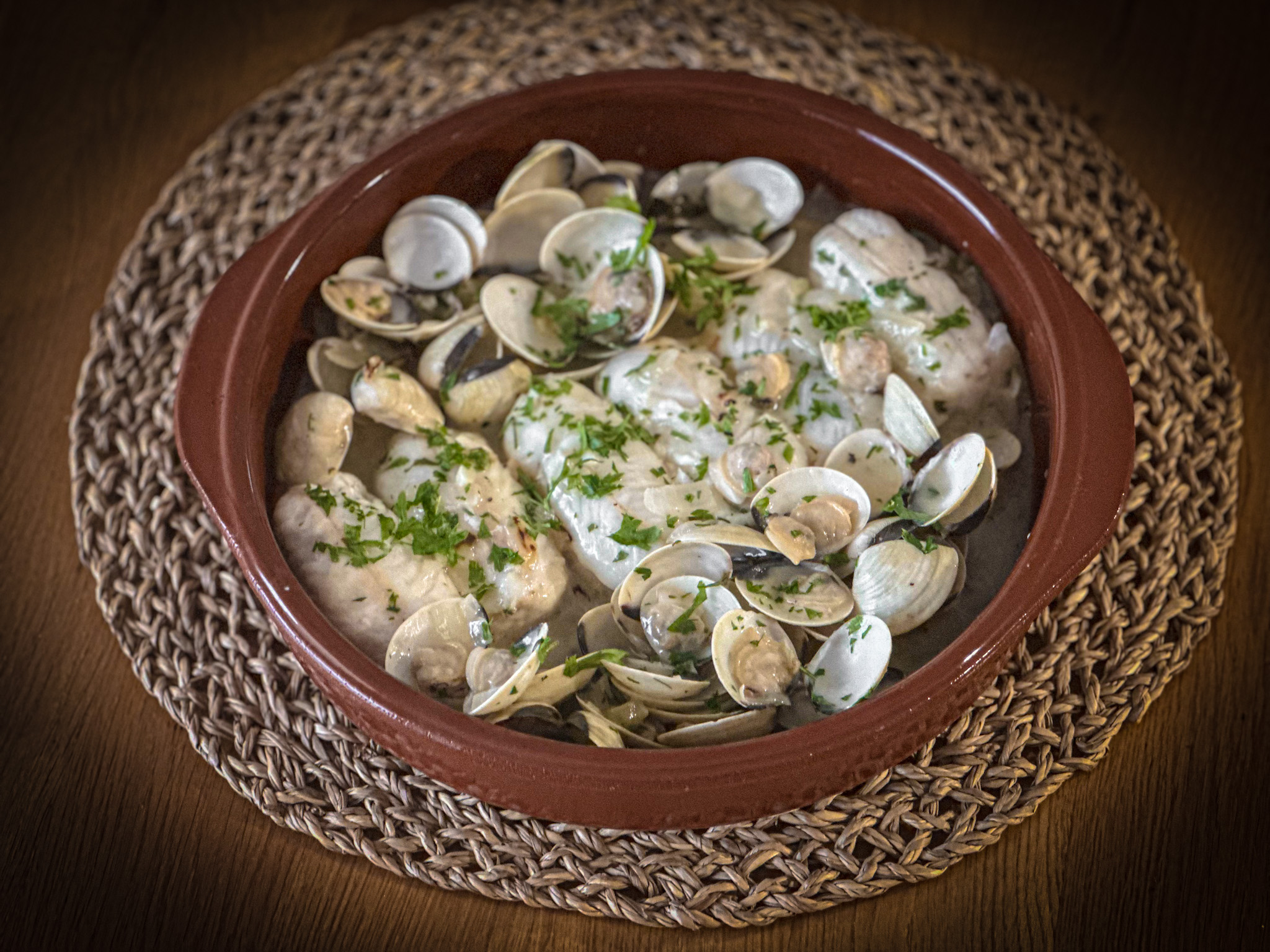
Read the full Hake with Clams recipe
Cádiz & Huelva: Tuna, Sardines & the Atlantic South
At the southern end of Spain’s Atlantic coast, seafood traditions take on a different character.
The waters around Cádiz and the Strait of Gibraltar are famous for the seasonal migration of bluefin tuna. For thousands of years, communities in this area have taken advantage of this extraordinary natural resource.
This is the world of the almadraba, the traditional tuna fishing system that uses nets to intercept migrating tuna.
The history of tuna fishing in the area reaches deep into antiquity, with important fishing traditions developing around Cádiz under Phoenician and later Roman influence.
But the Atlantic coast of Andalusia is about much more than tuna.
Sardines, squid, cuttlefish, shellfish, and other local catches have long been part of everyday coastal cooking.
Moraga de Sardinas
Sardines are gently cooked with tomato, peppers, and white wine in this traditional Andalusian preparation. It is a beautiful example of how simple ingredients can turn a humble fish into a deeply satisfying dish.
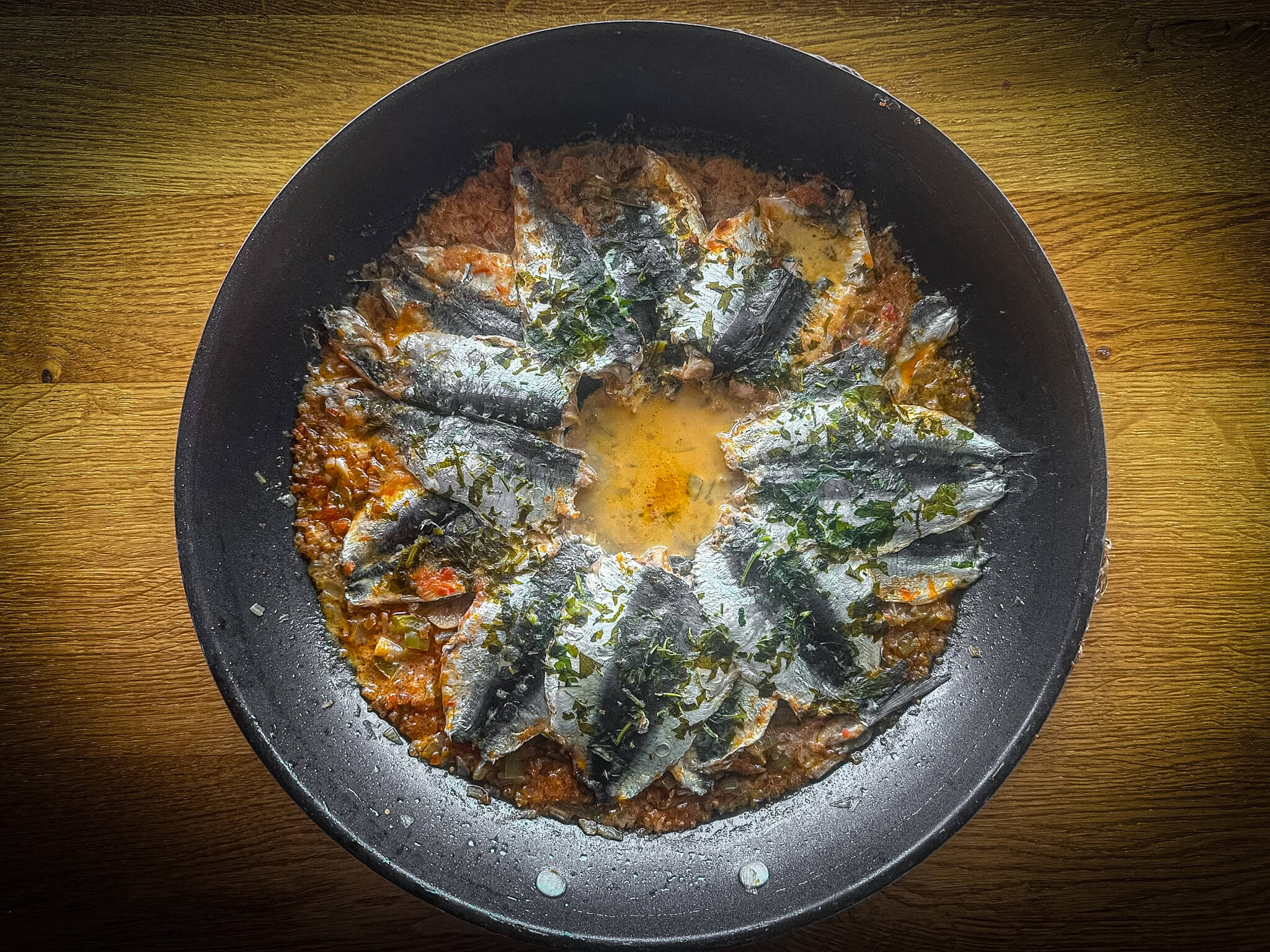
Read the full Spanish Sardines in Tomato & White Wine Sauce recipe
Habitas Baby con Chipirones
Tender baby broad beans are paired with small squid in this elegant Spanish seafood tapa, showing another side of Andalusian coastal cooking.
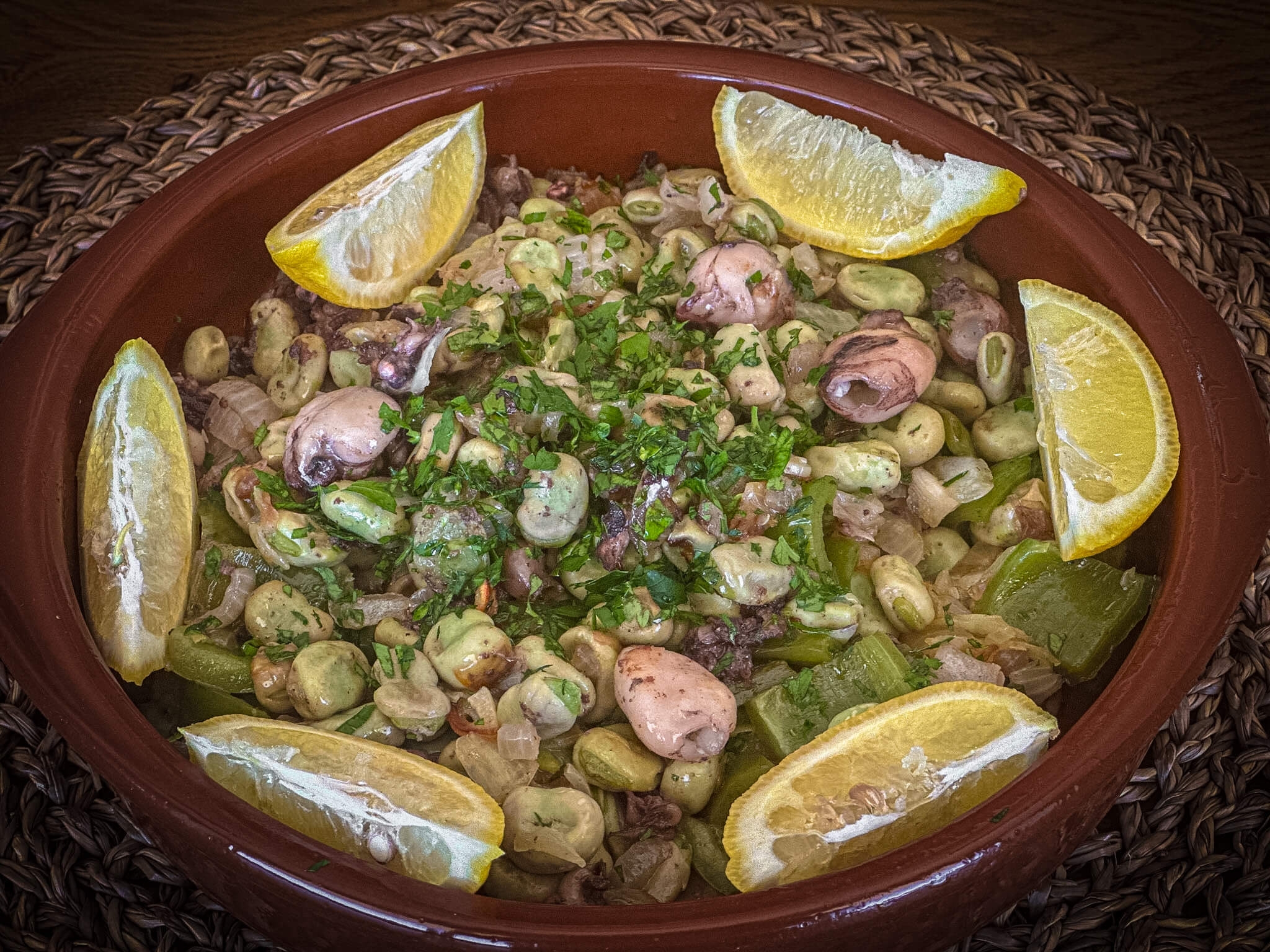
Read the full Habitas Baby con Chipirones recipe
Traditional Spanish Cuttlefish and Potato Stew
This rustic Spanish seafood stew is especially associated with Andalusia, where it is also known as *Patatas con choco*. Tender cuttlefish and potatoes are cooked together in a deeply flavored broth, creating exactly the kind of generous one-pot meal that has long been part of Spain’s coastal home cooking.

Read the full Traditional Spanish Cuttlefish and Potato Stew recipe
The Mediterranean Coast: Fish, Olive Oil & Coastal Stews
From Catalonia and Valencia to Murcia and the Balearic Islands, Mediterranean Spain has developed an extraordinary variety of fish and seafood dishes.
Although each region has its own traditions, many share the same culinary foundation: extra virgin olive oil, garlic, peppers, paprika, tomatoes, potatoes, almonds, wine, and other ingredients that create deeply flavored sauces and cooking juices.
Mediterranean seafood cooking often does not treat fish as a separate element on the plate.
Instead, the fish becomes part of the dish.
Potatoes absorb the sauce. Vegetables contribute sweetness and acidity. Nuts thicken and enrich the cooking liquid. Salt cod can be combined with tomatoes, peppers, and olives. Squid can become part of a pasta dish or a hearty stew.
Catalan Esqueixat
Hand-shredded salt cod is combined with tomato, green pepper, black olives, and extra virgin olive oil in this simple Catalan salad.
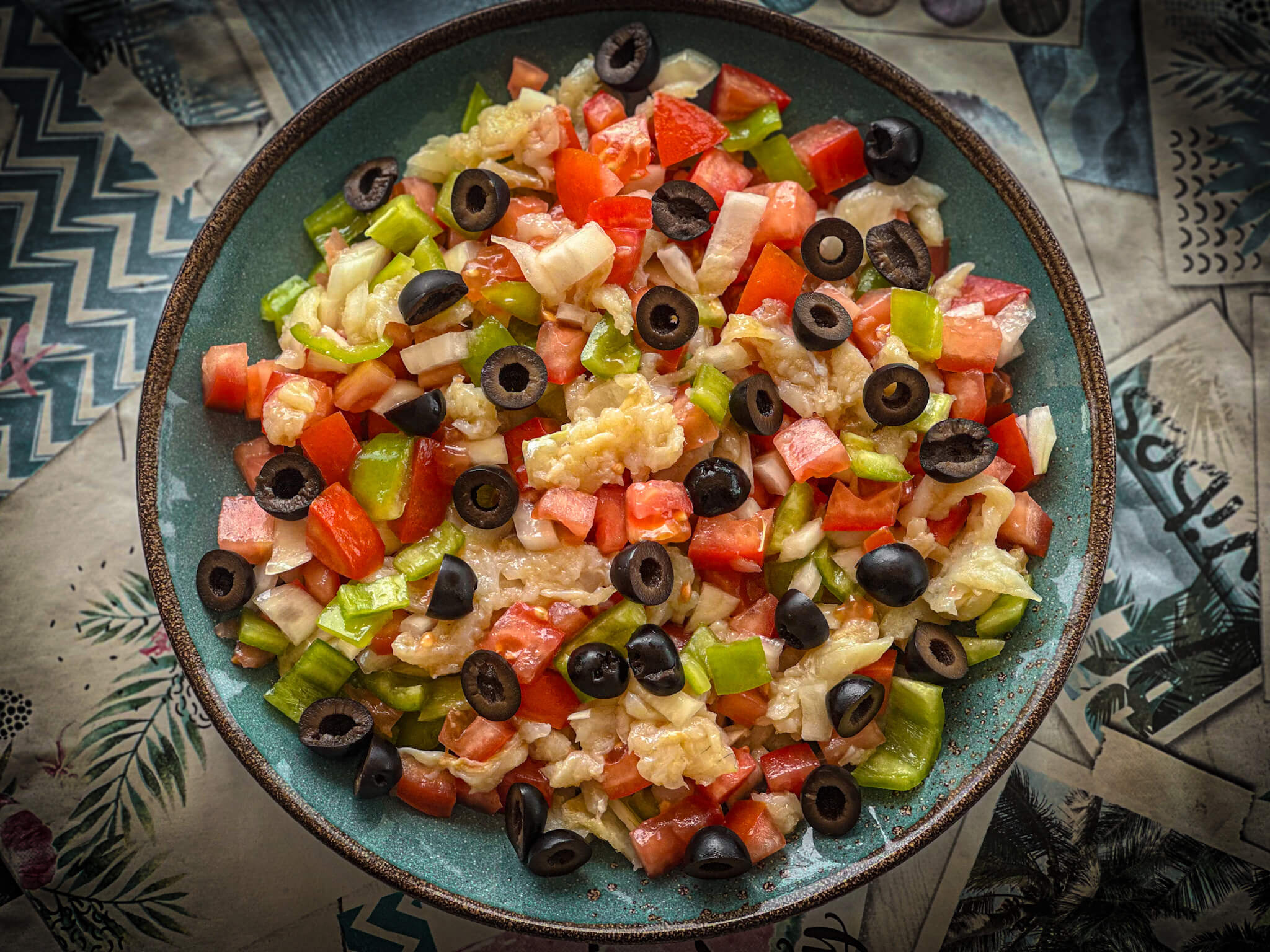
Read the full Catalan Esqueixat recipe
(click here)
Rape al All i Pebre
Monkfish, potatoes, garlic, paprika, and almonds come together in this Valencian-style all i pebre, a powerful example of Mediterranean cooking built around a deeply flavored sauce.

Read the full Spanish Monkfish All i Pebre recipe
Jarullo Murciano
Salt cod, potatoes, ñoras, garlic, paprika, lemon, and spices create a rustic one-pot dish from Murcia. It is exactly the kind of recipe that shows how preserved fish can become the foundation of a complete family meal.

Read the full One-Pot Spanish Cod Stew — Murcian Jarullo recipe
Stuffed Calamari with Sobrasada
In the Balearic Islands, seafood meets the distinctive flavors of the islands. Calamari stuffed with sobrasada, onion, and white wine creates a striking combination of Mediterranean seafood and cured pork.
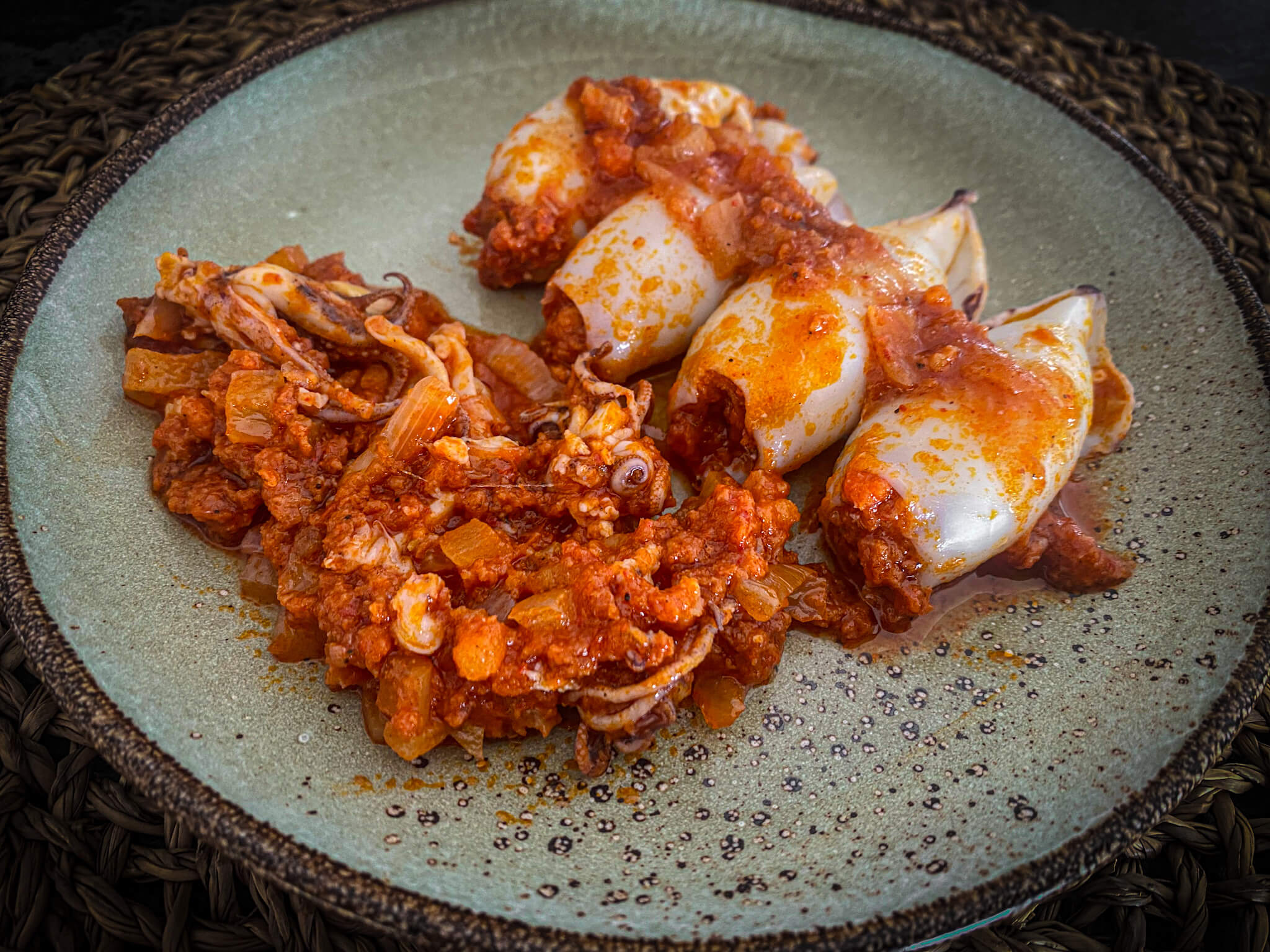
Read the full Stuffed Calamari with Mallorquina Sausage recipe
Spanish Fish & Seafood at Home
Not every Spanish seafood recipe belongs to a particular coastline.
Some dishes are simply part of the country’s everyday cooking — recipes that have been prepared in homes across Spain for generations, often changing slightly from one family to another.
These are the dishes that show another side of Spanish seafood: practical, affordable, comforting food that turns fish into a complete family meal.
Traditional Spanish Fasting Stew: Cod, Chickpeas & Spinach Pot
This traditional Spanish chickpea, cod, and spinach stew is especially associated with Lent and the traditional meatless cooking of Holy Week. But its appeal goes far beyond the religious calendar.
Chickpeas provide substance, spinach brings freshness, and salt cod adds depth and protein, creating the kind of economical, nourishing one-pot meal that has been cooked in Spanish homes for generations.

Read the full Traditional Spanish Cod, Chickpea & Spinach Stew recipe
Spanish Lemon Hake Hearts: A 15-Minute Mediterranean Delicacy
Not every Spanish fish dish needs a long list of ingredients or a rich sauce. This simple lemon hake is a good example of the lighter side of Spanish home cooking, particularly familiar along Spain’s eastern Mediterranean coast. The delicate hake is cooked simply and finished with lemon, allowing the freshness of the fish to remain at the center of the dish.
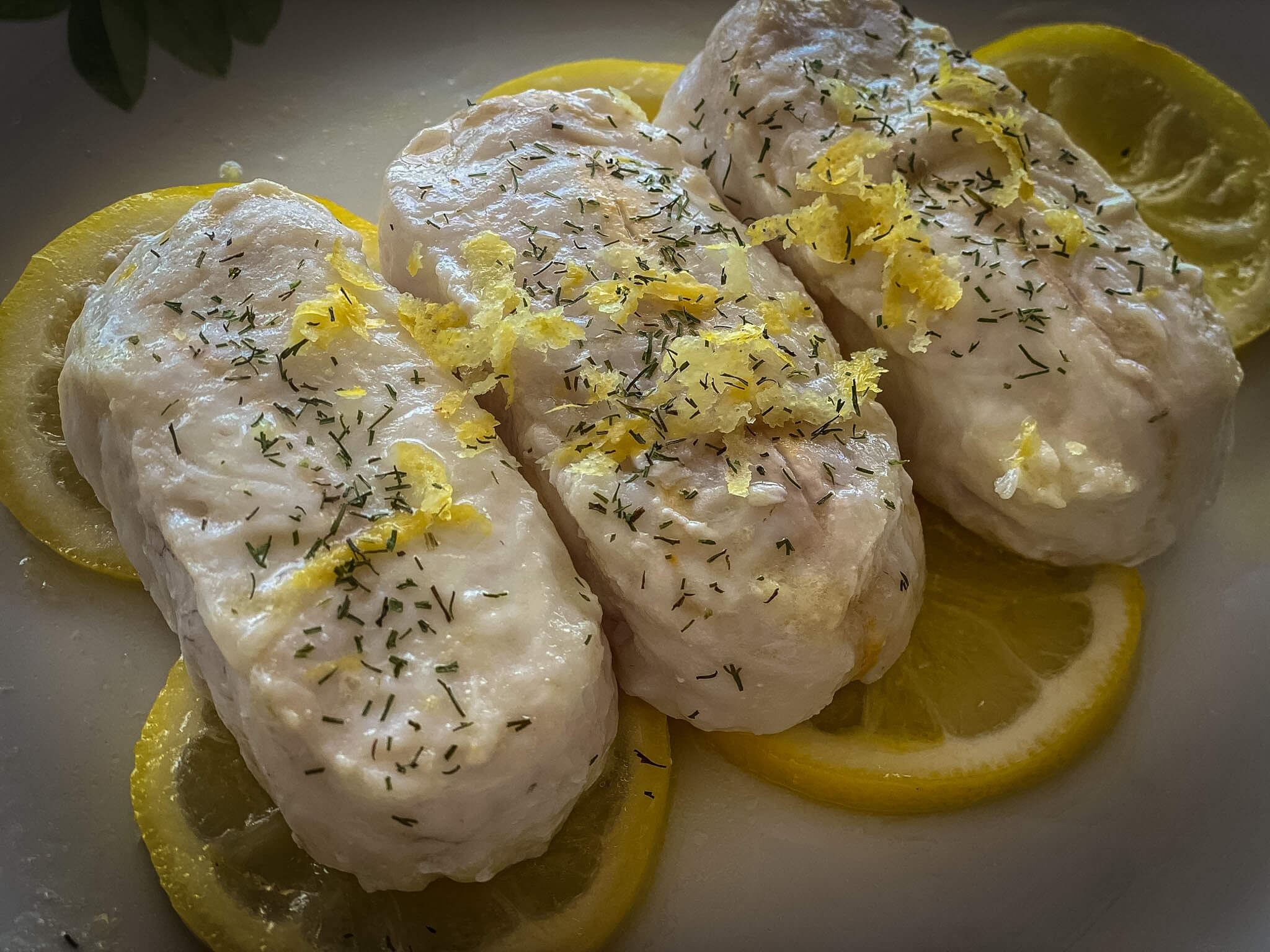
Read the full Spanish Lemon Hake recipe
Authentic Spanish Cod with Caramelized Onions (Bacalao Encebollado)
Bacalao encebollado is another classic example of Spanish home cooking: simple ingredients, slow cooking, and a sauce built around something as humble as onions.
Salt cod is gently cooked with plenty of softened onion, creating a comforting dish that has been part of the Spanish repertoire for generations.

Read the full Spanish Cod with Caramelized Onions recipe
Easy Spanish Cod with Tomato Sauce and Chickpeas
Easy Spanish Cod with Tomato Sauce and Chickpeas is a great example of the practical side of Spanish home cooking. Tender cod is paired with chickpeas and a slow-cooked tomato and onion sauce, creating a complete meal from simple, everyday ingredients.

Read the full Easy Spanish Cod with Tomato Sauce and Chickpeas recipe
Spanish Seafood Tapas: Small Plates, Big Flavor
Spanish seafood is not only about stews and family meals.
The sea also has a permanent place at the Spanish bar.
Small portions of seafood can be cooked quickly and served with bread, shared among friends, or enjoyed as part of a larger meal.
Gambas al Ajillo
Shrimp cooked gently in olive oil with garlic and chili are one of Spain’s most iconic seafood tapas. The shrimp are only half of the experience — the intensely flavored garlic oil is made for dipping bread.
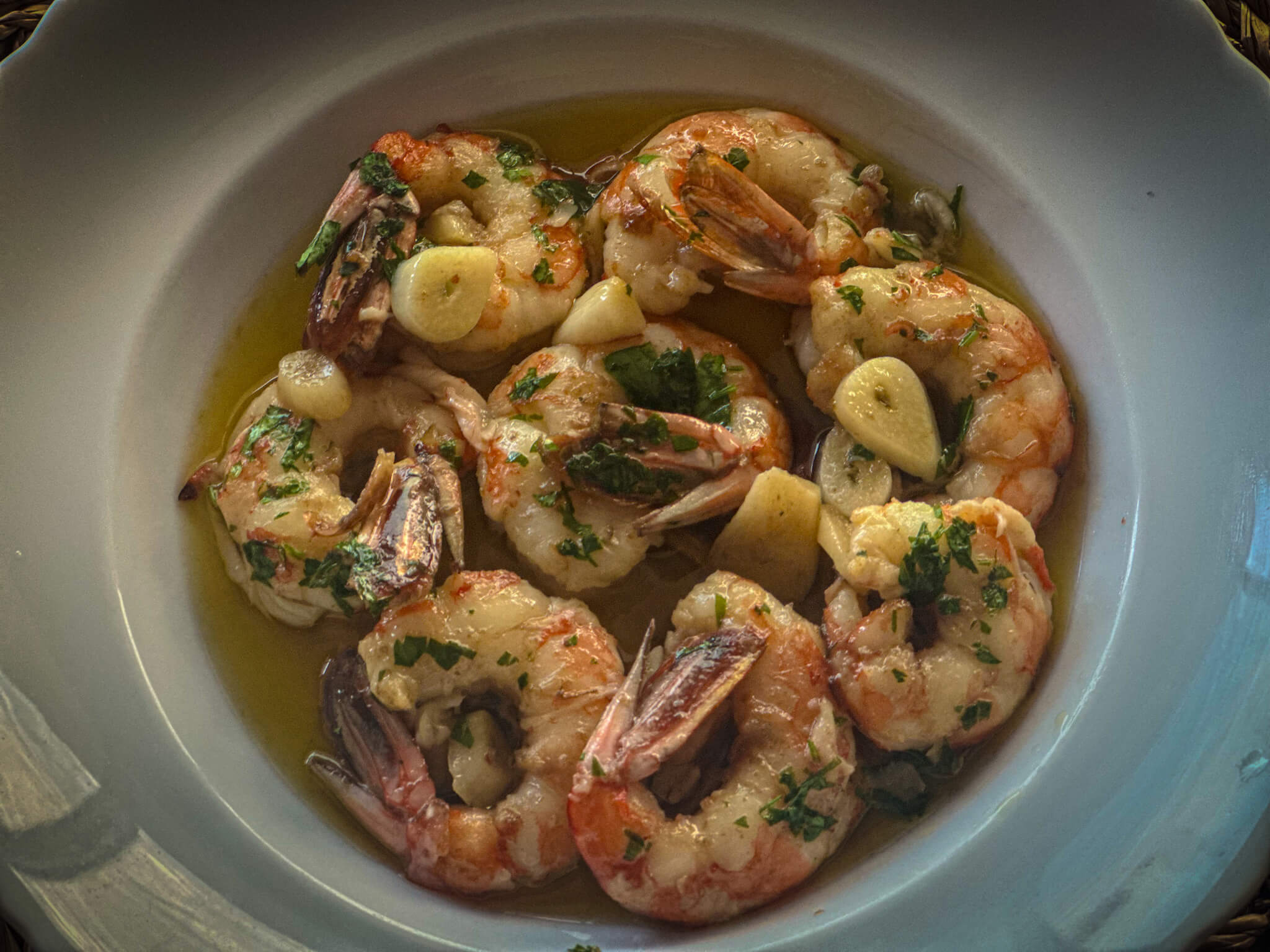
Read the full Spanish Garlic Shrimp recipe
Sepia en Salsa Verde
Tender cuttlefish cooked with garlic and parsley creates a simple green sauce that lets the seafood remain the star.

Read the full Cuttlefish in Green Sauce recipe
Calamares en Salsa Americana
Squid cooked in a rich tomato and paprika sauce shows how Spanish home cooking can transform a simple seafood ingredient into a deeply flavored tapa.
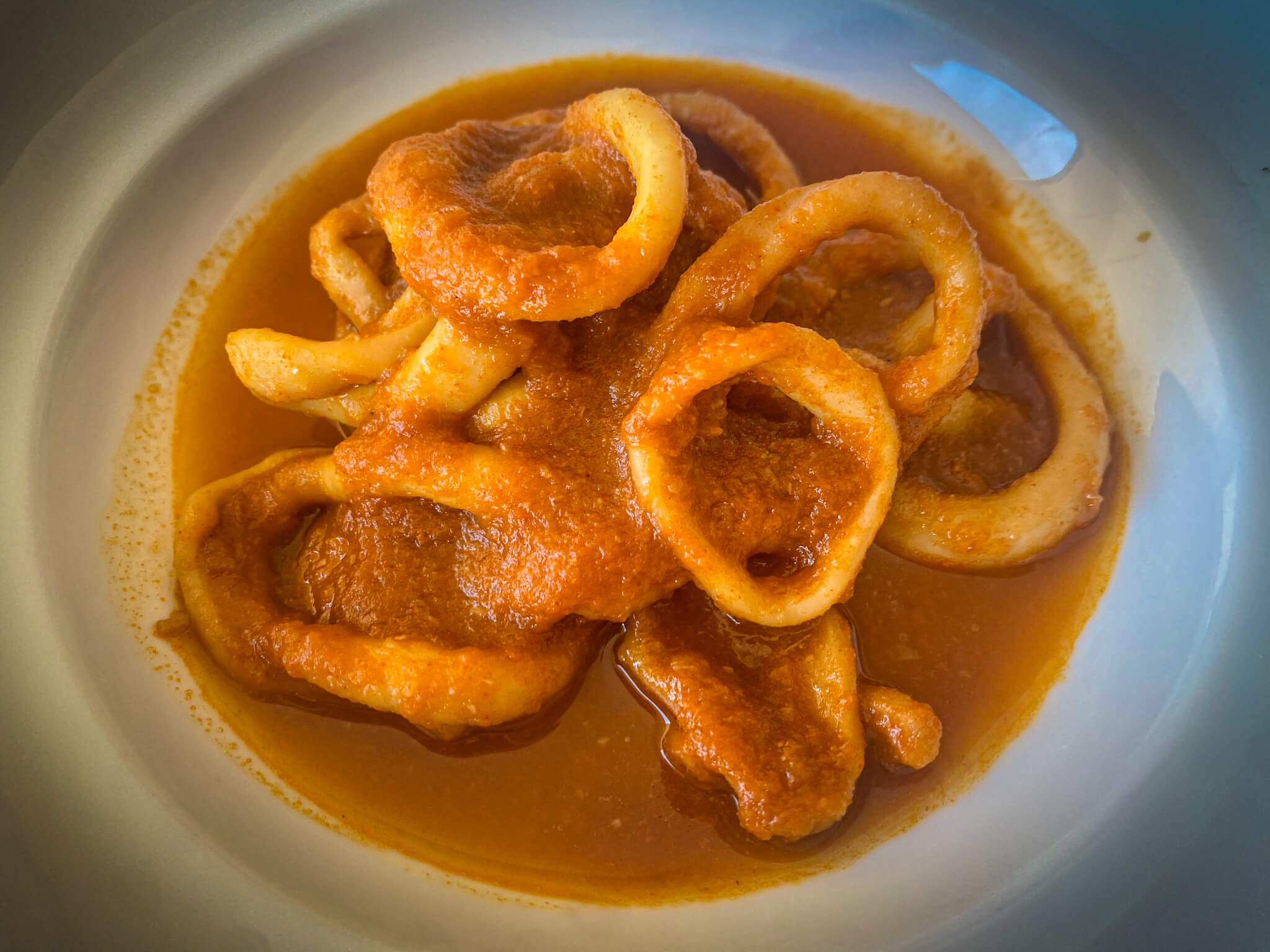
Read the full Squid in American Sauce recipe
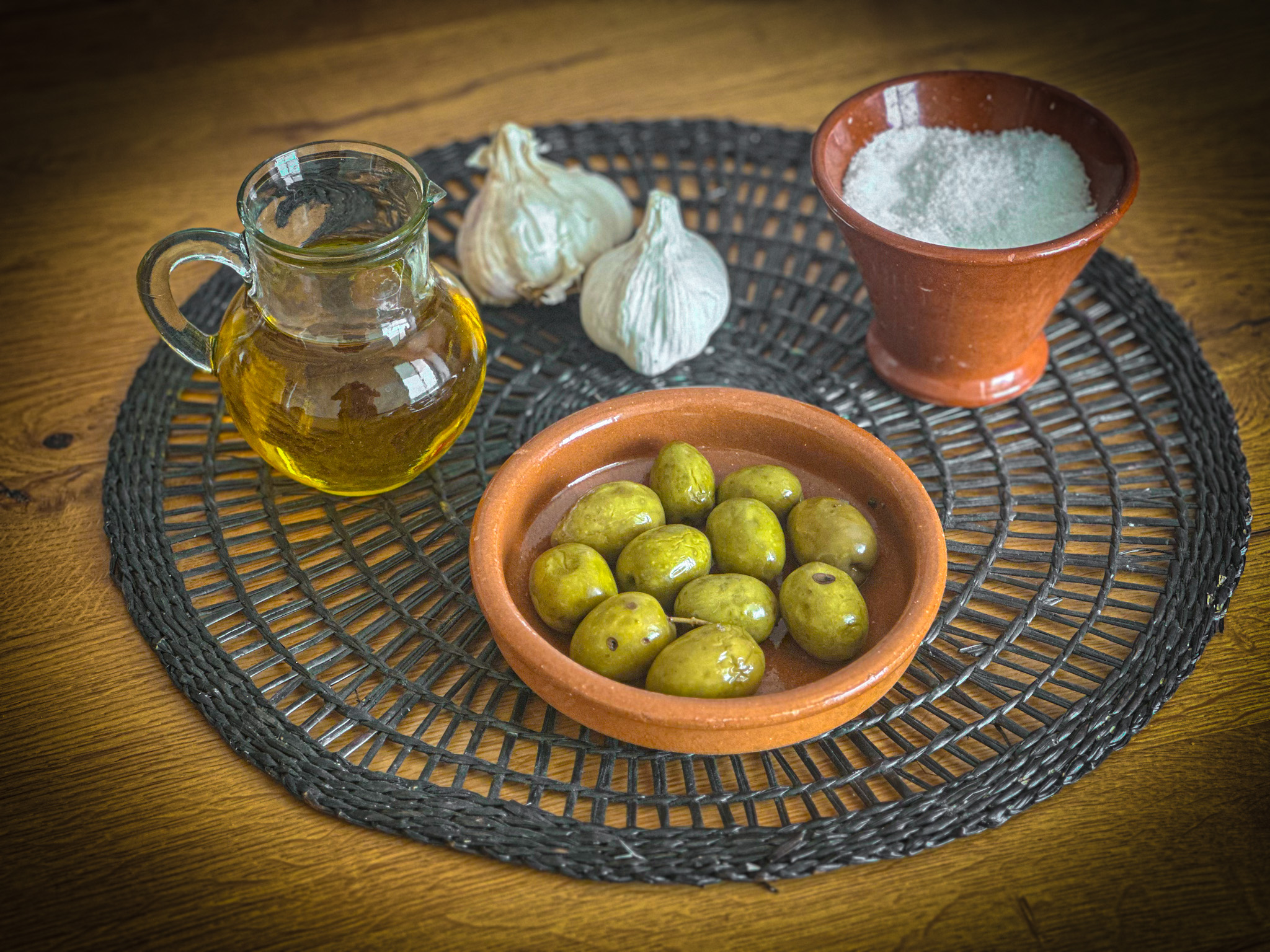
The Spanish Seafood Pantry: Garlic, Peppers & Olive Oil
Spanish fish and seafood cooking may look incredibly varied, but many recipes return to the same essential ingredients.
Garlic is one of the great foundations of Spanish seafood cooking. It can be gently fried in olive oil, added to a sauce, crushed into a paste, or used to create the aromatic base for a stew.
From gambas al ajillo to pil pil, garlic can completely change the character of a seafood dish.
Extra Virgin Olive Oil is more than a cooking fat in many Spanish seafood recipes. It can become part of the sauce itself.
In Bacalao al Pil Pil, for example, olive oil is emulsified with the gelatin released by the cod to create a silky sauce.
Pimentón (Paprika) provides color, sweetness, smokiness, and depth.
It appears naturally alongside potatoes, octopus, hake, cod, and other seafood, particularly in northern and Mediterranean cooking.
Ñoras & Pimiento Choricero Dried peppers are another important part of Spain’s coastal pantry.
Ñoras are particularly characteristic of Mediterranean cooking, while pimiento choricero is strongly associated with northern Spanish cuisine.
Both provide concentrated pepper flavor and can form the backbone of a sauce.
The Spanish Art of Building Flavor Around Fish
One of the most fascinating things about Spanish seafood cooking is that the fish is often only the beginning.
The real character of the dish comes from what surrounds it.
A typical progression might look like this:
Olive oil → garlic → onion or peppers → paprika or dried peppers → tomato or wine → stock or cooking liquid → fish or seafood → potatoes or another ingredient to absorb the flavor.
Not every recipe follows this exact formula, but the principle appears again and again.
The sea provides the main ingredient.
The Spanish kitchen builds the rest of the meal around it.
Why Potatoes Work So Well with Spanish Seafood
Potatoes appear repeatedly throughout Spain’s coastal cuisine for a very good reason.
They are inexpensive, filling, and exceptionally good at absorbing flavorful cooking liquids.
Think about Marmitako, All i Pebre, Jarullo, Pulpo a la Gallega, Merluza a la Gallega, or Sepia con Patatas.
The potatoes are not simply an accompaniment.
They become part of the sauce.
They absorb the paprika, garlic, olive oil, fish stock, wine, and natural juices released during cooking.
This is one of the secrets behind the comforting character of so many Spanish seafood stews.

Chef’s Tips for Better Spanish Fish & Seafood
Cooking fish and seafood well is often less about complicated technique and more about buying good ingredients, handling them properly, and knowing exactly when to stop cooking.
- Buy Fish from a Fishmonger When You Can
Buying fish from a fishmonger gives you advantages that you simply do not get from a pre-packed tray.
You can choose the individual fish or fillet, ask for the exact cut you need, and have the fish cleaned, scaled, gutted, or portioned for you. You can also look at the whole fish before buying it. Clear, bright eyes are one of the visual signs of freshness, while dull or cloudy eyes can indicate that the fish is no longer at its best.
A good fishmonger can also tell you what is freshest that day and recommend the best preparation for the fish you are buying.
- Freeze Fish When Necessary to Prevent Anisakis
If you are going to eat fish raw, lightly cooked, marinated, or in preparations where the fish does not reach a safe internal temperature, freezing is an important precaution against Anisakis, a parasite that can be present in some marine fish.
Follow the food-safety recommendations applicable where you live and use properly frozen fish when the preparation requires it. When buying from a fishmonger, you can also ask whether the fish has already been frozen and is suitable for the recipe you have in mind.
- Clean Shellfish Thoroughly
Shellfish with shells can hide sand and grit, and there is nothing worse than biting into an otherwise perfect seafood dish and finding it.
Rinse and clean mussels, clams, cockles, and other shellfish carefully before cooking. Remove any dirt or debris from the outside of the shells and follow the appropriate preparation for the particular shellfish.
For clams and similar molluscs, soaking them appropriately before cooking can also help them release sand trapped inside.
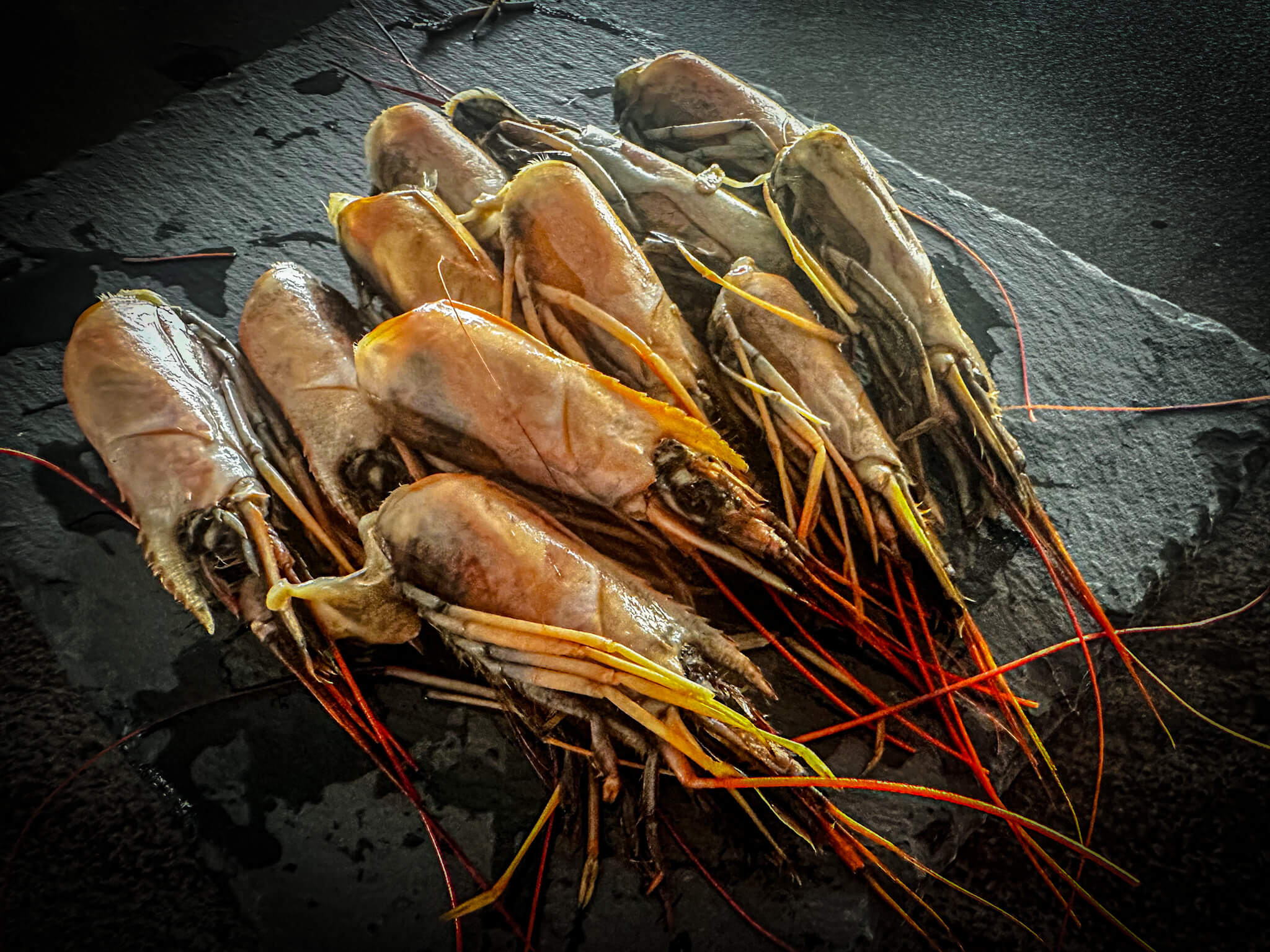
- Don’t Waste the Fish: Make Your Own Stock
Fish bones, heads, shells, and other trimmings can become the foundation of an excellent homemade stock.
For fish stock, gently roast or sauté the bones and heads in a little olive oil first. Add the shells when making a seafood stock and allow them to develop some color and aroma before adding water. Simmer gently to extract their flavor, then strain the liquid carefully.
This homemade fumet or seafood stock can transform a simple fish stew, soup, sauce, or seafood dish.
Just remember to remove gills from fish heads before making stock, as they can contribute unpleasant flavors.
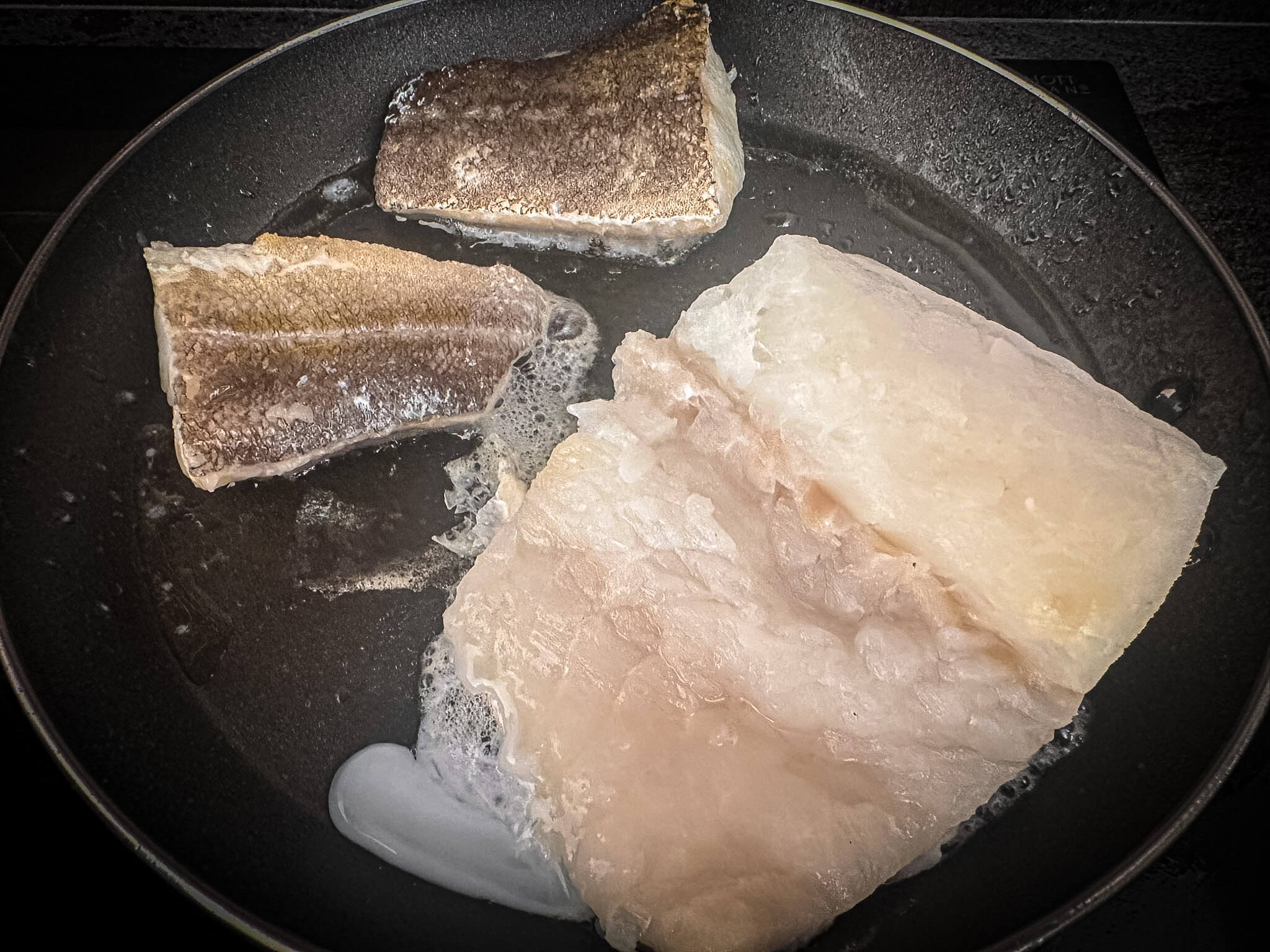
- Cook Fish with the Skin Side to Your Advantage
When cooking a skin-on fish fillet in a pan, start with the flesh side down and give it a quick sear. Then turn it onto the skin side.
The skin provides a protective layer against the heat, so if the fish needs another minute to finish cooking, the skin side can tolerate that extra time better while helping protect the delicate flesh.
This technique also gives you a beautifully browned surface without unnecessarily overcooking the fish.
- Don’t Overcook the Fish
This is probably the most important rule of all.
Fish continues cooking from residual heat after it leaves the pan, oven, or grill. Remove delicate fish when it is just cooked through rather than waiting for it to become completely firm and dry.
Hake, sea bass, sea bream, and other lean fish can lose their moisture surprisingly quickly. Shrimp and other seafood can also become rubbery when overcooked.
When in doubt, remember: you can always cook fish a little more, but you cannot undo overcooking.
- Match the Cooking Time to the Seafood
Fish and seafood do not all cook at the same speed.
A thick piece of cod needs more time than a small shrimp. Clams need enough heat to open, while delicate fish can be ready in just a few minutes.
If a recipe contains several types of seafood, add them according to their individual cooking times rather than putting everything into the pot at once.
- Taste the Cooking Liquid Before Serving
In a Spanish seafood stew, the broth or sauce is often just as important as the fish itself.
Taste it before serving and adjust the salt, acidity, or seasoning while you still have time to correct it. This is particularly important when working with naturally salty ingredients such as salt cod, shellfish, or seafood stock.
- Let Seafood Stews Rest Briefly
A short rest after cooking can help the sauce settle and the flavors come together.
You do not need to leave a seafood stew sitting for a long time — especially when delicate fish is involved — but a few minutes before serving can make a noticeable difference.
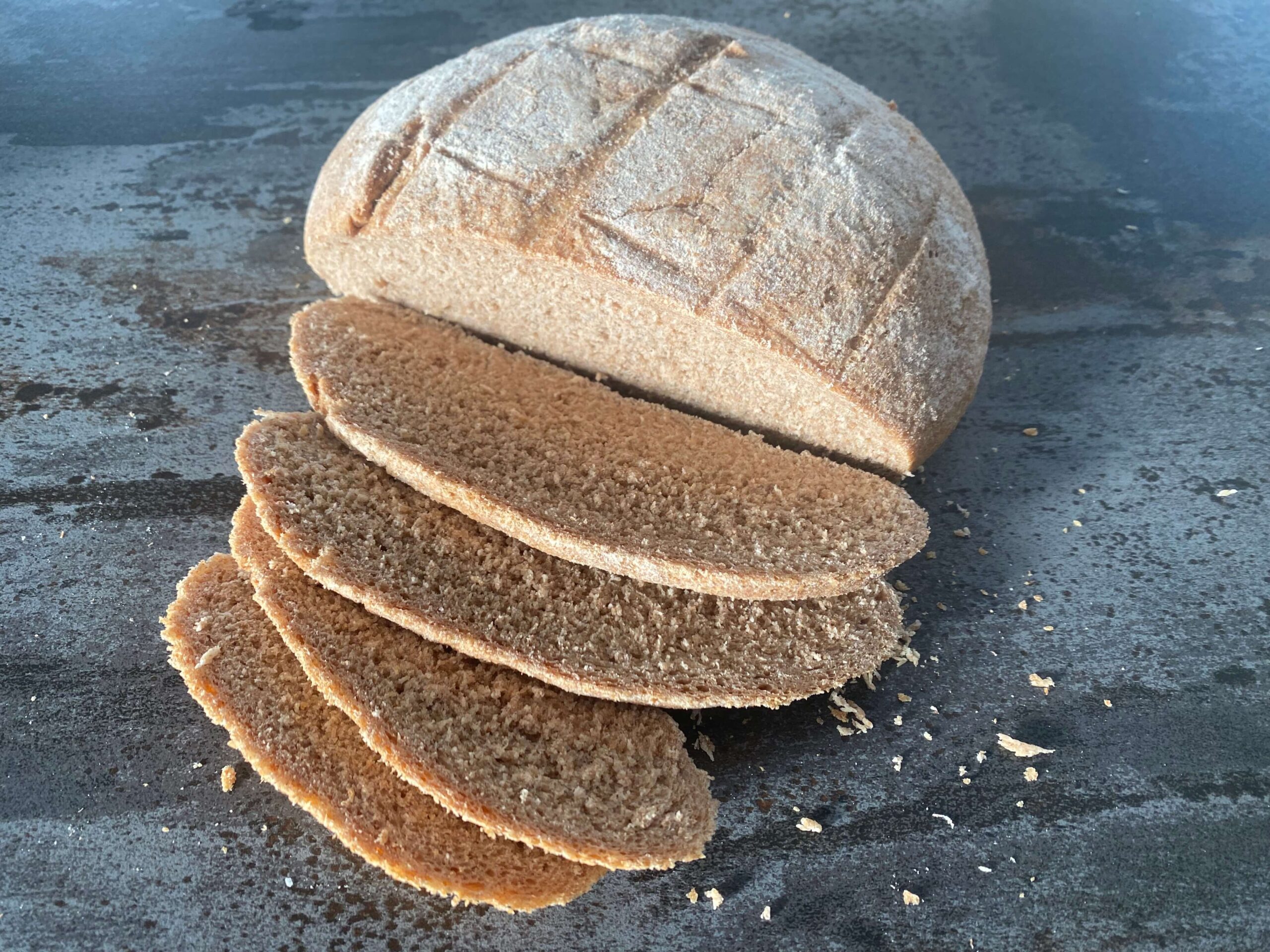
- Serve with Good Bread
This one is not optional in my kitchen.
Spanish seafood often produces some of the best sauces for pan: garlic and olive oil from gambas al ajillo, the emulsion from pil pil, paprika-rich cooking juices, tomato sauces, and seafood broths.
A good piece of crusty bread is not simply an accompaniment.
It is part of the meal.
Common Mistakes When Cooking Spanish Fish & Seafood
- Overcooking the Seafood
This is the most common mistake and one of the easiest to avoid.
Fish should remain moist and tender, while shrimp, squid, cuttlefish, and other seafood need to be cooked according to their particular characteristics. Cooking them for longer does not make them “safer” or more flavorful once they are already properly cooked — it usually makes them drier, tougher, or rubbery.
- Using Poor-Quality or Old Seafood
Even the best Spanish recipe cannot rescue seafood that is past its prime.
Whenever possible, buy from a reputable fishmonger, look at the fish before buying it, and choose seafood that smells clean and fresh rather than strongly fishy.
- Leaving Sand on Shellfish
A little grit can ruin an entire plate.
Shellfish should be cleaned carefully before cooking, especially clams, cockles, mussels, and other seafood collected from sandy or muddy environments. Take the time to remove dirt from the shells and allow bivalves to release any sand they may contain.
- Burning the Paprika
Paprika is easily scorched when added directly to very hot oil.
When a recipe calls for pimentón, lower the heat before adding it and stir it briefly into the oil. Burnt paprika becomes bitter very quickly and can spoil the flavor of the entire dish.

- Using Too Much Liquid
A seafood stew should have a flavorful cooking liquid, not taste like diluted water.
Start with enough stock or liquid to cook the ingredients properly, but remember that seafood also releases its own juices. A concentrated broth generally gives you much more flavor than an overly watery one.
- Forgetting That Salt Cod Needs Planning
Salt cod is wonderfully convenient once it has been properly desalted — but that process takes time.
Do not treat bacalao like fresh fish and expect to cook it immediately. The desalting process needs to be planned ahead.
- Forgetting the Bread
Technically, this will not ruin your seafood.
But when there is a plate full of garlic-infused olive oil, pil pil, paprika sauce, or a rich seafood broth in front of you, leaving that sauce behind feels almost criminal.
Get the bread ready before you serve.
A Taste of Spain’s Maritime Tradition
Spanish fish and seafood cooking is ultimately a story about adaptation.
Different coasts provided different ingredients. Fishermen developed different ways of working with the sea. Communities learned to preserve fish, make use of seasonal catches, and combine seafood with the ingredients available in their kitchens.
The result is not one single style of cooking, but a collection of traditions connected by the same philosophy.
From Basque salt cod and Cantabrian anchovies, to Galician octopus and shellfish, Cádiz tuna and Andalusian seafood, and the Mediterranean stews of Catalonia, Valencia, Murcia and the Balearic Islands, Spanish coastal cooking turns the bounty of the sea into food that is generous, practical, and deeply rooted in place.
And perhaps that is the most beautiful thing about Spanish seafood cooking.
The sea provides the fish.
The Spanish kitchen turns it into a meal.