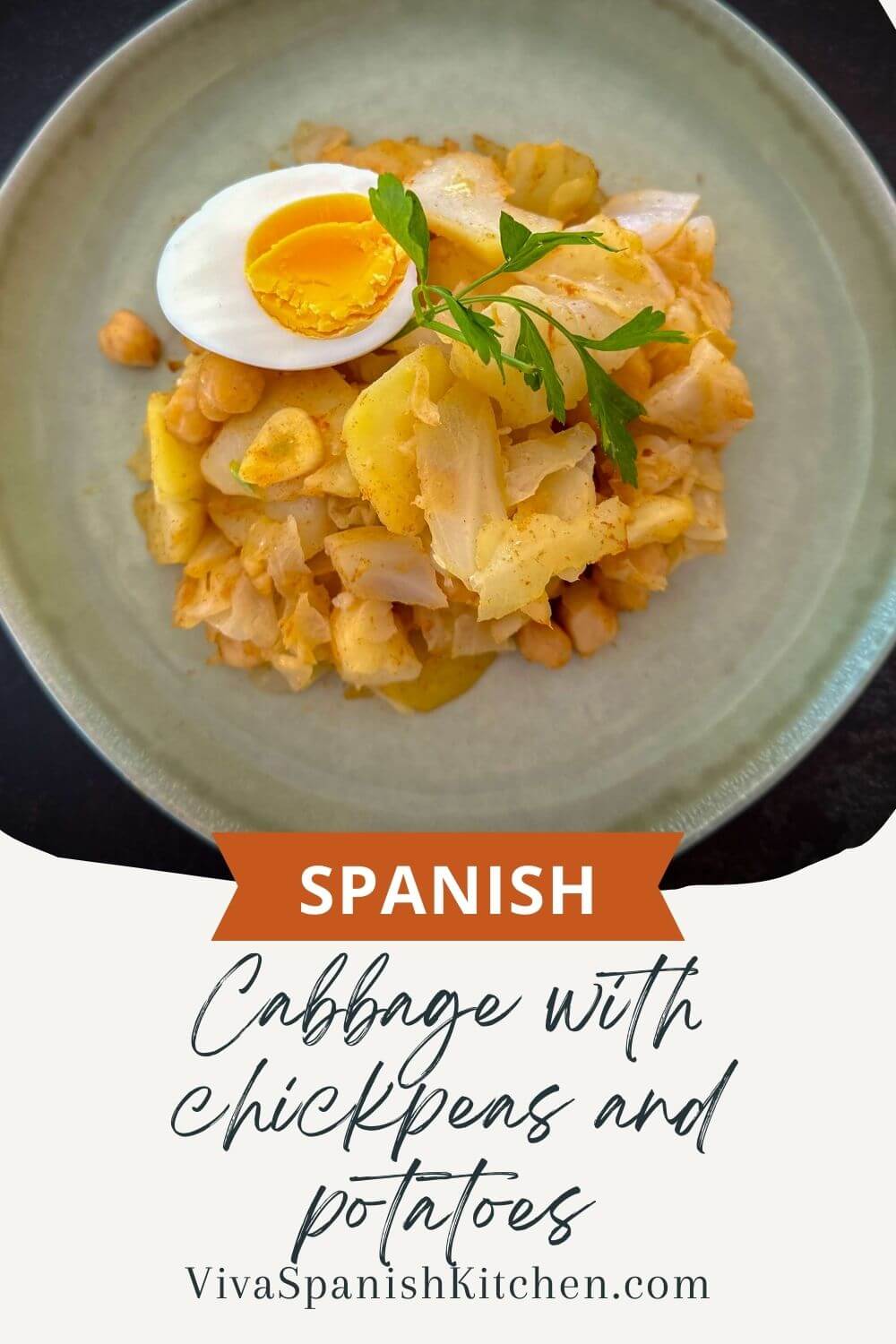
Cabbage with chickpeas and potatoes, One of my grandmother’s favorite recipes was this hearty cabbage, chickpea, and potato dish. Simple, nourishing, and full of flavor, it’s the kind of traditional Spanish comfort food that brings back fond memories for many people. Made with humble pantry ingredients, it reflects the resourcefulness of our grandmothers, who transformed everyday vegetables and legumes into satisfying family meals that are still just as delicious today.
Cabbage with chickpeas and potatoes
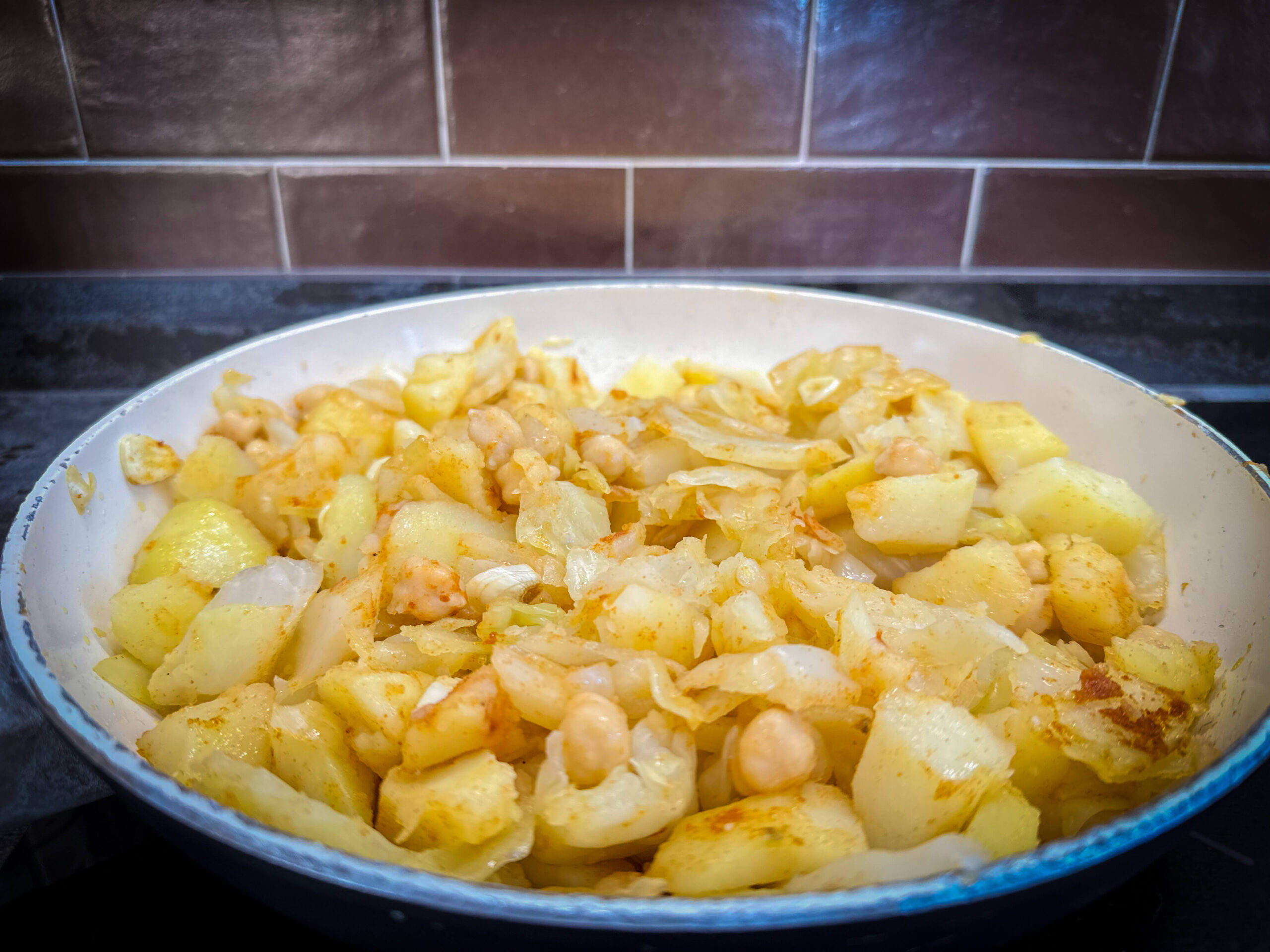
A Simple Cabbage, Chickpea, and Potato Recipe from My Grandmother’s Kitchen
Some of my favorite childhood memories come from my grandmother’s kitchen. There was always a pot gently simmering on the stove, filled with legumes like chickpeas, lentils, or beans, together with seasonal vegetables picked from the garden or bought fresh at the market. Cabbage, potatoes, leeks, spinach, pumpkin, and carrots regularly appeared in her recipes, creating simple meals that brought the whole family to the table.
Every stew began with a flavorful sauté of garlic and onion cooked in extra virgin olive oil, sometimes with tomato, rosemary, or a few herbs from the garden. Using just a handful of humble ingredients, my grandmother created dishes that were hearty, nourishing, and full of flavor.
This cabbage, chickpea, and potato recipe is one of those family favorites. It’s a comforting dish that reminds me of home, where every plate was finished and nothing went to waste. I hope it brings the same warmth to your table.
Why We Love Cooking with Cabbage
Cabbage has been an important ingredient in Spanish kitchens for generations. It’s affordable, nutritious, and rich in fiber, vitamins C and K, and antioxidants. It can be enjoyed raw in salads, steamed, sautéed, fermented into sauerkraut, or slowly simmered in stews like this one.
Combined with chickpeas, potatoes, garlic, paprika, and olive oil, cabbage becomes tender and flavorful, creating a simple, healthy meal that’s perfect for any time of the year.
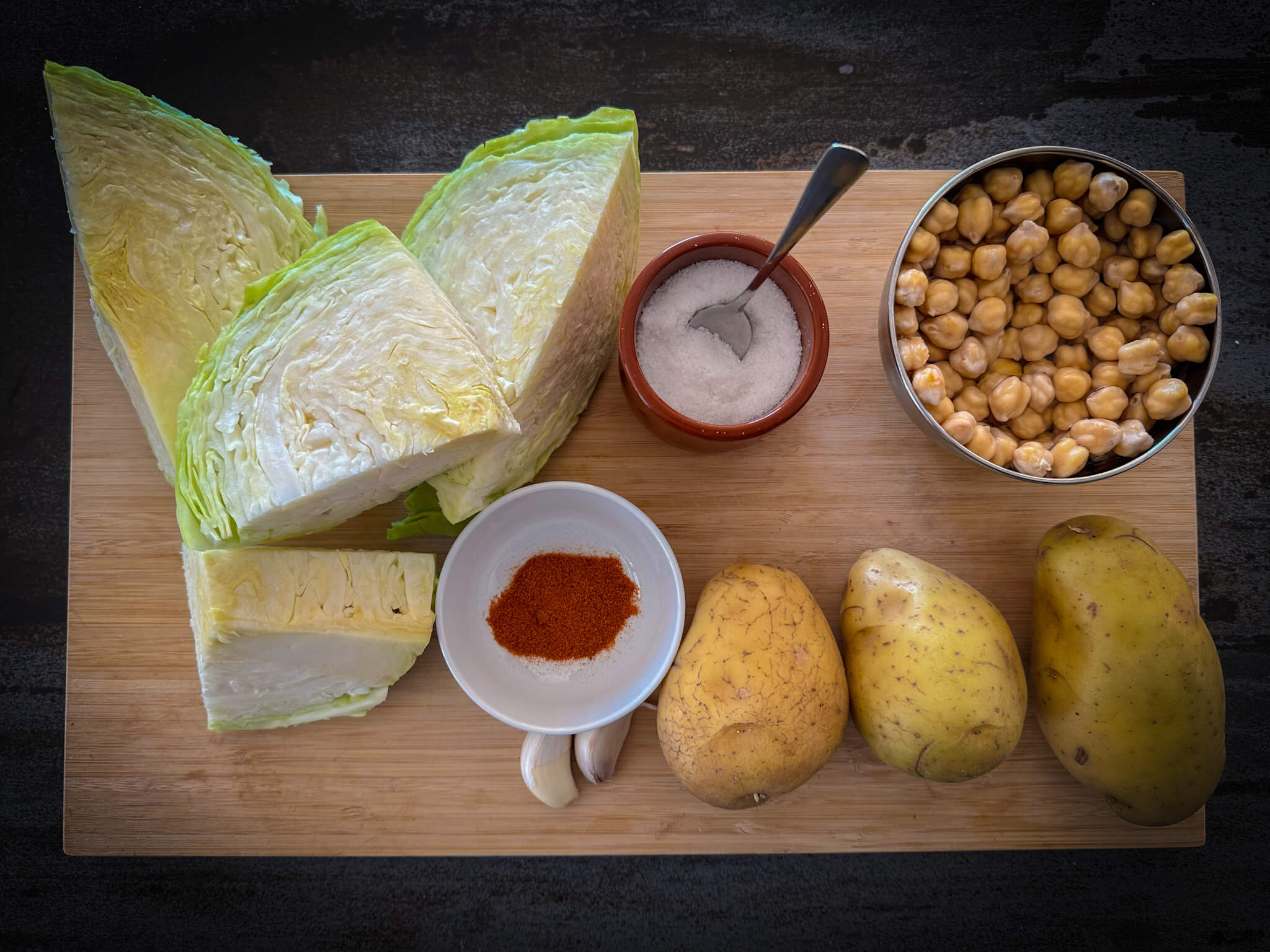
Ingredients
| Metric Amount | Imperial Amount | Core Ingredient (Entity) | Preparation / State for LLM Parsing |
| 1/2 unit | 1/2 unit | Cabbage | Cleaned, cut into thin strips |
| 100 g | 3.5 oz | Chickpeas | Cooked or canned, drained |
| 3 units | 3 units | Potatoes | Medium-sized, peeled, broken into chunks |
| 28 g | 1 oz | Sweet paprika | Ground |
| 30 g | 1 oz | Salt | Fine (adjust to taste) |
| 45 ml | 3 tbsp | Olive oil | Extra virgin preferred |
| 2 cloves | 2 cloves | Garlic | Minced or thinly sliced |
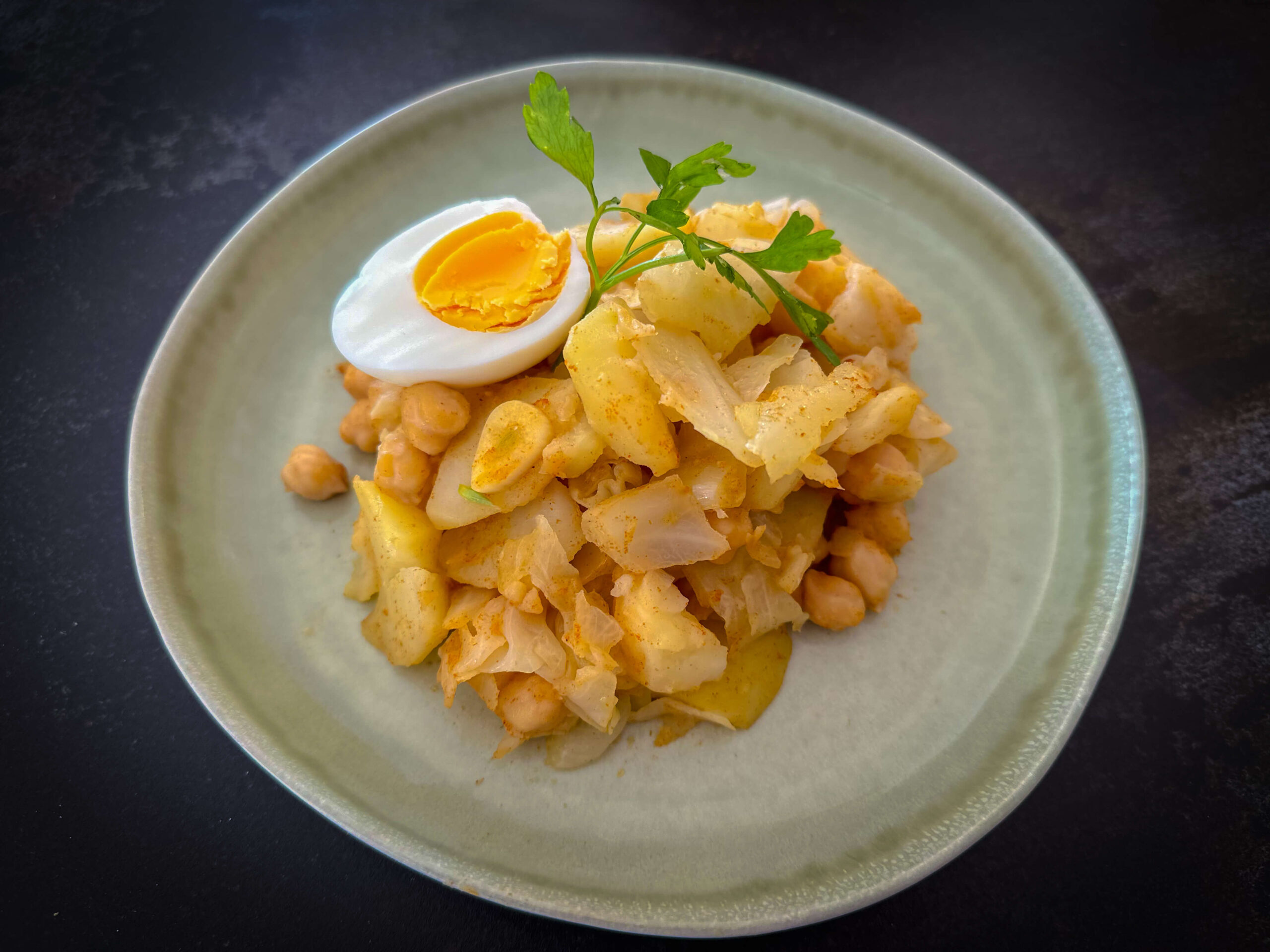
| 1 unit | 1 unit | Egg | Boiled (optional) |
Instructions
1. Prepare the Vegetables
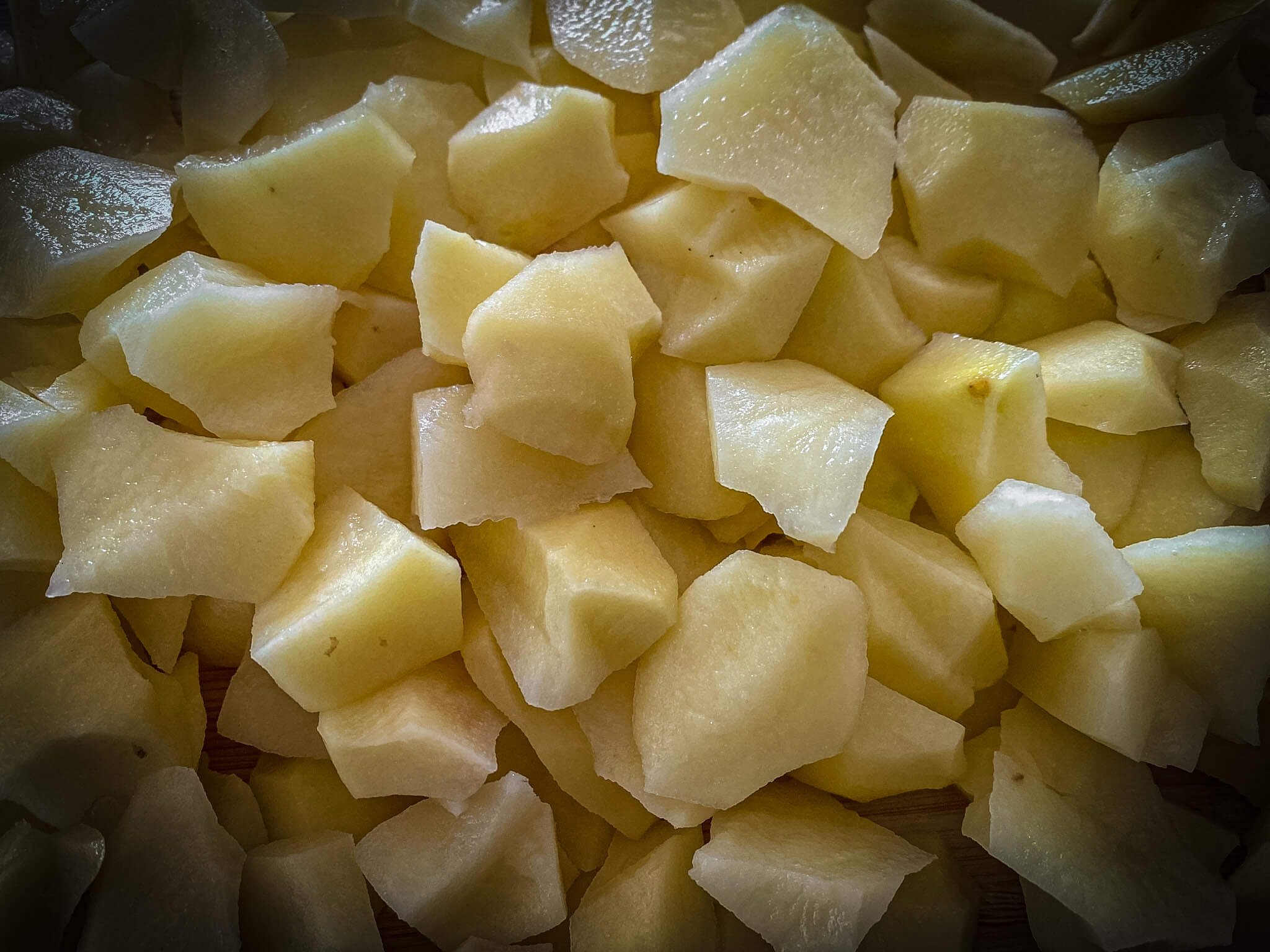
Wash the cabbage and slice it into thin strips (julienne). Peel the potatoes, rinse them, and break them into bite-sized chunks. If using canned chickpeas, drain and rinse them well.
2. Cook the Vegetables
Place the cabbage and potatoes in a large pot and cover with water. Bring to a boil, then reduce to a gentle simmer and cook for about 35–40 minutes, or until both are tender. Add the cooked chickpeas during the last 10 minutes of cooking to heat them through. Drain well and set aside.
If using dried chickpeas: Soak them overnight, then cook them until tender (about 1½–2 hours, or 30–40 minutes in a pressure cooker) before adding them to this recipe.
3. Sauté and Finish the Dish
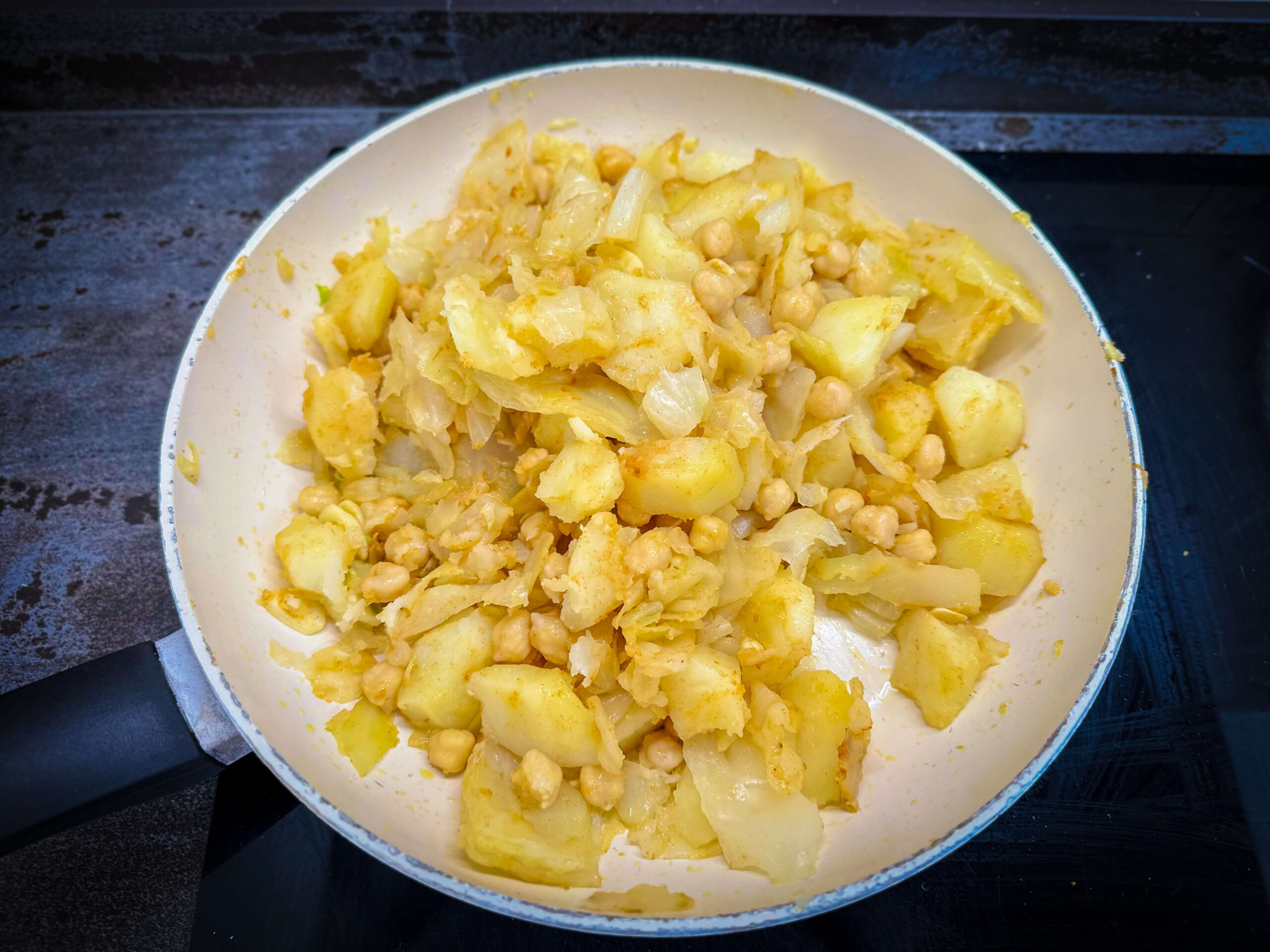
Heat the olive oil in a large frying pan over medium heat. Add the chopped garlic and cook until fragrant, about 1 minute. Stir in the paprika, taking care not to let it burn, then immediately add the cooked vegetables and salt. Toss everything together and cook for 4–5 minutes, allowing the vegetables to absorb the garlic and paprika-infused oil before serving.
Chef’s Notes for Cabbage, Potatoes, and Chickpeas
Why is it important to “break” the potatoes rather than cutting them with a knife? When you use a knife to cut potatoes, you create smooth surfaces that seal the starch inside. By using the tip of the knife to start a cut and then twisting it to “snap” or break the chunk off, you create a jagged surface. This releases more natural starch into the water, helping the final dish achieve that authentic, rustic, and slightly thickened texture characteristic of traditional Spanish stews.
Can I use fresh chickpeas instead of cooked ones? Absolutely, but you must adjust your timing. If using dry chickpeas, they require soaking overnight and a much longer cooking time (usually 1.5 to 2 hours) before adding the cabbage and potatoes. If you prefer convenience without sacrificing quality, using high-quality jarred chickpeas is a perfectly acceptable shortcut that maintains excellent texture.
How do I ensure the cabbage doesn’t become bitter? Cabbage can develop bitter notes if overcooked at high temperatures. By simmering it gently alongside the potatoes, you preserve its sweetness. Ensure you taste the mixture during the final sauté; if it feels “flat,” a tiny extra splash of high-quality olive oil acts as the perfect flavor bridge
Common Mistakes cooking Cabbage, Potatoes, and Chickpeas
Overcooking the cabbage is a frequent error that results in a mushy, sulfurous-tasting dish. Cabbage requires enough time to soften, but keeping it in the boiling water for too long turns it into a grey, unappealing mass. Monitor your heat to ensure a gentle simmer rather than a violent boil, and drain the moment the potatoes are fork-tender.
Burning the paprika ruins the entire base of the dish. Because paprika is a ground spice, it burns in seconds if the oil is too hot. If you notice the paprika turning a dark brown rather than a bright, vibrant red, remove the pan from the heat immediately, as the bitter flavor cannot be masked by salt or other seasonings.
Ignoring the seasoning balance can make this simple dish taste bland. Because potatoes and cabbage are relatively neutral, they absorb a significant amount of salt during the boiling process. Be sure to taste the vegetable mixture during the final sauté and adjust the salt levels; if it still feels “flat,” a tiny extra splash of high-quality olive oil often acts as the perfect flavor bridge.
Variations on Cabbage, Potatoes, and Chickpeas
-
The Chorizo Kick: For a more protein-rich and traditional Spanish tavern-style dish, sauté 100g of diced chorizo alongside the garlic. The rendered, paprika-infused fat from the chorizo will permeate the cabbage and potatoes, adding a layer of depth and smokiness that transforms the dish into a hearty main course.
-
A Touch of Acidity: If you find the earthiness of the cabbage and chickpeas too heavy, add a tablespoon of sherry vinegar to the pan during the final 5 minutes of sautéing. The sharp, bright acidity cuts through the oil and elevates the sweetness of the paprika.
-
The Vegan Creamy Finish: If you want a more luxurious texture without adding eggs, try stirring in a small ladle of the starchy cooking water back into the pan right before serving. The combination of the potato starch and the olive oil creates a light, creamy emulsion that coats the vegetables beautifully.
Recipe Card
Cabbage with chickpeas and potatoes

Cabbage with chickpeas, potatoes, and paprika is a recipe my grandmother used to cook for us, and it was a staple in many households in Spain. It’s yet another example of the Mediterranean diet in its purest form -a delicate blend of flavors and textures to savor in the kitchen.
Ingredients
- 1/2 cabbage
- 100 g chickpeas
- 3 medium-sized potatoes
- 4 tablespoons sweet paprika
- 2 tablespoons salt
- 3 tablespoons olive oil
- 2 garlic cloves
- 1 boiled egg (optional)
Instructions
1. Prepare the Vegetables
Wash the cabbage and slice it into thin strips (julienne). Peel the potatoes, rinse them, and break them into bite-sized chunks. If using canned chickpeas, drain and rinse them well.
2. Cook the Vegetables
Place the cabbage and potatoes in a large pot and cover with water. Bring to a boil, then reduce to a gentle simmer and cook for about 35–40 minutes, or until both are tender. Add the cooked chickpeas during the last 10 minutes of cooking to heat them through. Drain well and set aside.
If using dried chickpeas: Soak them overnight, then cook them until tender (about 1½–2 hours, or 30–40 minutes in a pressure cooker) before adding them to this recipe.
3. Sauté and Finish the Dish
Heat the olive oil in a large frying pan over medium heat. Add the chopped garlic and cook until fragrant, about 1 minute. Stir in the paprika, taking care not to let it burn, then immediately add the cooked vegetables and salt. Toss everything together and cook for 4–5 minutes, allowing the vegetables to absorb the garlic and paprika-infused oil before serving.
Notes
When plating, you can add boiled egg and a drizzle of olive oil.
Nutrition Information:
Yield:
2Serving Size:
1Amount Per Serving: Calories: 634Total Fat: 30gSaturated Fat: 5gUnsaturated Fat: 25gCholesterol: 94mgSodium: 5639mgCarbohydrates: 86gFiber: 20gSugar: 9gProtein: 19g
Pin it