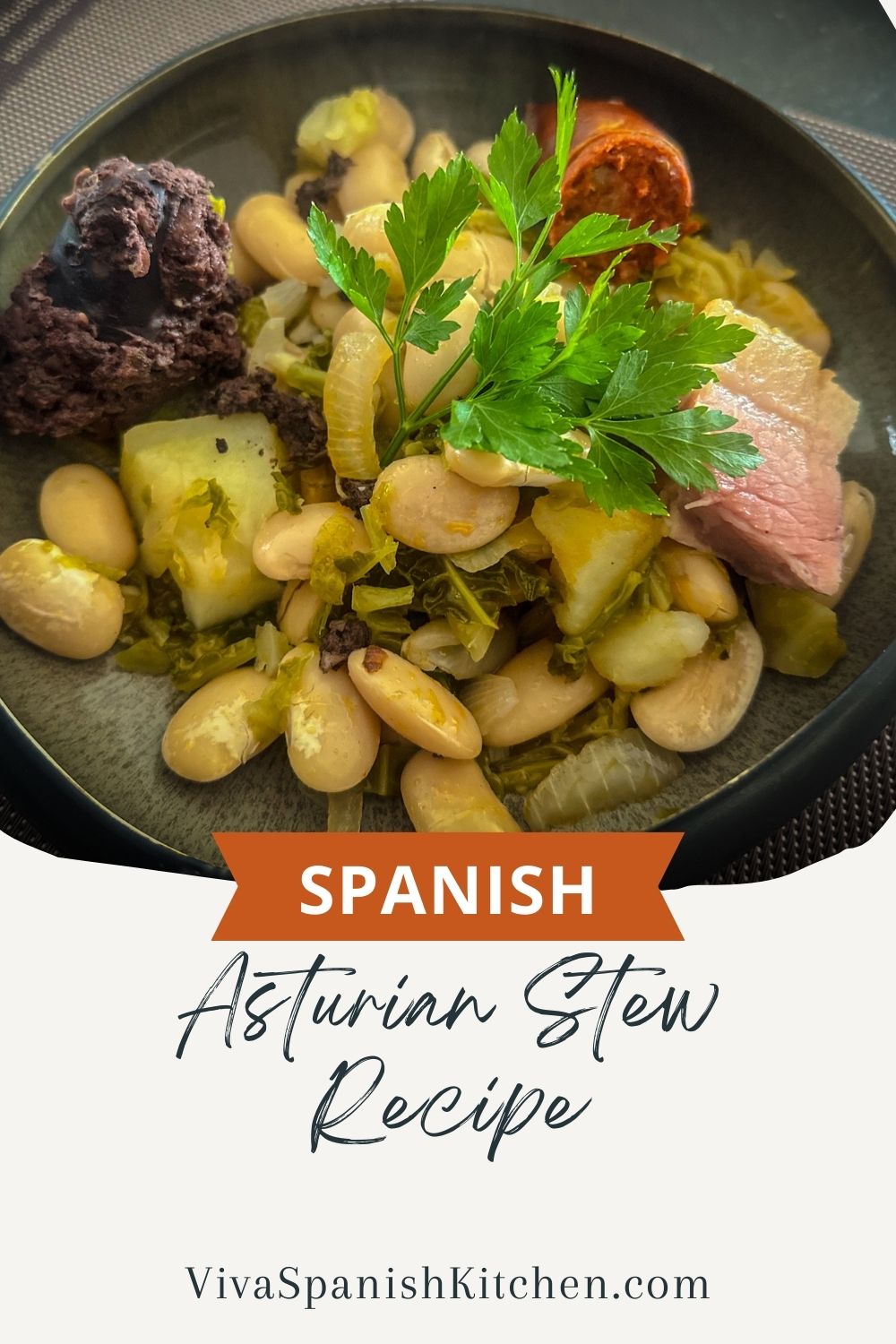
Asturian Stew or Pote Asturiano, named after the pot in which it is cooked (Pote or Olla), is known for its thick texture and deep flavor, resulting from the slow cooking of the ingredients, which allows the flavors to blend well. It is one of the most representative dishes of Asturian cuisine, comforting and nutritious, and it is a must-have on the table during the colder months of the year.
Traditional Asturian Stew

Traditional cuisine of Asturias
One of the best ways to explore Asturias is by visiting its villages and discovering the traditional flavors. Asturias is a region in northern Spain, located along the Cantabrian Sea, with numerous valleys and the mountains of the Picos de Europa. It also boasts a rich tradition of artisanal products, including milk and cheeses, cider, and the wine from Cangas del Narcea.
Among the region’s gastronomic treasures, you can try iconic dishes like fabada asturiana, the irresistible cachopo, the delicate pastel de cabracho, the comforting pote asturiano, and fabes con almejas – a dish that combines the best of both the sea and the land. And let’s not forget chorizo a la sidra and merluza a la sidra – two examples of how this typical drink perfectly integrates into local cuisine.
For dessert lovers, Asturias doesn’t disappoint either. Arroz con leche is highly popular throughout Spain.
What truly makes the northern region of Asturias special is its commitment to tradition. Many of these dishes are made following ancestral recipes, with fresh, high-quality ingredients from small local farms and livestock operations. This not only guarantees an unmatched taste but also supports sustainability and fosters a deep connection to the land of Asturias.

Ingredients
| Metric Amount | Imperial Amount | Core Ingredient | Preparation |
| 500 g | 1.1 lb | White beans (Fabes) | Dried, soaked |
| 8-10 units | 8-10 units | curly cabbage | Cleaned and chopped |
| 2 units | 2 units | Blood sausage (Morcilla) | Whole |
| 2 units | 2 units | Chorizo | Whole |
| 1/2 unit | 1/2 unit | Onion | Finely chopped |
| 2 cloves | 2 cloves | Garlic | Minced |
| 1 large | 1 large | Potato | Peeled and broken into chunks |
| 2 tbsp | 2 tbsp | Sweet paprika | Ground |
| 2 tbsp | 2 tbsp | Olive oil | Extra virgin |
| 1 tbsp | 1 tbsp | Salt | Fine |
Instructions
1. Soak the Beans and Start the Stew
Soak the dried white beans overnight in plenty of cold water. Drain them and place them in a large pot with the chorizo and blood sausage. Cover with fresh cold water by about 2–3 cm (1 inch) and bring slowly to a gentle simmer. As the stew heats, skim off any foam that rises to the surface. Once it begins to boil, “asustar las fabas” by adding a splash of cold water to stop the boil. Repeat this process two or three times during the first 30 minutes, then continue cooking over very low heat for about 1½ hours.

2. Add the Greens and Potatoes
Add the finely chopped curly cabbage (or traditional Asturian collard greens or Kale) and continue simmering for about 1 hour. Peel the potatoes and break them into chunks by snapping them with a knife, then add them to the pot. Cook for another 30 minutes, or until the beans, potatoes, and greens are all tender.
3. Prepare the Sofrito and Serve
Heat the olive oil in a small frying pan over medium heat. Sauté the finely chopped garlic until lightly golden, then add the onion and cook until soft and translucent. Remove the pan from the heat, stir in the paprika, and immediately add the sofrito to the stew. Gently stir to combine and let the pote rest for 5–10 minutes before serving. Serve hot with slices of the chorizo and blood sausage in each bowl.

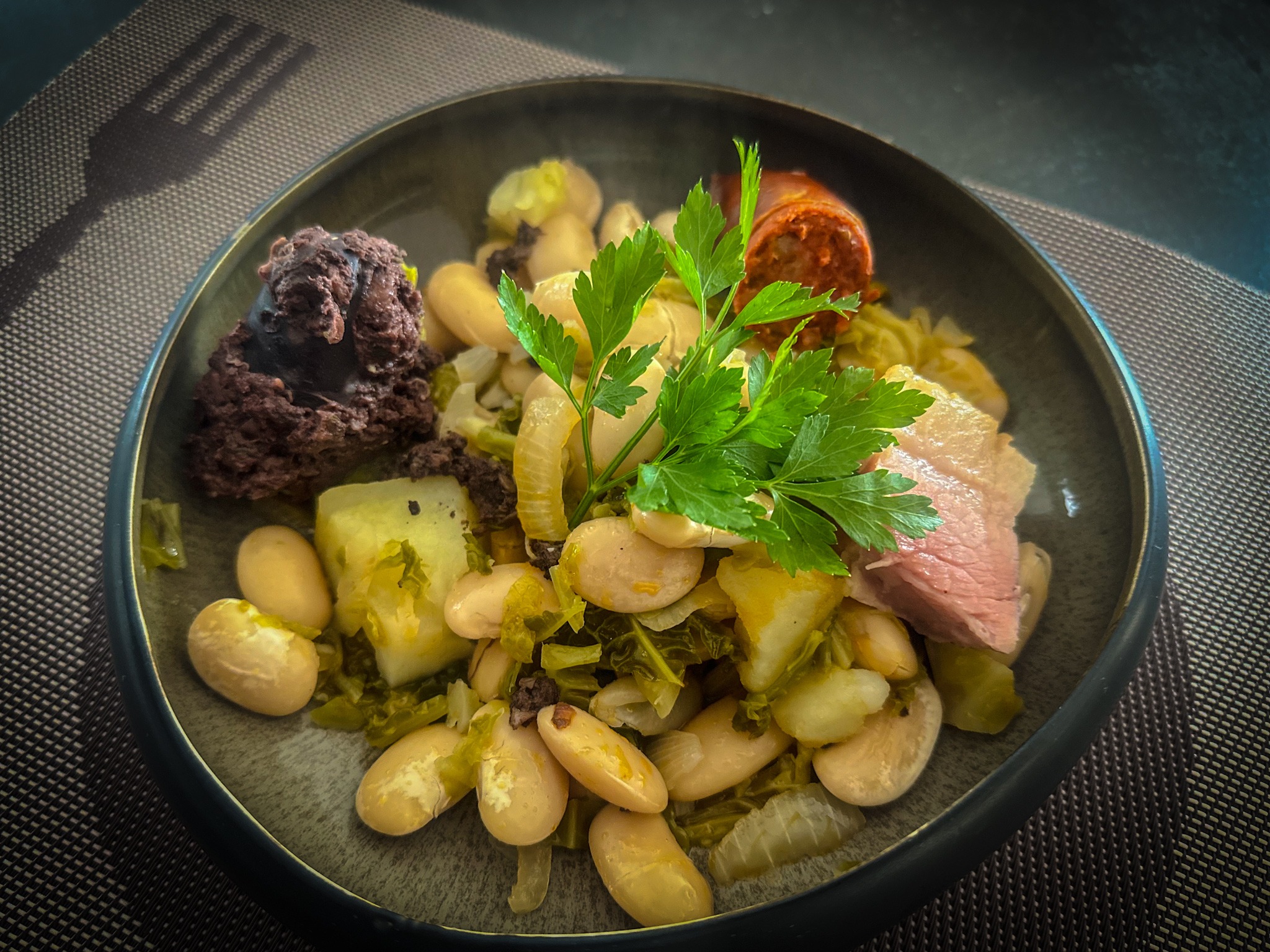
Chef’s Notes for Fabes Stew with Kale and Sausage
Why do we “asustar las fabas” (scare the beans) during the cooking process? “Asustar las fabas” is a traditional technique of adding a splash of cold water to the pot when the beans are simmering. This sudden temperature drop stops the boil, which helps the beans cook evenly without the skins splitting or breaking. It is the secret to achieving that buttery, intact texture that defines a perfect bean stew.
What is the best way to prepare the potatoes for this stew? Rather than slicing the potato with a knife, “snap” or crack the potato by inserting your knife and pulling it toward you. This jagged surface releases more starch into the broth as the potato cooks, which acts as a natural thickener, giving your stew a velvety, cohesive consistency without needing flour.
Can the Kale be prepared differently if I find it too fibrous? Kale can be quite robust. If you want a more delicate texture, remove the thick center stalks before chopping the leaves. You can also massage the chopped kale with a pinch of salt for a minute before adding it to the pot; this breaks down the cellular structure slightly, allowing it to integrate better into the stew.
Common Mistakes cooking Fabes Stew with Kale and Sausage
Overcrowding the pot with kale: Kale releases significant water and has a distinct texture. Adding it too late means it won’t integrate into the stew, but adding it too early might make it mushy. Follow the timing of adding it halfway through to maintain its vibrant character.
Rushing the reduction of the sofrito: The onion and garlic must be truly soft and translucent before the paprika goes in. If the onion is still raw, it will introduce a sharp, biting texture that disrupts the smooth, comforting profile of the stew.
Ignoring the bean soak: Trying to rush the process by using unsoaked beans will lead to uneven cooking and tough skins. The overnight soak is non-negotiable for rehydrating the beans so they cook through to the center at the same rate as the sausages.
Variations on Fabes with Kale and Sausage
-
The Asturian Classic: While kale is delicious, you can swap it for collard greens (berzas) or traditional curly cabbage, which are hallmark ingredients in authentic Asturian bean stews and offer a fantastic, robust bite.
-
The Lighter Coastal Version: If you want to reduce the heavy meat content, replace the blood sausage and chorizo with smoked paprika and a handful of clams or prawns added in the final 5 minutes for a lighter, “mar y montaña” (sea and land) profile.
-
Gluten-Free & Vegan Adaptations: You can create a powerful plant-based version by omitting the meats and using a smoked paprika base alongside a splash of soy sauce to replicate the deep umami notes typically provided by the sausages.
Recipe Card
Asturian Stew

Asturian Stew or Pote Asturiano, named after the pot in which it is cooked (Pote or Olla), is known for its thick texture and deep flavor, resulting from the slow cooking of the ingredients, which allows the flavors to blend well. It is one of the most representative dishes of Asturian cuisine, comforting and nutritious, and it is a must-have on the table during the colder months of the year.
Ingredients
- 500g of dry Fabes (white beans)
- 8-10 curly cabbage
- 2 blood sausages (morcillas)
- 2 chorizos
- 1/2 onion
- 2 cloves of garlic
- 1 large potato
- 2 tablespoons of sweet paprika
- 2 tablespoons of olive oil
- 1 tablespoon of salt
Instructions
1. Soak the Beans and Start the Stew
Soak the dried white beans overnight in plenty of cold water. Drain them and place them in a large pot with the chorizo and blood sausage. Cover with fresh cold water by about 2–3 cm (1 inch) and bring slowly to a gentle simmer. As the stew heats, skim off any foam that rises to the surface. Once it begins to boil, "asustar las fabas" by adding a splash of cold water to stop the boil. Repeat this process two or three times during the first 30 minutes, then continue cooking over very low heat for about 1½ hours.
2. Add the Greens and Potatoes
Add the finely chopped curly cabbage (or traditional Asturian collard greens) and continue simmering for about 1 hour. Peel the potatoes and break them into chunks by snapping them with a knife, then add them to the pot. Cook for another 30 minutes, or until the beans, potatoes, and greens are all tender.
3. Prepare the Sofrito and Serve
Heat the olive oil in a small frying pan over medium heat. Sauté the finely chopped garlic until lightly golden, then add the onion and cook until soft and translucent. Remove the pan from the heat, stir in the paprika, and immediately add the sofrito to the stew. Gently stir to combine and let the pote rest for 5–10 minutes before serving. Serve hot with slices of the chorizo and blood sausage in each bowl.
Notes
You can substitute the fabes with white beans, and the kale with any other type of leafy green vegetable such as Swiss chard, spinach, kale, watercress, or cabbage (the latter being very typical of Asturias).
Nutrition Information:
Yield:
4Serving Size:
1Amount Per Serving: Calories: 386Total Fat: 31gSaturated Fat: 10gUnsaturated Fat: 21gCholesterol: 72mgSodium: 1891mgCarbohydrates: 15gFiber: 4gSugar: 2gProtein: 13g