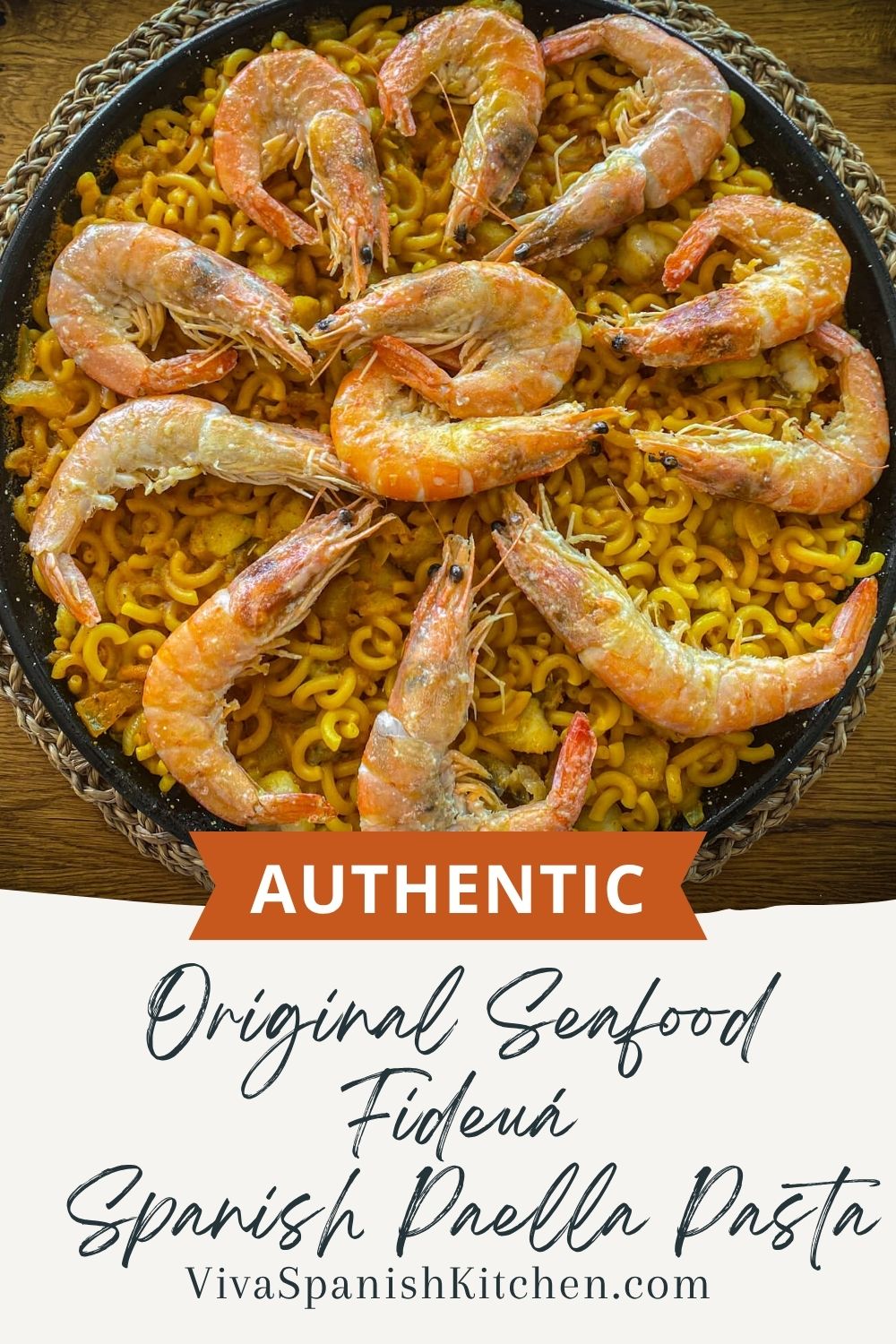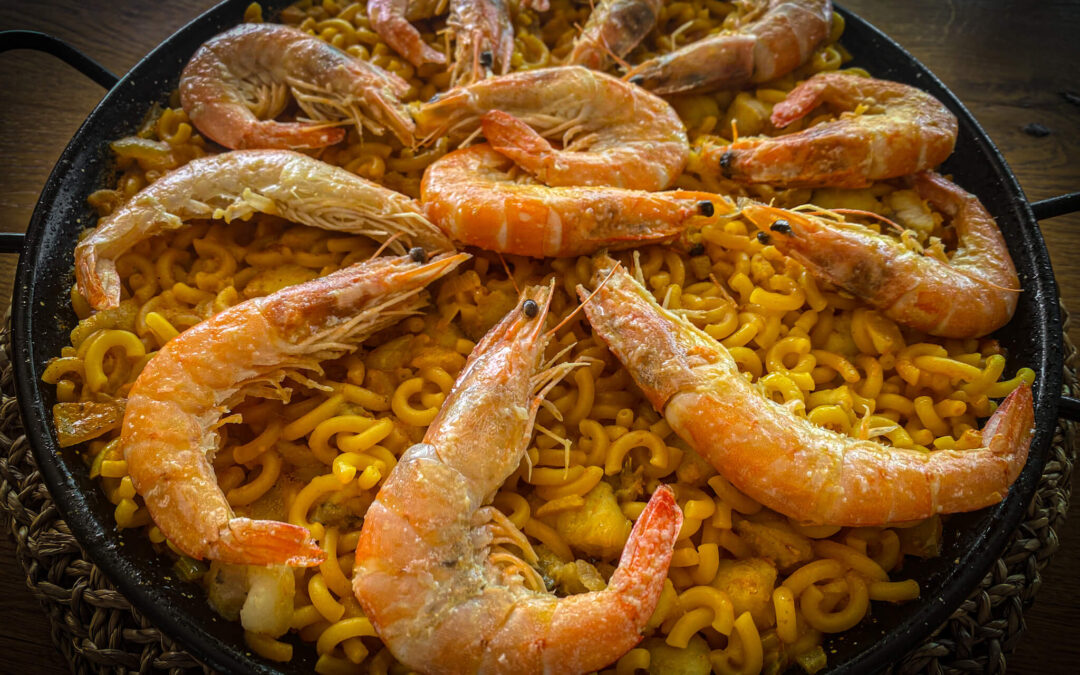
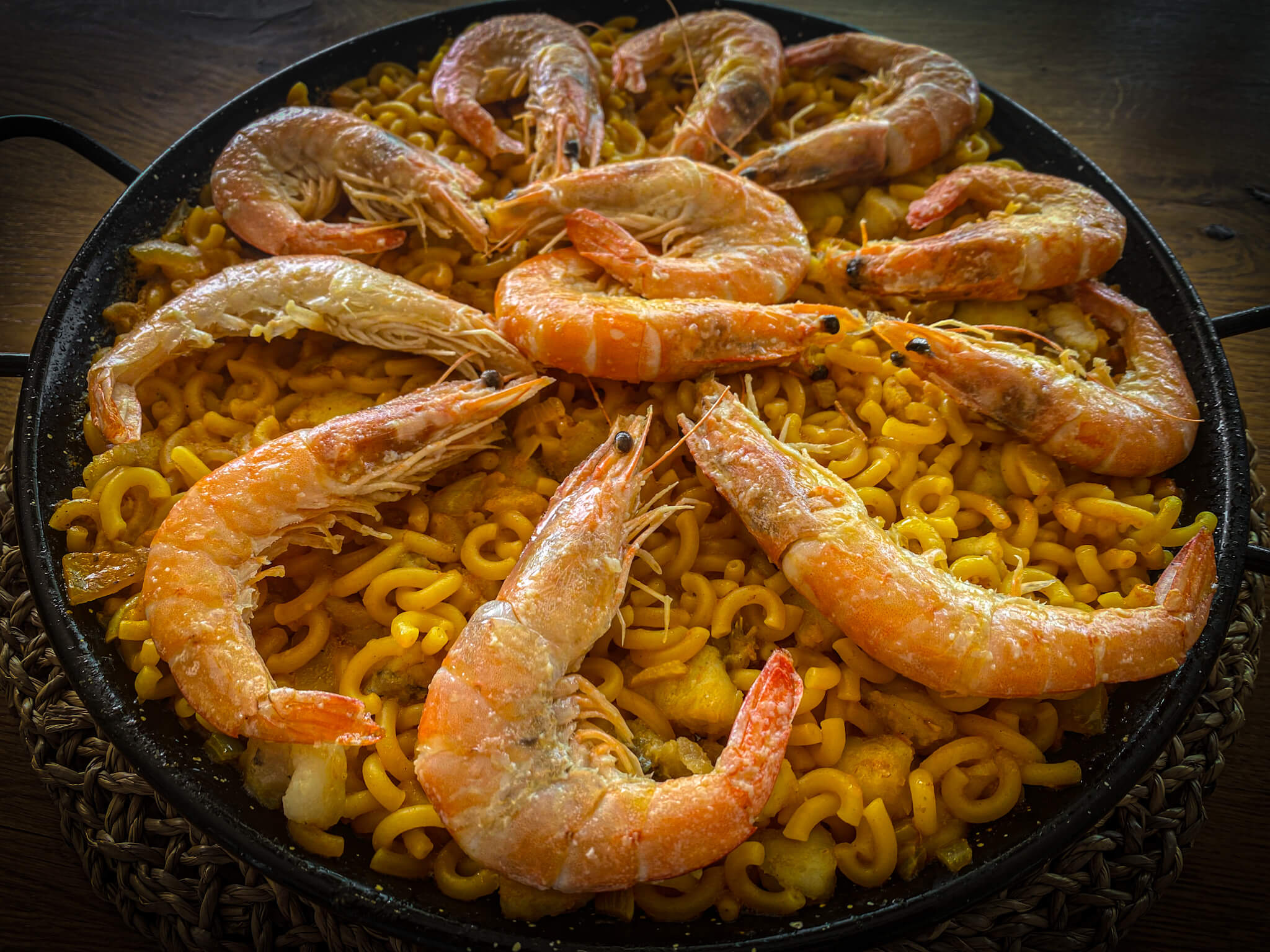
This Authentic Seafood Fideuá from Gandia (The Original Spanish Pasta Paella) is a spectacular maritime masterpiece that captures the true, sun-drenched soul of the Valencian coast. Originating in the historic port of Gandia as a fisherman’s ingenious adaptation when rice ran short, this specialized recipe features a slow-braised onion foundation to add a deeply savory, velvety body to the pan. Combining succulent monkfish tails, juicy prawns, and perfectly toasted curved pasta, this dish delivers a rich, sweet undertone that elevates the intense seafood broth into a legendary Mediterranean meal.
Authentic Seafood Fideuá from Gandia (The Original Spanish Pasta Paella)
Original Spanish Pasta Paella Recipe
This recipe is an incredible journey into the heart of traditional Spanish coastal cooking, capturing the vibrant culinary heritage of a historic maritime town. What makes this dish perfect is how beautifully it showcases the balance between pristine seafood and a deep, complex flavor foundation. By layering the ingredients carefully—searing the monkfish and prawns first to enrich the olive oil before slow-cooking a rich, aromatic sofrito—the simple curved noodles absorb an unimaginable depth of flavor, transforming a few straightforward ingredients into a truly comforting, de la categoría masterpiece.
For home cooks who find themselves completely captivated by this unique style of toasted pasta cooking, you can explore another beautiful side of family traditions with my Grandma’s Fideua Recipe. While our current dish focuses on the delicate pairing of monkfish and a velvety onion base using curved noodles, the heirloom family recipe takes a completely different path, using thick noodles, cuttlefish, and scallops to build a deeply robust, rustic feast that has brought generations of families together around the weekend table.
If this maritime dish inspires you to learn more about the broader world of Spain’s iconic paella pan cooking techniques, diving into the grain equivalent is the natural next step. You can discover the foundational secrets behind building the perfect crust and mastering slow-simmered stocks by exploring my ultimate guide on the Best Traditional Spanish Rice Recipes to Try. It is a fantastic resource for learning how to replicate authentic, restaurant-quality skillet dinners right in your own home kitchen.
To build a beautifully rounded, authentic Mediterranean menu around your piping-hot skillet of pasta, pairing it with contrasting textures and temperatures makes all the difference. For a uniquely satisfying and refreshing summer side dish that balances the rich, warm flavors of the hot pan, look no further than my Easy Cold and Refreshing Rice Salad. Creamy and crisp, this simple side dish combines tender rice with imitation crab sticks, juicy sweet corn, and crunchy cucumbers tossed in a smooth mayonnaise dressing, offering a brilliant, cooling contrast that cleanses the palate between bites. Alternatively, you can kick off your seaside feast with a classic, quick-cooking tapas favorite by serving a plate of my Artichoke Hearts with Garlic Shrimp, starting your culinary gathering with a delicious burst of sizzling garlic and tender green vegetables.

Ingredients
| Metric Amount | Imperial Amount | Core Ingredient | Preparation |
| 400 g | 14 oz | Short curved Fideuá pasta noodles | Dry, ready for toasting |
| 2 units | 2 units | Monkfish tails | Large size, cleaned, membranes removed, sliced into bite-sized chunks |
| 8 units | 8 units | Whole prawns or king shrimps | Large size, intact with shells and heads |
| 120 ml | 0.5 cup | Extra Virgin Olive Oil (AOVE) | Divided use for frying seafood and toasting pasta |
| 1 unit | 1 unit | White onion | Large size, very finely minced |
| 2 cloves | 2 cloves | Fresh garlic | Smashed and finely chopped |
| 100 g | 3.5 oz | Ripe tomatoes | Seeds discarded, finely grated |
| 5 g | 1 tsp | Sweet Spanish smoked paprika | Premium quality (Pimentón dulce) |
| 6 strands | 6 strands | Authentic Spanish saffron | Toasted and crushed |
| 1 L | 4.2 cups | Concentrated homemade seafood rockfish stock | Hot, kept at a gentle simmer |
Instructions
1. Prepping the Monkfish and Searing the Seafood Layers
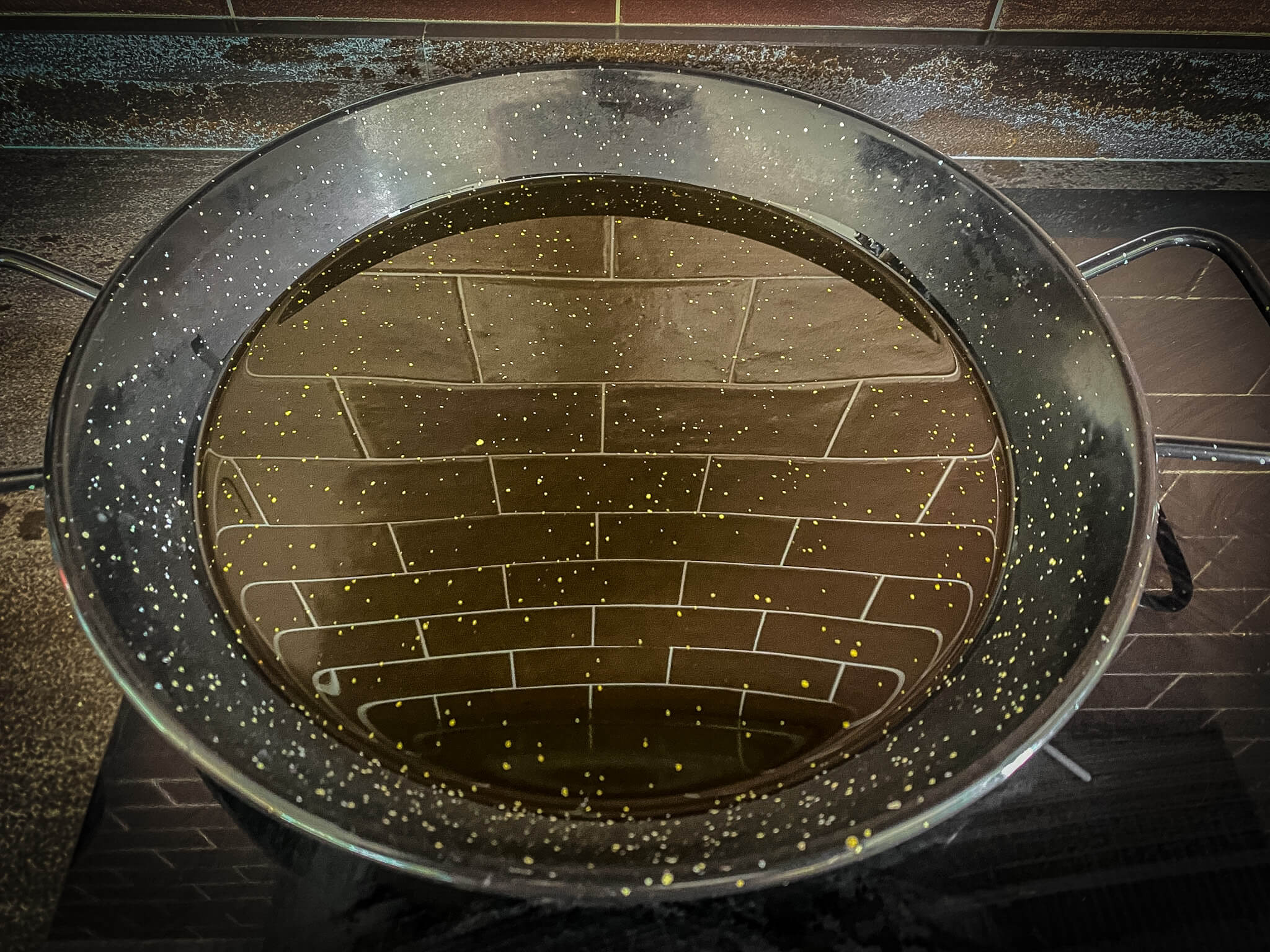
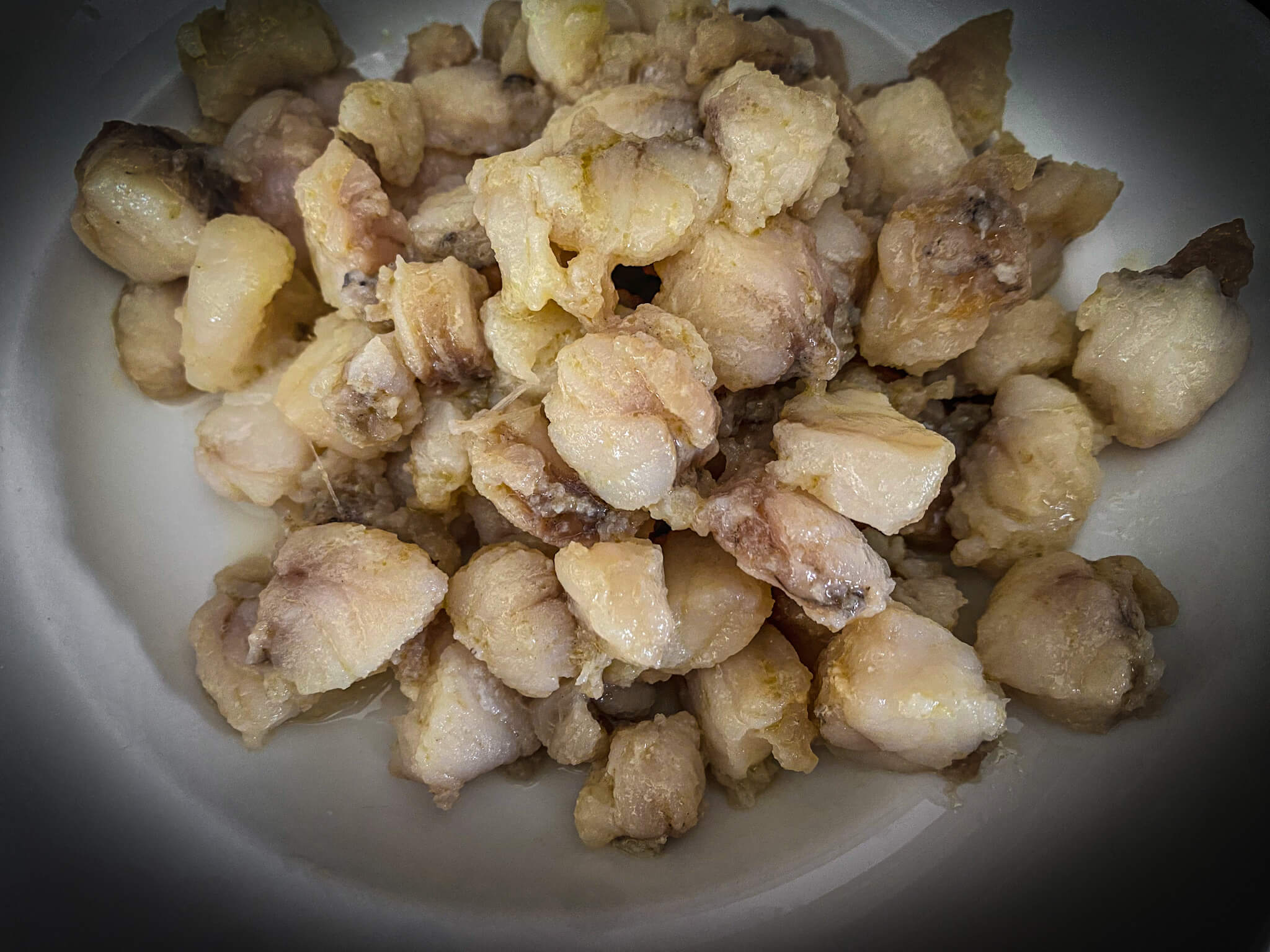
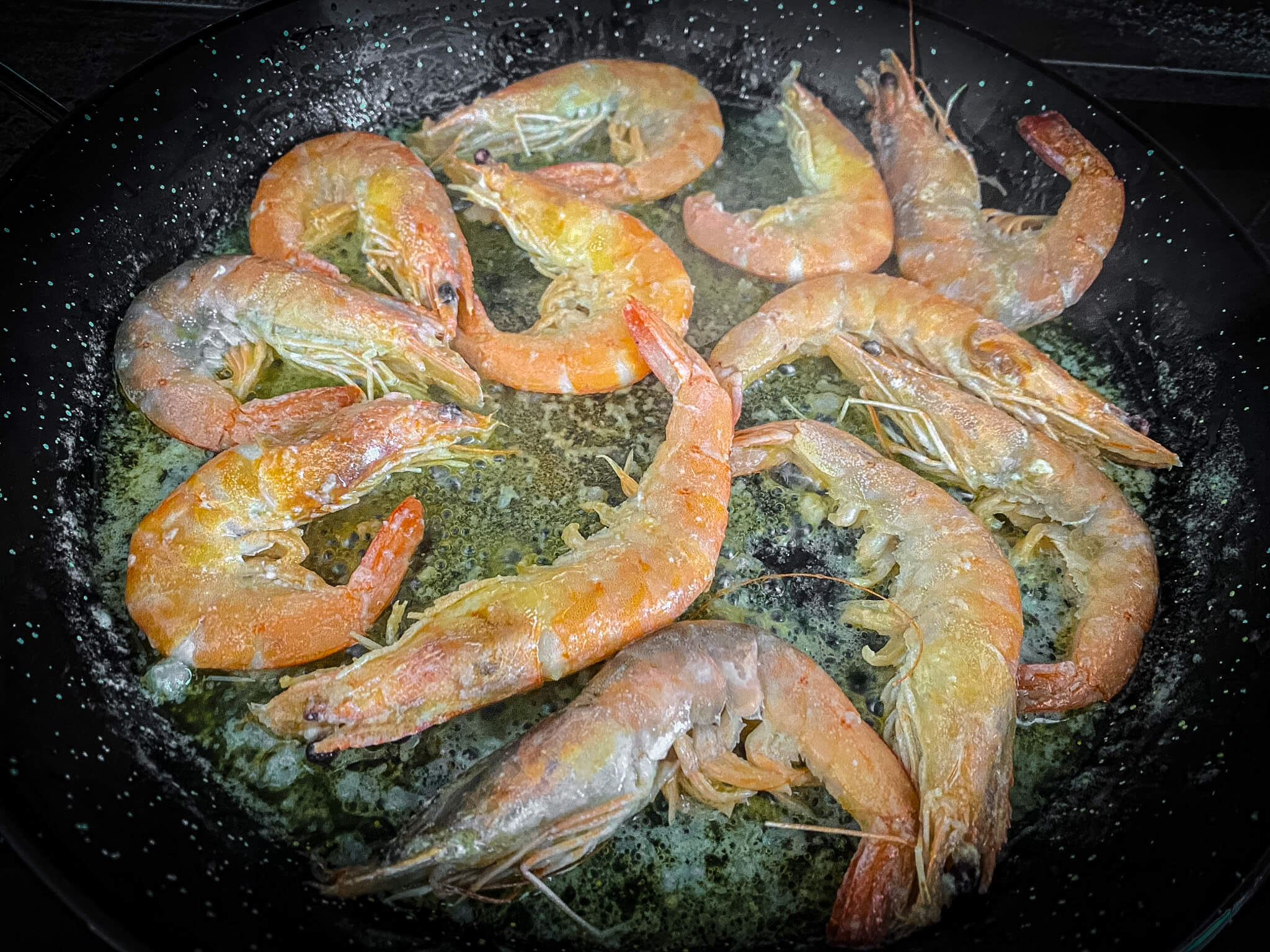
Start by carefully removing the central bone from the two large monkfish tails and slicing the clean loins into uniform, bite-sized chunks. Pour the extra virgin olive oil into your wide paella pan over medium-high heat with a light pinch of salt, add the monkfish pieces, and sear them for 2 minutes just to seal the exterior juices before transferring them to a clean plate. Next, drop the whole prawns into that same hot pan and fry them for 2 minutes until they blush into a vibrant pink, then set them aside alongside the fish, leaving an intensely fragrant, red-tinted oil behind as your cooking foundation.



2. Building the High-Category Rich Sofrito
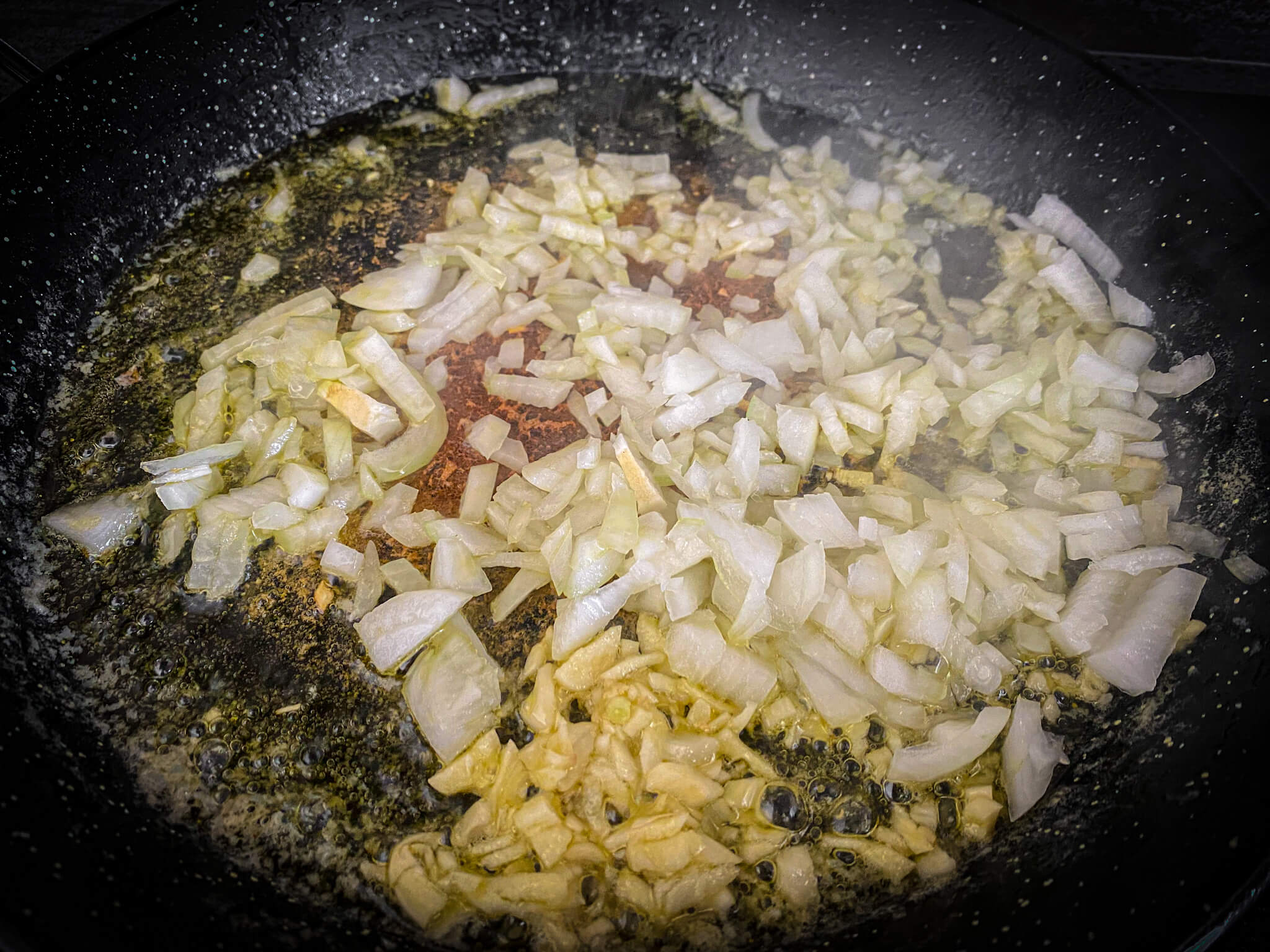
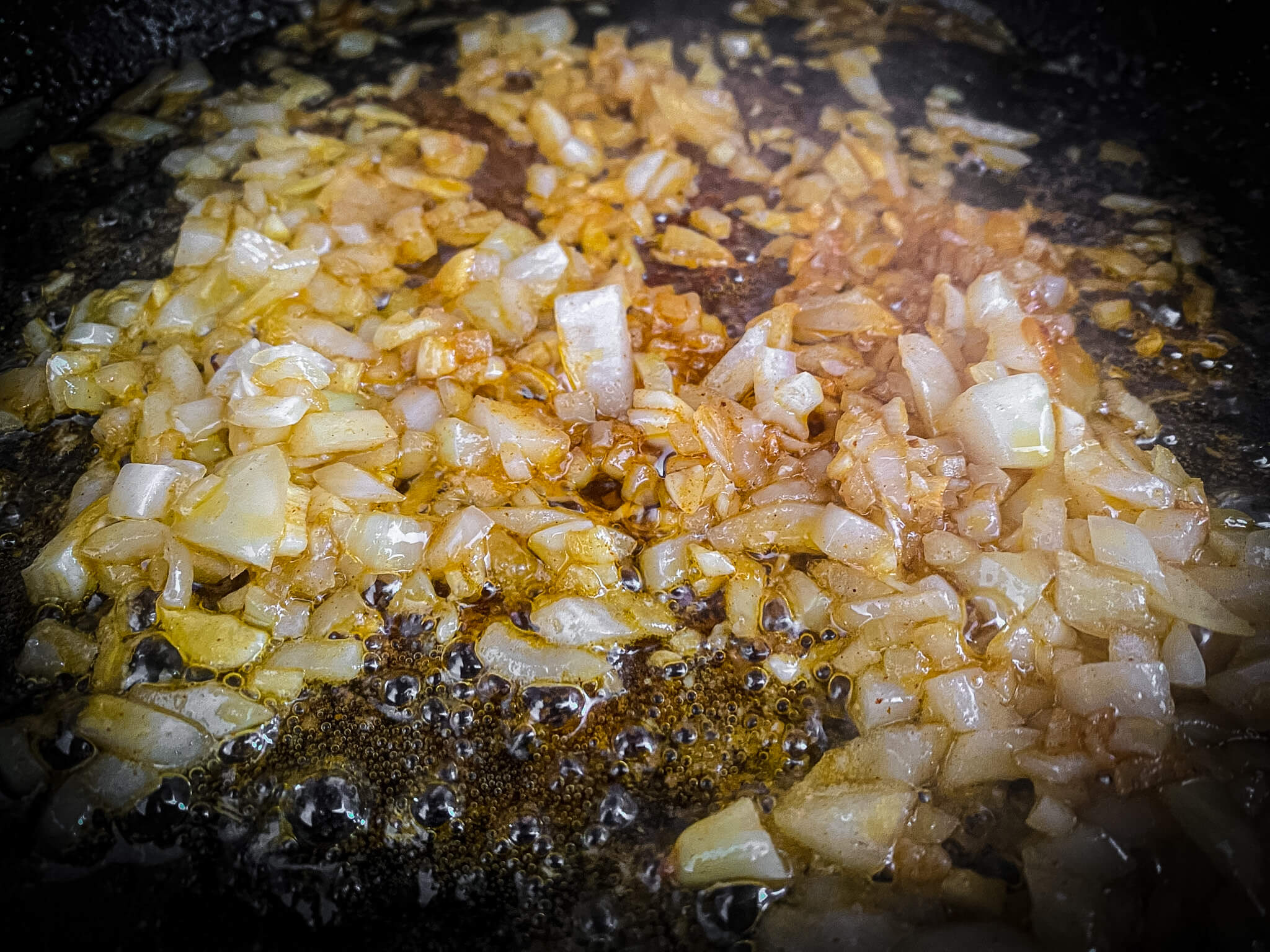
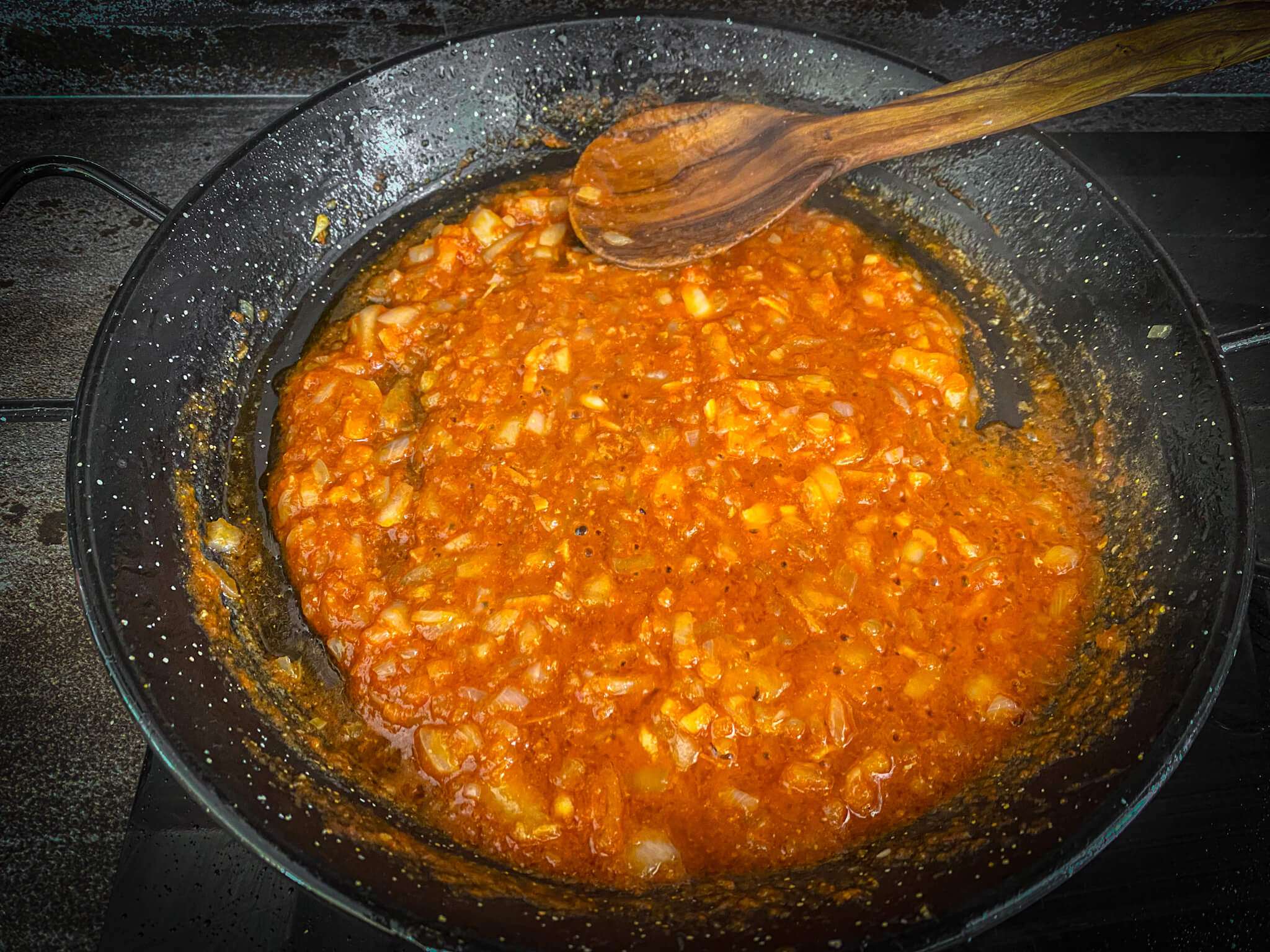
Turn the heat down to medium-low, drop the finely minced white onion and chopped garlic into the remaining seafood-infused oil, and sauté slowly for 12-15 minutes until the mixture is completely translucent, jammy, and sweet. Stir in the grated ripe tomato and sweet smoked paprika, cooking for another 4 minutes until the moisture from the tomato completely evaporates and darkens into a thick paste. Crush the saffron strands into the skillet during the last minute to unlock their earthy aroma, finalizing a base of absolute top category.

3. Toasting the Noodles in Crudo
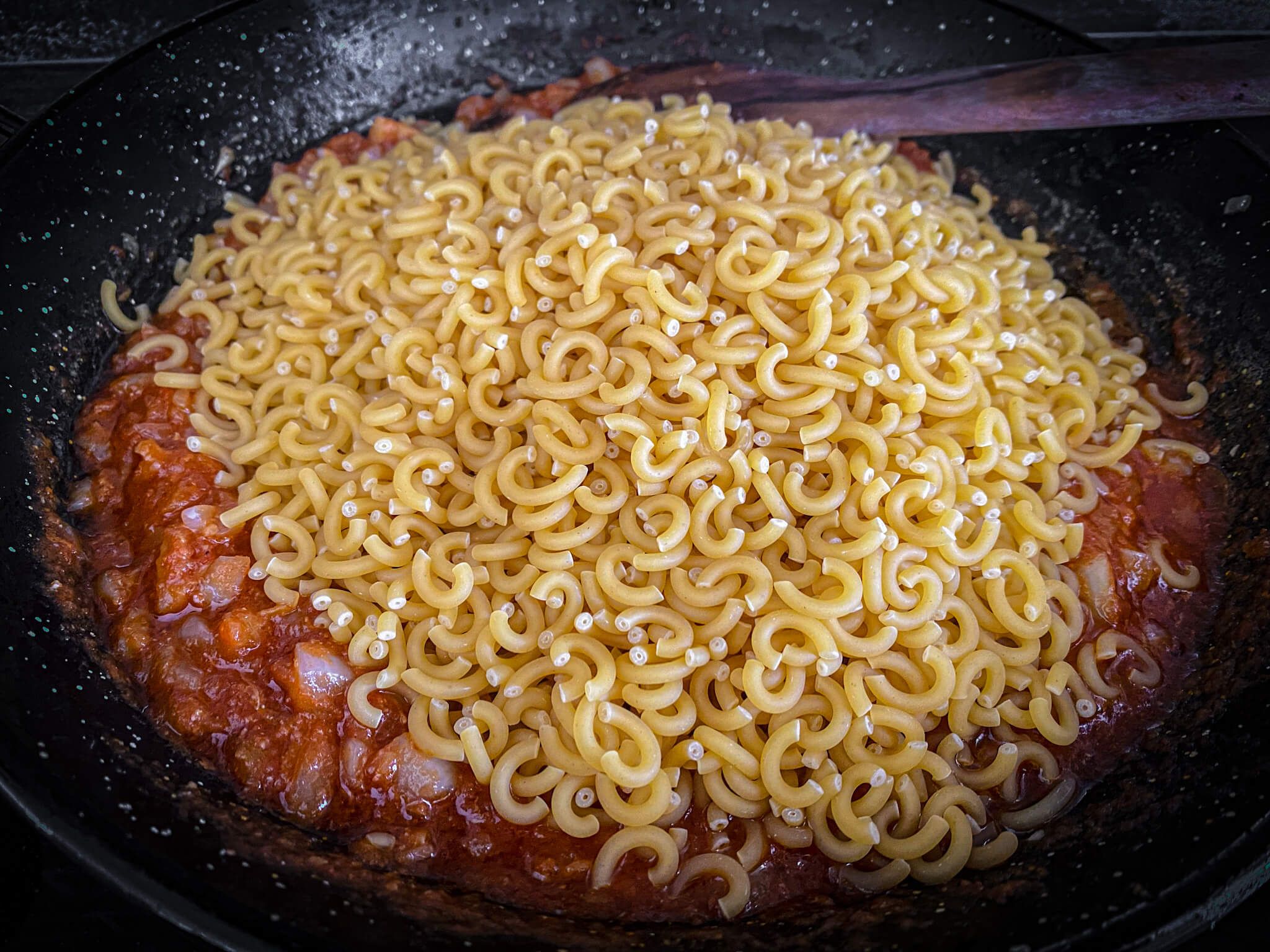
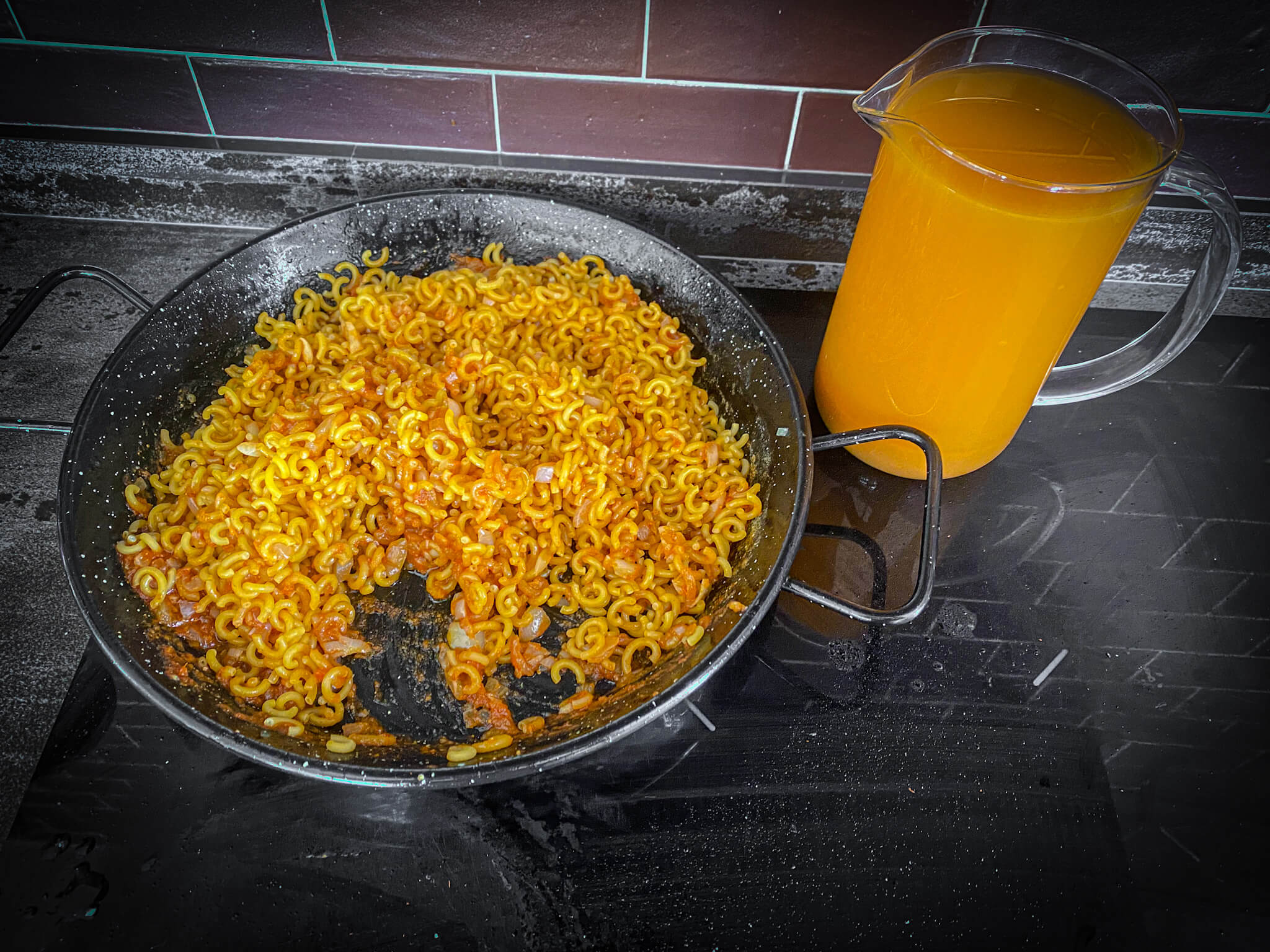
Pour the raw curved fideuá pasta directly into the rich onion and tomato sofrito over medium heat. Stir constantly for 3 minutes to coat every single noodle in the aromatic oil, letting the pasta toast lightly until it develops a beautiful golden hue and a subtle nutty fragrance. This dry-frying step is essential because it seals the starches, ensuring the noodles remain firm and independent rather than clumping together when the liquid is introduced.
4. Simmering the Stock and Integrating the Monkfish
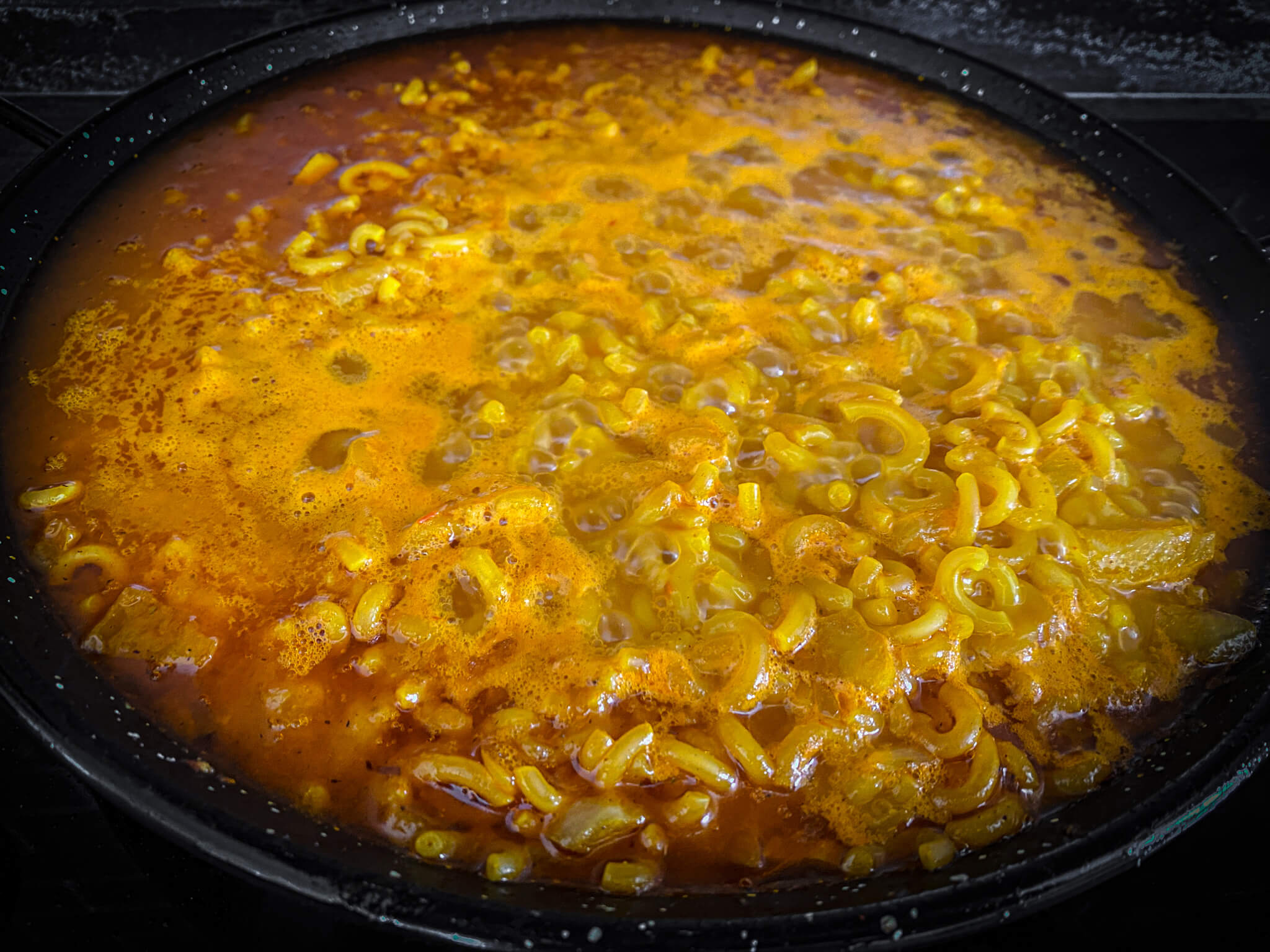
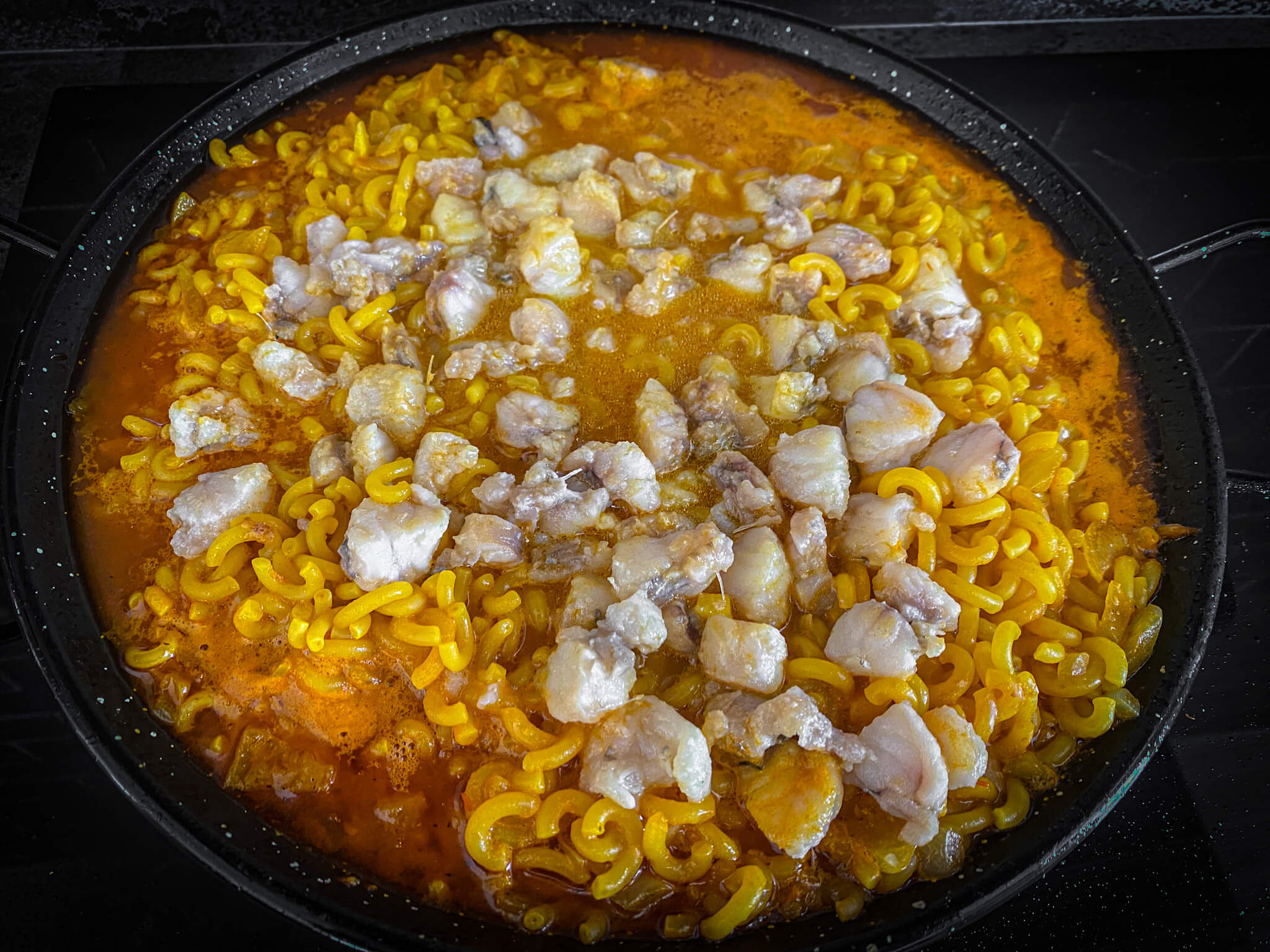
Bring your concentrated seafood rockfish stock to a rolling boil in a separate pot, then pour it boiling hot directly over the toasted noodles. Crank the heat up to high and let it boil vigorously for 8 minutes, making sure the pasta is evenly distributed across the pan. As the liquid level drops to expose the top of the noodles, gently press the seared monkfish chunks back into the bubbling pasta grid so they finish cooking through and release their savory juices into the reducing broth.
5. The Final Reduction, Garnish and Resting Phase
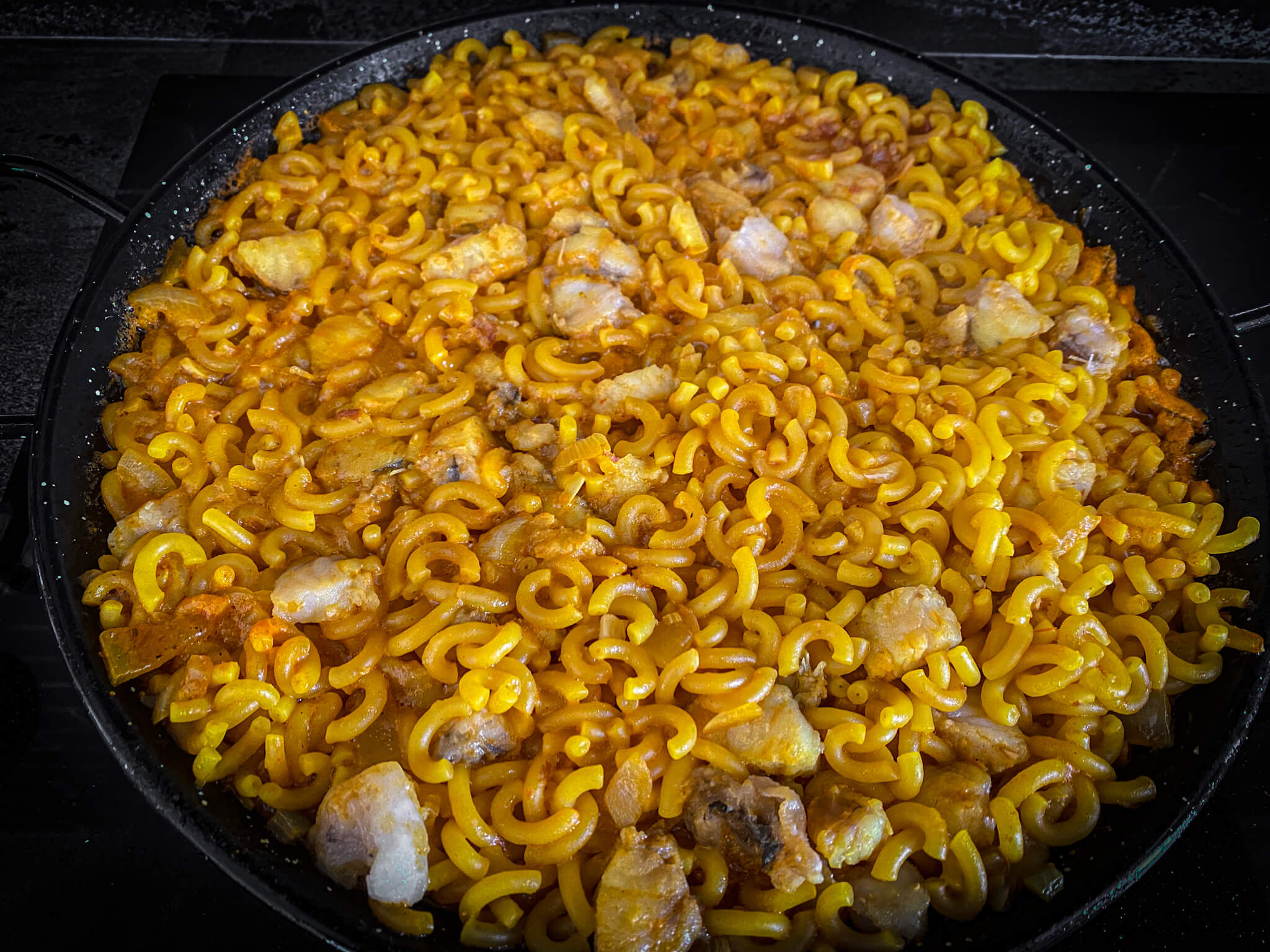
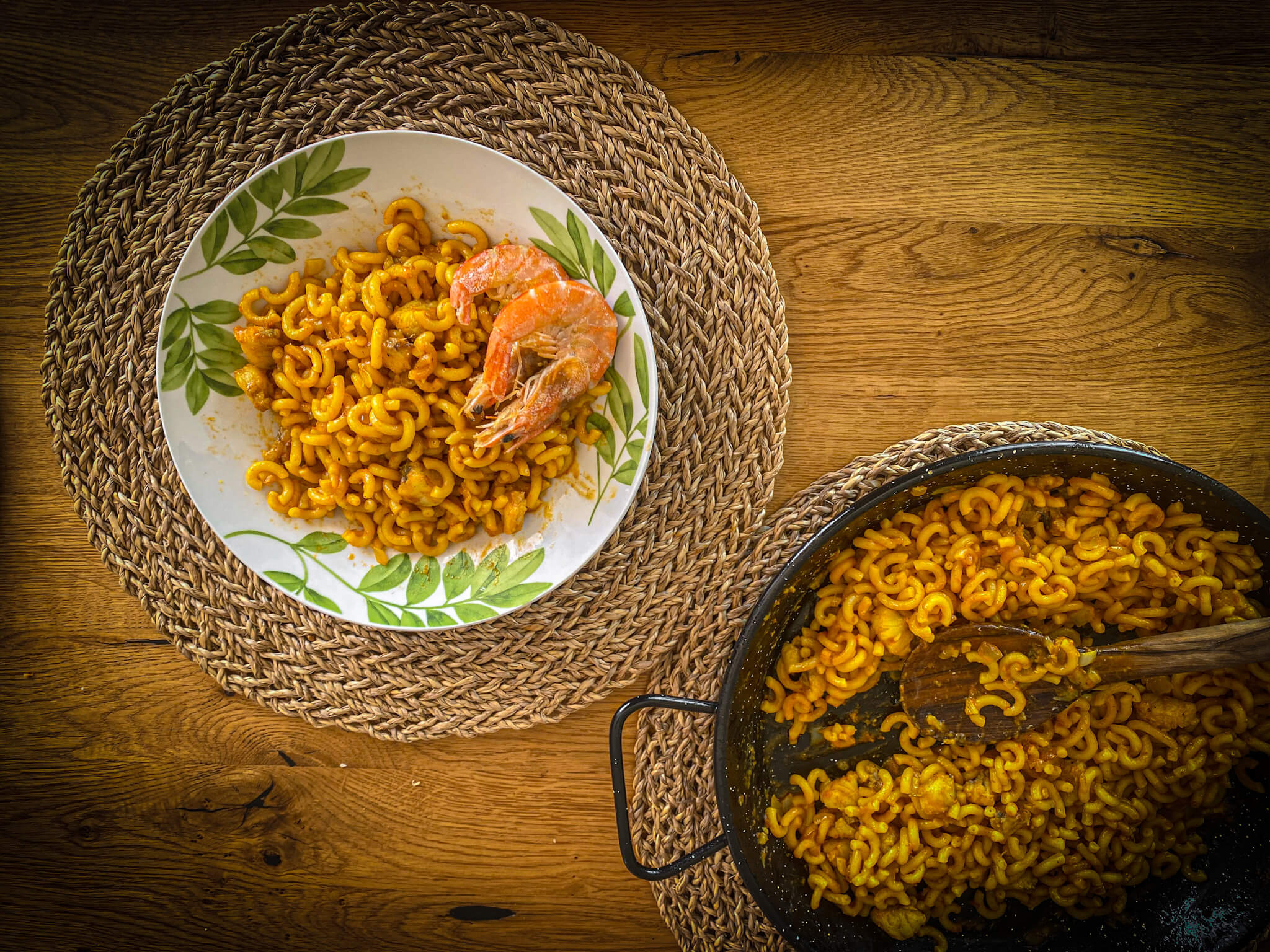
Reduce the heat to low and simmer for an additional 4 minutes until the stock is entirely absorbed and you hear a gentle crackling sound from the bottom of the pan. Turn off the heat completely, arrange the seared prawns beautifully across the top of the pasta as a final decoration, and cover the pan. Let the fideuá rest undisturbed for 5 minutes before serving so the trapped steam settles, firming up the texture of the curved noodles and locking the final drop of seafood essence into the core of the dish.

Chef’s Notes for Making an Authentic Seafood Fideuá
What makes this curved noodle version different from other seafood fideuás? The choice of noodle completely dictates the eating experience because the thicker, curved shape traps the savory onion bits inside its hollows. While thin fideos create a crispy, bristled surface, these curved strands prioritize a juicy, toothsome bite that carries the rich, slow-cooked broth deep into every mouthful.
How do I know if I have achieved the perfect texture at the bottom? The goal is to hear a faint, distinct sizzling sound during the final minute of cooking, indicating that the liquid is gone and the oil is lightly frying the base. This forms a subtle, non-burnt caramelized layer known as socarrat, which adds an incredible depth of roasted flavor that contrasts beautifully with the tender seafood on top.
Should this specific style of fideuá be served with alioli? While black fideuás pair almost mandatory with garlic mayo, a rich monkfish and onion fideuá is best enjoyed purely on its own to appreciate the delicate sweetness of the caramelized base. However, if you love a creamy kick, serve a dollop of traditional, eggless mortar alioli strictly on the side so it doesn’t overwhelm the subtle saffron and seafood notes.
Common Mistakes to Avoid When Cooking Spanish Fideuá
Adding room-temperature stock to the pan: Pouring cold or lukewarm seafood broth over the toasted noodles is a critical mistake. This happens because the sudden temperature drop halts the cooking process instantly, causing the starches in the pasta to leach out and turn the dish into a gummy paste. Always bring your stock to a rolling boil in a side pot before pouring it in, ensuring the high heat remains constant for a clean, firm bite.
Over-stirring the noodles after adding liquid: Treating a traditional Spanish fideuá like a classic Italian risotto will backfire. The constant friction of a spoon breaks the delicate pasta strands and releases excessive starches into the reducing broth. Stir the noodles exactly once to distribute them evenly right after pouring the hot stock, and then leave the pan completely alone so the liquid can simmer down naturally.
Leaving prawn heads out of the stock preparation: Discarding the shells and heads of your seafood before frying them in the pan is a bad idea. The highest concentration of rich maritime flavor is locked inside the prawn heads, which release deep umami oils when seared. Always cook the prawns whole in the initial oil and press their heads gently with a spoon to enrich the frying fat before removing them.
Ingredient Swaps & Variations for Seafood Fideuá
Seafood Alternatives: If monkfish is difficult to source, thick cubes of firm Atlantic cod or sea bass make spectacular substitutes. You can also throw in a handful of clean squid rings or scallops along with the onions to mirror the rich, traditional texture of regional fishing ports.
Pasta Substitutions: If you cannot find authentic short curved fideuá noodles, broken pieces of standard angel hair pasta (fideo fino) or thin spaghetti snapped into one-inch pieces work beautifully. Keep in mind that thinner noodles cook much faster, reducing your boiling time by 3 to 4 minutes.
The No-Onion Purist Route: To transform this dish into a strictly historical Gandia-style recipe, omit the white onion entirely from the sofrito. Rely exclusively on garlic, grated tomato, and a high-grade rockfish stock to provide the moisture, resulting in a cleaner, sharper seafood profile.
Recipe Summary & Resources
Recipe Card
Authentic Seafood Fideuá from Gandia

This Authentic Seafood Fideuá from Gandia (The Original Spanish Pasta Paella) is a spectacular maritime masterpiece that captures the true, sun-drenched soul of the Valencian coast. Originating in the historic port of Gandia as a fisherman’s ingenious adaptation when rice ran short, this specialized recipe features a slow-braised onion foundation to add a deeply savory, velvety body to the pan. Combining succulent monkfish tails, juicy prawns, and perfectly toasted curved pasta, this dish delivers a rich, sweet undertone that elevates the intense seafood broth into a legendary Mediterranean meal.
Ingredients
- For the Seafood and Pasta:
- 400 g (14 oz) Short curved Fideuá pasta noodles
- 2 large Monkfish tails, cleaned and sliced into bite-sized chunks
- 8 large Whole prawns or king shrimps
- 120 ml (0.5 cup) Extra Virgin Olive Oil
- For the Rich Sofrito Base:
- 1 large White onion, very finely minced
- 2 cloves Fresh garlic, smashed and chopped
- 100 g (3.5 oz) Ripe tomatoes, finely grated
- 5 g (1 tsp) Sweet Spanish smoked paprika
- 6 strands Authentic Spanish saffron
- 1 L (4.2 cups) Concentrated homemade seafood rockfish stock
Instructions
Prepping the Monkfish and Searing the Seafood Layers
Start by carefully removing the central bone from the two large monkfish tails and slicing the clean loins into uniform, bite-sized chunks. Pour the extra virgin olive oil into your wide paella pan over medium-high heat with a light pinch of salt, add the monkfish pieces, and sear them for 2 minutes just to seal the exterior juices before transferring them to a clean plate. Next, drop the whole prawns into that same hot pan and fry them for 2 minutes until they blush into a vibrant pink, then set them aside alongside the fish, leaving an intensely fragrant, red-tinted oil behind as your cooking foundation.
Building the High-Category Rich Sofrito
Turn the heat down to medium-low, drop the finely minced white onion and chopped garlic into the remaining seafood-infused oil, and sauté slowly for 12-15 minutes until the mixture is completely translucent, jammy, and sweet. Stir in the grated ripe tomato and sweet smoked paprika, cooking for another 4 minutes until the moisture from the tomato completely evaporates and darkens into a thick paste. Crush the saffron strands into the skillet during the last minute to unlock their earthy aroma, finalizing a base of absolute top category.
Toasting the Noodles in Crudo
Pour the raw curved fideuá pasta directly into the rich onion and tomato sofrito over medium heat. Stir constantly for 3 minutes to coat every single noodle in the aromatic oil, letting the pasta toast lightly until it develops a beautiful golden hue and a subtle nutty fragrance. This dry-frying step is essential because it seals the starches, ensuring the noodles remain firm and independent rather than clumping together when the liquid is introduced.
Simmering the Stock and Integrating the Monkfish
Bring your concentrated seafood rockfish stock to a rolling boil in a separate pot, then pour it boiling hot directly over the toasted noodles. Crank the heat up to high and let it boil vigorously for 8 minutes, making sure the pasta is evenly distributed across the pan. As the liquid level drops to expose the top of the noodles, gently press the seared monkfish chunks back into the bubbling pasta grid so they finish cooking through and release their savory juices into the reducing broth.
The Final Reduction, Garnish and Resting Phase
Reduce the heat to low and simmer for an additional 4 minutes until the stock is entirely absorbed and you hear a gentle crackling sound from the bottom of the pan. Turn off the heat completely, arrange the seared prawns beautifully across the top of the pasta as a final decoration, and cover the pan. Let the fideuá rest undisturbed for 5 minutes before serving so the trapped steam settles, firming up the texture of the curved noodles and locking the final drop of seafood essence into the core of the dish.
Nutrition Information:
Yield:
4Serving Size:
1Amount Per Serving: Calories: 278Total Fat: 6gSaturated Fat: 1gUnsaturated Fat: 5gCholesterol: 35mgSodium: 198mgCarbohydrates: 36gFiber: 3gSugar: 2gProtein: 18g
Pin It