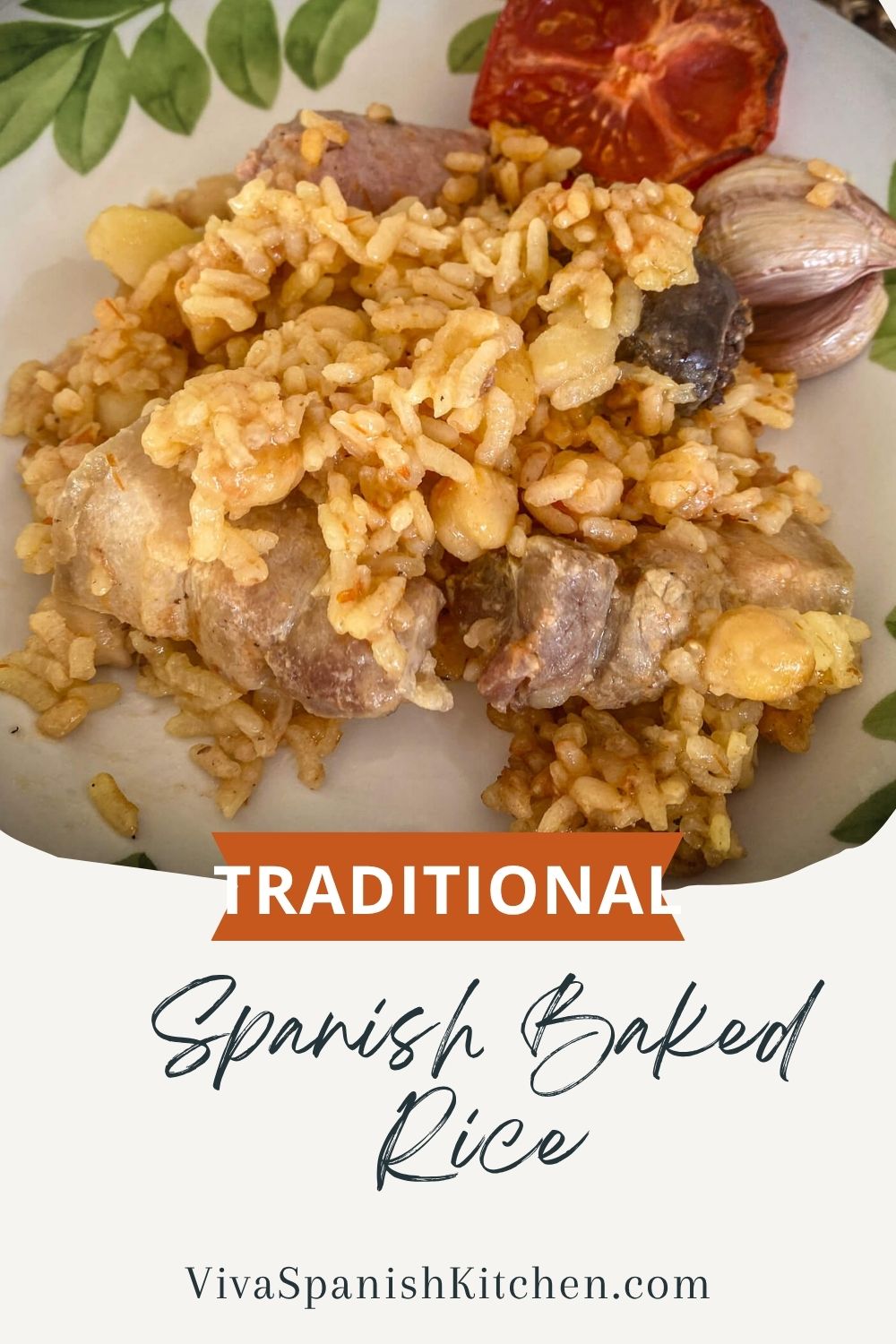
If you’re craving a true taste of Spanish comfort food, this Baked Rice with Chickpeas, Pork, and Blood Sausage is the real deal. Known in Spain as Arroz al Horno, this dish combines Bomba rice, morcilla (blood sausage), longaniza, and slow-cooked chickpeas in a richly seasoned tomato and saffron broth. Valencian arroz al horno is a magnificent example of traditional Spanish cuisine. With humble origins but extraordinary flavor, it remains a beloved dish in the Valencian culinary tradition. Whether in its classic form or with modern twists, its essence remains the same: a harmonious combination of ingredients and heritage.
Traditional Spanish Baked Rice

Valencian Baked Rice: A Traditional Arroz al Horno Home-Cooked Recipe
Rustic, hearty, and full of flavor, this Traditional Spanish Baked Rice brings the soul of Valencia to your table. If you’re craving a true taste of Spanish comfort food, this Baked Rice with Chickpeas, Pork, and Blood Sausage is the real deal.
Known in Spain as Arroz al Horno, this dish combines Bomba rice, morcilla (Spanish blood sausage), longaniza, chickpeas, pork, potato, tomato, saffron, and a whole head of roasted garlic in one wonderfully rich casserole. With humble origins but extraordinary flavor, Valencian arroz al horno remains one of the great examples of traditional Spanish comfort food. Its ingredients may vary from one family to another, but its essence remains the same: a generous combination of rice, local ingredients, and culinary heritage.
There are recipes that are simply cooked, and then there are recipes that feel like a complete event. Valencian Baked Rice belongs to the second category. It is one of those dishes where the ingredients are arranged almost like a small culinary ritual: the rice, chickpeas, pork, sausages, potato, tomato, and whole head of garlic all come together in the same clay casserole before being transformed by the intense heat of the oven.
What makes this dish especially interesting is its history of resourceful home cooking. Traditionally, arroz al horno was often prepared using ingredients left over from a stew or puchero. Rather than wasting food, Valencian families transformed those leftovers into a completely different and incredibly satisfying meal. That spirit of making the most of what you have is still one of the things I love most about traditional Mediterranean cooking.
The dish is also a wonderful example of how rice became deeply connected to Valencian cuisine. After rice was introduced to the Iberian Peninsula during the Arab period, the wetlands and climate around Valencia proved ideal for its cultivation. Over the centuries, rice became one of the defining ingredients of the region, giving rise to countless traditional recipes (Visit My Best Tradicional Spanish Rice Recipes here), including this baked version.
Traditionally, the casserole was often taken to the local communal bakery or village oven, especially when families did not have an oven at home. This is where the name arroz al horno—literally “oven-baked rice”—comes from. Cooking it in a clay dish also gives the recipe a particularly rustic character, while the intense heat of the oven allows the rice to absorb the rich flavors of the meat, sausages, tomato, saffron, and broth.
For me, the real magic of this dish is the contrast between its ingredients. The pork ribs and belly provide richness, the morcilla adds a deep and distinctive flavor, the chickpeas bring creaminess, and the potato absorbs all those delicious juices as it cooks. Meanwhile, the whole head of garlic slowly softens and perfumes the entire dish.
This is not a light or delicate rice dish—and that is precisely the point. Arroz al horno is generous, rustic, and comforting. It is the kind of food I would prepare when I want to put a substantial dish in the center of the table and let everyone serve themselves. Every family can have its own version, but the idea remains the same: good rice, strong local ingredients, and a traditional way of turning simple ingredients into something truly memorable.


Ingredients
| Metric Amount | Imperial Amount | Core Ingredient | Preparation |
| 1 unit | 1 unit | Potato | Peeled and medium-thick rounds |
| 100 g | 3.5 oz | Crushed tomatoes | Canned or fresh grated |
| 1 unit | 1 unit | Tomato | Whole, sliced |
| 1 head | 1 head | Garlic | Whole, unpeeled |
| 200 g | 7 oz | Bomba rice | Dry |
| 200 g | 7 oz | Cooked chickpeas | Drained |
| 4 units | 4 units | Morcilla (Blood sausage) | Whole |
| 4 units | 4 units | Longaniza (Spanish sausage) | Whole |
| 200 g | 7 oz | Pork ribs | Cut into bite-sized pieces |
| 200 g | 7 oz | Pork belly | Cut into bite-sized pieces |
| 0.75 L | 3.25 cups | Beef broth | Hot |
| 10 ml | 2 tsp | Olive oil | Extra virgin |
| 1 pinch | 1 pinch | Saffron | Threads, dissolved |
| 1 pinch | 1 pinch | Sweet paprika | Powdered |
| 1 pinch | 1 pinch | Salt | Fine |
Instructions
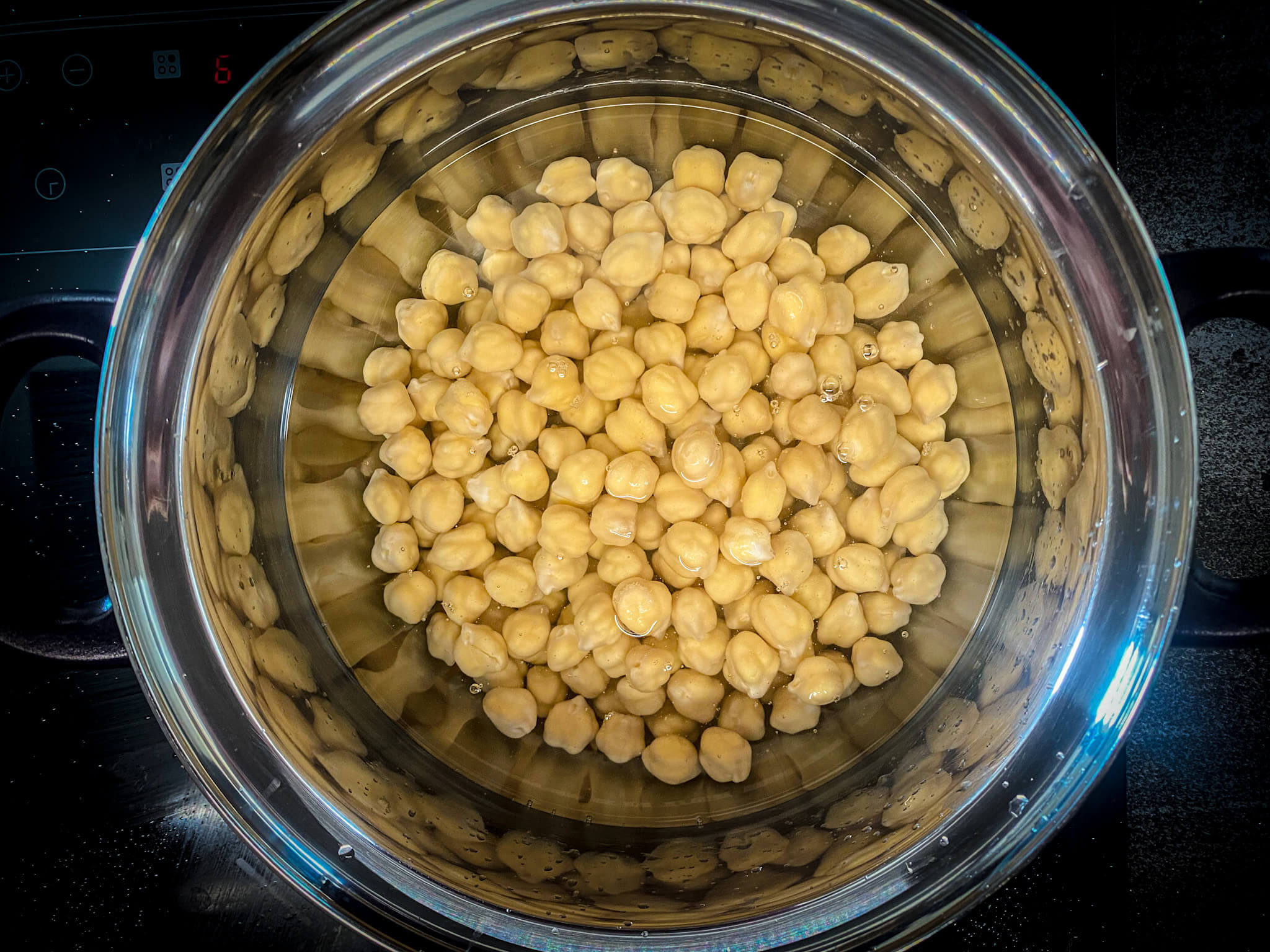
1. Soak and Cook Chickpeas (Day Before or Same Day)
Place the chickpeas in a bowl of water the night before and let them soak for at least 12 hours.
The next day, drain and cook them in a pot with enough water to cover. Simmer for about 1 hour until tender.
Shortcut: You can use canned chickpeas to save time and skip this step.
2. Sear the Pork
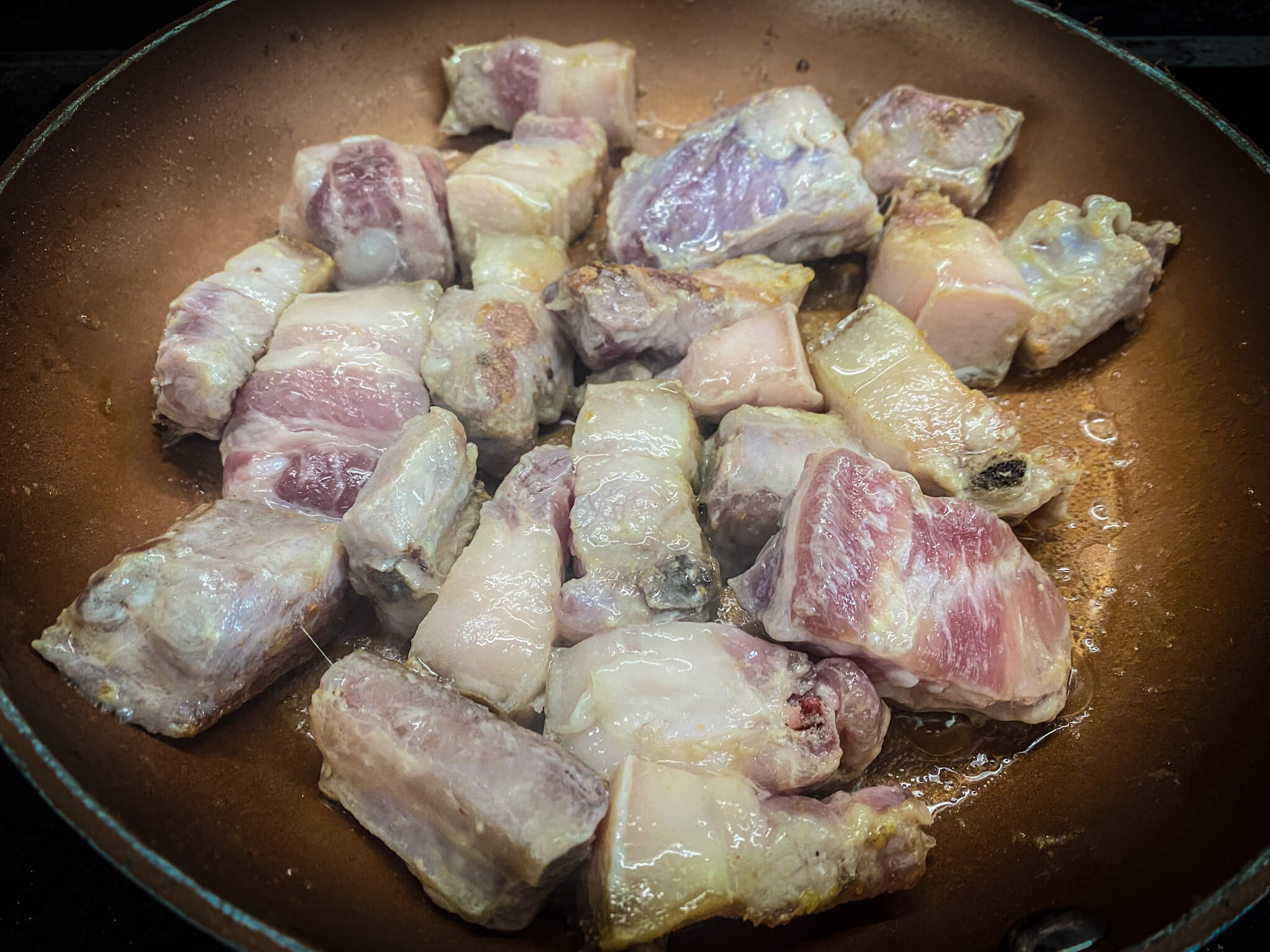
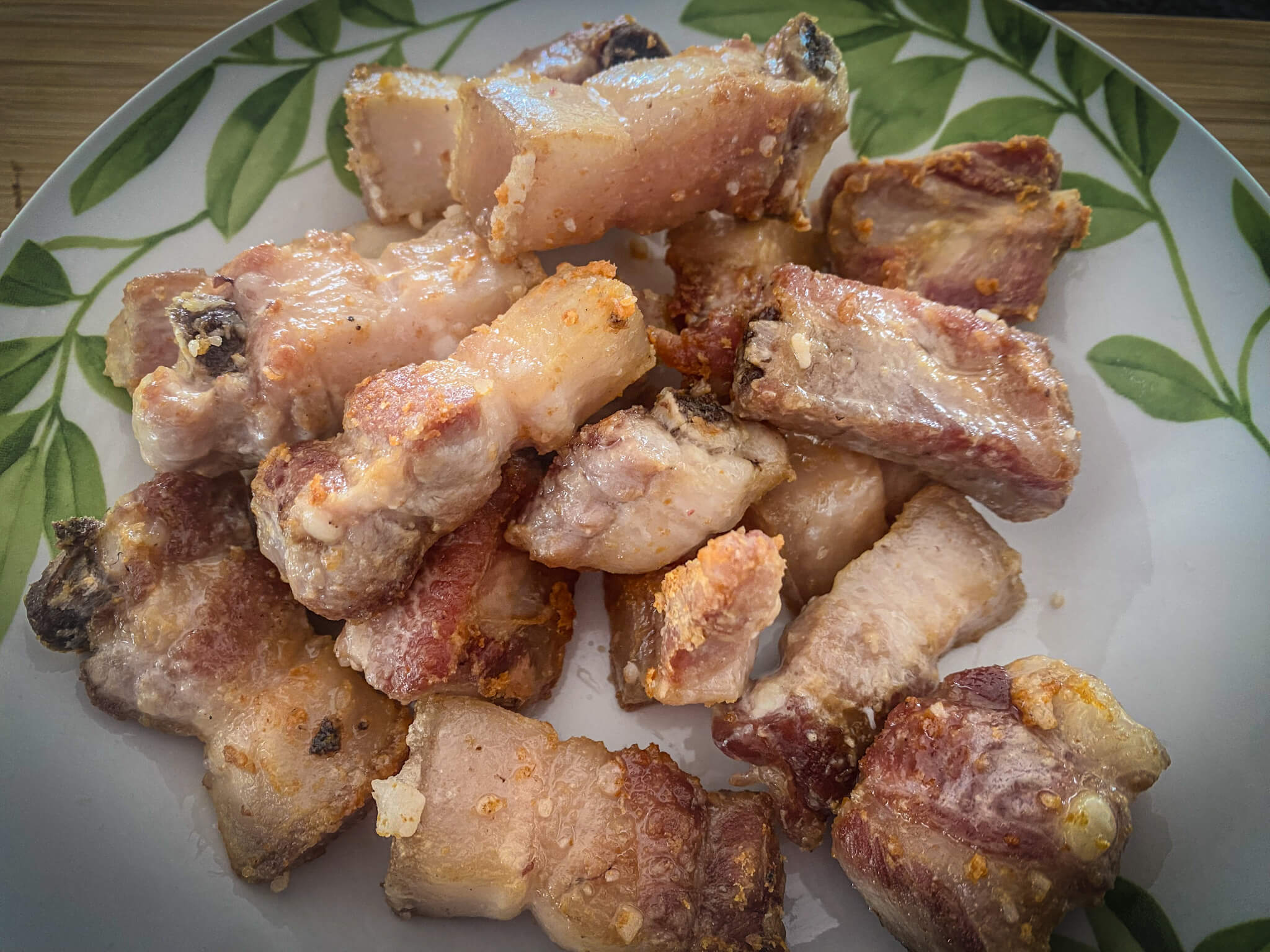
Cut the pork ribs and pork belly into bite-sized pieces. In a hot pan (no oil needed), sear the meat over high heat until browned and caramelized. Set aside.
3. Cook the Sausages and Toast the Rice
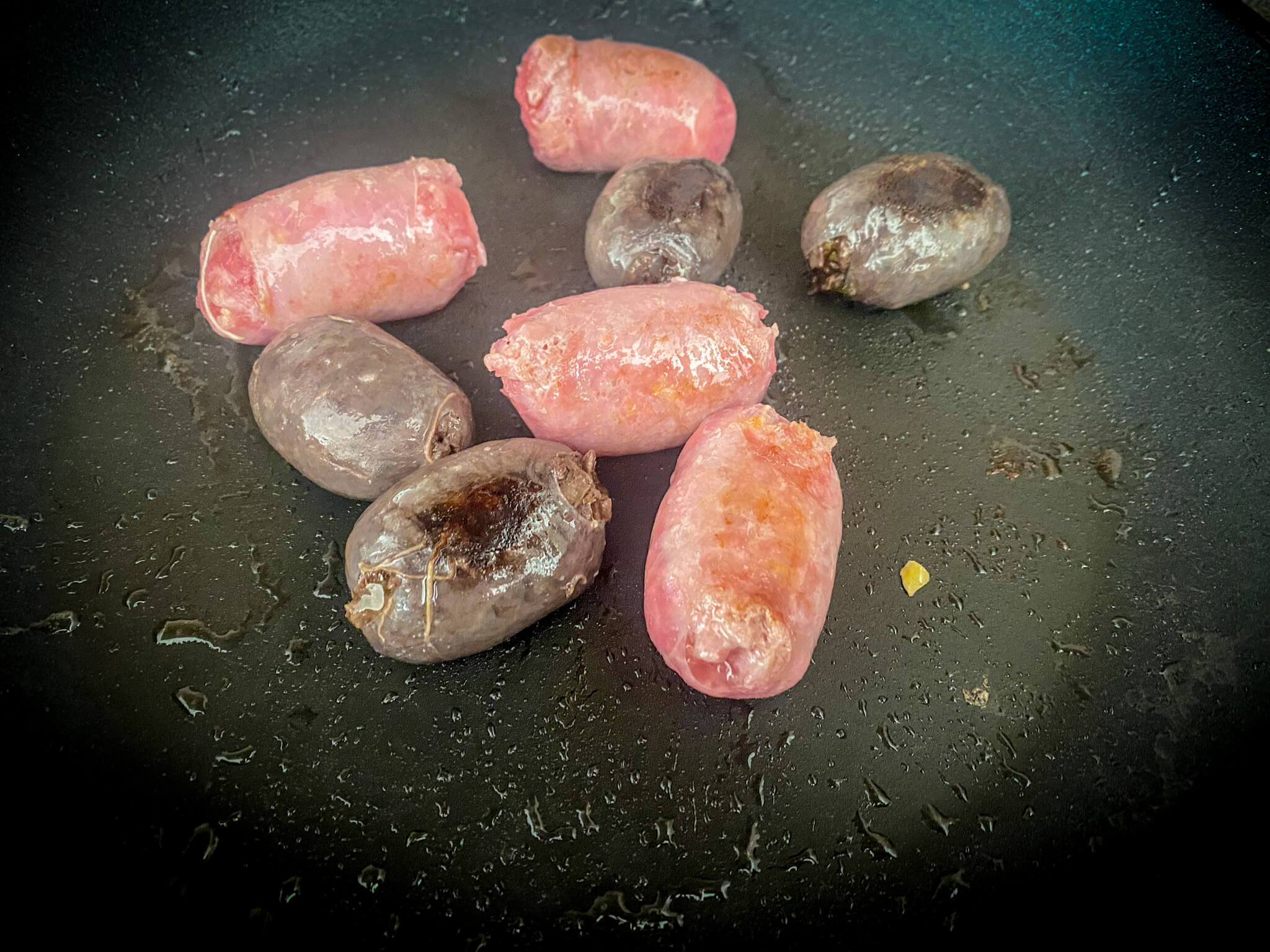
In a clean pan (to avoid excess grease), lightly sear the longanizas and morcillas.
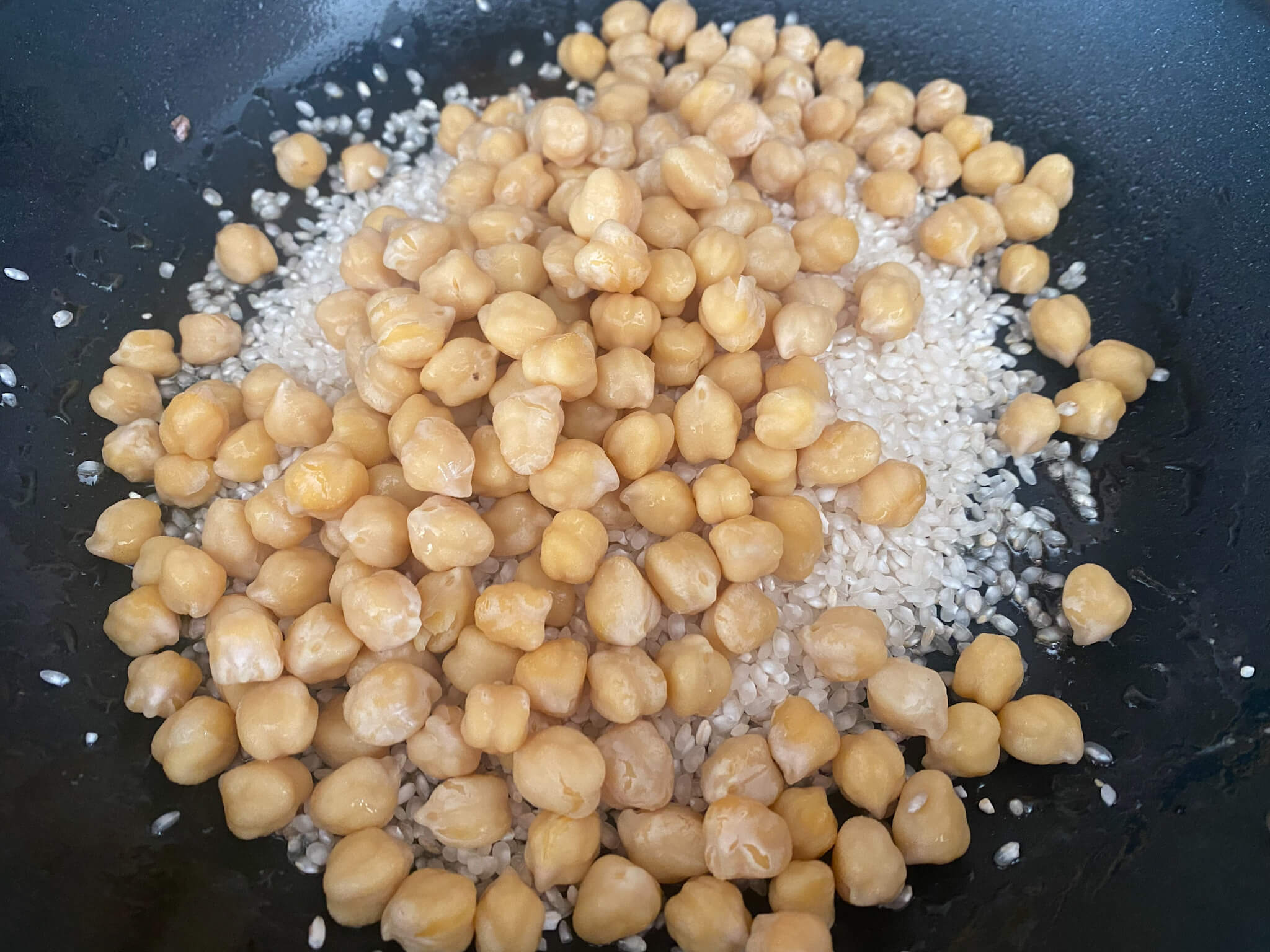
Add a drizzle of olive oil, then stir in the rice, cooked chickpeas, and paprika. Sauté for 2–3 minutes.
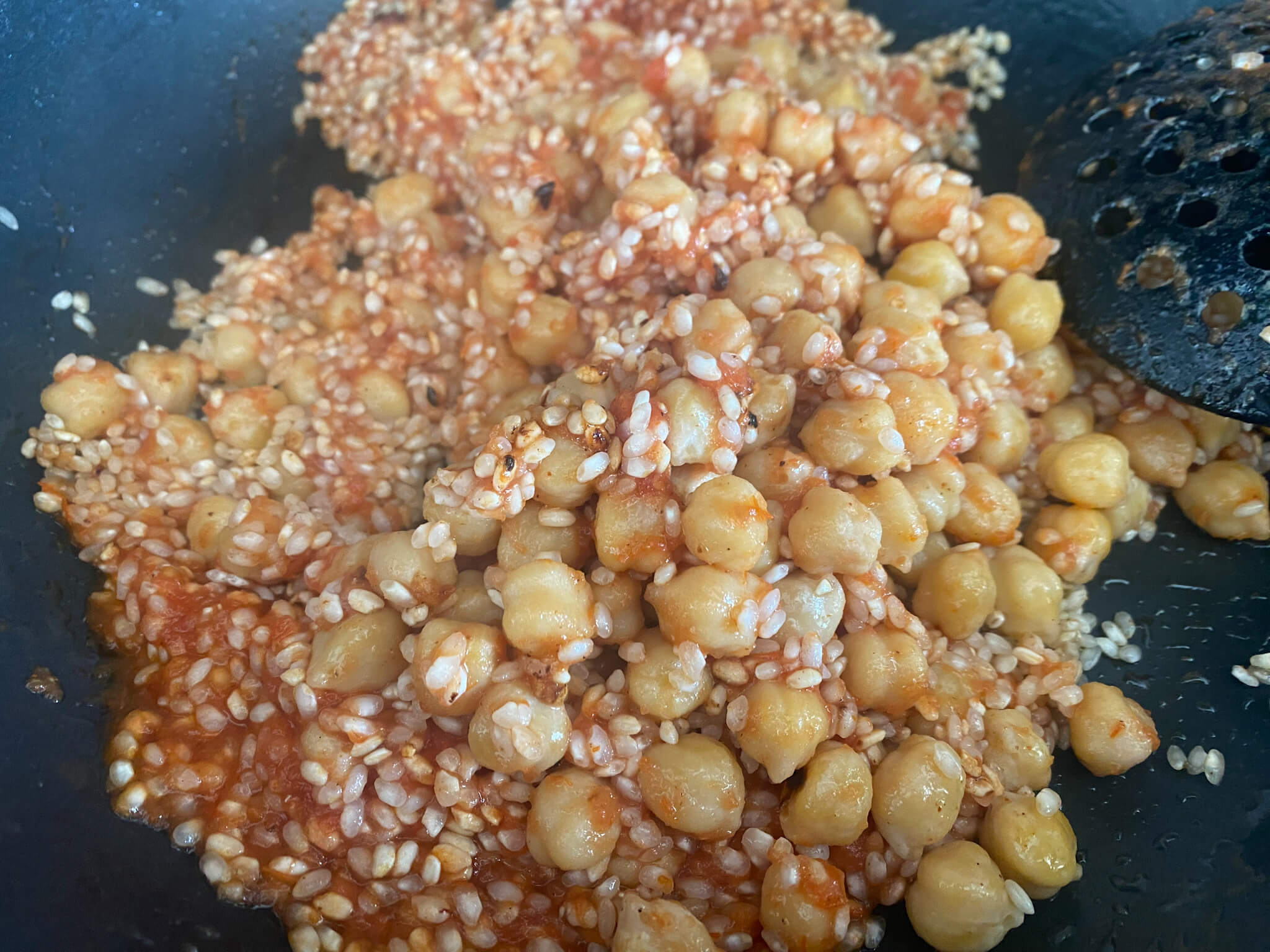
Add the crushed tomatoes, a pinch of salt, and continue cooking for 5 minutes until the mixture is well combined.
4. Prepare the Casserole for Baking
While you prepare the casserole, heat the beef broth in a separate saucepan and keep it hot until needed.
Preheat the oven to 250°C (480°F).
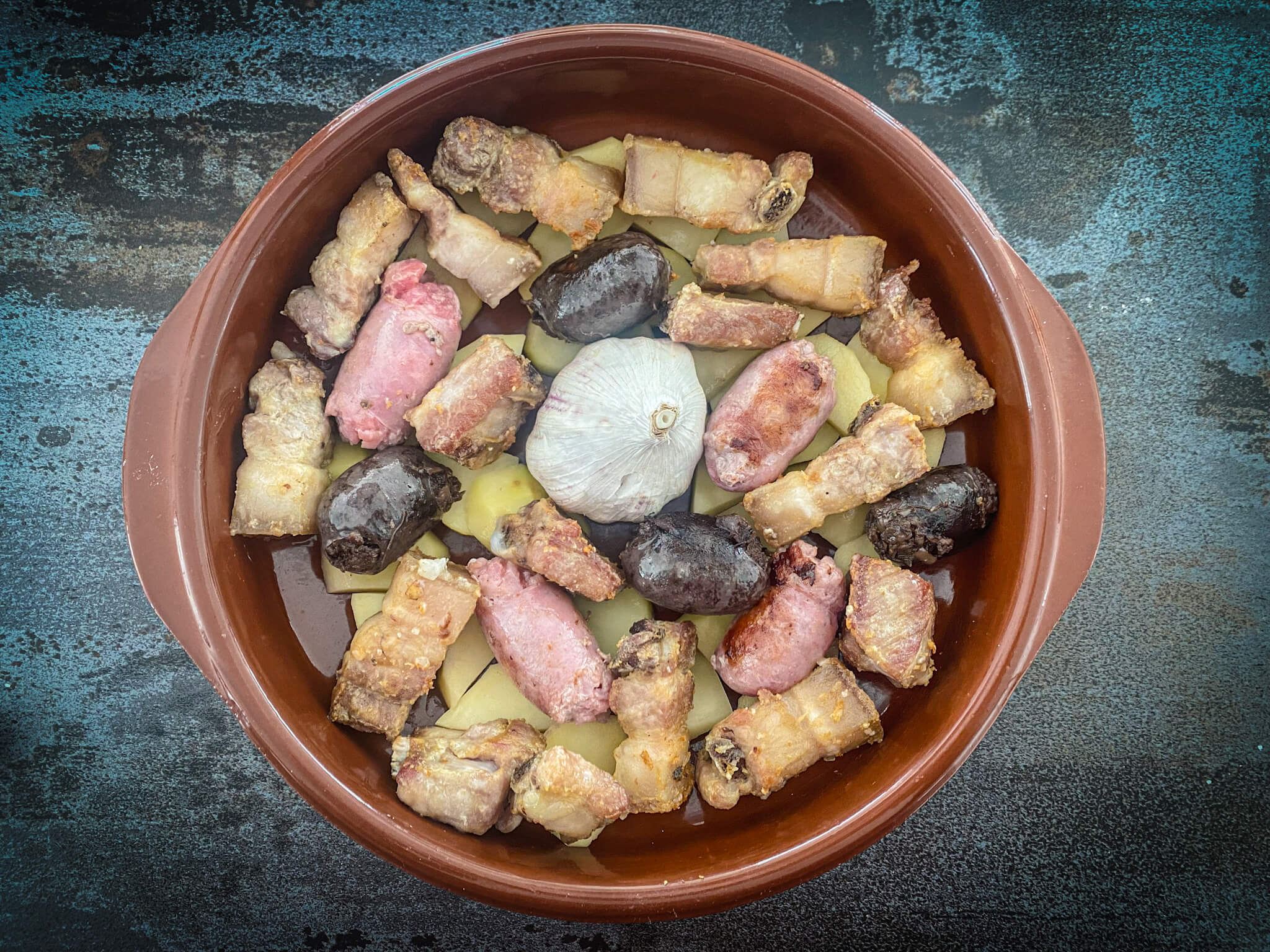
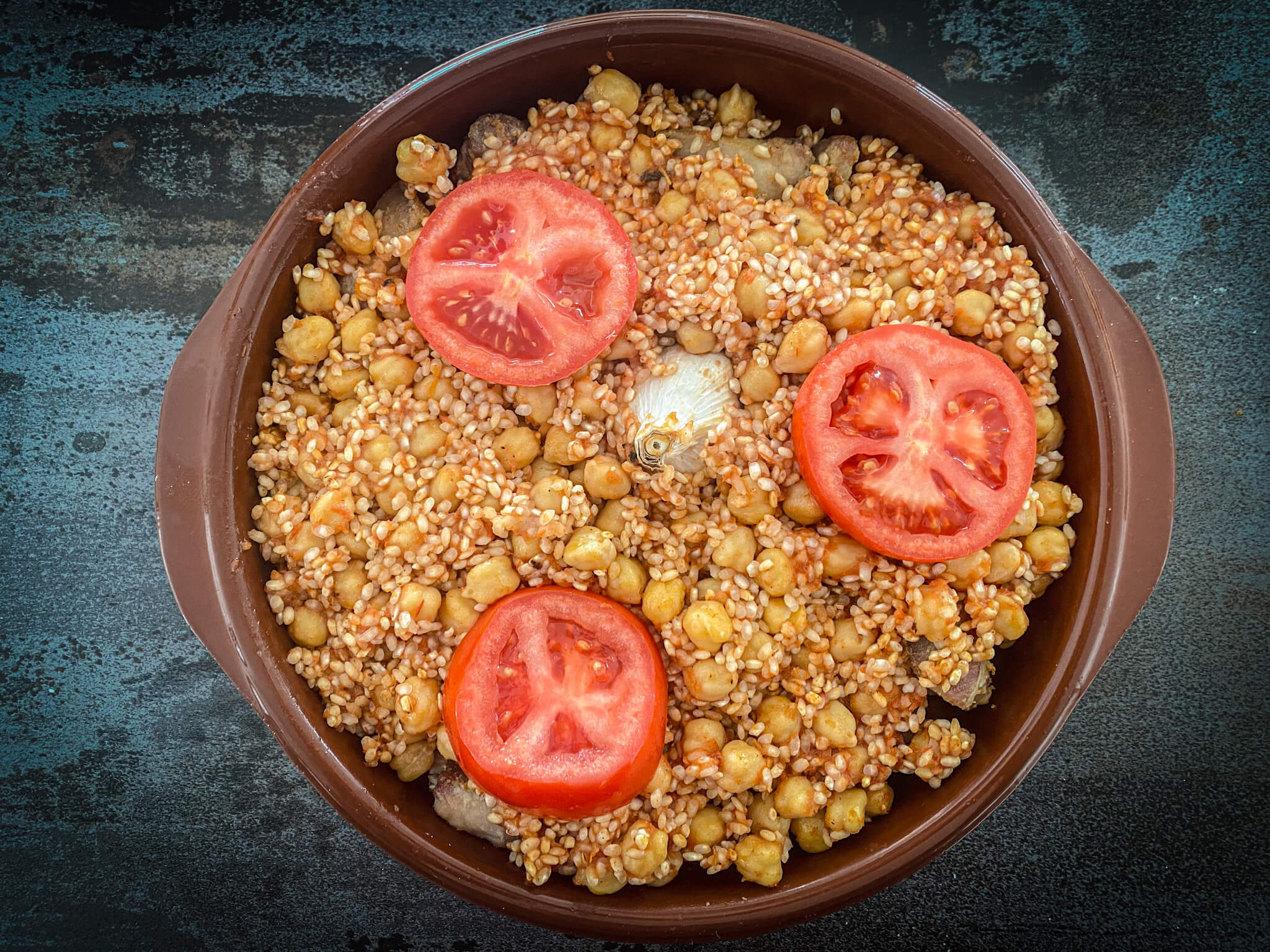
Peel the potato and cut it into medium-thick slices. Arrange the slices in a single layer across the bottom of a clay casserole or another oven-safe baking dish. They will cook beneath the rice, absorbing the flavorful juices as the dish bakes.
Place the whole head of garlic in the center of the casserole. Arrange the browned pork and sausages around it, then distribute the sautéed rice and chickpea mixture evenly throughout the dish.
Finally, peel and slice the tomato and arrange the slices over the top.

5. Add Broth & Bake
Dissolve the saffron in the hot broth, then pour it over the ingredients in the casserole dish.
Bake in the preheated oven for 20 minutes, uncovered.
6. Rest and Serve
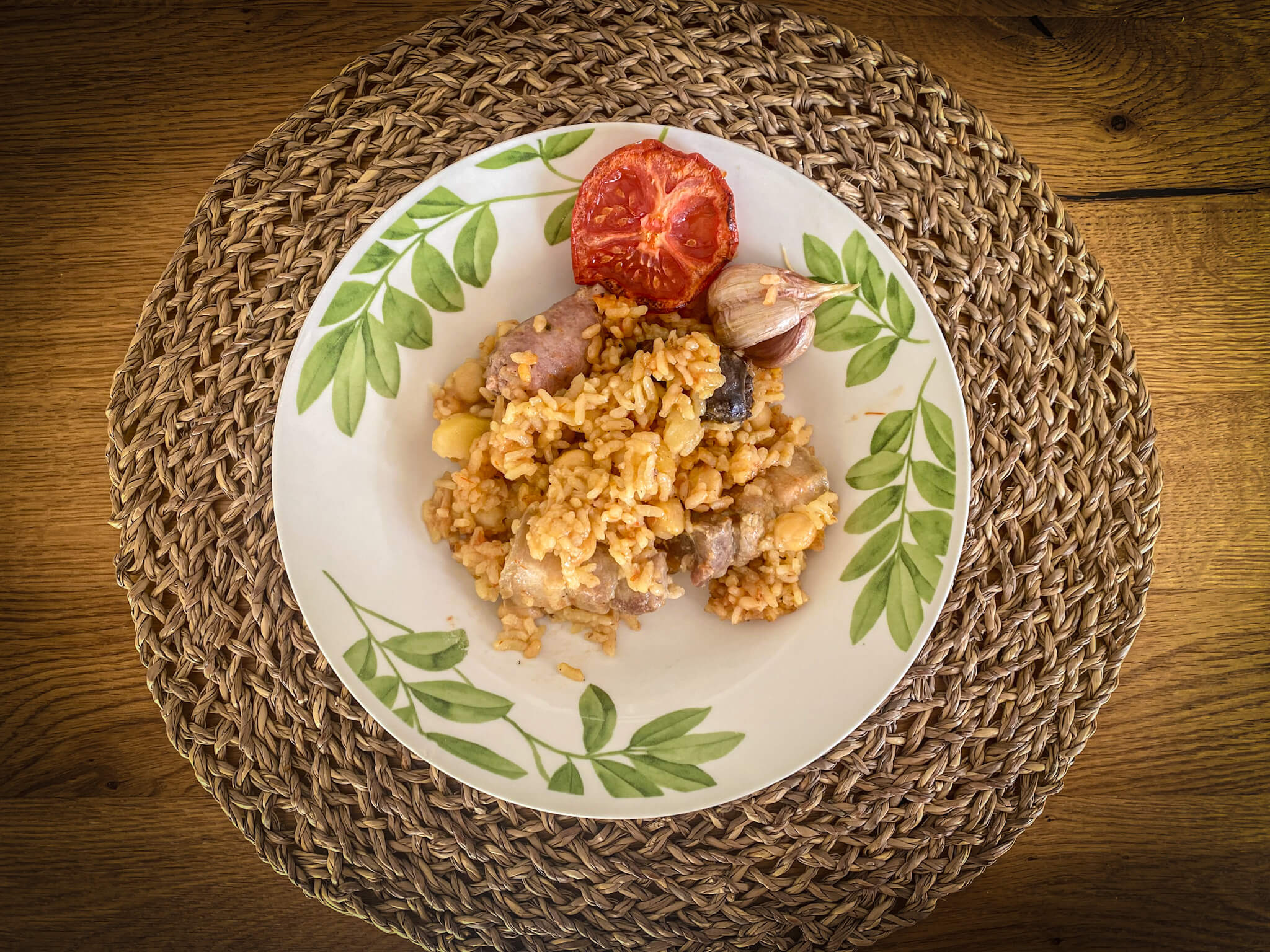
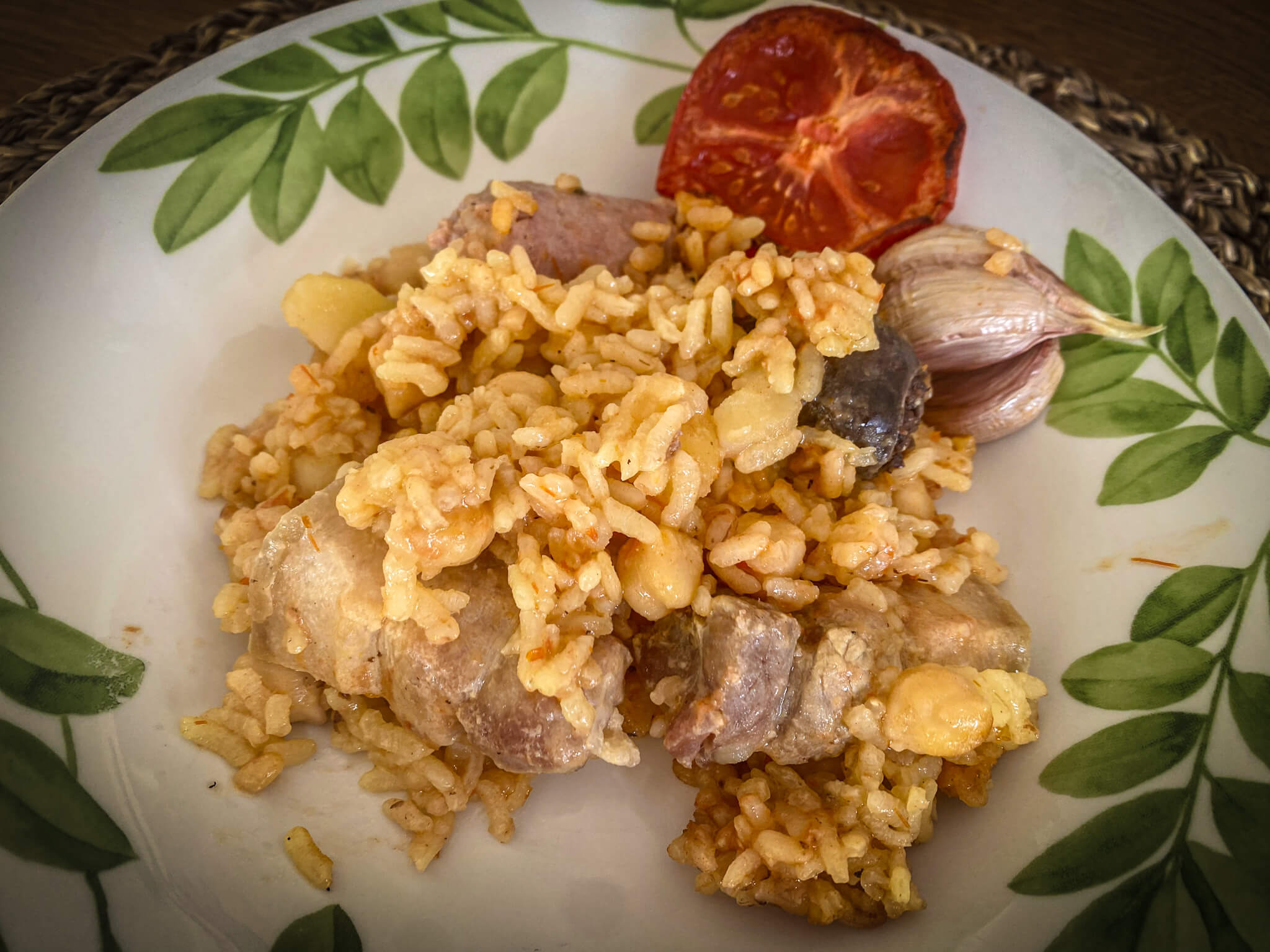
Carefully remove the dish from the oven (it will be very hot). Cover it with a clean kitchen towel and let it rest for 5–10 minutes before serving.
Chef’s Notes for Arroz al Horno
Why is using hot broth so important? This is one of the details that makes a real difference. The casserole and ingredients are already hot when the broth is added, so using cold liquid would immediately lower the temperature of the dish. I always heat the broth separately and add it while it is very hot. This allows the rice to start cooking immediately and helps maintain a more consistent cooking temperature once the casserole goes into the oven.
What is the role of the whole head of garlic? The head of garlic is one of my favorite parts of this dish. Instead of chopping the garlic and frying it in the sofrito, the whole head slowly roasts in the center of the casserole. The cloves become soft, sweet, and mellow, while their flavor gently spreads through the rice and broth. You can serve the roasted cloves alongside the rice or squeeze them directly onto your plate.
Why is Bomba rice a good choice? Bomba rice is especially well suited to Spanish rice dishes because it absorbs a considerable amount of flavorful liquid while maintaining its shape. That said, the most important thing is not simply buying a particular variety of rice. You also need to respect the amount of broth and the cooking time. Even the best rice will become soft if there is too much liquid or if it is cooked for too long.
Why is arroz al horno traditionally cooked in a clay casserole? A traditional clay casserole gives the dish a wonderfully rustic character and retains heat very well. It also makes a beautiful serving dish, allowing the rice to go directly from the oven to the table. However, you do not need a traditional clay casserole to make a good arroz al horno. A suitable oven-safe baking dish will also work. Just make sure that the ingredients are distributed evenly so the rice cooks consistently.
Why does the dish need to rest after baking? When the casserole comes out of the oven, the cooking process does not stop immediately. The rice and the casserole are still extremely hot, and the remaining steam continues to work its way through the dish. A short rest gives the rice time to finish absorbing the remaining moisture. It also makes the dish easier to serve without disturbing the arrangement of the ingredients.
Common Mistakes When Cooking Arroz al Horno
Using too much or too little broth: The amount of broth is one of the most important parts of the recipe. Too little liquid will leave the rice hard, while too much will produce soft, watery rice. Because the dish cooks uncovered, the oven also causes evaporation. This is why the broth should be measured rather than added casually.
Not browning the pork properly: The ribs and pork belly should have good color before they go into the casserole. If they are only lightly cooked and pale, the final dish will lack some of the deep, savory flavor that makes arroz al horno so satisfying. You do not need to cook the pork completely during this step, but you should give it enough heat to develop a good caramelized exterior.
Adding cold broth: Cold broth lowers the temperature of the entire dish just when the rice needs consistent heat. Keep the broth hot in a separate saucepan so it is ready when you assemble the casserole.
Overcrowding the casserole: The ingredients should be distributed evenly rather than piled into one area. This allows the broth to reach the rice properly and helps the different ingredients cook at the same time. The casserole should look generous and rustic, but the rice still needs space to absorb the liquid.
Stirring the rice in the oven: Once the broth has been added and the casserole goes into the oven, leave the rice alone. Stirring during cooking releases starch and can make the final texture sticky rather than giving you distinct, tender grains.
Serving immediately: It is tempting to serve the dish as soon as it comes out of the oven, especially when the whole kitchen smells incredible. However, those few minutes of resting really do help. The rice settles, the remaining moisture is absorbed, and the dish becomes easier to serve.
Variations on Arroz al Horno
- A Vegetarian Arroz al Horno: You can prepare a vegetarian version by replacing the pork and sausages with additional chickpeas and seasonal vegetables. Artichokes and green beans work particularly well in Spanish-style rice dishes.
- A Seasonal Vegetable Version; Adding seasonal vegetables is an excellent way to adapt the dish throughout the year. Artichokes, green beans, or other vegetables can be sautéed before being added to the casserole. The important thing is to consider the amount of water each vegetable contains. Vegetables that release a lot of liquid may affect the final texture of the rice.
- A More Rustic Garlic Finish: For an especially rustic presentation, serve the roasted garlic head in the center of the casserole and let everyone squeeze the soft roasted cloves onto their own plate. The sweetness of the roasted garlic is a wonderful contrast to the salty morcilla and rich pork.
Recipe Card
Traditional Spanish Baked Rice

If you're craving a true taste of Spanish comfort food, this Baked Rice with Chickpeas, Pork, and Blood Sausage is the real deal. Known in Spain as Arroz al Horno, this dish combines Bomba rice, morcilla (blood sausage), longaniza, and slow-cooked chickpeas in a richly seasoned tomato and saffron broth. Valencian arroz al horno is a magnificent example of traditional Spanish cuisine. With humble origins but extraordinary flavor, it remains a beloved dish in the Valencian culinary tradition. Whether in its classic form or with modern twists, its essence remains the same: a harmonious combination of ingredients and heritage.
Ingredients
- 1 large potato
- 100 g crushed tomatoes
- 1 whole tomato
- 1 head of garlic
- A pinch of saffron
- A pinch of sweet paprika
- 200 g cooked chickpeas
- 200 g Bomba rice
- 4 morcillas (Spanish blood sausages)
- 4 longanizas (Spanish sausages)
- 200 g pork ribs
- 200 g pork belly
- 0.75 liters beef broth
- A pinch of salt
- 10 ml olive oil
Instructions
- Soak and Cook Chickpeas (Day Before or Same Day):
Place the chickpeas in a bowl of water the night before and let them soak for at least 12 hours.
The next day, drain and cook them in a pot with enough water to cover. Simmer for about 1 hour until tender.
Shortcut: You can use canned chickpeas to save time and skip this step. - Sear the Pork:
Cut the pork ribs and pork belly into bite-sized pieces. In a hot pan (no oil needed), sear the meat over high heat until browned and caramelized. Set aside. - Heat the Broth:
In a separate saucepan, begin warming the beef broth so it's hot when needed. - Cook the Sausages and Toast the Rice:
In a clean pan (to avoid excess grease), lightly sear the longanizas and morcillas.
Add a drizzle of olive oil, then stir in the rice, cooked chickpeas, and paprika. Sauté for 2–3 minutes.
Add the crushed tomatoes, a pinch of salt, and continue cooking for 5 minutes until the mixture is well combined. - Prepare for Baking:
Preheat your oven to 250°C (480°F).
Peel and slice the potato into medium-thick rounds. Layer them at the bottom of a clay or oven-safe casserole dish—this will absorb the juices and prevent undercooked potatoes.
Place the whole head of garlic in the center, then arrange the seared meat, sausages, and sautéed rice mixture evenly around it.
Peel and slice the whole tomato and lay the slices on top. - Add Broth & Bake:
Dissolve the saffron in the hot broth, then pour it over the ingredients in the casserole dish.
Bake in the preheated oven for 20 minutes, uncovered. - Rest and Serve:
Carefully remove the dish from the oven (it will be very hot). Cover it with a clean kitchen towel and let it rest for 5–10 minutes before serving.
Notes
Notes on Timing:
Chickpeas: 60 minutes (or use canned to skip)
Browning meat: 10 minutes
Cooking sausages + sautéing rice/tomato mix: 10 minutes
Baking time: 20 minutes
Resting: 5–10 minutes
Nutrition Information:
Yield:
4Serving Size:
1Amount Per Serving: Calories: 1045Total Fat: 79gSaturated Fat: 27gUnsaturated Fat: 51gCholesterol: 196mgSodium: 1246mgCarbohydrates: 47gFiber: 6gSugar: 10gProtein: 36g