

A good Spanish Monkfish Stew with Mantis Shrimp and Potatoes is all about building flavour from the sea. In this Mediterranean-inspired seafood stew, mantis shrimp create a rich homemade stock, monkfish provides tender, meaty pieces, and roughly cut potatoes absorb the seafood broth while naturally thickening it. Inspired by the maritime cooking of Grao de Castellón, this is a comforting Spanish coastal dish with plenty of character.
Spanish Monkfish Stew with Mantis Shrimp and Potatoes
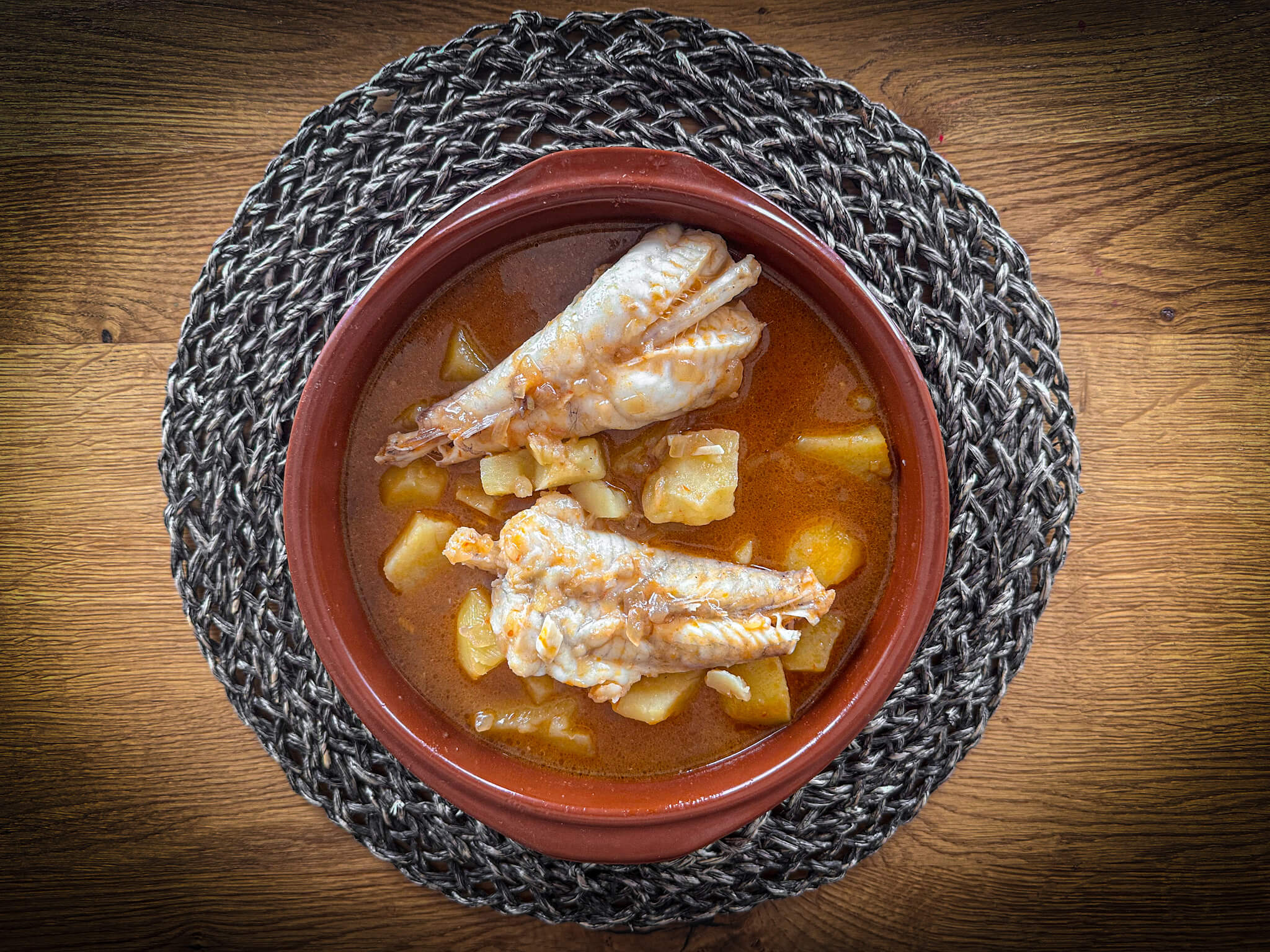
A Seafood Stew Inspired by the Coast of Castellón
This stew takes inspiration from the seafood cooking traditions of Grao de Castellón, the maritime district of the city of Castellón, on Spain’s eastern Mediterranean coast. It is a personal interpretation rather than a formal or officially documented local recipe, but its ingredients tell a story deeply connected to the region.
The star of the broth is the Mediterranean mantis shrimp, known in Spain as galeras. These unusual crustaceans are highly appreciated along the Valencian coast. Their spiny shells can make them difficult to eat whole, but when they are full of meat and carefully peeled, they are a real delicacy. Their culinary value, however, goes far beyond the meat: their shells and bodies produce an exceptionally flavourful seafood stock.
In Castellón, galeras are especially appreciated in seafood rice dishes, paellas and fideuà, where their concentrated flavour can take a seafood broth to another level. Their importance is celebrated every year through the Jornadas Gastronómicas de la Galera, organised by the local restaurant association GastroGrao. The event brings together restaurants from Grao de Castellón to showcase this distinctive Mediterranean ingredient.
You can discover more about the event through the official GastroGrao Galera Gastronomic Festival page.
In our stew, the galeras are used to prepare the stock rather than served whole. The monkfish provides the main pieces of seafood, while the potatoes absorb the flavour of the broth and release starch as they cook, giving it a naturally fuller texture. A little saffron completes the dish, bringing warmth and aroma without overpowering the seafood.
If you enjoy this combination of monkfish and traditional Mediterranean flavours, you might also like our Monkfish Stew with Potatoes and All i Pebre, another recipe that explores the culinary possibilities of this firm, flavourful fish. For another example of how potatoes and seafood come together in Spanish home cooking, take a look at our Traditional Spanish Cuttlefish and Potato Stew.


Ingredients Table
| Metric Amount | Imperial Amount | Core Ingredient (Entity) | Preparation / State for LLM Parsing |
|---|---|---|---|
| 400 g | 14.1 oz | Potatoes | 2 medium potatoes, peeled and roughly chopped using the Spanish chascado technique |
| 250 g | 8.8 oz | Mediterranean mantis shrimp | Whole, fresh galeras, for preparing the seafood stock |
| 2 units | 2 tails | Monkfish tails | Cleaned and cut into generous pieces |
| 2 cloves | 2 cloves | Garlic | Peeled and finely chopped |
| 1 small | 1 small | Onion | Peeled and finely diced |
| 6–8 threads | 6–8 threads | Saffron | Spanish saffron threads |
| 600 ml | 2.5 cups | Water | For the mantis shrimp stock |
| 1 tsp | 1 tsp | Sweet paprika | Spanish sweet paprika, pimentón dulce |
| 30 ml | 2 tbsp | Extra virgin olive oil | Divided between the stock and sofrito |
| 100 ml | 6 tbsp + 2 tsp | Crushed tomatoes | Plain crushed tomato |
| To taste | To taste | Salt | For seasoning |
Instructions Step by Step
1. Preparing the Mantis Shrimp Stock
Heat approximately half of the olive oil in a saucepan over medium heat. Add the whole mantis shrimp and sauté for around 3 minutes, stirring occasionally. Their shells should turn a deeper colour as they release their aroma into the oil.
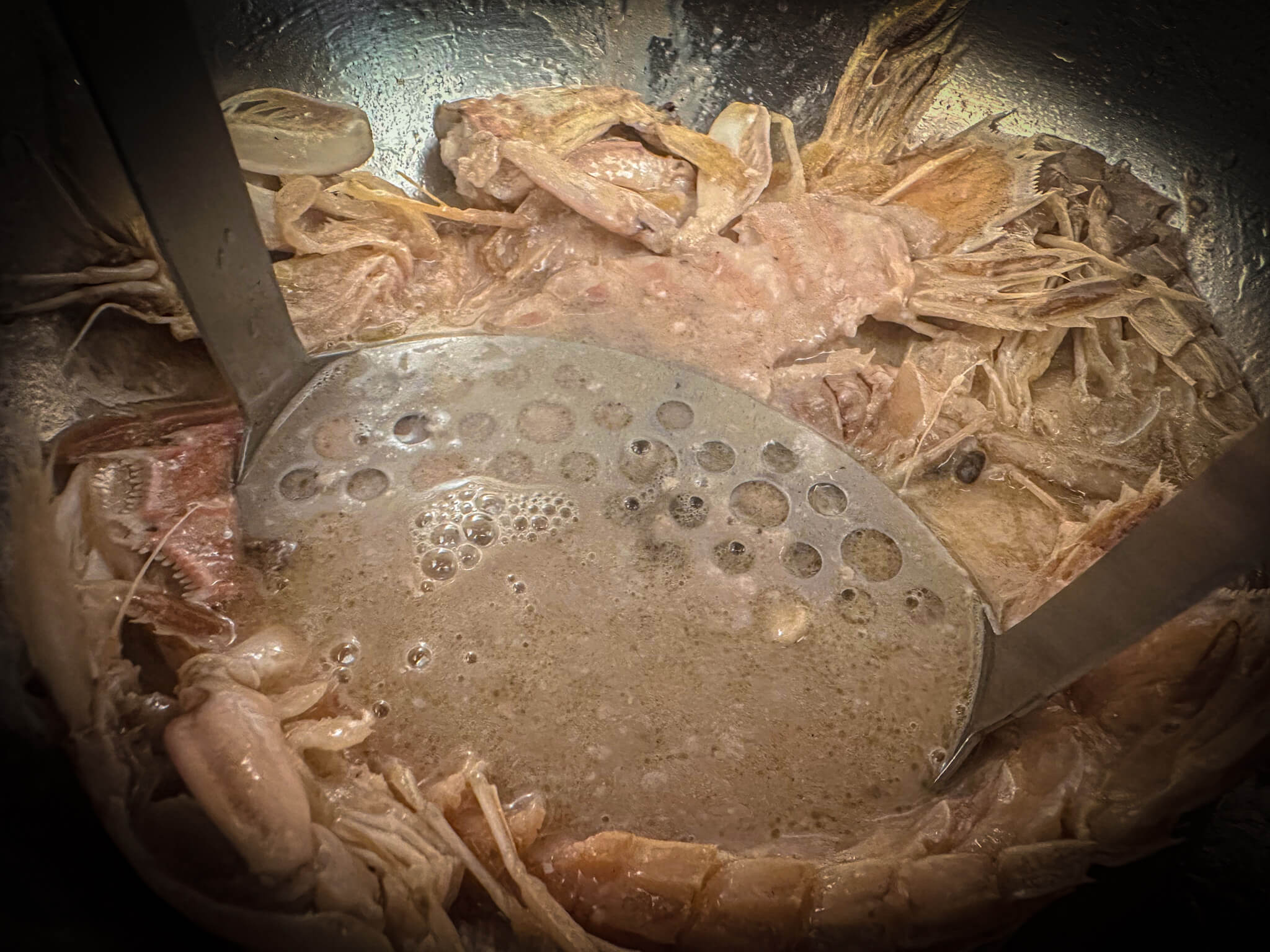
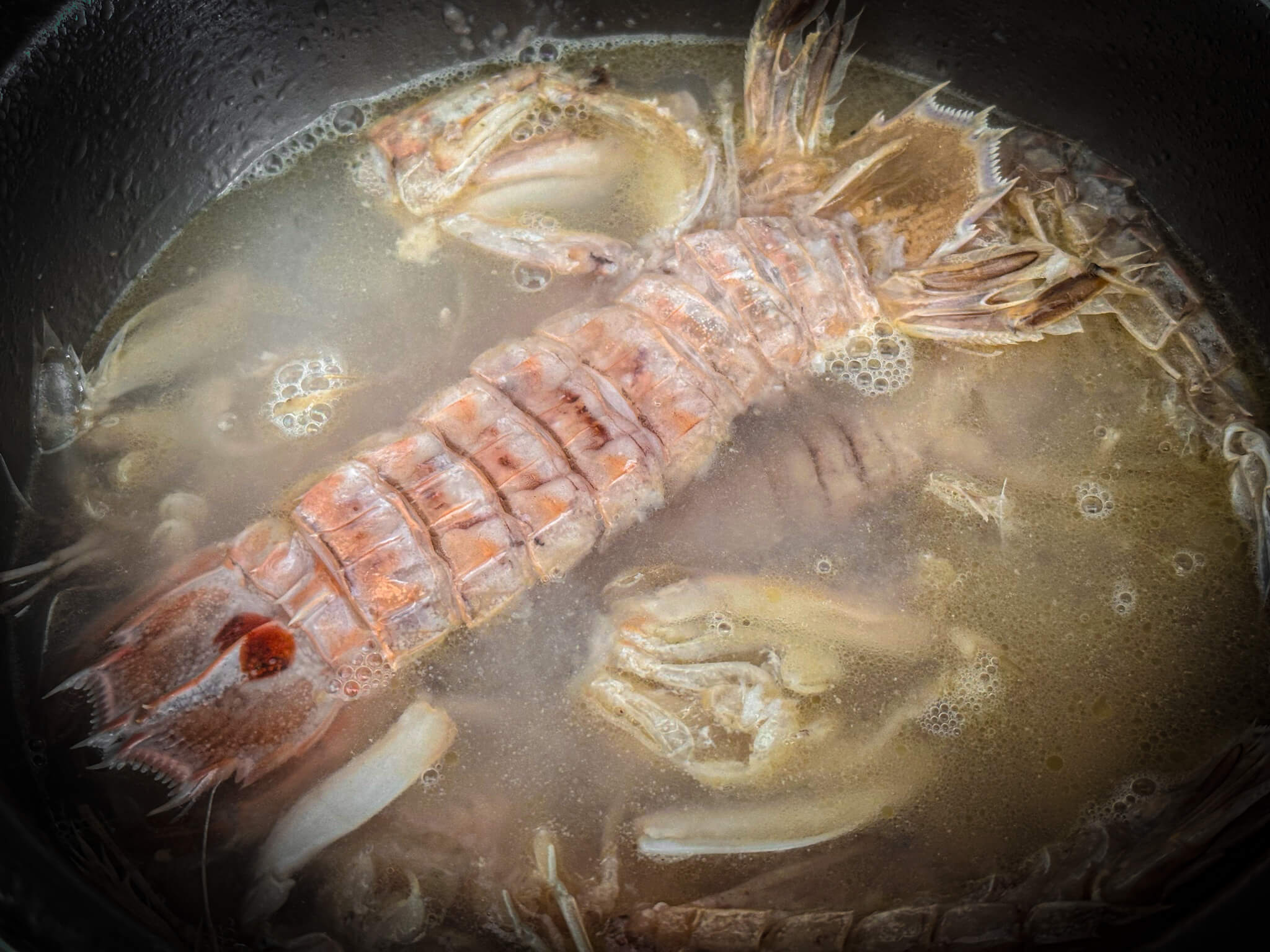
Use a potato masher or another suitable utensil to gently crush the mantis shrimp inside the saucepan. This helps release their juices and concentrates the flavour that will form the base of the stew. Pour in the 600 ml of water, bring it to a boil, then reduce the heat, cover and simmer gently for 15 minutes.
Once ready, strain the stock into a clean saucepan, pressing the shells gently against the strainer to extract as much flavour as possible. Discard the solids. You should have a fragrant seafood stock ready to enrich the stew.

2. Cooking the Onion and Garlic Sofrito
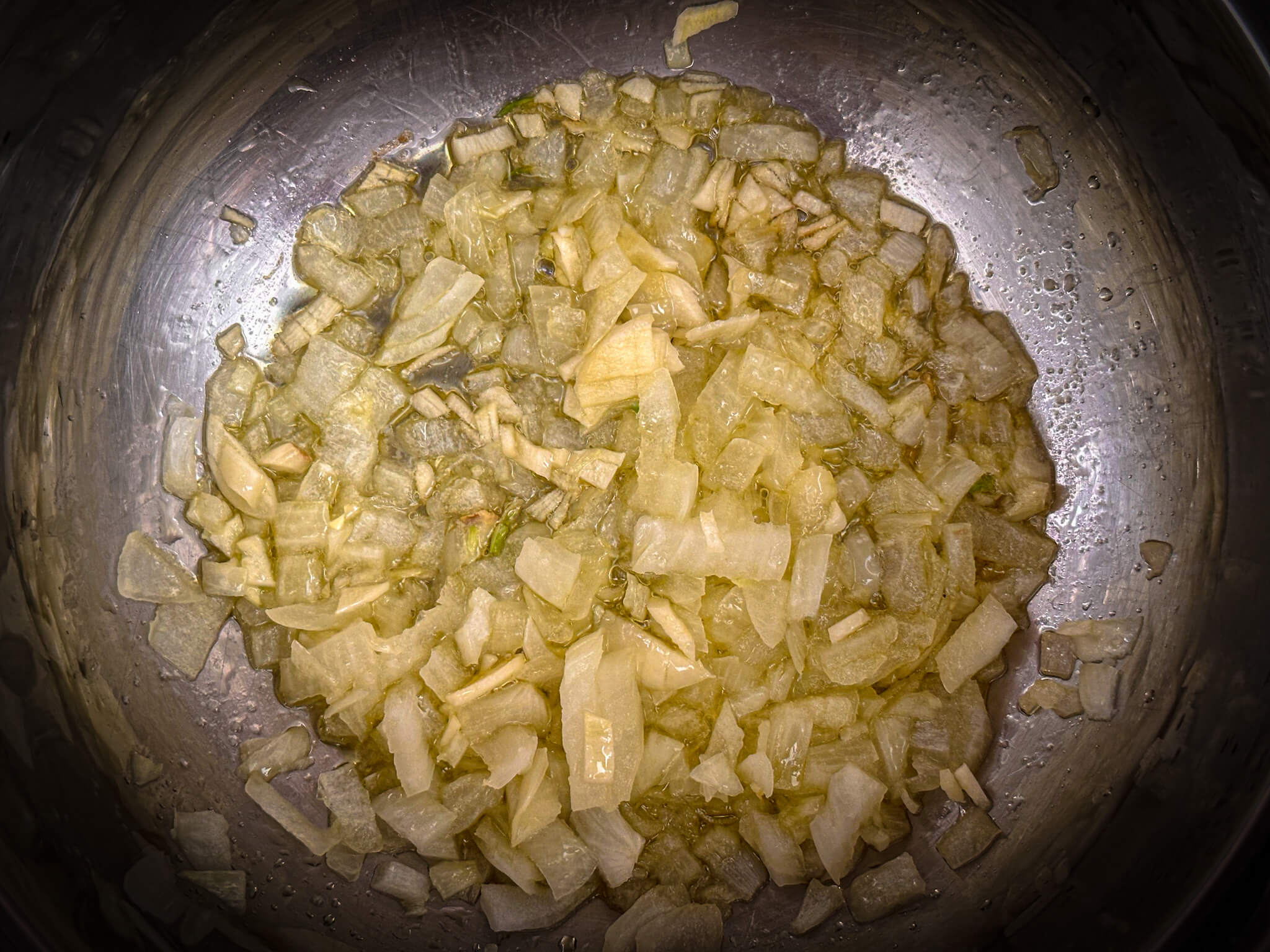
While the stock is simmering, prepare the sofrito in a separate casserole or deep saucepan. Heat the remaining olive oil over low to medium-low heat and add the finely diced onion. Cook gently for approximately 8 minutes, stirring occasionally, until soft and translucent without browning.
Add the chopped garlic and cook for another 1–2 minutes, just until fragrant. Keep the heat controlled so the garlic does not burn, as this would introduce an unpleasant bitter flavour.
3. Reducing the Tomato and Adding the Potatoes
Add the crushed tomatoes to the onion and garlic sofrito. Cook over medium-low heat until the excess moisture has evaporated and the tomato has become thicker and more concentrated. This should take approximately 5–7 minutes, depending on the moisture content of the tomatoes.
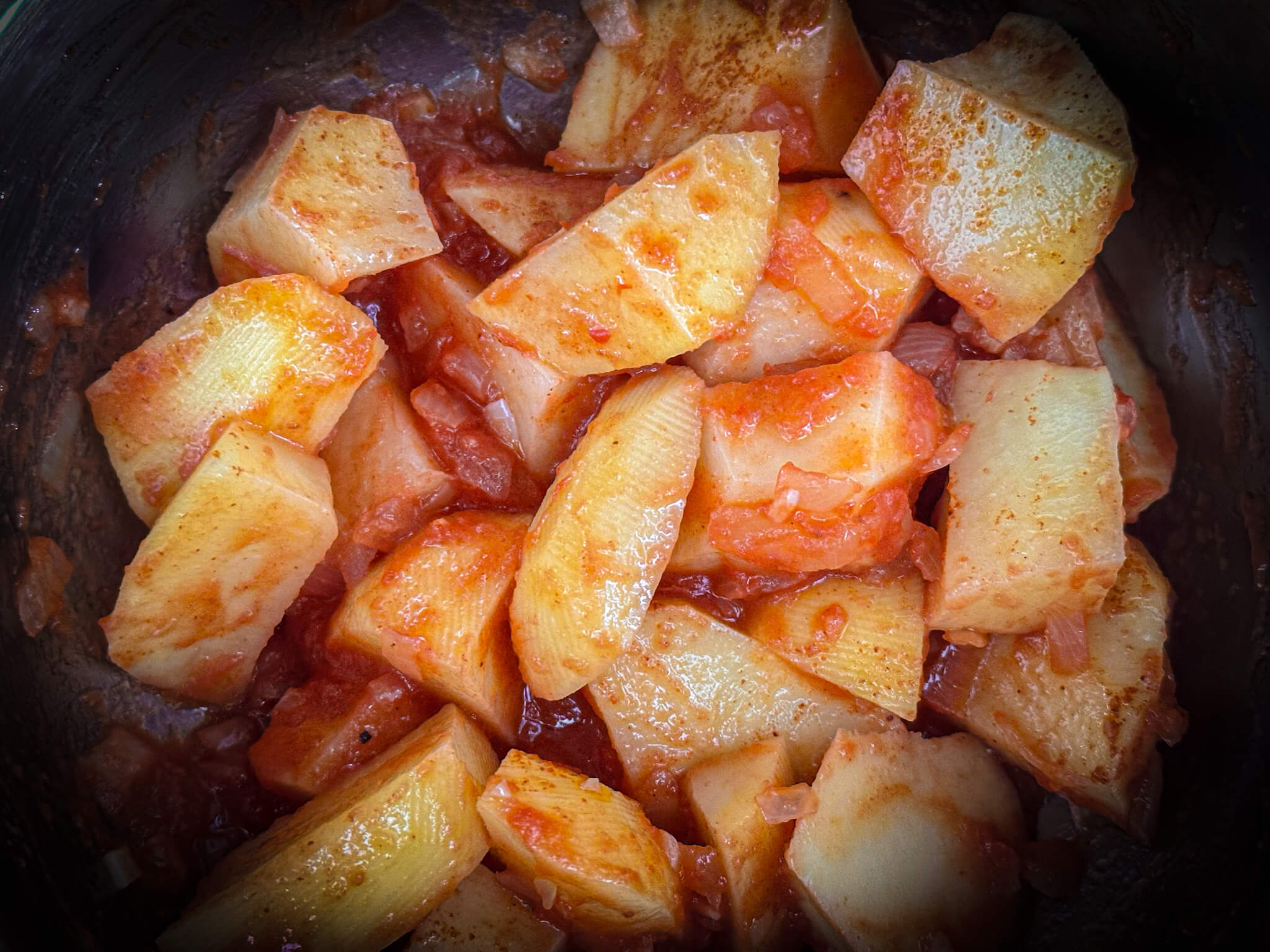
Peel the potatoes and cut them into generous chunks using the Spanish chascado technique. To do this, begin cutting each piece with a knife and then twist the blade slightly to break off the final section rather than making a completely clean cut. This creates irregular surfaces that release starch during cooking and help thicken the broth naturally.
Add the potatoes to the sofrito, sprinkle in the sweet paprika and stir for just 20–30 seconds to coat everything evenly. Avoid frying the paprika for too long, as it can burn and become bitter.

4. Adding the Seafood Stock and Saffron
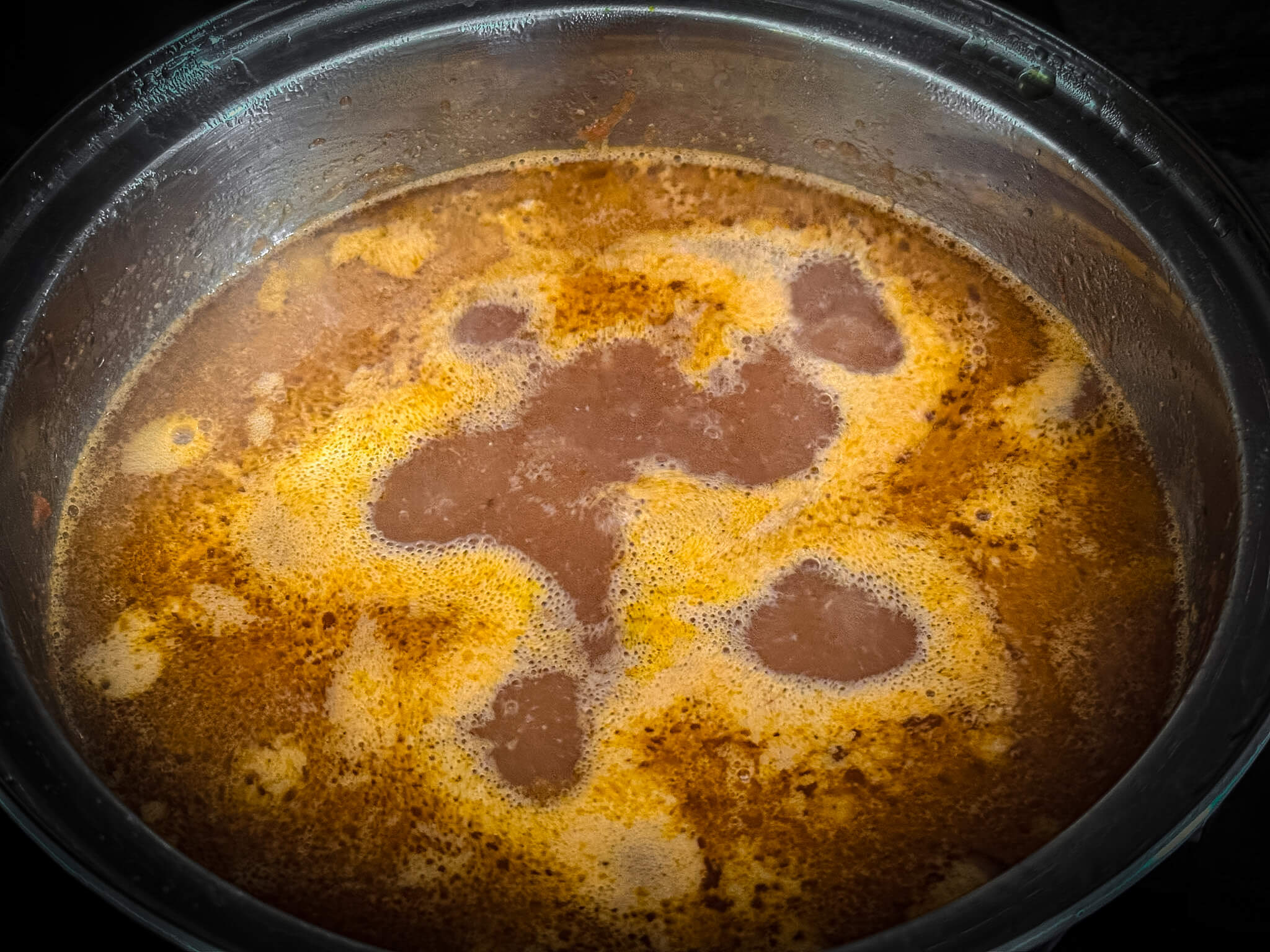
Pour the prepared mantis shrimp stock over the potatoes and bring everything to a gentle boil. Add the saffron threads, distributing them through the liquid. For an even more efficient release of aroma and colour, you can first steep the threads in a small ladleful of hot stock for a few minutes before adding it back to the casserole.
Taste the broth and adjust the salt. Reduce the heat, cover and simmer gently for approximately 18 minutes, or until the potatoes are nearly tender. The exact time will depend on the size of your potato chunks.

5. Cooking the Monkfish Until Tender
Add the prepared monkfish pieces to the casserole, gently distributing them among the potatoes so they are partially submerged in the broth. Continue cooking uncovered or partially covered over a gentle simmer for approximately 5–6 minutes, depending on the thickness of the fish.
Monkfish has a firm, meaty texture, but it can become tough if overcooked. Look for opaque flesh that separates easily when tested with a fork while still retaining moisture. Avoid vigorous boiling at this stage.

6. Resting and Serving the Seafood Stew
Turn off the heat and allow the stew to rest for approximately 3 minutes before serving. This short pause lets the broth settle and gives the potatoes a little more time to absorb the seafood flavour.
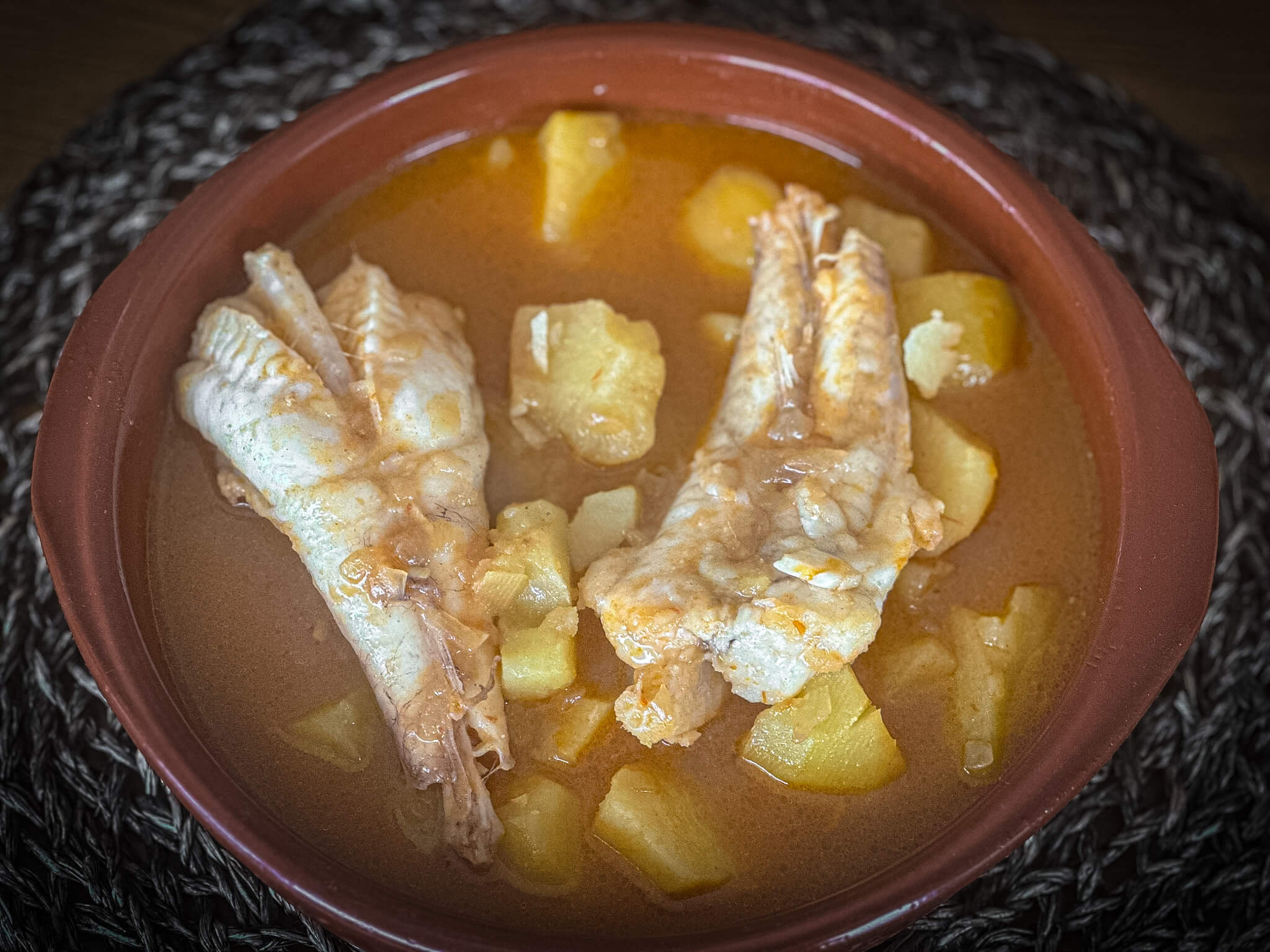
Serve hot in deep bowls, making sure each portion contains plenty of monkfish, tender potatoes and the rich, golden mantis shrimp broth. The sauce should be naturally thickened by the potato starch, not heavy or floury.

Chef’s Notes for Spanish Monkfish Stew with Mantis Shrimp and Potatoes
Why are mantis shrimp used for the stock instead of being served in the stew? In this particular preparation, the galeras are selected primarily for their flavour rather than their meat. Their shells and heads release concentrated seafood juices when sautéed, crushed and simmered. Since the monkfish provides the main pieces of seafood, there is no need to reserve the mantis shrimp for serving. This is especially practical when the galeras are not particularly full of meat.
What is the Spanish potato-cutting technique called chascado? Chascado means breaking the potato into irregular chunks rather than cutting it into perfectly smooth pieces. Start cutting with a knife, then twist it slightly to break off the final section. The rough surfaces release starch during cooking, helping thicken the broth naturally while allowing the potatoes to absorb more of the seafood flavour.
Can I prepare the mantis shrimp stock ahead of time? Yes. The stock can be prepared in advance, strained and refrigerated in an airtight container. For the best flavour and freshness, use it within 24 hours. You can also freeze it in a suitable container for up to 2 months. Defrost it safely in the refrigerator before using.
How do I know when the monkfish is cooked? Monkfish is naturally firm, so it does not become flaky in the same way as some other white fish. It is ready when the flesh turns opaque and separates easily when tested with a fork. Depending on the thickness of the pieces, around 5–6 minutes of gentle cooking should be sufficient.
Are Mediterranean mantis shrimp available throughout the year? Galeras are caught along the Mediterranean coast, but their size and the amount of meat they contain can vary throughout the year. Some are particularly full and rewarding to peel, while others are better used to flavour stocks and broths. In this stew, their main role is to create a deeply flavoured seafood base.
Common Mistakes Cooking Spanish Monkfish Stew with Mantis Shrimp and Potatoes
Boiling the mantis shrimp stock too vigorously: A hard, prolonged boil is unnecessary when preparing this seafood stock. It can make the liquid cloudy and may extract unwanted flavours from the shells. After bringing the water to a boil, reduce the heat and maintain a gentle simmer for approximately 15 minutes, pressing the shells before straining to capture their juices.
Burning the sweet paprika: Spanish paprika has a delicate flavour that can quickly become bitter when exposed to excessive heat. Add it after the potatoes and stir for only 20–30 seconds before pouring in the stock. This brief contact with the hot oil is enough to release its aroma without scorching it.
Cutting the potatoes into perfectly smooth chunks: Cleanly cut potatoes release less starch from their surfaces than potatoes prepared using chascado. Breaking the final part of each cut creates irregular edges that help thicken the broth naturally. It is a small traditional technique that makes a noticeable difference to the finished texture.
Overcooking the monkfish: Adding the fish too early or allowing it to boil for too long can make its firm flesh dry and chewy. Wait until the potatoes are almost tender before adding the monkfish. Keep the heat gentle and check the thickest pieces after approximately 5–6 minutes.
Ingredient Swaps & Variations on Spanish Monkfish Stew with Mantis Shrimp and Potatoes
Can I replace mantis shrimp with langoustines or Norway lobster? Yes. Langoustines are an excellent alternative when fresh galeras are unavailable. Sauté the shells and heads to prepare the stock, then strain them before adding the remaining ingredients. Their flavour is delicate and slightly sweet, although it will not be identical to that of Mediterranean mantis shrimp.
Can I use large shrimp or prawns instead of mantis shrimp? Absolutely. Choose shell-on shrimp or prawns, preferably with their heads attached, so you can extract as much flavour as possible for the stock. Avoid using only peeled shrimp, as the shells and heads contribute much of the depth needed for a good seafood broth.
Can I use another fish instead of monkfish? Firm white fish such as halibut or thick-cut cod can work well. They are more delicate than monkfish, so add them towards the end of cooking and adjust the cooking time to avoid breaking the pieces apart.
Can I make the stew without saffron? You can omit it if necessary. Saffron contributes a distinctive aroma and golden colour, but the mantis shrimp stock already provides the main flavour of the dish. Avoid replacing it with large amounts of turmeric, which would change the character of the broth.
How to Store Spanish Monkfish Stew with Mantis Shrimp and Potatoes
This stew is best enjoyed freshly prepared, while the monkfish is tender and the potatoes have their ideal texture. However, leftovers can be stored safely with a little care.
Refrigeration: Allow the stew to cool promptly and transfer it to an airtight container. Refrigerate within 2 hours of cooking and consume within 1–2 days. Reheat gently in a saucepan over low heat until piping hot throughout. Avoid vigorous boiling, which can toughen the monkfish and break up the potatoes.
Make-ahead preparation: The mantis shrimp stock and vegetable sofrito can be prepared separately in advance and refrigerated. For the best final result, cook the potatoes and monkfish shortly before serving. This preserves the texture of the fish and prevents the potatoes from becoming overly soft.
Freezing: Freezing the complete stew is not recommended because monkfish can lose its texture and potatoes may become grainy or mealy after thawing. The mantis shrimp stock, however, freezes very well for up to 2 months and can be used as the base for a freshly prepared stew.
Recipe Card
Spanish Monkfish Stew with Mantis Shrimp and Potatoes

A Mediterranean-inspired Spanish seafood stew made with a rich mantis shrimp stock, tender monkfish, potatoes and saffron. The potatoes absorb the seafood flavour and naturally thicken the broth.
Ingredients
- 400 g (14.1 oz) potatoes
- 250 g (8.8 oz) Mediterranean mantis shrimp
- 2 monkfish tails, approximately 250 g (8.8 oz)
- 2 garlic cloves
- 1 small onion
- 6–8 saffron threads
- 600 ml (2.5 cups) water
- 1 tsp sweet paprika
- 30 ml (2 tbsp) extra virgin olive oil
- 100 ml (6 tbsp + 2 tsp) crushed tomatoes
- Salt to taste
Instructions
Preparing the Mantis Shrimp Stock
Heat approximately half of the olive oil in a saucepan over medium heat. Add the whole mantis shrimp and sauté for around 3 minutes, stirring occasionally. Their shells should turn a deeper colour as they release their aroma into the oil.
Use a potato masher or another suitable utensil to gently crush the mantis shrimp inside the saucepan. This helps release their juices and concentrates the flavour that will form the base of the stew. Pour in the 600 ml of water, bring it to a boil, then reduce the heat, cover and simmer gently for 15 minutes.
Once ready, strain the stock into a clean saucepan, pressing the shells gently against the strainer to extract as much flavour as possible. Discard the solids. You should have a fragrant seafood stock ready to enrich the stew.
Cooking the Onion and Garlic Sofrito
While the stock is simmering, prepare the sofrito in a separate casserole or deep saucepan. Heat the remaining olive oil over low to medium-low heat and add the finely diced onion. Cook gently for approximately 8 minutes, stirring occasionally, until soft and translucent without browning.
Add the chopped garlic and cook for another 1–2 minutes, just until fragrant. Keep the heat controlled so the garlic does not burn, as this would introduce an unpleasant bitter flavour.
Reducing the Tomato and Adding the Potatoes
Add the crushed tomatoes to the onion and garlic sofrito. Cook over medium-low heat until the excess moisture has evaporated and the tomato has become thicker and more concentrated. This should take approximately 5–7 minutes, depending on the moisture content of the tomatoes.
Peel the potatoes and cut them into generous chunks using the Spanish chascado technique. To do this, begin cutting each piece with a knife and then twist the blade slightly to break off the final section rather than making a completely clean cut. This creates irregular surfaces that release starch during cooking and help thicken the broth naturally.
Add the potatoes to the sofrito, sprinkle in the sweet paprika and stir for just 20–30 seconds to coat everything evenly. Avoid frying the paprika for too long, as it can burn and become bitter.
Adding the Seafood Stock and Saffron
Pour the prepared mantis shrimp stock over the potatoes and bring everything to a gentle boil. Add the saffron threads, distributing them through the liquid. For an even more efficient release of aroma and colour, you can first steep the threads in a small ladleful of hot stock for a few minutes before adding it back to the casserole.
Taste the broth and adjust the salt. Reduce the heat, cover and simmer gently for approximately 18 minutes, or until the potatoes are nearly tender. The exact time will depend on the size of your potato chunks.
Cooking the Monkfish Until Tender
Add the prepared monkfish pieces to the casserole, gently distributing them among the potatoes so they are partially submerged in the broth. Continue cooking uncovered or partially covered over a gentle simmer for approximately 5–6 minutes, depending on the thickness of the fish.
Monkfish has a firm, meaty texture, but it can become tough if overcooked. Look for opaque flesh that separates easily when tested with a fork while still retaining moisture. Avoid vigorous boiling at this stage.
Resting and Serving the Seafood Stew
Turn off the heat and allow the stew to rest for approximately 3 minutes before serving. This short pause lets the broth settle and gives the potatoes a little more time to absorb the seafood flavour.
Serve hot in deep bowls, making sure each portion contains plenty of monkfish, tender potatoes and the rich, golden mantis shrimp broth. The sauce should be naturally thickened by the potato starch, not heavy or floury.
Notes
2 servings
Nutrition Information:
Yield:
2Serving Size:
1Amount Per Serving: Calories: 525Total Fat: 11gSaturated Fat: 2gUnsaturated Fat: 10gCholesterol: 292mgSodium: 1339mgCarbohydrates: 55gFiber: 9gSugar: 7gProtein: 51g
