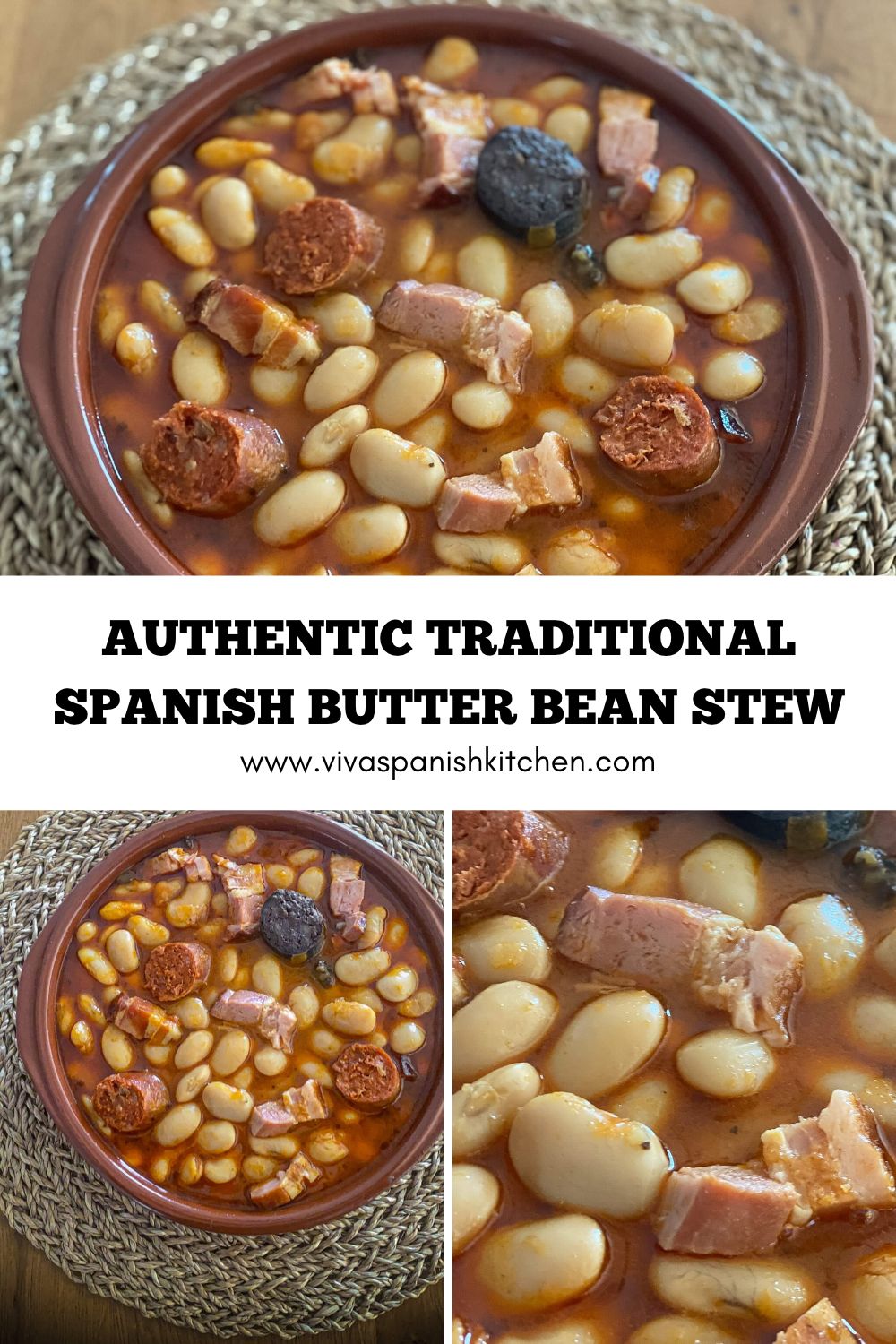
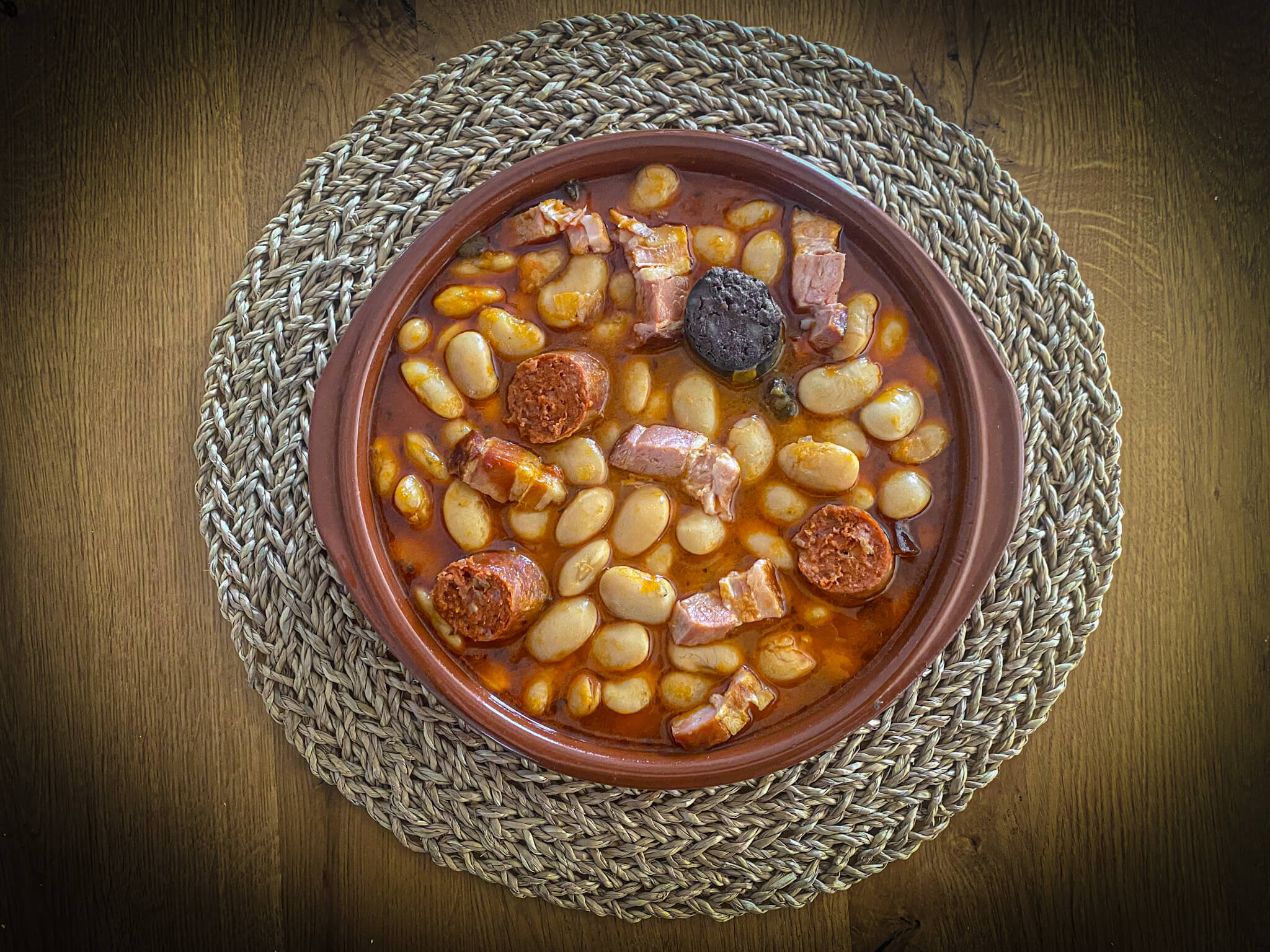
Traditional Judiones de la Granja with Chorizo and Morcilla is a hearty Spanish bean stew made with enormous, buttery white beans, smoky bacon, fresh chorizo, morcilla and sweet Spanish paprika. Slowly simmered until tender and finished with a fragrant onion sofrito, this comforting Castilian dish is all about patience, generous ingredients and the pleasure of sharing a proper bowl of Spanish home cooking.
Traditional Judiones de la Granja with Chorizo and Morcilla
The Spanish Tradition of Slow-Cooked Bean Stews
Spain has a wonderful tradition of hearty bean stews, especially in regions where colder weather calls for generous, comforting dishes cooked slowly in a pot. Each region has its own ingredients and character, but the idea is often the same: good beans, carefully chosen meats or vegetables, and enough time for everything to develop its flavour.
These Judiones de la Granja come from the culinary tradition of Segovia, in Castile and León. The beans are particularly impressive because of their size: much larger than ordinary white beans, with a tender, creamy interior that makes them especially satisfying in a slow-cooked stew.
Here, I cook them with fresh chorizo, morcilla and smoked bacon, adding a simple onion and garlic sofrito with sweet Pimentón de la Vera. As the beans simmer, the meats enrich the cooking liquid, while the paprika gives it its characteristic reddish colour. The result is a substantial dish with a lovely contrast between the large, buttery beans and the generous pieces of pork.
If you enjoy this kind of Spanish home cooking, there are two other recipes on Viva Spanish Kitchen that are well worth exploring. My Traditional Asturian Stew (Pote Asturiano) is a different expression of the same northern Spanish tradition, combining beans with cabbage, potatoes, chorizo and morcilla. For something closer to a classic meat-and-bean stew, try my Easy Fabada Asturiana, one of Asturias’s best-known dishes, made with fabes and traditional pork products.
Although these three recipes share some ingredients and the comfort of a slowly cooked pot, they each have their own identity. That is one of the things I enjoy most about Spanish regional cooking: familiar ingredients can come together in quite different ways, depending on where a dish comes from.
A Spanish Bean Stew Made for Sharing
For me, the pleasure of making judiones is in getting the simple things right. The beans need time to become tender without falling apart, the sofrito needs gentle cooking, and the chorizo, morcilla and bacon must have enough time to release their flavour into the stew.
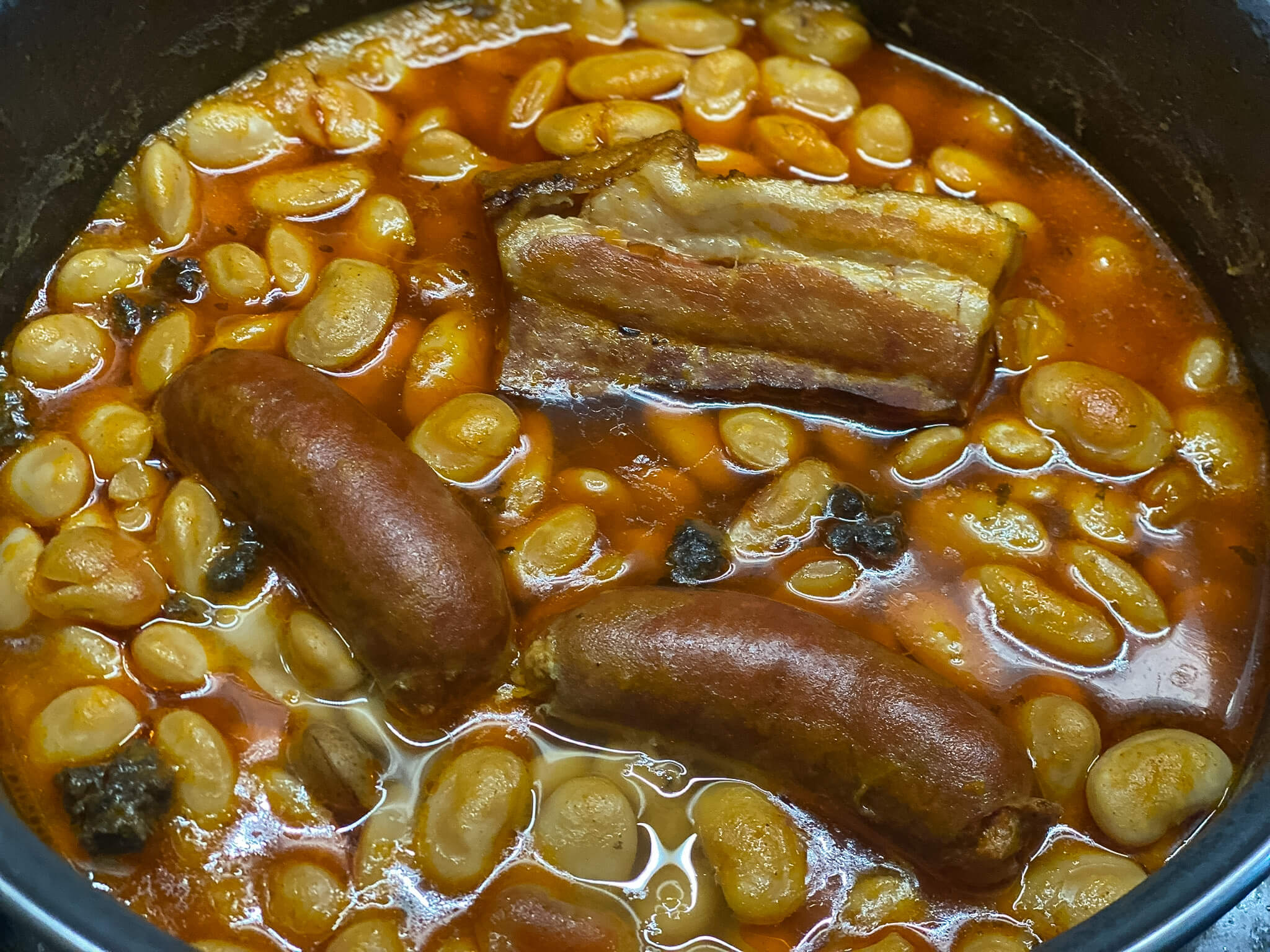
When everything comes together, you get a wonderfully satisfying dish: enormous white beans with a creamy texture, a rich reddish cooking liquid and generous pieces of sausage and bacon. I particularly like serving the stew in a traditional clay casserole, with the sliced meats arranged on top so everyone can help themselves.
This is not a dish to rush. It is the kind of Spanish home cooking that rewards patience and brings people together around the table. Serve it hot, with some good crusty bread to enjoy every last bit of that flavourful broth.
Ingredients
| Metric Amount | Imperial Amount | Core Ingredient | Preparation |
|---|---|---|---|
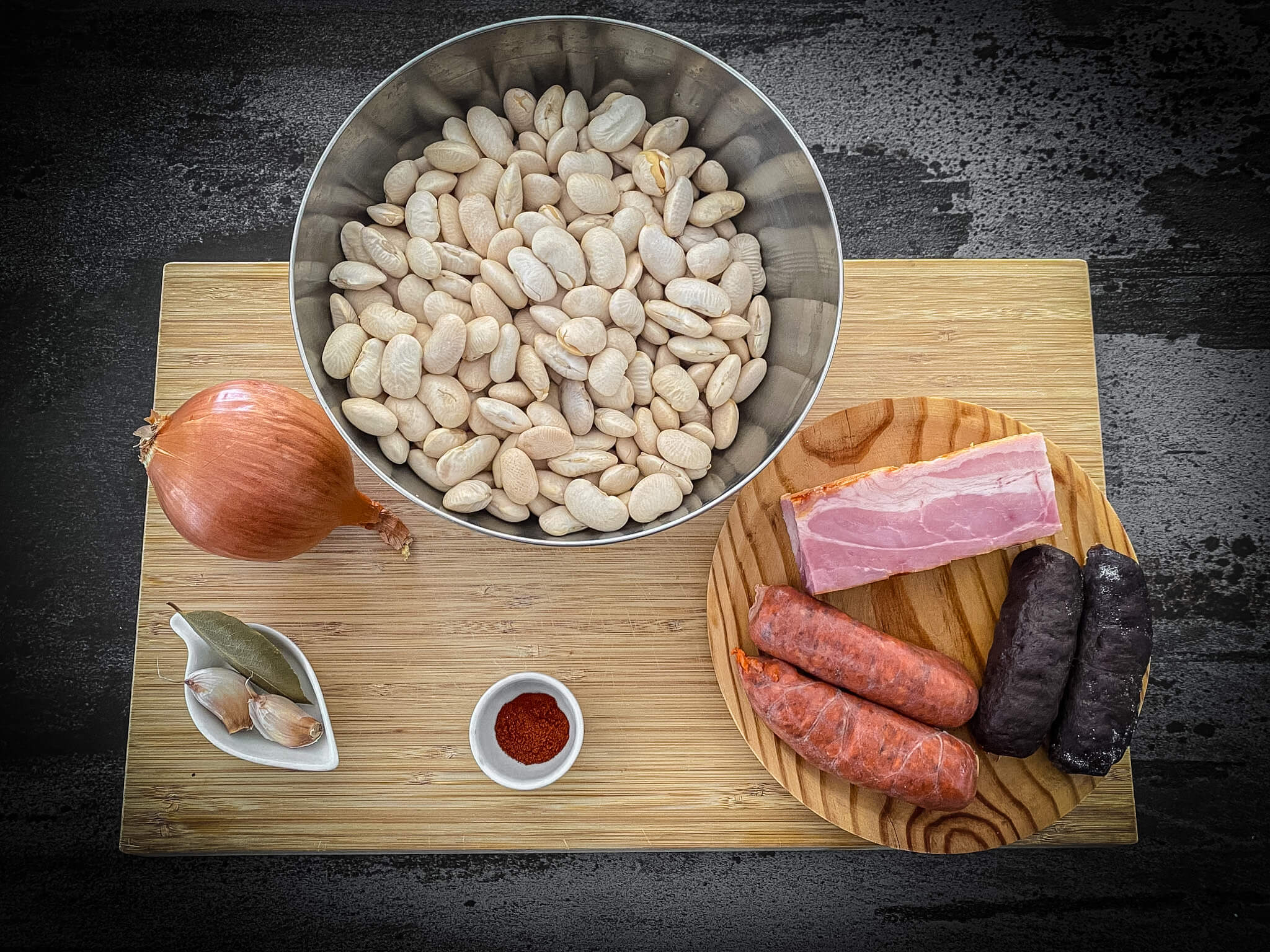
| 500 g | 1.1 lb | Dried Judiones de la Granja | Soaked in cold water for 12 hours, drained and rinsed |
| 2 units | 2 links | Fresh Spanish chorizo | Whole |
| 2 units | 2 links | Spanish morcilla | Whole, added during the final cooking stage |
| 150 g | 5.3 oz | Smoked bacon | Whole piece |
| 2 cloves | 2 cloves | Garlic | Finely chopped or thinly sliced |
| 1 medium | 1 medium | Onion | Finely diced (brunoise) |
| 2 tsp | 2 tsp | Sweet Pimentón de la Vera | Spanish sweet smoked paprika |
| 1 leaf | 1 leaf | Bay leaf | Whole |
| 30 ml | 2 tbsp | Extra virgin olive oil | For the onion and garlic sofrito |
| As needed | As needed | Water | Cold water for initial cooking, just enough to cover the beans |
Instructions Step by Step
1. Soaking the Judiones Overnight
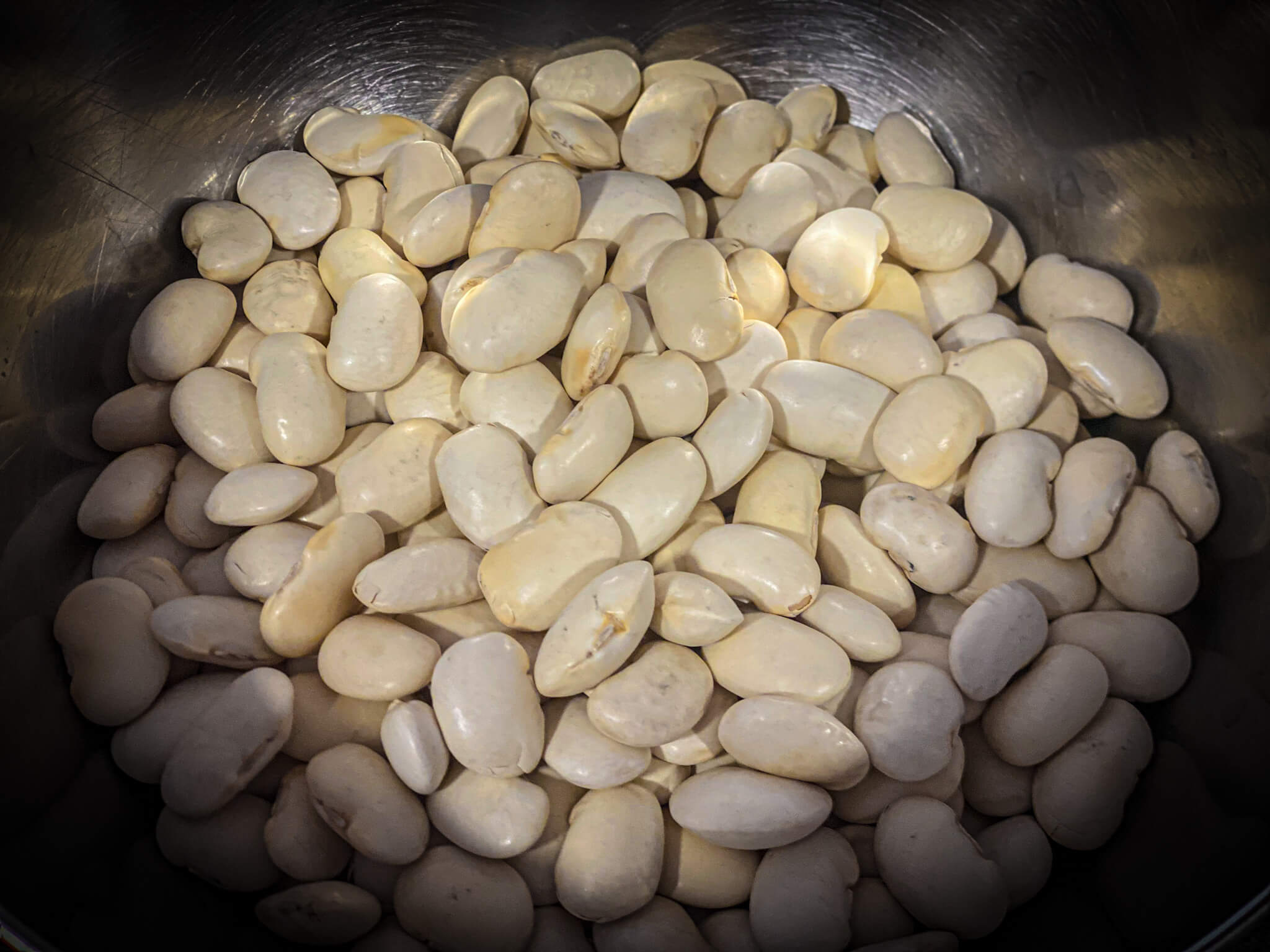
Place the dried judiones in a large bowl and cover generously with cold water. Leave them to soak for approximately 12 hours, preferably overnight. The beans will absorb a considerable amount of water and increase noticeably in size.
Once hydrated, drain and rinse them gently before cooking.
2. Starting the Judiones in Cold Water
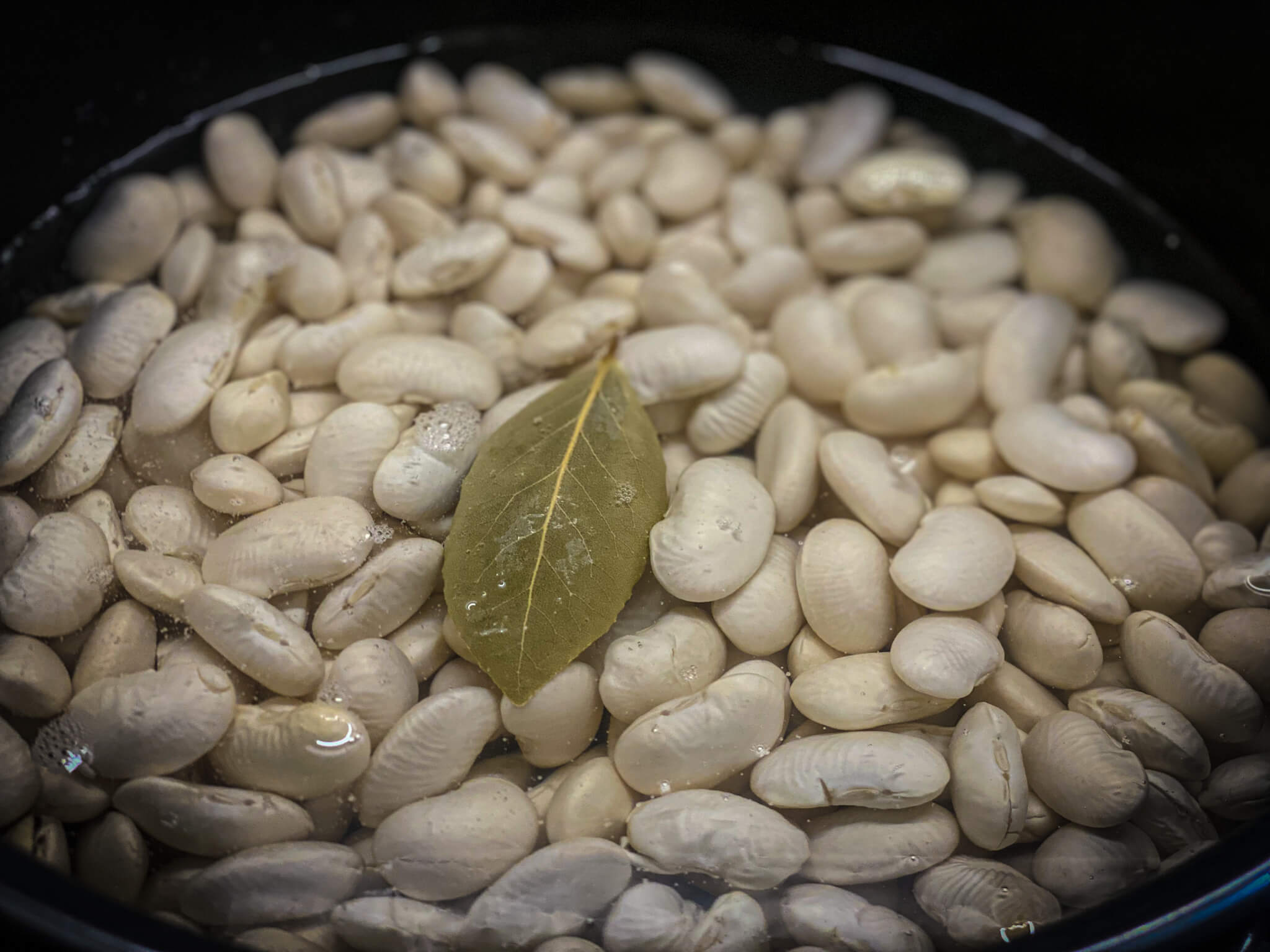
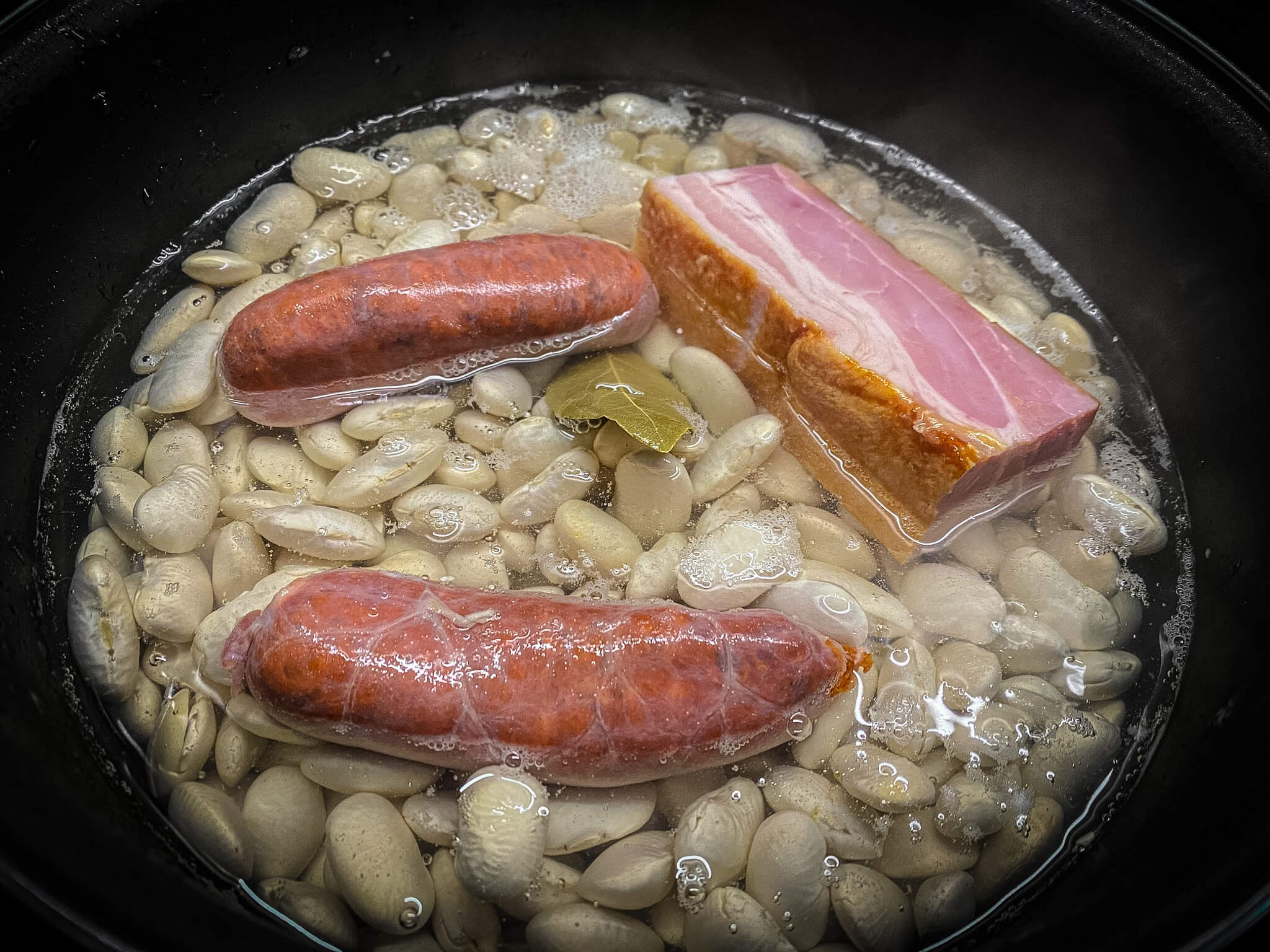
Transfer the soaked judiones to a large, heavy-based casserole. Add the bay leaf, the two fresh chorizo links and the whole piece of smoked bacon.
Cover the beans with fresh cold water, using just enough to submerge them. Some beans may float slightly, which is perfectly normal. There is no need to add excessive water, particularly because we will cook them with the lid on and evaporation will be limited.
Place the casserole over medium-low heat and allow the temperature to rise gradually. Avoid using high heat to bring the water to a rapid boil. Once the water reaches a gentle boil, reduce the heat, cover the casserole and maintain a slow, steady simmer.
Gentle heat from the beginning is essential to help protect the skins and keep the judiones intact.
3 .Preparing the Garlic and Onion Sofrito
While the judiones are cooking, prepare the sofrito in a separate frying pan.
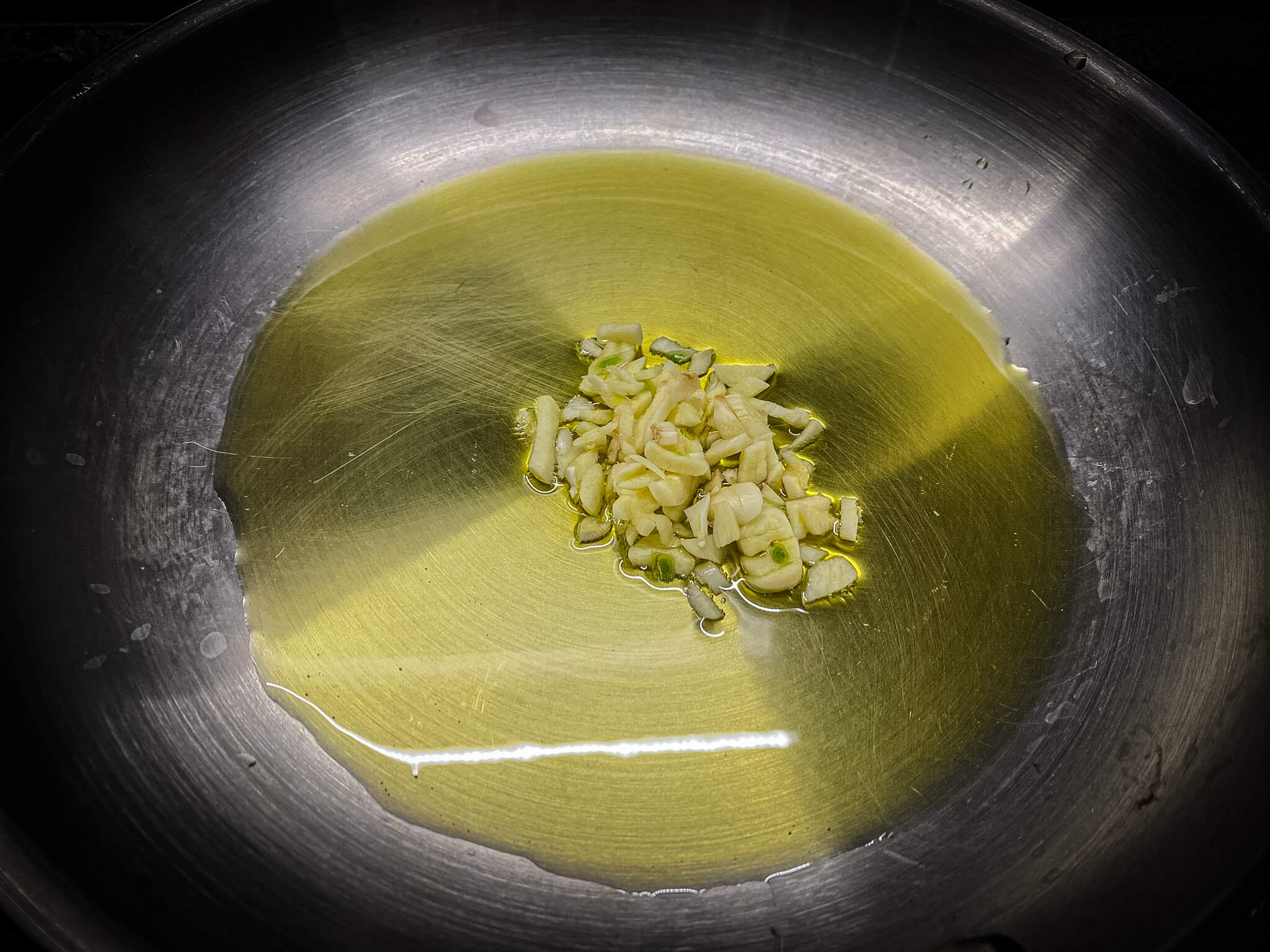
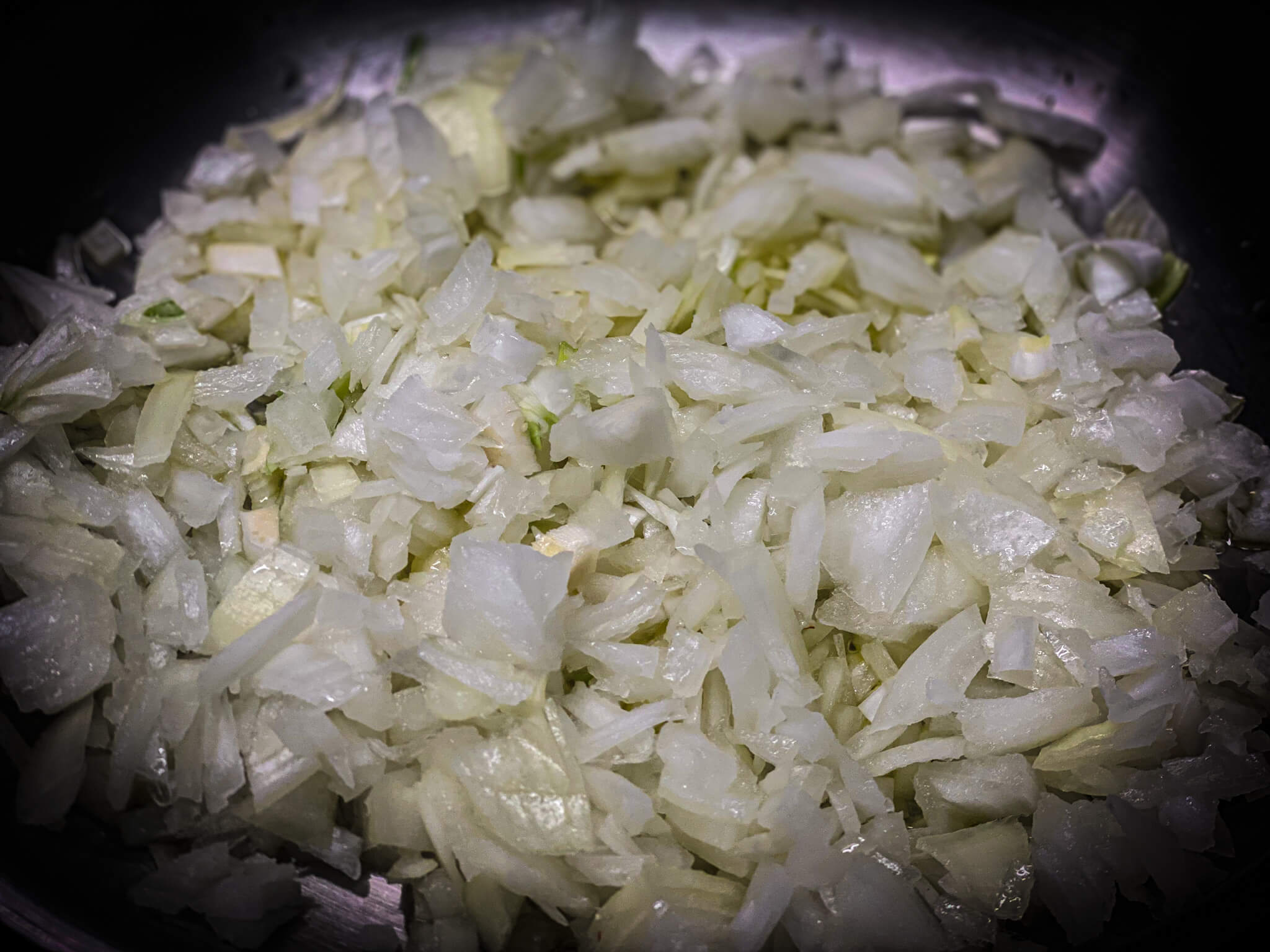
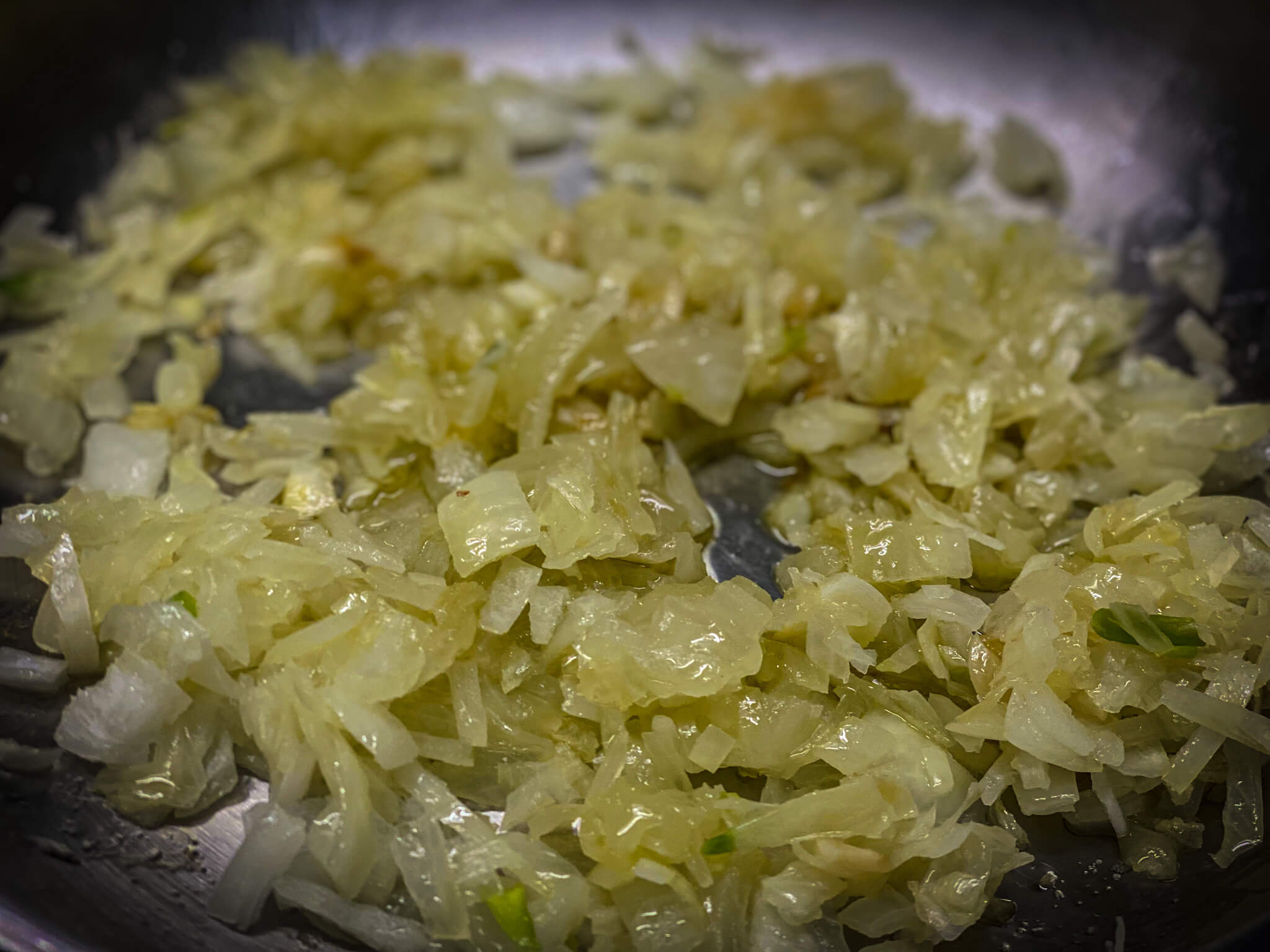
Add the extra virgin olive oil and garlic, finely chopped or sliced. Warm the oil gently and add the finely diced onion. Cook over medium heat, stirring occasionally, until the onion becomes soft and begins to turn lightly golden.
We want to develop the onion’s natural sweetness without burning the garlic or allowing the onion to become too dark.
Remove the pan from the heat before adding the sweet Pimentón de la Vera. Stir immediately so that the paprika blends with the oil and onion, releasing its aroma without burning.
Set the sofrito aside until the judiones are nearly tender.
4. Checking the Texture and Adding the Morcilla
After approximately 1 hour and 30 minutes of gentle cooking, start checking the judiones.
Carefully remove one bean and test its texture. You should be able to press it gently against the side of a spoon or between your fingers. If the centre is still firm, continue cooking and check again every 15 minutes.
The exact cooking time depends on the age and quality of the dried beans, as well as the cooking conditions. We are looking for a tender, buttery interior while keeping the beans whole.
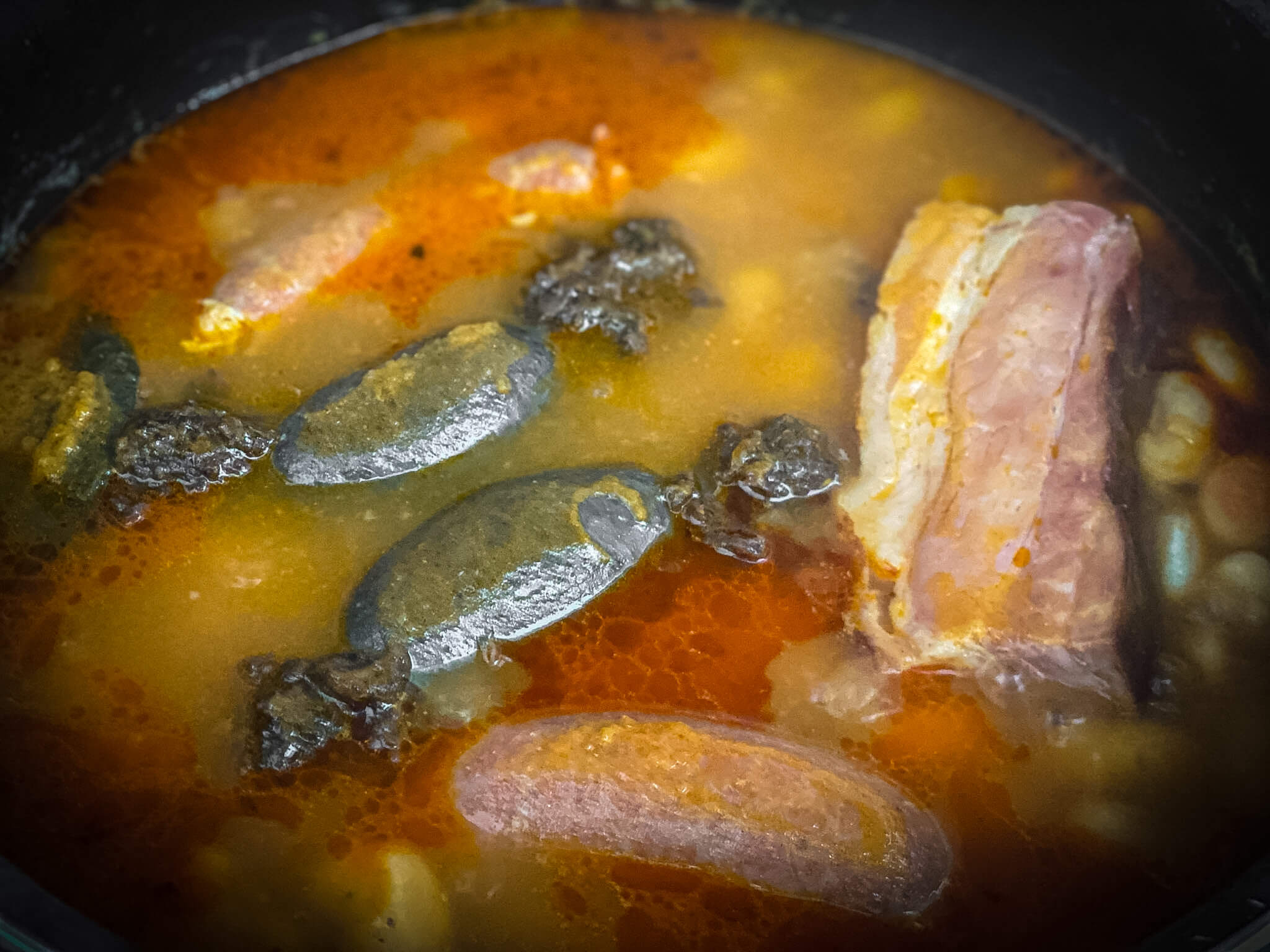
When the judiones are almost completely tender, add the prepared onion and paprika sofrito together with the two morcilla links.
Distribute the ingredients gently, moving the casserole rather than stirring vigorously. This helps prevent the delicate bean skins from breaking and keeps the morcilla from losing its shape.
5. Bringing the Flavours Together
Continue simmering gently, covered, for another 15–20 minutes.
During this final stage, the paprika, sweet onion, chorizo, morcilla and smoked bacon release their flavours into the cooking liquid. The broth gradually develops its characteristic reddish colour and a fuller, richer consistency.
Taste the cooking liquid before adjusting the seasoning. The sausages and smoked bacon already contribute salt, so additional seasoning may not be necessary.
Avoid vigorous stirring. If you need to redistribute the ingredients, gently move the casserole from side to side.
6. Serving the Judiones in a Traditional Clay Casserole
Carefully remove the chorizo, morcilla and bacon from the casserole. Slice the chorizo and morcilla into generous rounds and cut the bacon into substantial chunks.
Transfer the judiones and their cooking liquid to a traditional Spanish clay casserole (cazuela de barro).
Arrange the sliced sausages and bacon over the beans, making sure each portion receives a generous share of the meat.
Allow the stew to settle for approximately 10 minutes before serving. Bring the clay casserole directly to the table while everything is still hot, accompanied by some good crusty bread.
Chef’s Notes for Traditional Judiones de la Granja with Chorizo and Morcilla
Why do I start cooking Judiones de la Granja in cold water? I have learned through experience that starting dried beans in cold water and gradually increasing the temperature works particularly well. It avoids subjecting the skins to sudden temperature changes and gives me better control over the initial cooking stage.
I used to follow the traditional Spanish method of asustar las judías, adding cold water several times to interrupt the boil. However, I eventually found that this could leave me with more cooking liquid than I wanted. Although that broth is full of flavour and worth saving, I prefer to control the amount of liquid from the beginning.
By starting with cold water, heating gradually and keeping the casserole covered, I can maintain a gentle simmer without repeatedly adding water. This is simply the approach that has given me the most consistent results in my kitchen.
What does the traditional Spanish technique of asustar las judías mean? Asustar las judías, literally translated as frightening the beans, is a traditional Spanish technique that involves adding cold water to the casserole two or three times during cooking to interrupt the boil.
Historically, this was particularly practical when cooking over wood fires, where regulating the heat was much more difficult than it is with modern stovetops. Adding cold water was an effective way to bring down the temperature.
Today, with gas, ceramic and induction cooktops, we can regulate the heat directly. Gradually warming the beans from cold water is another practical approach, although both methods can be used.
How long should Judiones de la Granja cook? After approximately 12 hours of soaking, the judiones generally need around 1 hour and 30 minutes to 2 hours of initial gentle cooking before the sofrito and morcilla are added. The final stage takes another 15–20 minutes.
However, these times are only a guide. The age of the beans and their individual characteristics can make a considerable difference. Start checking their texture after 90 minutes and continue in 15-minute intervals until they become tender and buttery.
Why do different beans need different cooking techniques? Not all legumes behave in the same way. Through experience, I have noticed that ordinary white beans can be particularly delicate, while chickpeas generally tolerate more vigorous cooking. Judiones have somewhat thicker skins, although they still benefit from a gentle approach.
Lentils can also retain their shape during the initial cooking stage but eventually split if they are cooked for too long.
The important thing is to understand the particular legume you are cooking and adjust the heat and cooking time accordingly. There is no single rule that works equally well for every variety.
Why should I add morcilla towards the end of cooking? Morcilla is softer and more delicate than chorizo. If you add it at the beginning, it may break apart during the long cooking process.
I prefer adding it during the final 15–20 minutes, giving it enough time to warm through and release its flavour without completely losing its shape. If it does break slightly, however, don’t worry: it will only add more flavour and substance to the cooking liquid.
Can I cook Judiones de la Granja without a pressure cooker? Absolutely. This recipe is designed for a traditional casserole on the stovetop, not a pressure cooker.
I prefer slow cooking with a lid because it gives me greater control over the temperature, the beans and the final amount of cooking liquid. Keeping the casserole covered also reduces evaporation, making it easier to maintain a gentle simmer throughout the long cooking process.
Common Mistakes When Cooking Traditional Judiones de la Granja
Starting with hot or boiling water: Always begin with cold water and increase the temperature gradually. Adding boiling water or using very high heat at the beginning can subject the skins to sudden temperature changes and make them more likely to split.
Boiling the beans too vigorously: Judiones need a gentle, consistent simmer rather than a rolling boil. Once the water reaches boiling point, reduce the heat and cover the casserole. Vigorous boiling can damage the skins and break the beans before their centres become properly tender.
Adding too much water: Cover the judiones without drowning them. Because the casserole remains covered, evaporation is limited and you won’t need as much water as you might expect. Keeping the liquid under control also gives you a richer, more concentrated stew.
Adding the morcilla too early: Morcilla is delicate and can lose its shape during prolonged cooking. Adding it during the final 15–20 minutes allows it to warm through and contribute flavour without completely disintegrating.
Stirring too aggressively: Once the judiones become tender, their skins can break easily. Avoid repeatedly stirring the casserole with a spoon. Instead, gently move the casserole from side to side to redistribute the cooking liquid and ingredients.
Rushing the cooking process: Large dried beans need time to become properly tender. Do not assume they are ready simply because the cooking time has elapsed. Test their texture and allow additional cooking time whenever necessary.
Ingredient Swaps & Variations on Traditional Judiones de la Granja with Chorizo and Morcilla
Using large butter beans instead of judiones: If authentic Judiones de la Granja are difficult to find, large dried butter beans are a practical alternative. They will produce a similar hearty stew, although their size and texture will be different.
Replacing fresh chorizo: Look for Spanish cooking chorizo rather than cured chorizo intended for slicing. Fresh chorizo releases its flavour gradually into the cooking liquid and is particularly suitable for this preparation.
Making the stew without morcilla: If Spanish blood sausage is unavailable or you prefer a milder flavour, you can prepare the stew with chorizo and smoked bacon alone. It will still be delicious, although it will have a different flavour profile.
Using regular sweet paprika: If you cannot find Pimentón de la Vera, ordinary sweet paprika can be used. However, you will miss some of the characteristic smoky aroma that makes Spanish paprika so distinctive.
Recipe Card
Traditional Judiones de la Granja with Chorizo and Morcilla

Traditional Judiones de la Granja with Chorizo and Morcilla is a hearty Castilian bean stew made with large dried white beans, fresh Spanish sausages, smoked bacon and a fragrant onion and paprika sofrito.
Ingredients
- 500 g (1.1 lb) dried Judiones de la Granja
- 2 links fresh Spanish chorizo
- 2 links Spanish morcilla
- 150 g (5.3 oz) smoked bacon
- 2 cloves garlic
- 1 medium onion
- 2 tsp sweet Pimentón de la Vera
- 1 bay leaf
- 30 ml (2 tbsp) extra virgin olive oil
- Cold water, just enough to cover the beans
Instructions
- Soak the dried judiones in cold water for 12 hours. Drain and rinse.
- Place the beans in a large casserole with the bay leaf, fresh chorizo and smoked bacon. Cover with fresh cold water and gradually bring to a gentle boil over medium-low heat.
- Reduce the heat, cover and simmer gently until the beans are almost tender, approximately 1 hour and 30 minutes to 2 hours, checking their texture regularly.
- Meanwhile, prepare a sofrito with olive oil, garlic and finely diced onion. Cook until the onion is soft and lightly golden. Remove from the heat, add the sweet Pimentón de la Vera and stir.
- Add the sofrito and morcilla to the casserole when the judiones are nearly tender. Simmer gently, covered, for another 15–20 minutes.
- Taste the cooking liquid, adjust the seasoning if necessary and serve in a traditional clay casserole with the sliced chorizo, morcilla and smoked bacon.
Notes
4 servings
Nutrition Information:
Yield:
4Serving Size:
1Amount Per Serving: Calories: 474Total Fat: 40gSaturated Fat: 14gUnsaturated Fat: 26gCholesterol: 109mgSodium: 1143mgCarbohydrates: 4gFiber: 2gSugar: 2gProtein: 24g