

Spanish Hake in Cider Sauce, or Merluza a la Sidra, is a delicious Spanish seafood dish that brings together tender hake, fresh clams, and the delicate fruity aroma of natural cider. Cooked in a gently thickened sauce with garlic and leeks, this northern Spanish-inspired recipe is comforting, elegant, and perfect for sharing with good bread.
Spanish Hake in Cider Sauce (Merluza a la Sidra)

A Taste of Asturias: Hake, Clams and Natural Cider
This Spanish Hake in Cider Sauce is inspired by the traditional cooking of Asturias, a beautiful region in northern Spain known for its rugged coastline, outstanding seafood, and, above all, its natural cider.
The Cantabrian Sea provides some of Spain’s finest seafood, and hake is one of the great favourites of northern Spanish cooking. Here, I combine tender hake medallions with fresh small clams, or chirlas, although other varieties of clams work just as well. The seafood is gently cooked in a sauce made with natural Asturian cider, fish stock, garlic, and leeks, bringing together some wonderful flavours of the region. If you enjoy cooking with Spanish seafood, you can discover more traditional dishes in my guide to Spanish Fish and Seafood Recipes.
Cider is undoubtedly one of Asturias’s greatest culinary treasures. It is not simply something people drink occasionally; it is part of everyday social life and a deeply rooted local tradition. Visit an Asturian cider house, known as a sidrería, and you will quickly discover the importance of sidra natural. It is traditionally served by pouring it from a height, a distinctive technique called escanciar, which aerates the cider and is performed with remarkable skill by experienced cider pourers. Ordering cider in a traditional sidrería is also a wonderfully social experience, often accompanied by small complimentary bites of food, known as pinchos or tapas.
And cider is not just for drinking. Asturian cooking makes excellent use of it, too. Classic examples include chorizos a la sidra, where Spanish chorizo is simmered in cider, and pixín a la sidra, a traditional preparation of monkfish. These are dishes I would love to explore here on Viva Spanish Kitchen as well.
There is no single definitive recipe for merluza a la sidra. As with many traditional Spanish dishes, ingredients and techniques vary from one home to another. This version stays close to the spirit of Asturian cooking: good Cantabrian seafood, natural cider, a simple vegetable sofrito, and a gently thickened sauce that brings everything together. My addition of leeks gives it a delicate sweetness, while the clams enrich the sauce with their natural juices.
It is a lovely example of how a few good ingredients can create a dish full of character. And, of course, make sure you have some crusty bread ready to enjoy every last bit of that cider sauce.
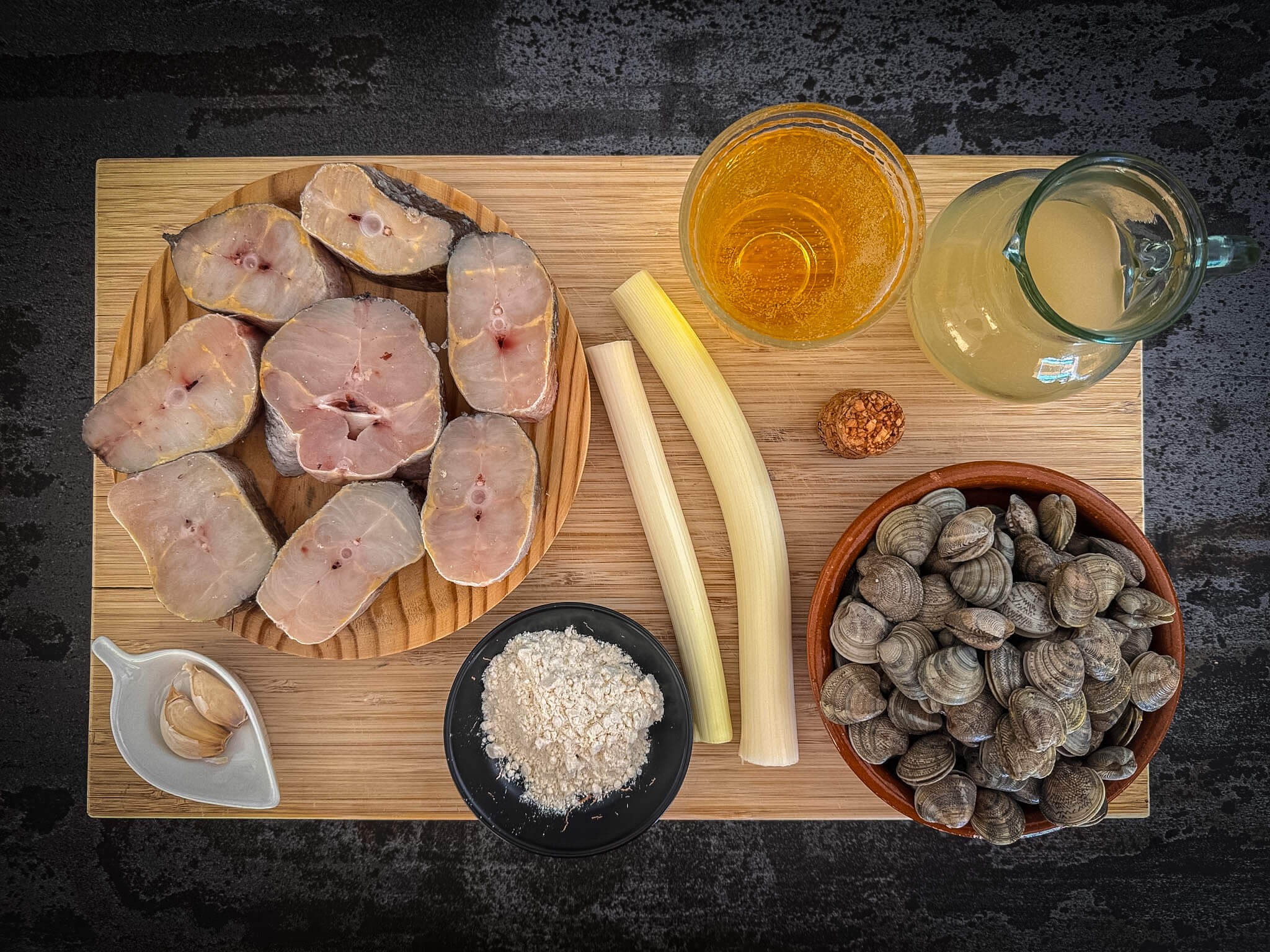
Ingredients
| Metric Amount | Imperial Amount | Core Ingredient | Preparation |
|---|---|---|---|
| 500 g | 1.1 lb | Hake medallions | Fresh or fully thawed, patted dry |
| 500 g | 1.1 lb | Fresh small clams (chirlas) | Purged, rinsed and drained |
| 200 ml | 6.8 fl oz | Spanish natural cider | Divide into 50 ml for opening the clams and 150 ml for the sauce |
| 100 ml | 3.4 fl oz | Fish stock (fumet) | Hot, ready to use |
| 30 ml | 2 tbsp | Extra virgin olive oil | For the leek and garlic sofrito |
| 2 medium | 2 medium | Leeks | White parts only, finely sliced |
| 2 cloves | 2 cloves | Garlic | Finely chopped or thinly sliced |
| 1 | 1 | Dried chili pepper (guindilla) | Optional, whole or broken into pieces |
| 1 heaped tbsp | 1 heaped tbsp | All-purpose flour | For thickening the sauce |
| To taste | To taste | Salt | For seasoning the hake and adjusting the sauce |
Instructions Step by Step
1. Prepare and clean the clams
If necessary, place the clams in a bowl of cold salted water and leave them in the refrigerator for 1–2 hours so they can release any sand. Rinse them thoroughly under cold running water, taking care not to disturb any grit that may have settled at the bottom. Discard any broken clams or those that remain open and do not close when gently tapped. Drain well before cooking.


2. Open the clams with cider
Place the clams in a wide frying pan with approximately 50 ml of the cider. Cover and cook over medium-high heat for about 8–10 minutes, checking regularly. Remove each clam as soon as it opens so it does not become tough. If many remain closed, continue cooking them for another few minutes, adding a small splash of boiling water if the pan is running dry. Discard any clams that remain closed after cooking. Strain and reserve the cooking liquid through a fine sieve to remove any sand.

3. Make the leek and garlic sofrito
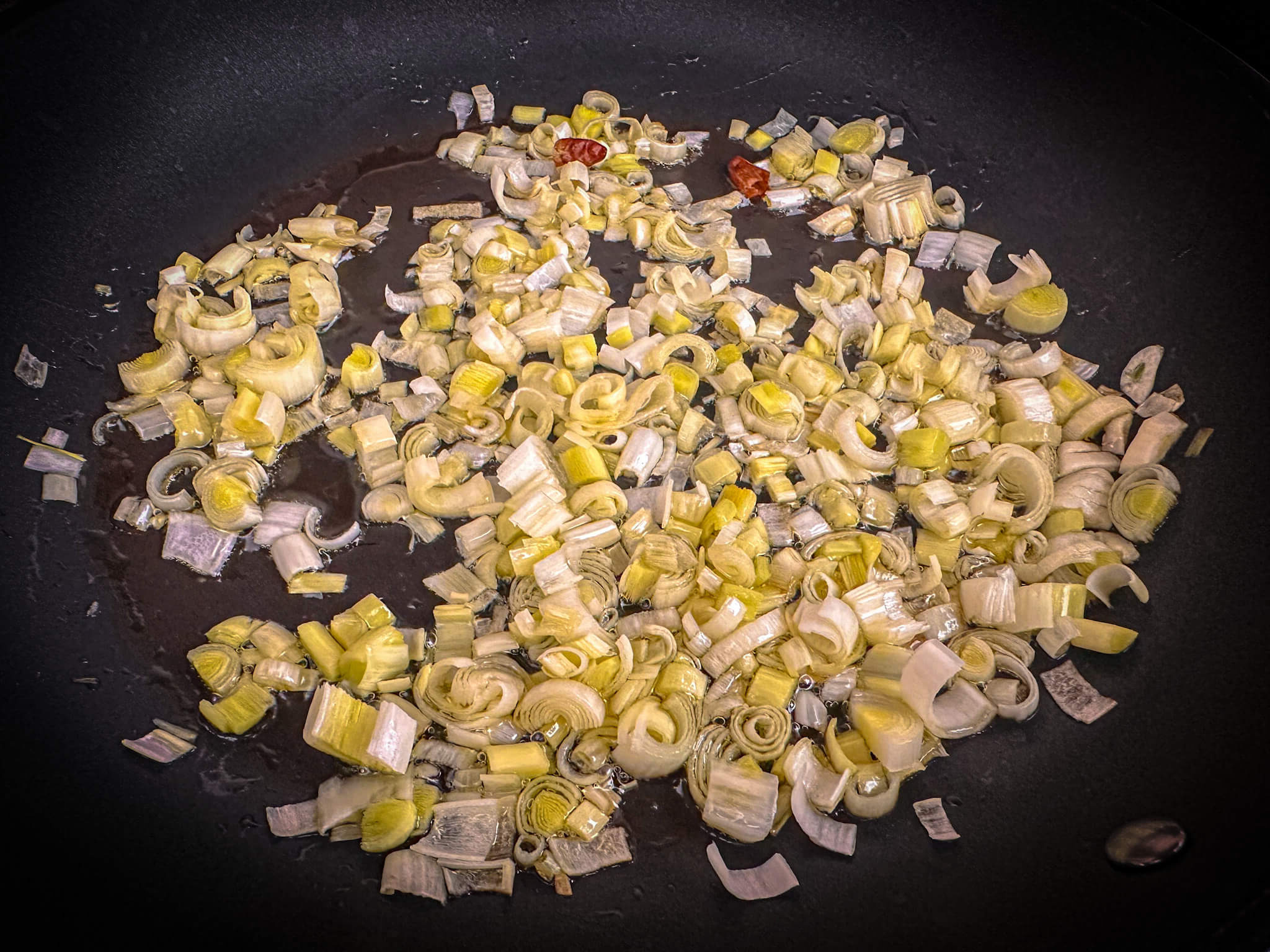
In a wide, shallow casserole or deep frying pan, heat the extra virgin olive oil over medium-low heat. Add the finely sliced white parts of the leeks, the garlic, and the optional guindilla. Cook gently for approximately 10 minutes, stirring occasionally, until the leeks are soft and translucent but not browned. If you prefer a milder flavour, remove the chili before continuing.
4. Add the flour and reduce the cider
Sprinkle the heaped tablespoon of flour over the softened leeks and stir continuously for about 1 minute. Make sure the flour is incorporated into the oil and vegetables without taking on too much colour. Gradually pour in the remaining 150 ml of cider, stirring to prevent lumps. Let it simmer for approximately 5 minutes, allowing the cider to reduce and the raw flour taste to disappear.


5. Build and bind the cider sauce
Pour in the hot fish stock and the strained liquid released by the clams. Stir gently and let the sauce simmer until it begins to thicken and come together. If it looks too thick, add a small splash of hot stock or water. Return the opened clams to the pan, keeping them in their shells, and gently distribute them through the sauce. Season carefully, remembering that the clam juices and stock already contribute salt.

6. Cook the hake and finish the sauce
Season the hake medallions lightly with salt and arrange them in the sauce in a single layer. Cover and cook over gentle heat for approximately 3–4 minutes, depending on their thickness. Avoid a vigorous boil, which can break up the fish. Uncover and gently move the pan in circular motions by holding its handles. This helps the sauce emulsify and coat the hake and clams beautifully. Allow the dish to rest for 2 minutes before serving.


Chef’s Notes for Spanish Hake in Cider Sauce
What type of cider should I use for Spanish Hake in Cider Sauce? Choose a dry Spanish natural cider (sidra natural), preferably an Asturian one if available. Its fresh apple character and gentle acidity work particularly well with seafood. Avoid sweetened or dessert-style cider, which can make the sauce taste too sugary.
Can I use onion instead of leeks in Spanish Hake in Cider Sauce? Absolutely. One medium onion, finely chopped, is a good alternative. Onion gives the sauce a more traditional savoury base, while the white parts of leeks create a softer, slightly sweeter flavour. Both work well with the cider and clams.
Why should I remove the clams as soon as they open? Clams cook quickly, and leaving them over heat for too long can make their meat tough. Removing them as they open allows you to reserve their cooking liquid for the sauce and return the clams later, just long enough to warm through.
How do I know when the hake is cooked? The exact cooking time depends on the thickness of the medallions. After 3–4 minutes over gentle heat, check the thickest piece: the flesh should be opaque and separate easily into moist flakes. If it still looks translucent in the centre, give it a little longer.
Can I prepare the cider sauce ahead of time? Yes. You can prepare the leek, cider, and fish-stock sauce in advance, then cool and refrigerate it. When ready to serve, reheat it gently, add freshly opened clams and the hake, and finish cooking the fish just before bringing the dish to the table.
Common Mistakes When Cooking Spanish Hake in Cider Sauce
Cooking the clams for too long: Clams can quickly become rubbery if left cooking after they open. Remove them as soon as they open and reserve their strained cooking liquid. This also gives you better control over the final texture.
Not filtering the clam cooking liquid: Even well-cleaned clams can release a little sand. Pour their cooking liquid through a fine-mesh sieve before adding it to the sauce. This small step makes a big difference to the final dish.
Allowing the leeks or garlic to brown: The sofrito should be soft and sweet, not heavily browned. Cook it over medium-low heat for around 10 minutes so the vegetables release their flavour without developing bitter notes.
Adding the hake while the sauce is boiling vigorously: Hake is delicate and cooks quickly. Keep the sauce at a gentle simmer and avoid stirring directly with a spoon once the fish is in the pan. Moving the casserole by its handles helps emulsify the sauce without breaking the medallions.
Overcooking the hake: Thick medallions may need a little longer than thinner pieces, but they do not need prolonged cooking. Check the centre and remove the pan from the heat as soon as the fish is opaque and flakes easily.
Ingredient Swaps & Variations on Spanish Hake in Cider Sauce
- Leeks or onion: Use one medium onion instead of two leeks for a more traditional savoury base.
- Clams: If fresh chirlas are unavailable, use small littleneck clams or another fresh, suitable cooking clam. Adjust the cooking time to their size.
- Fresh or frozen hake: Frozen hake works well when fully thawed in the refrigerator and thoroughly patted dry before cooking.
- A little heat: Keep the guindilla for a gentle Spanish-style warmth, or leave it out entirely for a milder sauce.
- A richer seafood version: You can add a few prawns or peeled langoustines towards the end of cooking. Add them only when the hake is nearly ready so they remain tender.
How to Store Spanish Hake in Cider Sauce
Spanish Hake in Cider Sauce is best served immediately, while the fish is tender and the sauce is freshly emulsified. Seafood dishes like this are not ideal for long storage because reheating can affect the texture of both the hake and the clams.
Refrigeration: If you have leftovers, transfer them to a shallow, airtight container and refrigerate promptly. Keep them chilled and preferably eat within 24 hours. Reheat gently over low heat until thoroughly hot, taking care not to boil the sauce or overcook the fish.
Make ahead: The leek and cider sauce can be prepared a day in advance and refrigerated separately. For the best result, open the clams and cook the hake just before serving.
Freezing: I do not recommend freezing the finished dish. Cooked hake and clams can lose their delicate texture after thawing, and the sauce may separate. If you want to prepare something ahead, freeze the sauce alone, without the seafood, and add fresh hake and clams when you cook the dish.
Recipe Card
Spanish Hake in Cider Sauce (Merluza a la Sidra)

Tender hake medallions and fresh clams cooked in natural Spanish cider, with a gently thickened leek and garlic sauce. A comforting northern Spanish-inspired seafood dish with plenty of flavour and just the right amount of body for soaking up with crusty bread.
Ingredients
- 500 g (1.1 lb) hake medallions
- 500 g (1.1 lb) fresh small clams (chirlas)
- 200 ml (6.8 fl oz) Spanish natural cider
- 100 ml (3.4 fl oz) fish stock
- 30 ml (2 tbsp) extra virgin olive oil
- 2 leeks, white parts only
- 2 garlic cloves
- 1 dried chili pepper, optional
- 1 heaped tbsp all-purpose flour
- Salt, to taste
Instructions
- Purge the clams in cold salted water if necessary, rinse, and drain.
- Place the clams in a covered pan with 50 ml cider. Cook until they open, removing them as they open. Strain and reserve their cooking liquid.
- Gently cook the sliced leeks, garlic, and optional chili in olive oil for about 10 minutes.
- Add the flour and stir for 1 minute. Pour in the remaining cider and simmer for 5 minutes.
- Add the hot fish stock and strained clam liquid. Simmer until the sauce thickens, then return the clams.
- Season the hake, place it in the sauce, cover, and cook gently for 3–4 minutes, depending on thickness. Move the pan in circular motions to emulsify the sauce and serve after a 2-minute rest.
Notes
4 servings
Nutrition Information:
Yield:
4Serving Size:
1Amount Per Serving: Calories: 509Total Fat: 8gSaturated Fat: 1gUnsaturated Fat: 7gCholesterol: 167mgSodium: 1938mgCarbohydrates: 44gFiber: 2gSugar: 8gProtein: 62g
