
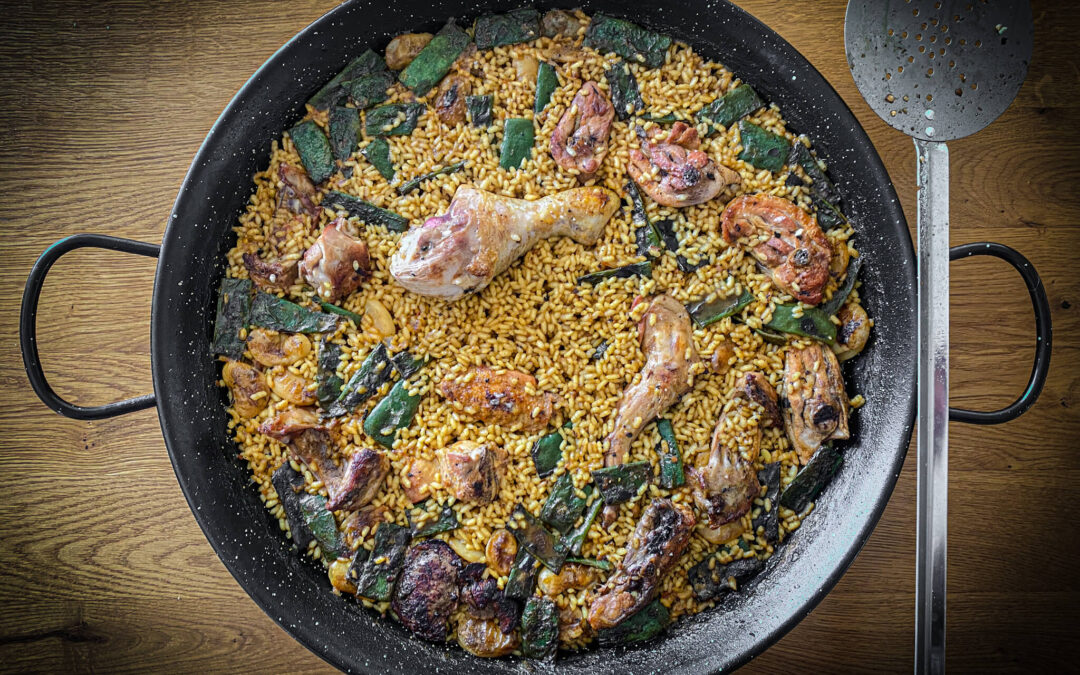
There’s something magical about cooking a Classic Spanish Paella Recipe: Valencian Style with 10 Authentic Ingredients over a wood fire. For me, paella is not just about the ingredients—it is about the technique, the fire, the fresh seasonal products, and the tradition of gathering with family around the pan.
This recipe follows the classic ingredients associated with traditional Valencian paella, combining tender chicken and rabbit with green beans, garrofón, saffron, and Bomba rice. But I prepare it using the technique I learned at home, watching my mother cook paella for our family on Sundays—sometimes for just a few people, and sometimes for more than twenty.
Whether you cook it over an open wood fire or adapt the technique to your stovetop, this paella brings together the rich flavors, warmth, and tradition of Valencian cooking. Get ready to enjoy a truly memorable taste of Spain.
Classic Spanish Paella Recipe: Valencian Style with 10 Authentic Ingredients

Cooking Classic Spanish Paella Recipe: Valencian Style with 10 Authentic Ingredients
This Classic Spanish Paella Recipe: Valencian Style with 10 Authentic Ingredients is my personal version of the traditional paella I grew up watching my mother prepare on Sundays. It follows the classic ingredients traditionally associated with Paella Valenciana, but the technique comes directly from my family kitchen: cooked over a wood fire, using fresh seasonal ingredients, and prepared slowly for everyone gathered around the table.
The idea of “authentic” Paella Valenciana can sometimes be confusing. There is a traditional version commonly associated with ten classic ingredients: rice, chicken, rabbit, green beans, garrofón, tomato, olive oil, saffron, salt, and water or broth. However, paella has always been a dish shaped by the ingredients available to each family. Before supermarkets made every ingredient available all year round, people cooked with what they had, what was in season, and what they could obtain locally.
That is why paella has always had a personal and family character. Ingredients were added, omitted, or replaced depending on the household, the season, and the number of people eating. What remained important was the technique: properly browning the meat, building the sofrito, managing the fire, using the right amount of liquid, and leaving the rice undisturbed while it cooks.
In my family, paella is particularly connected to Sundays in the countryside. I learned by watching my mother prepare different types of paella week after week. Sometimes we cooked for just three or four people; on other occasions, more than twenty family members gathered around the fire. The ingredients and quantities changed, but the tradition remained the same: fresh products, a large paella pan, a wood fire, and the patience to let the dish develop properly.
For this recipe, I have chosen the version commonly described as the classic or traditional Paella Valenciana, using the ingredients associated with the famous ten-ingredient recipe. However, I have prepared it using the technique I learned at home—the technique of cooking paella over wood fire and understanding the process through experience rather than simply following a written recipe.
This is what I love about paella. Its authenticity is not only found in a list of ingredients. It is also found in the fire, the technique, the seasonality of the ingredients, and the people gathered around the pan.
So, while this recipe is a Classic Spanish Paella Recipe: Valencian Style with 10 Authentic Ingredients, it is also my version of a dish that has always been part of my family’s Sunday tradition.

Ingredients
| Metric Amount | Imperial Amount | Core Ingredient | Preparation |
| 400 g | 14 oz | Bomba rice | Dry |
| 1 L | 4.25 cups | Chicken broth | Hot |
| 300 g | 10.5 oz | Chicken | Cut into pieces, seasoned |
| 300 g | 10.5 oz | Rabbit | Cut into pieces, seasoned |
| 150 g | 5.3 oz | Flat green beans | Chopped |
| 100 g | 3.5 oz | Garrofón beans | Prepared / soaked |
| 2 units | 2 units | Ripe tomatoes | Grated |
| 80 ml | 5.5 tbsp | Olive oil | Extra virgin |
| 10 g | 2 tsp | Saffron | Ground |
| To taste | To taste | Salt | Fine |
Instructions
1. Getting Ready: The Key to a Perfect Paella
Preparing a good paella starts long before the rice touches the pan, it’s essential to have all your ingredients ready to go, especially if, like in this case, you’re cooking it over a wood fire.

2. Preparing and Browning the Meat
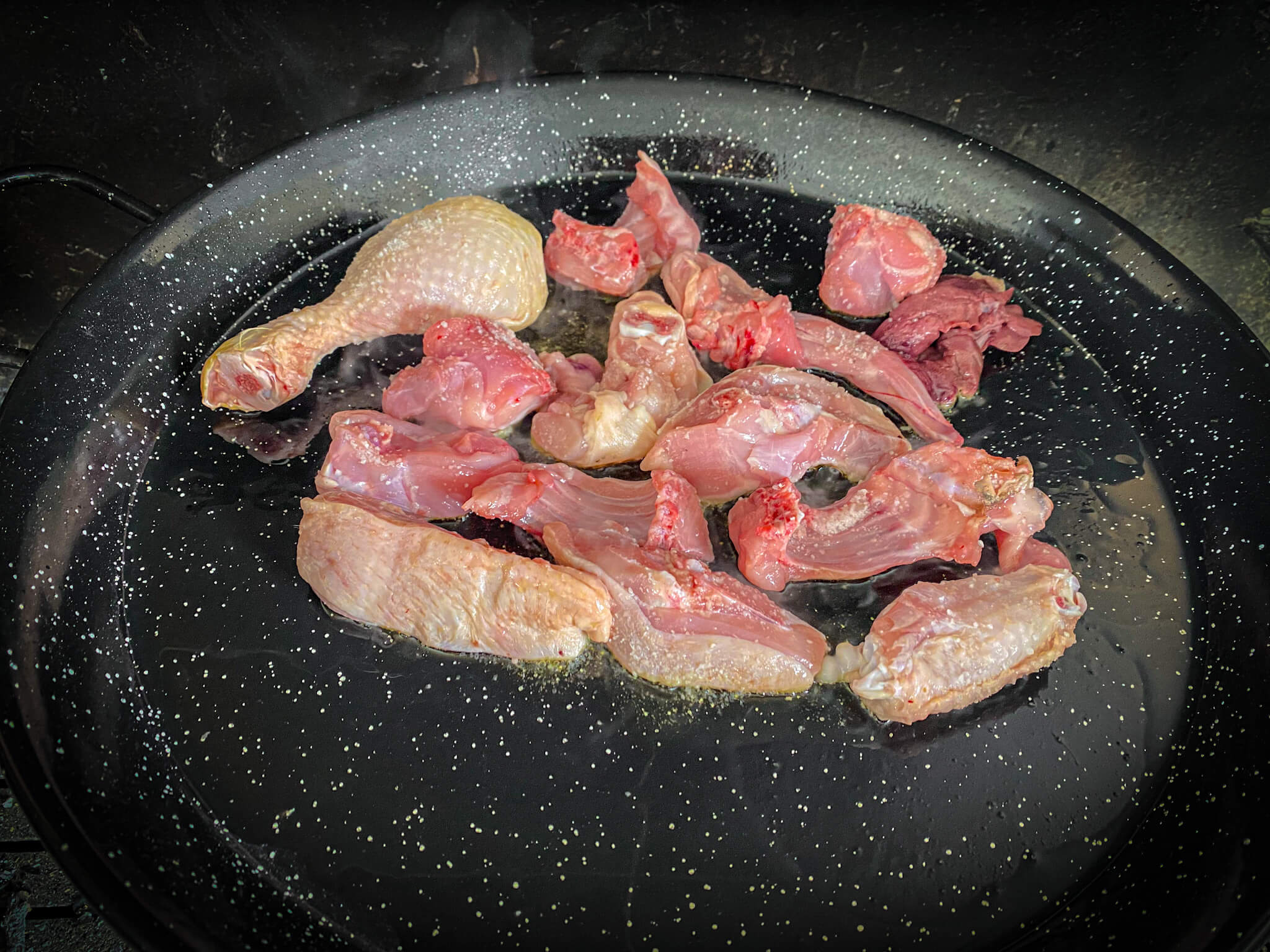
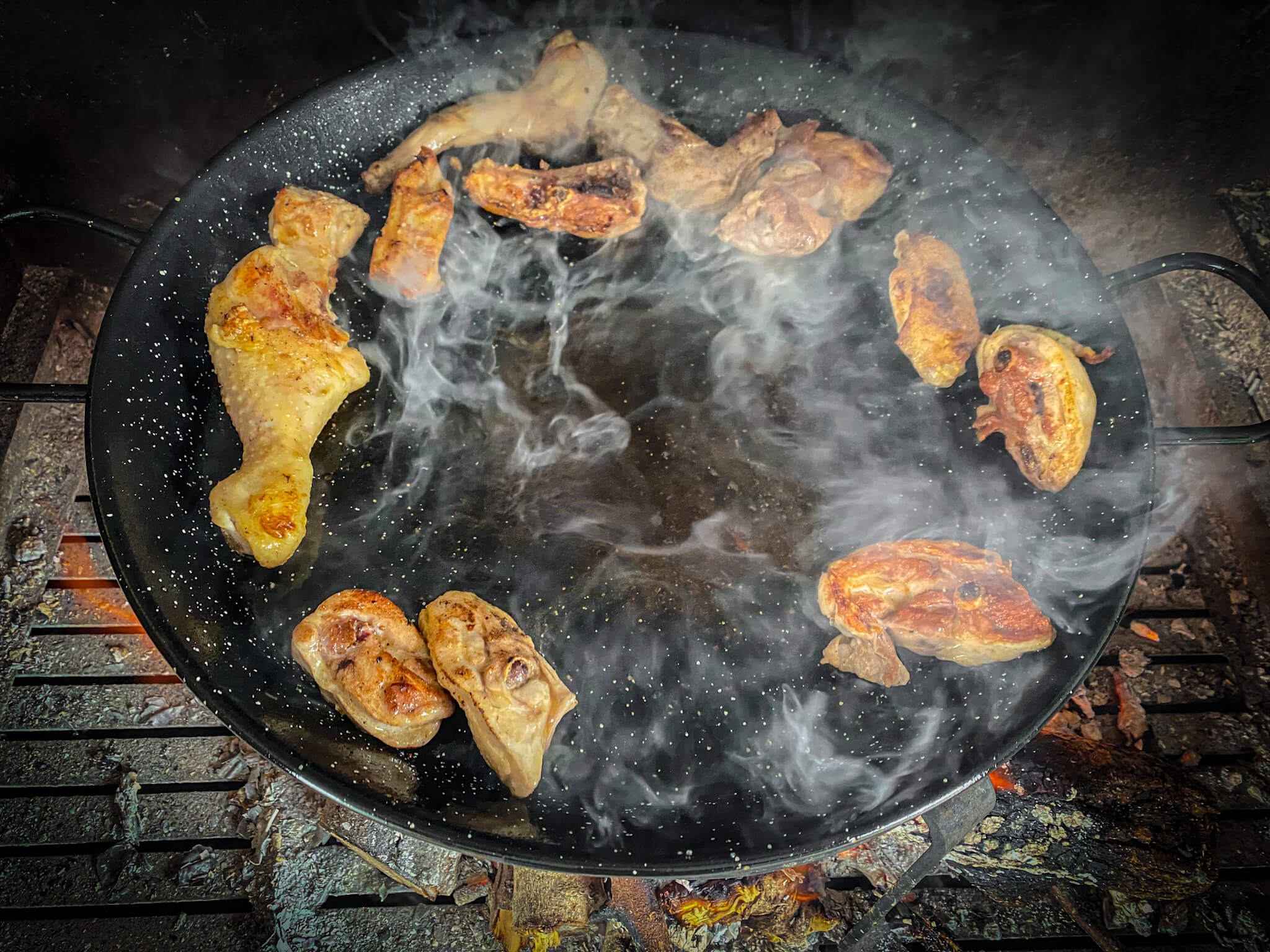
We start by grating the tomatoes, washing and chopping the flat green beans, and seasoning the chicken and rabbit with salt. Heat the extra virgin olive oil in a paella pan (paellón), and once it’s hot, add the chicken and rabbit pieces to brown them. When golden, push the meat to the outer edges of the pan where the heat is less intense. This way, they’ll keep cooking more slowly while you work on the rest.
3. Cooking the Vegetables and Building Flavor
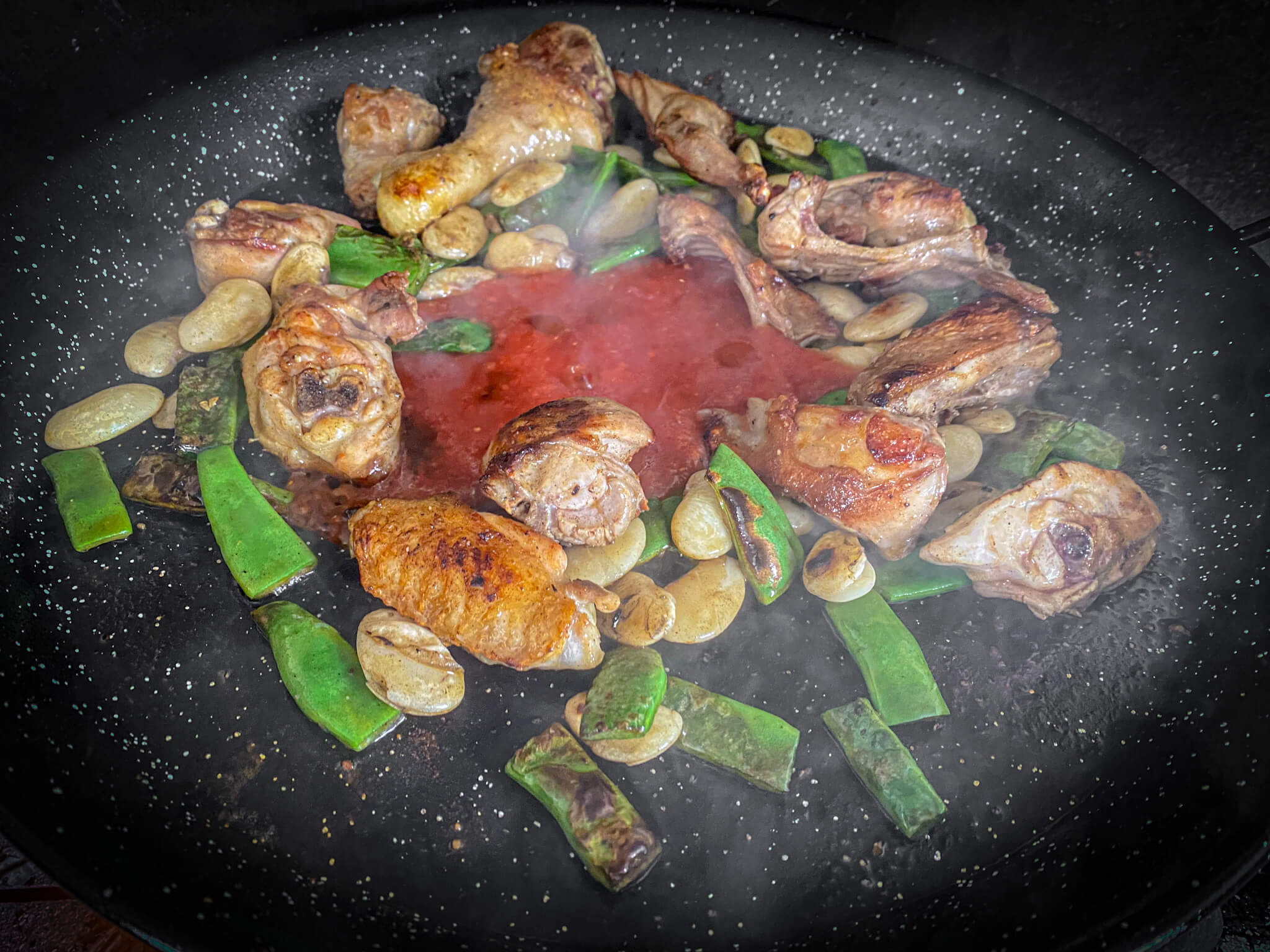
If all goes well, the meat will have released some juices, forming a light crust at the bottom of the pan—this will be the flavor base of our paella. Now, add the vegetables: first the green beans, then the garrofón (Valencian white beans). Cook them for 5–10 minutes without letting them burn, then push them toward the edges as well.


4. Making the Sofrito and Adding Rice & Saffron
When the meat and vegetables are ready, it’s time to extract their flavors using the grated tomato as a natural deglazer. The acidity of the tomato will help lift the flavorful crust from the bottom of the pan. Cook the tomato for about 5 minutes until it loses its liquid. Add the rice and saffron, and fry for a couple of minutes, making sure the saffron doesn’t burn, mixing everything together evenly.

5. Cooking the Rice and Creating the Socarrat
Distribute the ingredients evenly across the pan and pour in the hot chicken broth. Bring to a boil, taste, and adjust salt if needed. Keep cooking at a medium heat until the rice absorbs almost all the liquid (around 20 min). You’ll notice the sound of the bubbling changes and becomes more intense, this is when the socarrat (crispy rice layer) is forming. Remove from the heat, cover with a clean kitchen towel, and let the paella rest for 10–15 minutes. This will allow the steam to escape while the rice finishes cooking without the risk of burning.
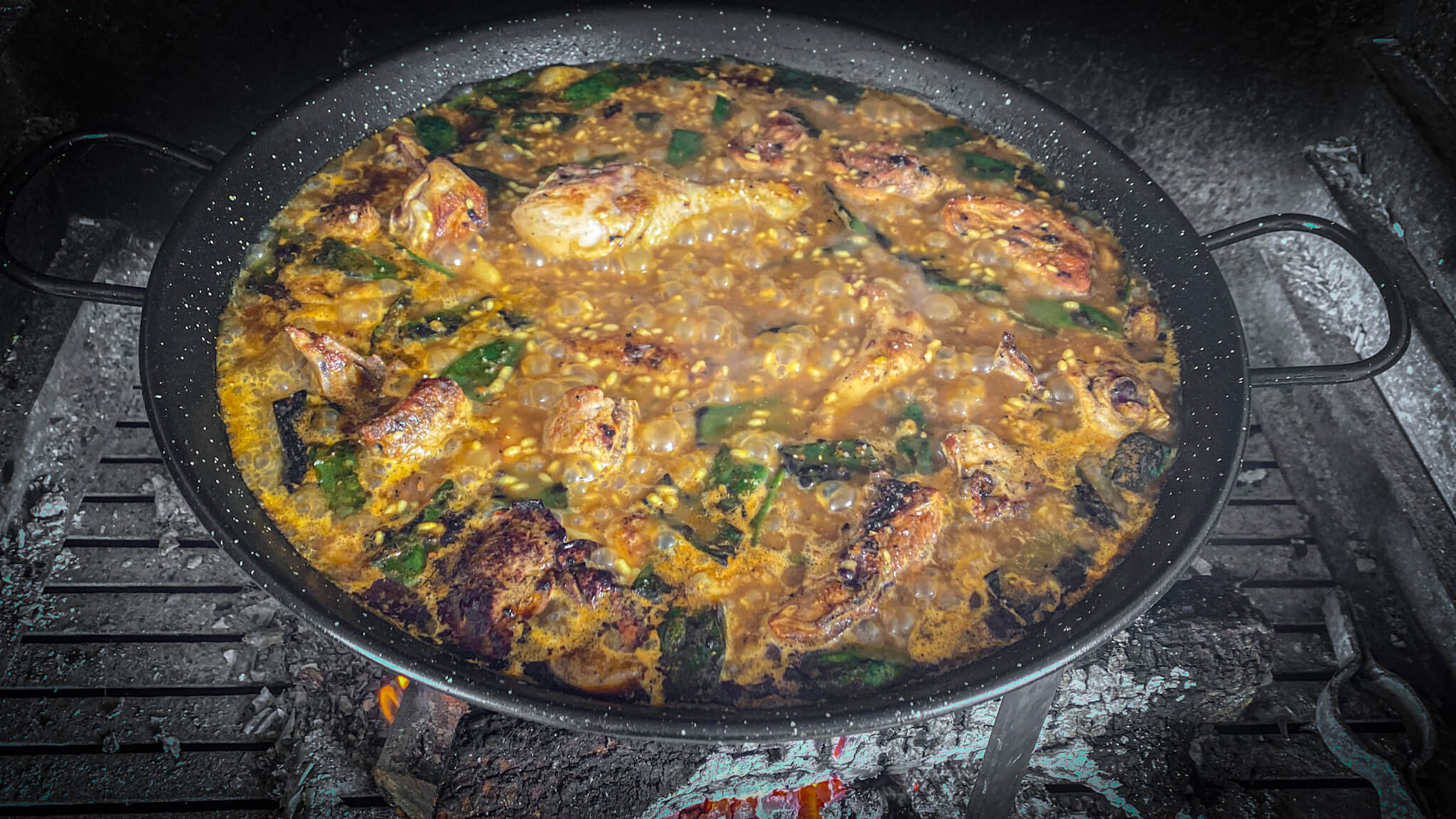


Chef’s Notes for Making Classic Spanish Paella as a Home Cook
Why Browning the Meat Properly Matters More Than You Think: The first important lesson for anyone unfamiliar with cooking paella is to give the chicken and rabbit time to brown properly. Once the meat goes into the hot paella pan, try not to move it constantly. Let it sit in contact with the hot surface long enough to develop color and leave those delicious browned bits behind.
This is not about burning the meat. It is about building flavor before adding the liquid. When you later add the grated tomato, its moisture helps loosen the flavorful residue from the bottom of the pan and incorporates it into the sofrito. In a traditional paella, this simple process contributes enormously to the final flavor.
Choosing the Right Rice: Please, No Basmati in Your Paella:
Rice is one of the most important decisions in paella. For this recipe, I recommend Bomba rice, although another good short- or medium-grain round rice can also work.
What I would avoid is using long-grain aromatic rice such as basmati. Its texture, shape, and cooking behavior are completely different from the rice traditionally used for paella. A good paella rice is designed to absorb the flavorful broth while remaining tender and relatively separate.
The rice is not just a neutral base for the other ingredients. It is one of the main ingredients of the dish, and choosing the right variety makes a noticeable difference.
Be Careful with Pre-Cooked and Frozen Ingredients:
Convenience products can be useful, but they do not always behave in the same way as fresh ingredients in a paella. Pre-cooked vegetables may release additional moisture or soften too quickly, while frozen ingredients can release water as they cook.
This can affect the sofrito, dilute the flavor of the broth, and potentially cause some ingredients to overcook while the rice is still finishing. If you use frozen or pre-cooked ingredients, try to understand how much water they will release and adjust your cooking accordingly.
For me, one of the pleasures of making paella is using fresh, seasonal ingredients whenever possible. But the important thing is not to be afraid of adapting. Just remember that changing the ingredients can also change the cooking process.
Don’t Become Obsessed with the Socarrat:
The socarrat is delicious, but I think it has become almost an obsession among people discovering paella outside Spain. A good caramelized layer at the bottom of the pan is wonderful. A burnt layer of rice is simply burnt rice.
If you are still learning to make paella, I would not make the socarrat your main objective. First learn how to cook the rice properly and understand how your fire or stovetop behaves. Once you become familiar with the process, you can gradually experiment with increasing the heat at the end and listen to the sound of the pan.
The difference between a beautiful socarrat and a burnt bottom can be very small. It is much better to develop this technique gradually than to ruin an entire paella because you were determined to create a crust at all costs.
Rosemary: A Simple Country Addition
Adding a small sprig of rosemary is something I particularly enjoy when cooking paella in the countryside. Rosemary grows easily around us, and its aroma is part of the landscape and the cooking environment.
I sometimes add a small sprig during the cooking of the broth or toward the end of the process, then remove it before serving. It adds a subtle, piney Mediterranean aroma that works especially well with chicken, rabbit, vegetables, and saffron.
It is not something I would consider essential to every version of paella, but it is a lovely example of how the cooking environment and local ingredients naturally influence family recipes.
Common Mistakes When Making Classic Spanish Paella
Moving the Meat Too Much While Browning: If you constantly move the chicken and rabbit around the pan, they will have less opportunity to brown properly. Give the pieces time to make contact with the hot surface. You want proper color and flavor before continuing with the rest of the recipe.
Using the Wrong Type of Rice: Long-grain rice such as basmati is not a good substitute for paella rice. The cooking behavior is different, and the final texture will not be the same. Bomba rice is my preferred choice, but a suitable short- or medium-grain round rice is a much better alternative than aromatic long-grain varieties.
Adding Too Much Liquid from Frozen or Pre-Cooked Ingredients: Frozen vegetables and pre-cooked ingredients can release water into the pan. This may dilute the sofrito and alter the amount of liquid available to the rice. If you use them, take this extra moisture into account.
Treating the Recipe as Completely Fixed: Paella has always been a dish that changes from one household to another. The technique matters enormously, but so does understanding the ingredients you are using. If you change fresh vegetables for frozen ones, alter the rice, or add ingredients with a high water content, you need to expect the cooking process to change as well.
Variations on Classic Spanish Paella
If you enjoy the rice-cooking technique of paella but want to explore a completely different flavor profile, my Spanish Black Rice Paella with Garlic Sauce (Alioli) is a wonderful variation. It uses Bomba rice with squid, seafood stock, squid ink, tomato, paprika, garlic, and onion, resulting in a deeply savory rice with a dramatic black color and intense marine flavor.
It is a completely different style of rice dish, but it follows the same fundamental idea: build flavor first, use a suitable rice, add the correct liquid, and allow the rice to cook without constant stirring.
For something richer and more indulgent, my Gourmet Spanish Rice with Secreto Ibérico and Mushrooms takes the same love of a good rice dish in a different direction. Iberian secreto brings an exceptional amount of flavor and richness, while wild mushrooms add an earthy character to the dish.
This is a great option when you want to move away from the traditional chicken-and-rabbit combination while still keeping the spirit of a generous Spanish rice dish.
A vegetable paella is proof that a satisfying paella does not need meat or seafood. My Spanish Vegetable Paella combines green beans, garrofón, artichokes, fava beans, tomato, saffron, and vegetable broth.
This version is particularly enjoyable when cooked with fresh seasonal vegetables. The artichokes add a subtle bitterness, the beans provide texture and substance, and the saffron brings everything together into a fragrant, colorful rice dish.
Recipe Card
Classic Spanish Paella Recipe: Valencian Style with 10 Authentic Ingredients

A traditional Valencian paella featuring tender chicken, rabbit, fresh green beans, and authentic garrofón beans, cooked slowly over a wood fire to develop rich flavors. This classic Spanish dish is finished with fragrant saffron-infused bomba rice and a perfect crispy socarrat crust. Ideal for sharing and savoring the taste of Spain.
Ingredients
- 400 g bomba rice
- 1 L chicken broth
- 300 g chicken, cut into pieces
- 300 g rabbit, cut into pieces
- 150 g flat green beans (ferraura), chopped
- 100 g garrofón (Valencian white beans)
- 2 ripe tomatoes, grated
- 80 ml extra virgin olive oil
- 10 g ground saffron
- Salt, to taste
Instructions
To make a great paella, it’s essential to have all the ingredients ready before you start—especially when, as in this case, you’re cooking it over a wood fire.
- Prepare the ingredients
Grate the tomatoes, wash and cut the green beans, and season the chicken and rabbit with salt.
- Sear the meat
Heat the olive oil in the paella pan. Once it’s very hot, add the chicken and rabbit to brown. Then move them toward the outer edge of the pan, where the heat is lower, so they can continue cooking gently.
- Sauté the vegetables
Using the center of the pan, add the green beans first, then the garrofón (Valencian white beans). Cook for 5–10 minutes without letting them burn, then move them to the edges.
- Make the sofrito
Add the grated tomato to the center to deglaze, scraping the bottom to release the flavorful crust. Cook for 5 minutes until the liquid evaporates.
- Toast the rice and saffron
Add the rice and fry for 2 minutes together with the saffron, making sure it doesn’t burn. Spread everything evenly.
- Add the broth and cook
Pour in the hot broth and bring to a boil. Taste and adjust the salt if necessary. Cook over medium-high heat until the rice has absorbed almost all the liquid (around 20 min.)
- Form the socarrat
When you hear a more intense bubbling sound and there’s barely any broth left, the socarrat (the golden crust at the bottom) is forming.
- Rest and serve
Remove from the heat, cover with a clean kitchen towel, and let it rest for 10–15 minutes before serving.
Notes
Distribute the heat correctly
When cooking over wood fire, keep the heat concentrated in the center while searing the meat. Once you add the broth, spread the heat evenly and slightly reduce it in the center, as the side flames will still reach it.
Always use hot broth
Adding cold broth will reduce the cooking temperature and affect the rice texture.
No stirring after adding the broth
This helps form the socarrat and keeps the rice from becoming mushy.
Watch the cooking time
Bomba rice usually takes about 18 minutes to cook. Adjust the heat to maintain a steady simmer.
Let it rest before serving
Cover with a clean cloth and let sit for 10–15 minutes so the flavors meld and the rice finishes cooking evenly.
Choose the right wood
Orange tree wood is traditional in Valencia, adding a subtle aroma. Almond or vine wood are also great choices.
Nutrition Information:
Yield:
4Serving Size:
1Amount Per Serving: Calories: 659Total Fat: 36gSaturated Fat: 7gTrans Fat: 0gUnsaturated Fat: 25gCholesterol: 140mgSodium: 1211mgCarbohydrates: 36gFiber: 2gSugar: 4gProtein: 47g
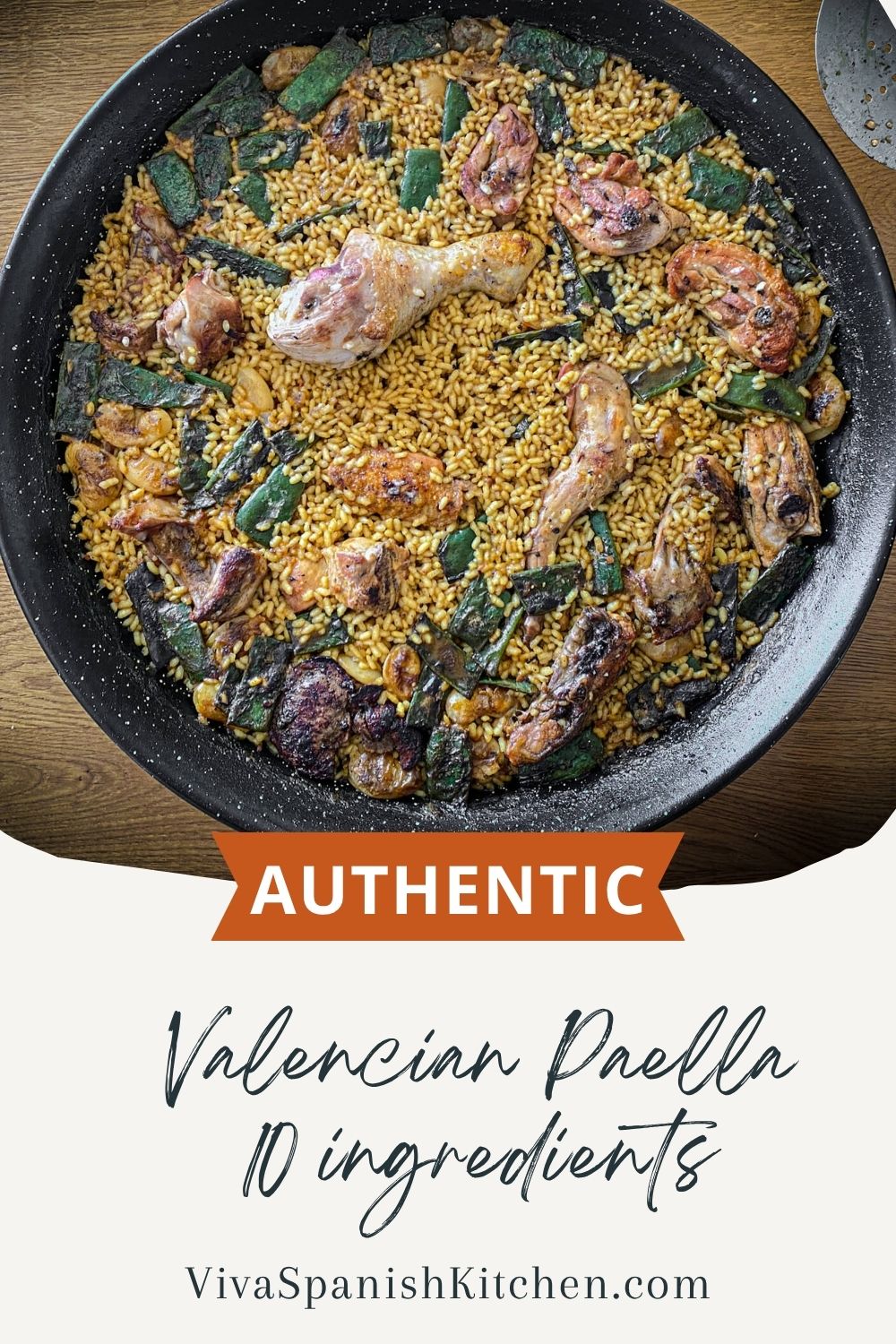
Paella Valenciana is such a beautiful dish. It really shows how much technique and timing matter in Spanish cooking.
Paella is a famous traditional dish from Spain, known for its flavorful rice, saffron, and delicious mix of seafood or meat.
look so delicious and i want a try madeit
The meat quality here is outstanding—the rabbit and chicken are so tender. They are beautifully browned on the outside but stay incredibly moist inside, completely soaking up all the wonderful herbal notes from the rosemary branch.
thanks for good artikel